-You see cars with aggressive double hood scoops and wonder if it's all for show. Is there a real performance gain, or is one scoop just as good?
Generally, the number of hood scoops does not determine horsepower gain. A single, well-designed functional scoop can easily outperform two poorly placed or purely cosmetic double scoops1. The key is the total airflow volume2 and the delivery of cool, dense air directly to the engine's intake system3.

So, if counting the scoops isn't the answer, what really makes one effective? It all starts with the basic question of whether they work at all. Before we compare one versus two, let's explore if any hood scoop can truly add power or if it's just a popular myth.
Do Hood Scoops Really Increase Horsepower or Is It a Myth?
Many people think hood scoops are just for style. You might be missing out on a real performance boost, or maybe you're just paying for an expensive cosmetic part.
It is not a myth. A truly functional hood scoop4 can increase horsepower. It works by forcing cooler, denser air from outside the car into the engine's air intake5. This cooler air contains more oxygen, which allows the engine to burn fuel more efficiently and produce more power.
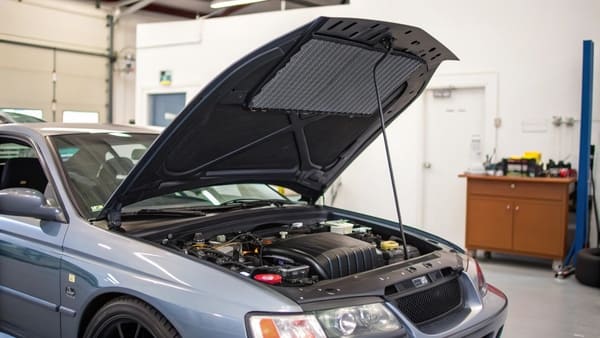
The difference between a functional scoop and a cosmetic one comes down to engineering and manufacturing. A functional scoop is a performance part. A cosmetic one is just a piece of plastic. We learned this the hard way. Manufacturing these scoops with the required precision is very difficult. Standard injection molding machines often can't meet the tight tolerances needed for these exterior parts. The process for us involves at least three critical stages, with cooling being the most challenging. The best machines for this job are usually found in coastal areas like Fujian or near Shanghai, not inland where precision can be lower.
One of the trickiest steps is adding color. To add color powder, we have to stop the machine and open the mold. This messes up the cooling cycle6 and can cause problems. I remember my first time producing these for a client in Pakistan. I was inexperienced, and the parts showed significant "shrinkage" after cooling. I thought it was a disaster. Luckily, the client actually preferred the slightly altered look. We got lucky, but it taught me a valuable lesson about the precision required. From that day on, we perfected our process to ensure every scoop we make is dimensionally perfect7.
Functional vs. Cosmetic Scoops
| Feature | Functional Hood Scoop | Cosmetic Hood Scoop |
|---|---|---|
| Purpose | Increase engine performance | Enhance vehicle appearance |
| Airflow | Has an open path to the engine intake | Blocked off or has no opening |
| Effect | Delivers cool, dense air for more power | No impact on horsepower |
| Cost | Generally more expensive | Less expensive |
How Does a Hood Scoop Improve Engine Airflow?
You know scoops bring in air, but the actual science seems complex. Without understanding how they work, you can't pick the right part for your project or car.
A hood scoop improves airflow by capturing high-pressure, cool air that flows over the hood as the car moves. It then funnels this clean air directly to the engine's air intake5, bypassing the hot, stagnant, and turbulent air trapped inside the hot engine bay.
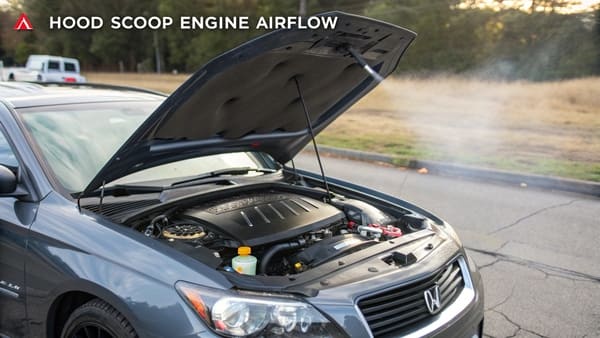
Let's break down how this works in simple terms. A car moving at speed creates different air pressure zones across its body. The area at the base of the windshield and the front of the hood are typically high-pressure zones8. A properly designed scoop acts like a funnel placed right in this high-pressure stream. This is often called the "ram air" effect. The forward motion of the car literally rams air into the scoop. This pressurized air then travels through ducting directly to the engine's air filter box.
An engine needs oxygen to burn fuel9. The air inside a hot engine bay is thin and has less oxygen. Cool air from outside is denser and packed with more oxygen. By feeding the engine this higher-quality air, it can make a more powerful explosion in the cylinders. This translates directly to more horsepower. The shape and placement of the scoop are critical. If it's designed poorly or placed in a low-pressure zone, it can create turbulence and actually hurt airflow instead of helping it. This is why our OEM/ODM process involves so much testing to find the optimal design for each specific vehicle model.
Key Steps to Improving Airflow
- Capture High-Pressure Air: The scoop's opening is placed in a zone of high aerodynamic pressure.
- Create a Direct Path: Ducting connects the scoop directly to the air intake5, avoiding the hot engine bay.
- Lower Air Temperature: It supplies the engine with cooler, denser air from outside the vehicle.
Do Double Hood Scoops Deliver Better Air Intake Than Single Scoops?
You see powerful muscle cars with two scoops and assume it is the best setup. Is a single, large scoop better, or are two smaller ones the key to more power?
Not always. The total open area and the efficiency of the design are much more important than the number of scoops. A single, large, and well-designed scoop can move much more air than two small or poorly placed scoops combined. It is about total airflow, not scoop count.
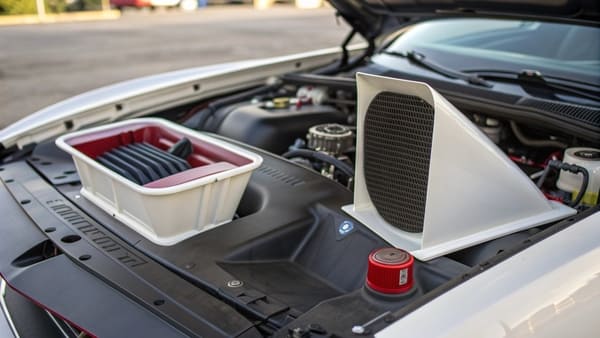
The main idea is to get the largest volume of cool air to the engine as smoothly as possible. Think of it like a drain. One large, clear drain will empty a sink faster than two small, clogged ones. The same principle applies here. The most important factor is the total inlet area10 that is open to high-pressure air. A single scoop can be designed with a very large opening placed at the hood's center, which is often the point of highest air pressure.
Double scoops can sometimes be less efficient. If they are placed too far to the sides, they might be in areas with less air pressure or more turbulence. This means they are scooping less effective air. However, there are exceptions. Some engines, like V-engines with two separate air intake5s, can benefit from a dedicated scoop for each intake11. But for most cars with a single air intake5, one large scoop is usually the more direct and efficient path. As an OEM supplier, we often get requests for double scoops for purely stylistic reasons. A client wants their car to look aggressive. In these cases, we might even design a hood where only one of the two scoops is functional, while the other is just for looks to maintain the visual symmetry.
Single vs. Double Scoop Comparison
| Aspect | Single Scoop | Double Scoops |
|---|---|---|
| Efficiency | Often more efficient due to central placement | Can be less efficient if not placed properly |
| Airflow Path | Simple, direct path to a single intake | Can be complex, may require splitting the air |
| Engine Type | Ideal for most inline and V-engines with one intake | Can be effective for engines with dual air intake5s |
| Aesthetics | Classic, focused performance look | Symmetrical, often seen as more aggressive |
Conclusion
A scoop's performance comes from its functional design, not the number of openings. A single, efficient scoop is often better than two cosmetic ones for actually increasing horsepower.
Find out if double scoops are just for looks or if they actually contribute to engine power, helping you avoid unnecessary upgrades. ↩
Understanding total airflow volume helps you choose the most effective hood scoop for real horsepower gains, not just cosmetic upgrades. ↩
Learn how cooler, denser air boosts engine efficiency and power, making your car perform better with the right hood scoop. ↩
Discover the engineering behind functional hood scoops and why they are essential for real performance improvements. ↩
Explore how hood scoops influence air intake and why this matters for maximizing your car's horsepower. ↩
Understand the manufacturing challenges of hood scoops and how cooling cycles impact their precision and effectiveness. ↩
Find out why precision matters in hood scoop design for both aesthetics and performance, ensuring the best results. ↩
Discover how proper placement in high-pressure zones maximizes airflow and engine power, ensuring your scoop works efficiently. ↩
Discover the science behind oxygen's role in combustion and how hood scoops help deliver more oxygen for increased power. ↩
Learn why the size and placement of the scoop's opening are critical for maximizing airflow and horsepower. ↩
Explore scenarios where double scoops are actually functional, especially for engines with dual air intakes. ↩