-Choosing new headlights can feel overwhelming. You want something that looks good and works well, but the technical terms are confusing. This guide makes understanding composite headlights simple and clear.
A composite headlight is a modern automotive light assembly featuring a clear, separate plastic lens, a replaceable bulb, and an internal reflector.1 This multi-part design allows for more aerodynamic vehicle styling and easy replacement of just the bulb, unlike older, one-piece sealed-beam units.
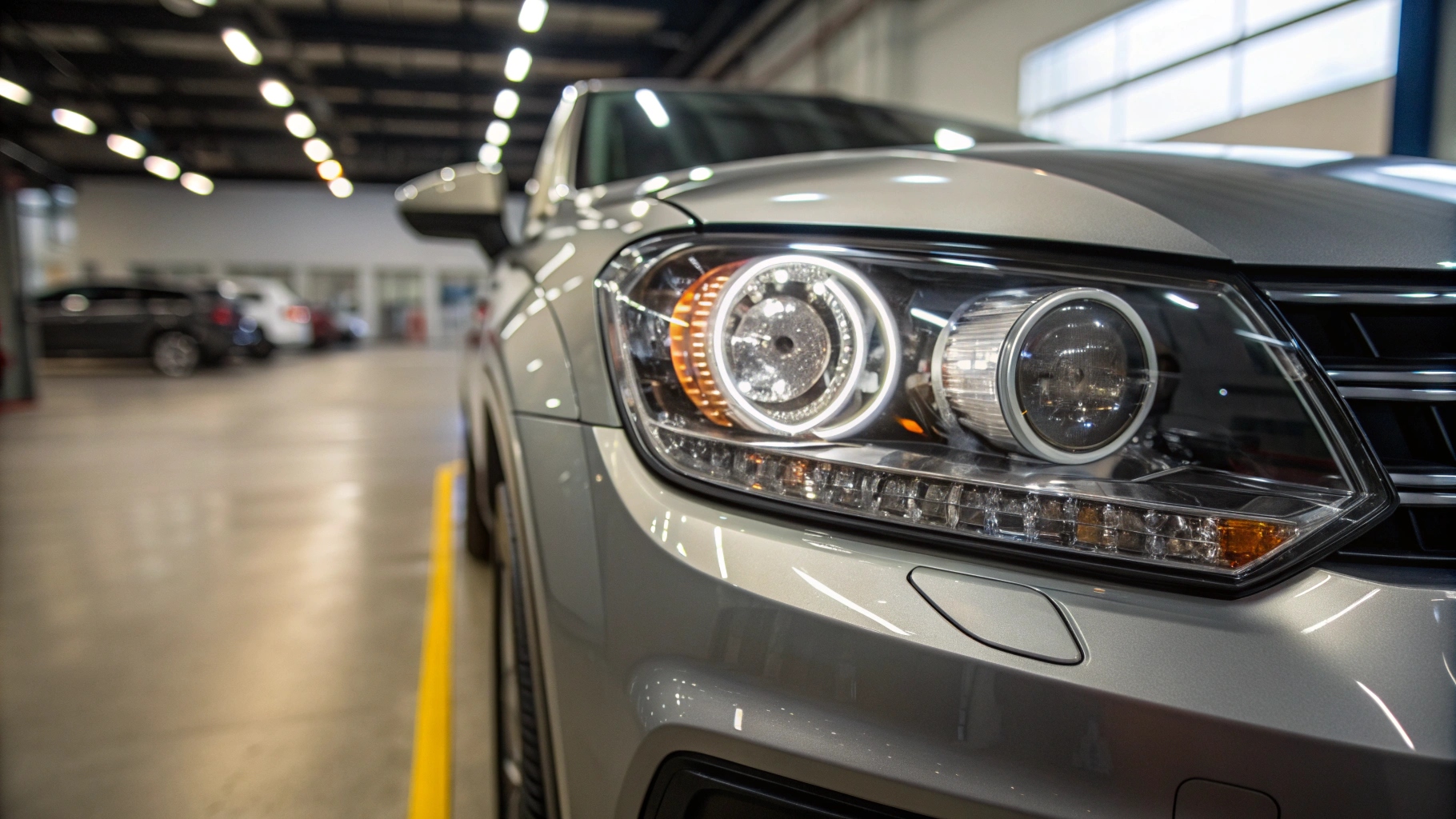
Now you know the basic definition of a composite headlight. But there is a lot more to it than just that. As a manufacturer, I see the side of these products that most people don't. The design seems simple, but making them is incredibly complex. Let's dive deeper into what these components are, why they are called "composite," and the difficult process of how they are actually made. This information will help you understand their real value.
What Is a Composite Headlight?
You see the term "composite headlight" in product descriptions, but what does it really mean? Without a clear definition, you can't compare it to other options like sealed beams. Let's break it down.
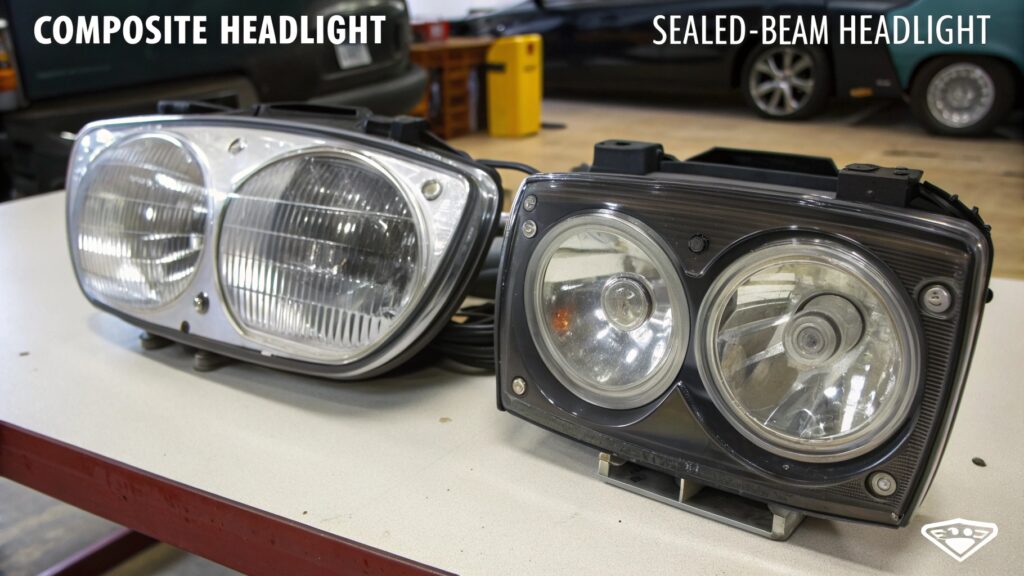
A composite headlight is an assembly that brings together a replaceable bulb, a reflector, and a separate outer lens into one unit. The key difference is its modular nature. You can change the bulb without replacing the entire headlight, which is a major advantage over old sealed-beam lights.2
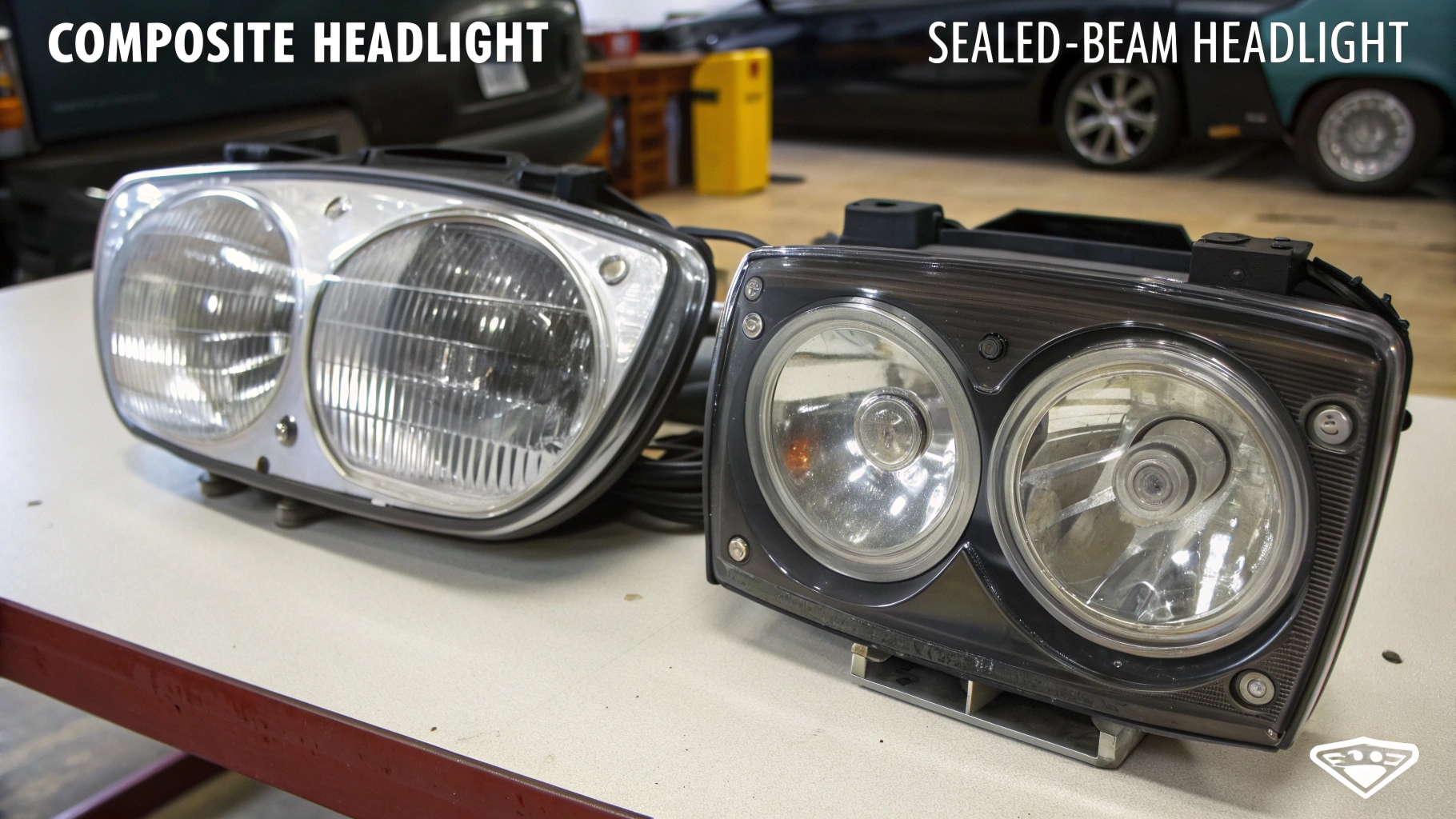
When we talk about composite headlights, we are really talking about an assembly of distinct parts that must work together perfectly. As a manufacturer, I know that the precision required to make these parts fit and function correctly is immense. The final product looks sleek and simple, but the engineering behind it is advanced. Let's look at the individual components and how they compare to the older technology they replaced.
The main material for the outer lens is polycarbonate.3 We use it because it is strong, lightweight, and very clear. It can also be molded into aerodynamic shapes that were impossible with the glass used in older sealed beams.4 This allows car designers to integrate the headlights smoothly into the body of the car, improving both style and fuel efficiency5.
Here is a simple table to show the differences:
| Feature | Composite Headlight | Sealed-Beam Headlight |
|---|---|---|
| Bulb | Replaceable (e.g., H4, H7, LED) | Integrated, not replaceable |
| Lens | Separate, polycarbonate plastic | Integrated, part of the glass bulb |
| Design | Aerodynamic, styled to fit car body | Standardized round or rectangular shape |
| Repair | Change only the burnt-out bulb | Replace the entire sealed unit |
| Cost | Higher initial cost, cheaper repairs | Lower initial cost, more expensive repairs |
This modular approach is what defines the modern headlight. It gives you, the owner, more flexibility for repairs and even upgrades.
Why Is It Called a Composite Headlight?
The word "composite" might sound like it refers to a special, high-tech material. This can be confusing, but the name is actually much simpler. It describes the structure, not the material.
It's called a "composite" headlight because it is composed of multiple, separate components that are assembled to form a single unit. Think of it as a team of parts working together, unlike the old sealed-beam headlight, which was just one single, sealed piece of glass.
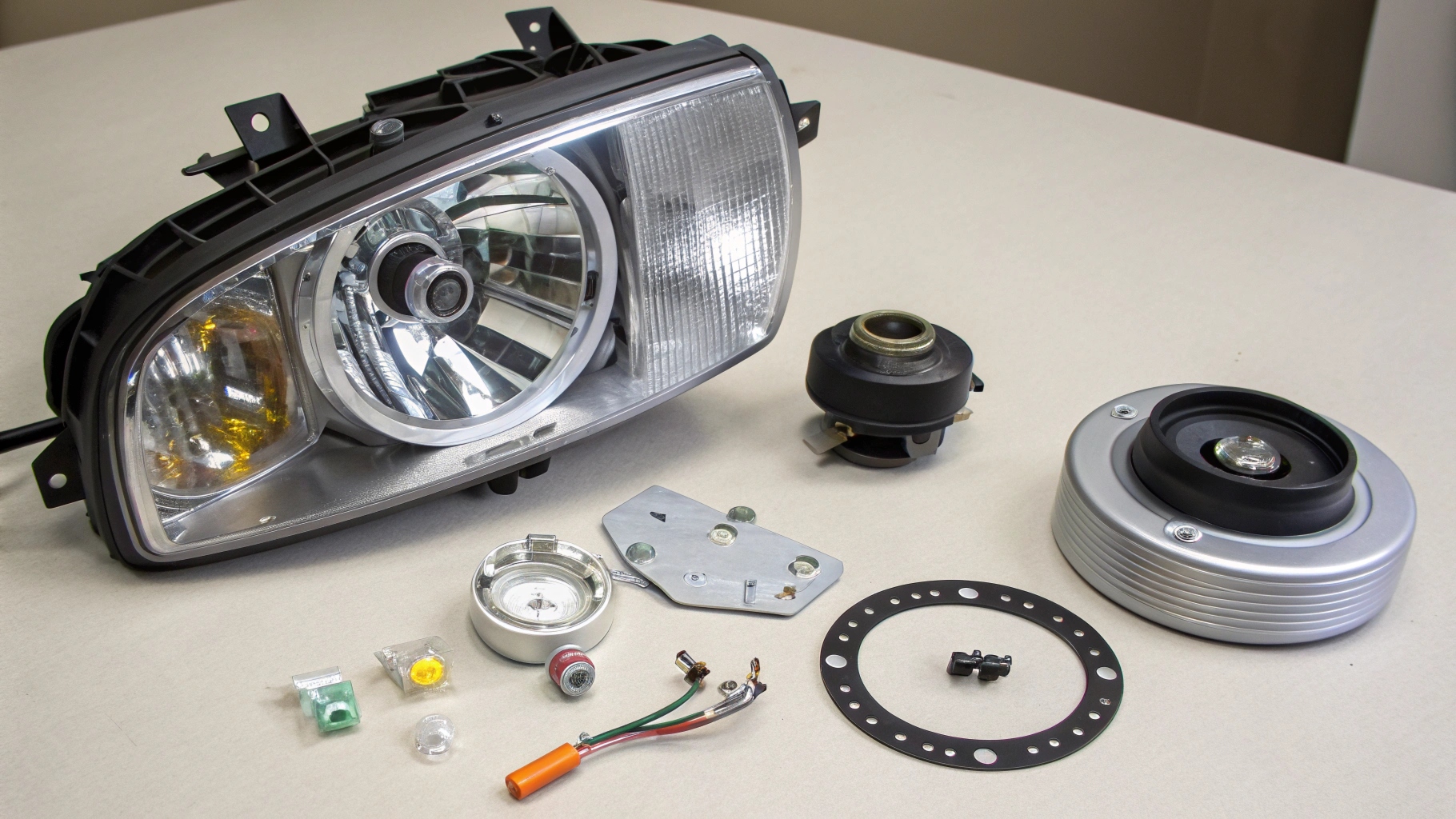
The term "composite" simply means "made up of various parts or elements."6 Understanding this helps you see the headlight not as a single black box, but as a system. Each part has a specific job, and as a manufacturer, I have to ensure each one is made perfectly so the whole system works. The quality of the final headlight depends entirely on the quality of its individual pieces and how they are put together.
The Key Components
Let's break down the team of parts inside a typical composite headlight:
- The Housing: This is the main body of the headlight, usually made from a durable plastic like polypropylene. It acts as the backbone, holding all the other components in place and mounting the entire assembly to the vehicle's frame.
- The Reflector: This is the shiny, chrome-plated surface behind the bulb. Its job is to capture the light produced by the bulb and shape it into a controlled beam. The geometry of the reflector is critical for proper road illumination and preventing glare for other drivers.
- The Bulb: This is the replaceable light source. It can be a traditional halogen bulb, a brighter HID (High-Intensity Discharge) bulb, or a modern, energy-efficient LED. The fact that it's separate is the main convenience of the composite design.
- The Lens: This is the clear outer cover that you see on the front of the car. It is almost always made of polycarbonate plastic with a protective hard coating. It protects the internal components from water, dirt, and impacts, while its shape helps finalize the light beam pattern.
Making these separate pieces, especially the plastic housing and lens, is the most challenging part of my job. They must be manufactured with extreme precision to ensure a perfect, weather-tight seal.
How Does a Composite Headlight Work?
Understanding how a headlight functions might seem very technical. But if you don't know the basics, you can feel lost when a bulb burns out or you're considering an upgrade. Let's look at the simple journey from electricity to light.
A composite headlight works by using electricity to power a replaceable bulb. The light from that bulb is then collected and aimed by an internal reflector. Finally, this focused beam of light shines through the clear outer lens to light up the road ahead of you.
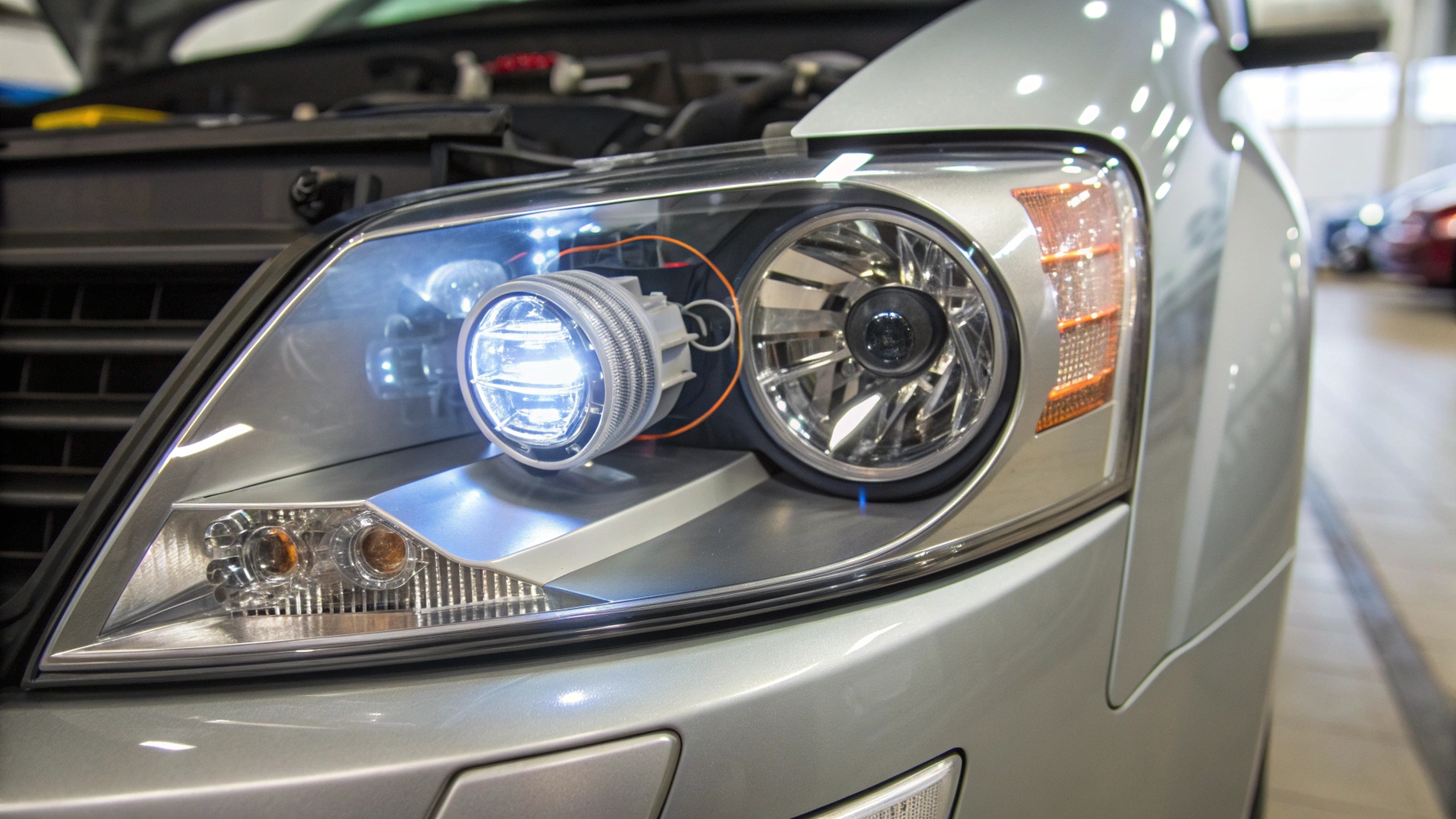
That’s the simple version of how it works. But "how it works" from a manufacturing standpoint is a different story. The creation of the plastic components is a process filled with challenges. The quality of this process determines whether the headlight will perform well and last for years or fail prematurely. Based on my experience, I want to share a look into how these parts are really made.
The Manufacturing Challenge: Precision is Everything
The plastic housing and lens of a composite headlight are made using injection molding.7 But you can't use just any machine. The precision needed is incredibly high. If the parts are off by even a fraction of a millimeter, they won't seal properly, leading to condensation inside the lens.8 Standard injection molding machines just can't meet these tight tolerances. The best machines for this job are usually found in factories in the coastal regions of China, like in Fujian or near Shanghai. Machines from other areas often lack the required accuracy.
The process has at least three major stages, but the most difficult by far is cooling. After the hot, liquid plastic is injected into the mold, it has to cool down and harden. If it cools too fast or unevenly, the part can warp or shrink, ruining it.
My First Composite Headlight Project
I learned this lesson the hard way. My first time producing composite headlight housings was for a client from Pakistan. We had another challenge with that order: adding color. To add color pigments, you have to stop the machine and open the mold. This interrupts the stable temperature of the process and makes the cooling stage even more difficult to control. We were not experienced enough back then.
After we produced the first batch of plastic housings, the "shrinkage" from the cooling process was pretty severe. The parts were noticeably smaller than the design specifications. I was sure the client would reject them. But, in a strange turn of events, he actually preferred the slightly smaller, tighter look. It was pure luck. That project taught me a valuable lesson about controlling the cooling process. We never made that mistake again, and now it is a core part of our quality control.
Conclusion
A composite headlight is a modern system of separate parts that allows for great design and easy bulb changes. However, manufacturing it, especially the plastic components, demands extreme precision and expertise.
"Headlamp - Wikipedia", https://en.wikipedia.org/wiki/Headlamp. An automotive encyclopedia or technical standard confirms that composite headlights are defined by their modular assembly, including a separate lens, replaceable bulb, and internal reflector, distinguishing them from sealed-beam units. This definition may vary slightly by region or manufacturer. Evidence role: definition; source type: encyclopedia. Supports: A composite headlight is a modern automotive light assembly featuring a clear, separate plastic lens, a replaceable bulb, and an internal reflector.. Scope note: Regional or manufacturer-specific variations may exist. ↩
"How to Open and Reseal Sealed Beam Glass Headlights - YouTube", https://www.youtube.com/watch?v=wV6tgGiqxnw. Automotive repair manuals and technical guides confirm that composite headlights allow for bulb replacement without changing the entire unit, unlike sealed-beam headlights, which require full unit replacement when the bulb fails. Evidence role: mechanism; source type: education. Supports: You can change the bulb without replacing the entire headlight, which is a major advantage over old sealed-beam lights.. Scope note: Some specialty sealed-beam units may have exceptions. ↩
"Are all plastic headlights made from polycarbonate ? : r/AutoDetailing", https://www.reddit.com/r/AutoDetailing/comments/1361ndv/are_all_plastic_headlights_made_from_polycarbonate/. Materials science literature and automotive manufacturing standards indicate that polycarbonate is the predominant material used for composite headlight lenses due to its strength, clarity, and moldability. Evidence role: mechanism; source type: paper. Supports: The main material for the outer lens is polycarbonate.. Scope note: Some high-end or specialty headlights may use alternative materials. ↩
"Headlamp - Wikipedia", https://en.wikipedia.org/wiki/Headlamp. Automotive engineering sources explain that polycarbonate's moldability allows for complex, aerodynamic headlight shapes, which were not feasible with the glass used in sealed-beam headlights. Evidence role: mechanism; source type: education. Supports: It can also be molded into aerodynamic shapes that were impossible with the glass used in older sealed beams.. Scope note: Some glass headlights may have limited shaping capabilities, but not to the extent of polycarbonate. ↩
"Aerodynamic Characteristics of Sixteen Electric, Hybrid, and ...", https://ntrl.ntis.gov/NTRL/dashboard/searchResults/titleDetail/DOEJPL152170T1.xhtml. Automotive engineering studies show that aerodynamic integration of headlights can reduce drag, contributing to improved fuel efficiency and vehicle styling. Evidence role: mechanism; source type: paper. Supports: Integrating polycarbonate headlights into the car body improves both style and fuel efficiency.. Scope note: The effect on fuel efficiency is typically modest and depends on overall vehicle design. ↩
"Composite material - Wikipedia", https://en.wikipedia.org/wiki/Composite_material. Technical dictionaries and engineering glossaries define 'composite' as something made up of multiple distinct parts or elements, supporting its use in describing modular headlight assemblies. Evidence role: definition; source type: encyclopedia. Supports: The term "composite" simply means "made up of various parts or elements.". Scope note: The term may have broader meanings in other contexts. ↩
"Automotive Lighting Injection Molding - Global Plastics", https://www.global-plastics.com/industries/automotive-lighting-injection-molding/. Manufacturing and engineering sources confirm that injection molding is the standard process for producing plastic housings and lenses for composite headlights. Evidence role: mechanism; source type: education. Supports: The plastic housing and lens of a composite headlight are made using injection molding.. Scope note: Some specialty headlights may use alternative manufacturing methods. ↩
"Who Killed the Sealed Beam Headlamp? - Car Talk Community", https://community.cartalk.com/t/who-killed-the-sealed-beam-headlamp/79474. Engineering and quality control literature confirm that improper sealing due to manufacturing tolerances can lead to condensation inside composite headlights, affecting performance and longevity. Evidence role: mechanism; source type: paper. Supports: If the parts are off by even a fraction of a millimeter, they won't seal properly, leading to condensation inside the lens.. Scope note: Condensation may also result from other factors such as damage or aging. ↩