-Struggling to understand the brake pad replacement process? It can seem intimidating, with many technical details. Getting it wrong can compromise safety, leading to serious issues for your customers.
Changing brake pads involves preparing the vehicle, removing the wheel and caliper, replacing the old pads with new ones, and reassembling everything.1 For professionals, the key is ensuring every component, from the pad to the smallest clip, meets strict quality standards before installation.
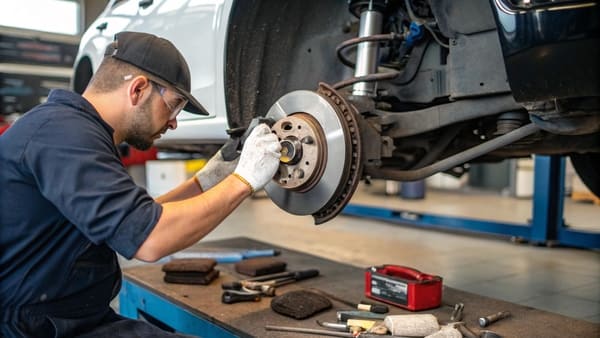
Now that you have a basic idea of the process, you might be wondering about the parts themselves. To truly grasp the importance of a proper brake job, we need to start with the fundamentals. Let's break down what brake pads are and why they are so vital for any vehicle. This knowledge is crucial for anyone in the business of selling automotive parts.
What Are Brake Pads and Why Are They Important?
Do you view brake pads as just simple, replaceable friction blocks? This view overlooks their critical engineering and can lead you to source inferior products that put drivers at risk.
Brake pads are essential safety components that create the friction needed to slow and stop a vehicle.2 They press against the brake rotor inside the caliper, converting the car's kinetic energy into heat.3 Their quality directly determines a vehicle's stopping power and overall safety.
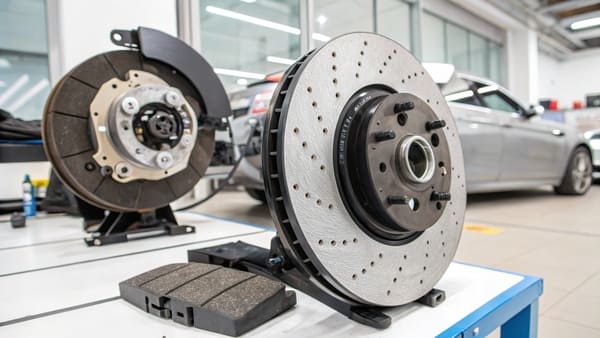
Let's dive deeper into their construction. A brake pad isn't just one piece of material. It's a system composed of several layers. The main parts are the steel backing plate and the friction material bonded to it.4 The backing plate provides a rigid foundation and helps dissipate heat.5 The friction material is the star of the show, engineered to provide consistent stopping power while resisting extreme temperatures. Many pads also include shims, which are thin layers of metal or rubber on the back of the plate to dampen vibrations and reduce noise.6 As someone sourcing parts, understanding the different friction materials is key.
| Brake Pad Type | Key Characteristics | Best For |
|---|---|---|
| Organic (NAO) | Quiet, soft on rotors, less dust | Daily driving, smaller cars |
| Semi-Metallic | Excellent heat transfer, durable | Performance driving, heavy vehicles |
| Ceramic | Quiet, low dust, stable at high temps | Luxury and high-performance cars |
Choosing the right type for your market is a critical business decision. It's about matching the product to the customer's needs, whether it's quiet operation for a daily commuter or extreme durability for a work truck.
How Do You Know When Brake Pads Need to Be Replaced?
Are you unsure about the exact signs of worn-out brake pads? Misinformation can lead your customers to wait too long for a replacement, creating a dangerous situation and damaging your credibility.
The most common signs are a high-pitched squeal when braking, a harsh grinding sound, a vibrating brake pedal, or an illuminated brake warning light.7 A visual inspection showing less than 4mm of friction material also confirms that replacement is needed immediately.8
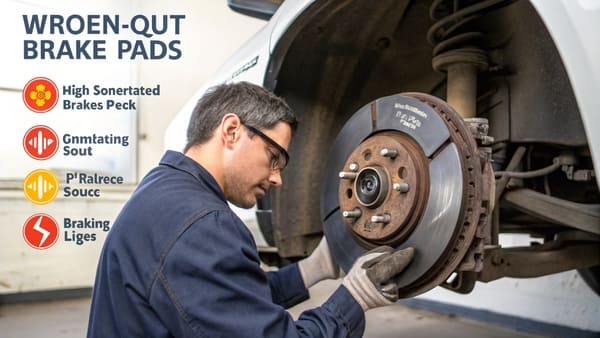
Let's explore these indicators more closely. The squealing sound is often the first warning. It's caused by a small metal tab called a wear indicator, which we build into the brake pad.9 When the pad material wears down to a certain point, this tab makes contact with the rotor, creating that audible alert. If your customers hear a grinding noise, it's a much more serious problem. This means the friction material is completely gone, and the metal backing plate is grinding against the rotor.10 This is not only unsafe but also causes expensive damage to other brake components.
Other signs include changes in pedal feel. A "spongy" or soft pedal can indicate issues, while vibrations or pulsations felt through the pedal often point to a warped brake rotor, which can happen when worn pads are used for too long. Modern vehicles also simplify things with electronic wear sensors. These are small sensors embedded in the pads that trigger a warning light on the dashboard when the pads are low.11 As a parts supplier, offering complete kits that include these sensors is essential for providing a full solution to your clients.
Can You Change Brake Pads Yourself?
Thinking about the components for a brake job? It might seem like a simple set of parts. But the manufacturing precision required for even the smallest accessories is incredibly high.
While the mechanical steps can be learned, the real challenge is in manufacturing the components to precise specifications. Even simple plastic accessories for brake pad kits demand advanced injection molding and cooling processes.12 Sourcing these parts from the right factory is critical for ensuring proper fit and safety.
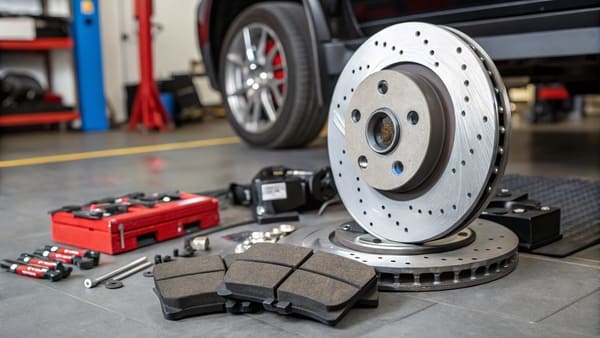
Let me give you an inside look from my experience as a manufacturer. The plastic accessories that come in a brake pad set—like clips, guides, and sensor housings—are surprisingly difficult to produce correctly. Standard injection molding machines often can't achieve the required precision. You need specialized equipment that can handle a multi-step process, with the cooling stage being the most challenging part. Factories with this capability are mainly found in specific industrial zones, like those along the Fujian coast or around Shanghai. Machines from other regions often just can't meet the tight tolerances.
I remember my first time producing these parts for a client in Pakistan. We were new to this specific component, and our first batch experienced some "shrinkage" after cooling. The dimensions were slightly off. I was worried we had failed, but the client called back and said they actually preferred the tighter fit. It was a lucky accident, but it taught us a huge lesson about the critical nature of the cooling process. Another challenge is adding color. To add color pigments, you have to stop the machine and open the mold, which makes controlling the cooling temperature even harder. This is why partnering with an experienced OEM/ODM manufacturer is so important. We understand these complexities and have the right equipment and processes to produce reliable, high-quality components every single time.
Conclusion
From recognizing wear signs to understanding the complex manufacturing behind each part, sourcing quality brake components requires real expertise. Partner with a professional to ensure safety and reliability.
"Quick Guide: How Long to Change Brake Pads (+ Cost)", https://bigblue.atlantisuniversity.edu/how-long-does-it-take-to-change-brake-pads/. Automotive repair manuals and technical guides describe the standard process for replacing brake pads as involving vehicle preparation, wheel and caliper removal, pad replacement, and reassembly. Evidence role: general_support; source type: education. Supports: Changing brake pads involves preparing the vehicle, removing the wheel and caliper, replacing the old pads with new ones, and reassembling everything.. Scope note: Procedures may vary slightly by vehicle make and model. ↩
"Brake pad - Wikipedia", https://en.wikipedia.org/wiki/Brake_pad. Automotive engineering sources and safety organizations identify brake pads as critical components responsible for generating friction to slow and stop vehicles. Evidence role: definition; source type: encyclopedia. Supports: Brake pads are essential safety components that create the friction needed to slow and stop a vehicle.. ↩
"An overview of regenerative braking systems - ADS", https://ui.adsabs.harvard.edu/abs/2022JEnSt..5205033H/abstract. Physics and automotive engineering texts explain that brake pads press against the rotor to convert kinetic energy into heat through friction. Evidence role: mechanism; source type: education. Supports: They press against the brake rotor inside the caliper, converting the car's kinetic energy into heat.. ↩
"Conventional and unconventional materials used in the production ...", https://ui.adsabs.harvard.edu/abs/2020SECM...27..374B/abstract. Technical references and automotive encyclopedias describe brake pads as consisting primarily of a steel backing plate and a friction material bonded to it. Evidence role: definition; source type: encyclopedia. Supports: The main parts are the steel backing plate and the friction material bonded to it.. ↩
"Brake pad", https://en.wikipedia.org/wiki/Brake_pad. Engineering sources note that the steel backing plate in brake pads serves as a rigid foundation and assists in heat dissipation during braking. Evidence role: mechanism; source type: education. Supports: The backing plate provides a rigid foundation and helps dissipate heat.. Scope note: The primary function is structural support; heat dissipation is a secondary benefit. ↩
"How Do Brake Pad Shims Work? - ADVICS", https://www.advicsaftermarket.com/technical-resources/tech-videos/how-do-brake-pad-shims-work/. Automotive repair guides and technical sources state that shims are often included in brake pads to dampen vibrations and reduce noise. Evidence role: mechanism; source type: education. Supports: Many pads also include shims, which are thin layers of metal or rubber on the back of the plate to dampen vibrations and reduce noise.. Scope note: Not all brake pads include shims; inclusion depends on design and manufacturer. ↩
"[PDF] Checks on brake discs and brake pads, carried out visually and ...", https://education.mn.gov/mdeprod/groups/educ/documents/hiddencontent/mdaw/mdu5/~edisp/059294.pdf. Automotive safety organizations and repair manuals list squealing, grinding, pedal vibration, and warning lights as common indicators of worn brake pads. Evidence role: expert_consensus; source type: government. Supports: The most common signs are a high-pitched squeal when braking, a harsh grinding sound, a vibrating brake pedal, or an illuminated brake warning light.. Scope note: Some symptoms may also indicate other brake system issues. ↩
"19VAC30-70-80. Service brakes. - Virginia Law", https://law.lis.virginia.gov/admincode/title19/agency30/chapter70/section80/. Automotive maintenance guidelines often recommend replacing brake pads when the friction material is less than 3-4mm thick. Evidence role: expert_consensus; source type: government. Supports: A visual inspection showing less than 4mm of friction material also confirms that replacement is needed immediately.. Scope note: Exact minimum thickness recommendations may vary by manufacturer. ↩
"A Quick Guide to Brake Wear Indicators - Chapel Hill Tire", https://www.chapelhilltire.com/what-are-brake-wear-indicators. Technical sources explain that many brake pads include a metal wear indicator tab that produces a squealing sound when the pad material is low. Evidence role: mechanism; source type: education. Supports: The squealing sound is often the first warning. It's caused by a small metal tab called a wear indicator, which we build into the brake pad.. Scope note: Not all brake pads have wear indicator tabs; design varies by manufacturer. ↩
"Scraping noise from brakes - but the pads look fine? : r/AskMechanics", https://www.reddit.com/r/AskMechanics/comments/12yyqyh/scraping_noise_from_brakes_but_the_pads_look_fine/. Automotive repair manuals and safety guides state that a grinding noise during braking often indicates the friction material is worn away and the backing plate is contacting the rotor. Evidence role: mechanism; source type: education. Supports: If your customers hear a grinding noise, it's a much more serious problem. This means the friction material is completely gone, and the metal backing plate is grinding against the rotor.. Scope note: Other brake system failures can also cause grinding noises. ↩
"Brake wear indicator - Wikipedia", https://en.wikipedia.org/wiki/Brake_wear_indicator. Automotive technology references describe electronic wear sensors embedded in brake pads that activate a dashboard warning light when pad material is low. Evidence role: mechanism; source type: education. Supports: Modern vehicles also simplify things with electronic wear sensors. These are small sensors embedded in the pads that trigger a warning light on the dashboard when the pads are low.. Scope note: Not all vehicles or brake pads are equipped with electronic wear sensors. ↩
"Injection moulding - Wikipedia", https://en.wikipedia.org/wiki/Injection_moulding. Manufacturing engineering literature notes that producing precision plastic automotive components, such as those in brake pad kits, requires advanced injection molding and controlled cooling processes to achieve tight tolerances. Evidence role: mechanism; source type: education. Supports: Even simple plastic accessories for brake pad kits demand advanced injection molding and cooling processes.. Scope note: Specific process requirements may vary by component and manufacturer. ↩