-That sinking feeling when your brake pedal feels soft is terrifying. Ignoring it can lead to total brake failure.1 Understanding your master cylinder helps you spot trouble before it becomes a disaster.
The brake master cylinder is the heart of your vehicle's hydraulic braking system.2 It converts the force from your foot on the brake pedal into hydraulic pressure to stop the car.3 You know it needs replacement if you have a spongy or sinking brake pedal, contaminated brake fluid, or visible fluid leaks.4
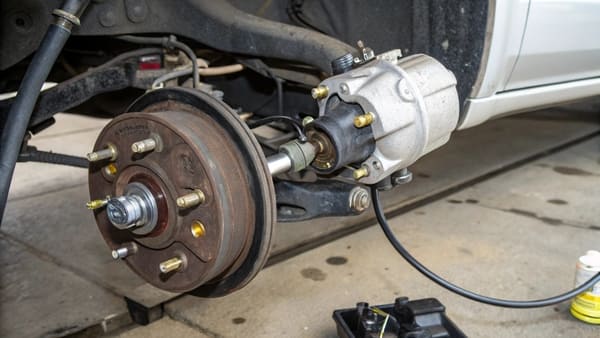
Knowing the signs of a failing master cylinder is not just for mechanics; it's a critical piece of knowledge for any driver. When this component starts to wear out, it gives clear warnings. Being able to recognize them means you can address the problem early, ensuring your car remains safe on the road. Let's dive into what this part is, what it does, and how to spot it, so you can feel more confident about your vehicle's most important safety system.
What Is a Brake Master Cylinder?
You hear mechanics talk about it, but what exactly is it? Not knowing can make you feel powerless during repairs. Let's demystify this essential part and give you control.
A brake master cylinder is a hydraulic pump that acts as the core of your braking system. It’s a small but powerful device, usually made of cast iron or aluminum, with a plastic reservoir on top that holds the brake fluid. Its entire job is to create stopping power.5
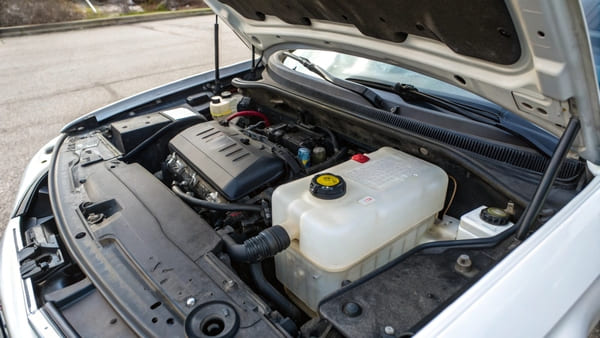
The main body houses pistons and seals that are precision-engineered to move fluid under pressure. The attached plastic reservoir holds the extra brake fluid. As a manufacturer, I can tell you that making this plastic reservoir is surprisingly difficult. Standard injection molding machines often can't achieve the required precision. The process has multiple steps, and the cooling stage is the hardest part. High-precision machines for this work are usually found in factories in coastal regions like Fujian or near Shanghai. I learned this the hard way on a project for a Pakistani client. My first batch of reservoirs "shrank" too much after cooling because of my inexperience. Luckily, the client actually liked the smaller, tighter look, but it was a valuable lesson in how critical precision manufacturing is for every single component, even the plastic ones.
| Component | Function | Material |
|---|---|---|
| Reservoir | Stores brake fluid | High-grade plastic |
| Cylinder Body | Houses the pistons and seals | Cast iron or aluminum |
| Pistons | Push the brake fluid when the pedal is pressed | Hardened steel |
| Seals | Prevent fluid from leaking past the pistons | High-resistance rubber |
What Does a Brake Master Cylinder Do?
Your car isn't stopping as quickly as it should. You press the pedal, but the response feels weak and delayed. Understanding the master cylinder's job explains why this is happening.
The master cylinder’s primary function is to convert the mechanical force you apply with your foot into hydraulic pressure. This pressure is then sent through the brake lines to each wheel, forcing the brake pads to clamp down on the rotors and stop the car.
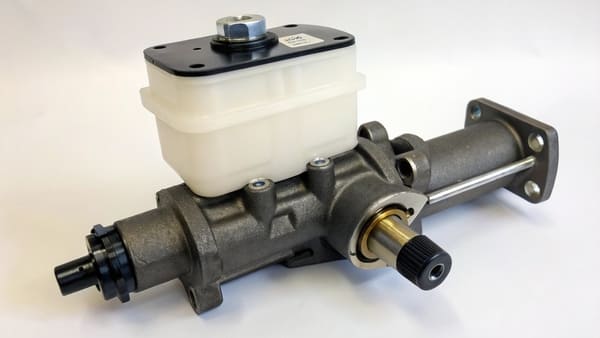
When you press the brake pedal, you are pushing a rod connected to a piston inside the master cylinder. This piston moves forward, compressing the brake fluid in front of it. Because fluid can't be compressed, it's forced to move. This movement creates immense pressure throughout the sealed system of brake lines. Most modern cars use a tandem master cylinder, which is a safety feature.6 It operates two separate brake circuits, typically one for the front-left and rear-right wheels, and another for the front-right and rear-left wheels.7 This means if one circuit fails due to a leak, you still have 50% of your braking power, which is often enough to bring the car to a safe stop.8 It’s a simple but brilliant system that relies on every part working perfectly.
Here is the sequence of events:
- Pedal Press: You apply force to the brake pedal.
- Piston Movement: The pedal linkage pushes the primary piston inside the cylinder.
- Pressure Build-Up: The piston compresses brake fluid, creating hydraulic pressure.
- Fluid Transfer: This pressure is transmitted equally through the brake lines to all four wheels.
- Braking Action: The pressure activates calipers or wheel cylinders, which press the brake pads against the rotors, slowing the car down.
Where Is the Brake Master Cylinder Located?
You need to check your brake fluid, but you're not sure where to look. Opening the hood reveals a confusing collection of parts. Let's find the master cylinder together, step-by-step.
You can find the brake master cylinder in the engine bay, almost always on the driver's side of the vehicle.9 It is mounted directly to the firewall, which is the metal wall separating the engine compartment from the passenger cabin.10 You'll recognize it by its plastic fluid reservoir on top.
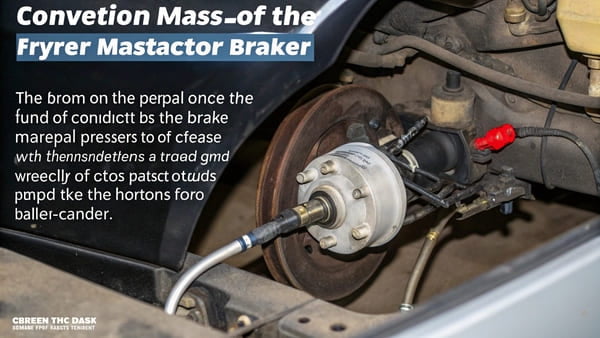
To locate it, follow these simple steps. First, open your car’s hood and secure it. Stand on the driver's side and look toward the back of the engine compartment, near the base of the windshield. You will see a large, round, black drum-like object. This is the brake booster, which uses engine vacuum to make the brake pedal easier to push. The brake master cylinder is the smaller metal component bolted directly to the front of this brake booster. You can’t miss the plastic tank on top of it, which is the brake fluid reservoir. This location is chosen for a direct mechanical connection from the brake pedal through the firewall. Once you've found it, you can easily check the fluid level, which should be between the "MIN" and "MAX" lines on the side of the plastic reservoir. A low level is a major sign of a leak somewhere in the system.11
Conclusion
Understanding your brake master cylinder is vital for your safety. Regular fluid checks and recognizing the signs of failure allow you to perform timely replacements, keeping your brakes reliable.
"[PDF] Safety Recall: Soft or Low Brake Pedal - nhtsa", https://static.nhtsa.gov/odi/rcl/2018/RCRIT-18V777-4372.pdf. Government and educational sources confirm that a soft or sinking brake pedal is a warning sign of potential brake system failure, which, if left unaddressed, can result in total loss of braking ability. However, the exact progression depends on the underlying cause and vehicle maintenance history. Evidence role: expert_consensus; source type: government. Supports: Ignoring a soft brake pedal can lead to total brake failure.. Scope note: Progression to total failure may vary depending on the specific fault and maintenance practices. ↩
"Hydraulic brake - Wikipedia", https://en.wikipedia.org/wiki/Hydraulic_brake. Encyclopedia and technical sources describe the brake master cylinder as the primary component responsible for generating hydraulic pressure in automotive braking systems, supporting its central role. Evidence role: definition; source type: encyclopedia. Supports: The brake master cylinder is the heart of your vehicle's hydraulic braking system.. Scope note: Metaphorical language ('heart') is interpretive; technical sources describe its function rather than its importance relative to other components. ↩
"Designing and Analyzing the Brake Master Cylinder for an ATV vehicle", https://www.academia.edu/80784404/Designing_and_Analyzing_the_Brake_Master_Cylinder_for_an_ATV_vehicle. Educational and technical sources explain that the brake master cylinder converts mechanical force from the pedal into hydraulic pressure, which is transmitted to the brakes to stop the vehicle. Evidence role: mechanism; source type: education. Supports: The master cylinder converts the force from your foot on the brake pedal into hydraulic pressure to stop the car.. Scope note: Descriptions may vary slightly depending on vehicle design; the basic mechanism is consistent across most hydraulic brake systems. ↩
"AUTO 150 - Brakes - - Montgomery College catalog", https://catalog.montgomerycollege.edu/preview_course_nopop.php?catoid=11&coid=14747. Automotive maintenance guides and educational sources list spongy or sinking brake pedal, contaminated fluid, and visible leaks as common symptoms indicating master cylinder failure and the need for replacement. Evidence role: expert_consensus; source type: education. Supports: A spongy or sinking brake pedal, contaminated brake fluid, or visible fluid leaks indicate the need to replace the master cylinder.. Scope note: Some symptoms may overlap with other brake system faults; diagnosis should be confirmed by inspection. ↩
"How Do Diesel Hydraulic Brakes Work? - Universal Technical Institute", https://www.uti.edu/blog/diesel/hydraulic-brakes. Technical sources clarify that the master cylinder generates hydraulic pressure, which enables the braking system to create stopping power; it does not directly produce the force that stops the vehicle. Evidence role: mechanism; source type: education. Supports: The master cylinder's entire job is to create stopping power.. Scope note: The master cylinder initiates the process, but stopping power is ultimately produced by the brake pads and rotors. ↩
"[PDF] AUT 151 (A5) - Durham Tech", https://www.durhamtech.edu/sites/default/files/course_outlines/AUT151_0.pdf. Automotive engineering sources confirm that tandem master cylinders are standard in most modern vehicles, providing redundancy for safety in case of hydraulic failure. Evidence role: historical_context; source type: education. Supports: Most modern cars use a tandem master cylinder, which is a safety feature.. Scope note: Exact adoption rates may vary by region and vehicle type; the feature is standard in passenger cars since the late 1960s. ↩
"(PDF) ANALYSIS AND ASSESSMENT OF DUAL BRAKE CIRCUITS", https://www.academia.edu/29803885/ANALYSIS_AND_ASSESSMENT_OF_DUAL_BRAKE_CIRCUITS. Technical manuals and educational sources describe tandem master cylinders as operating two separate brake circuits, often split diagonally (front-left/rear-right and front-right/rear-left) for safety. Evidence role: mechanism; source type: education. Supports: A tandem master cylinder operates two separate brake circuits, typically one for the front-left and rear-right wheels, and another for the front-right and rear-left wheels.. Scope note: Some vehicles use front/rear split instead; diagonal split is common but not universal. ↩
"[PDF] BSEE Safety Alert 425 - Drawworks Parking Brake Failure", https://www.bsee.gov/sites/bsee.gov/files/safety-alerts//bsee-safety-alert-425-drawworks-parking-brake-failure.pdf. Automotive safety standards and engineering sources state that tandem master cylinders provide partial braking capability if one circuit fails, typically retaining braking on two wheels, but the exact percentage and safety outcome depend on vehicle design and conditions. Evidence role: mechanism; source type: government. Supports: If one brake circuit fails due to a leak, you still have 50% of your braking power, which is often enough to bring the car to a safe stop.. Scope note: Actual retained braking power and stopping distance may vary; 50% is an estimate, not a guaranteed value. ↩
"Master Cylinder Sizing Guide: Find the Perfect Fit for Your Brake ...", https://imba.missouri.edu/master-cylinder-sizing-3039119172.html. Automotive technical guides confirm that the brake master cylinder is usually located on the driver's side of the engine bay, mounted to the firewall, though exceptions exist in some vehicle designs. Evidence role: general_support; source type: education. Supports: The brake master cylinder is almost always located on the driver's side of the engine bay.. Scope note: Some vehicles, especially those with right-hand drive or unique layouts, may differ. ↩
"Wilwood Disc Brakes - Search: firewall", https://www.wilwood.com/search/partnosearch?q=firewall. Technical diagrams and automotive encyclopedias show that the brake master cylinder is typically mounted to the firewall, which separates the engine compartment from the passenger cabin. Evidence role: definition; source type: encyclopedia. Supports: The brake master cylinder is mounted directly to the firewall, which separates the engine compartment from the passenger cabin.. Scope note: Some vehicles may use alternative mounting locations; firewall mounting is standard in most passenger cars. ↩
"What Is Brake Fluid? | UTI - Universal Technical Institute", https://www.uti.edu/blog/automotive/brake-fluid. Automotive maintenance guides and educational sources state that a low brake fluid level is commonly caused by leaks in the brake system, making it a key diagnostic indicator. Evidence role: expert_consensus; source type: education. Supports: A low brake fluid level is a major sign of a leak somewhere in the brake system.. Scope note: Low fluid can also result from worn brake pads or other issues; leaks are the most frequent cause. ↩