-Your brake pedal feels spongy, sinking slowly to the floor. This is a serious safety concern. This guide will walk you through the entire replacement process, step by step.
To replace a brake master cylinder, you must first disconnect the brake lines and mounting nuts. Then, you bench bleed the new cylinder before installing it. Finally, you reconnect the lines, bleed the entire brake system to remove all air, and test the brakes for proper function.
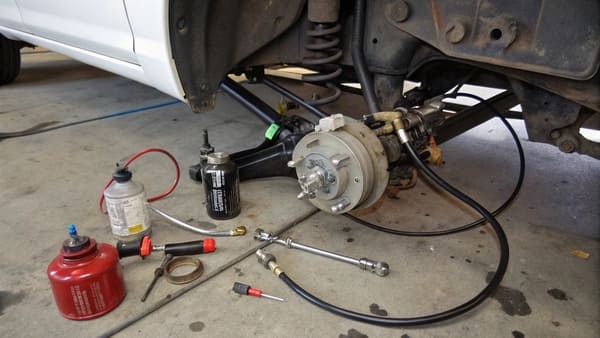
Replacing a master cylinder is a job you can do yourself, but it requires care and attention to detail. It's not just about swapping parts; it's about ensuring your vehicle's most critical safety system works perfectly. Before we grab our tools, let's make sure we're replacing the right part for the right reason. This guide will cover everything from diagnosis to the final test drive.
When Should You Replace a Brake Master Cylinder?
You think the master cylinder is bad, but replacing it is a lot of work. Guessing wrong costs you time and money. Here’s how you can be sure.
You should replace your brake master cylinder when you have confirmed symptoms that cannot be fixed by other means. This includes a sinking brake pedal that doesn't improve after bleeding the brakes1, or visible fluid leaking from the rear of the cylinder into the brake booster2.
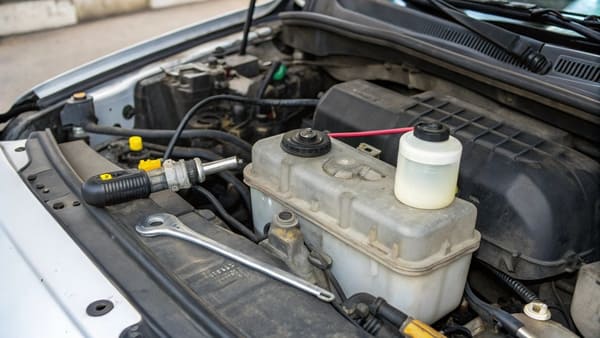
Deciding when to replace the cylinder comes down to a process of elimination. First, you check for other problems. Are your brake lines leaking? Is the fluid level low? Are your calipers or wheel cylinders seized? If you have bled the brakes properly and the pedal still feels soft or sinks to the floor, the problem is likely internal to the master cylinder. The seals inside wear out over time. When this happens, brake fluid bypasses the seals instead of pushing out to the brakes. This causes the loss of pressure you feel in the pedal. Another clear sign is an external leak. Check the point where the master cylinder bolts to the brake booster. If you see brake fluid there, the rear seal has failed and you need a replacement immediately.
| Condition | Diagnosis | Action |
|---|---|---|
| Spongy pedal after bleeding | Internal seals are worn | Replace master cylinder |
| Pedal slowly sinks to floor | Internal seals are bypassing fluid | Replace master cylinder |
| Fluid leaking at brake booster3 | Rear seal has failed | Replace master cylinder |
| Dark, contaminated fluid4 | Seals are breaking down | Consider replacement |
What Are the Symptoms of a Bad Brake Master Cylinder?
Your car's brakes just don't feel right, and it's making you nervous. Ignoring these warning signs can lead to complete brake failure. Let’s identify the key symptoms now.
The most common symptoms of a bad brake master cylinder are a soft, spongy, or sinking brake pedal5. You might also notice contaminated brake fluid that looks dark and dirty6, or the brake warning light on your dashboard may turn on due to a low fluid level7.
Understanding the symptoms helps you diagnose the problem accurately. A sinking pedal is the classic sign. You press the brake, and it feels firm at first, but then slowly drops toward the floor as you hold pressure. This happens because fluid is leaking past the internal seals. A spongy or soft pedal feel is another indicator, often caused by air entering the system through a failing seal, though it can also mean you just need to bleed your brakes. Always check the brake fluid reservoir. If the fluid, which should be clear or light amber, is dark and murky, it means the rubber seals inside the cylinder are deteriorating and contaminating the fluid. This is a sure sign that the component is nearing the end of its life and needs to be replaced before it fails completely.
What Tools Do You Need to Replace a Brake Master Cylinder?
You're ready to start a repair, but you don't have the right tools. This is frustrating and can turn a simple job into a nightmare. Here is a complete list.
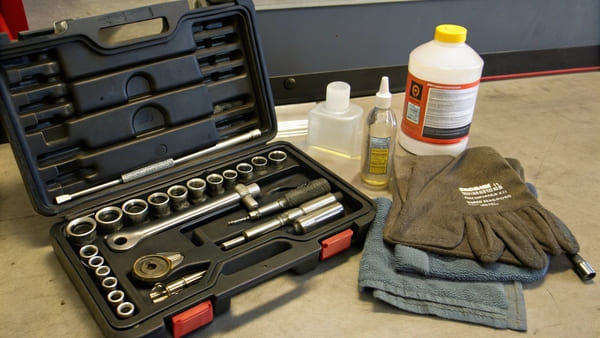
You will need a basic socket and ratchet set, a set of flare nut wrenches for the brake lines, a master cylinder bench bleeding kit, fresh DOT-approved brake fluid, shop rags, and a container to catch old fluid. A vise is also very helpful.8
Having the right tools is half the battle, but the quality of your replacement part is just as important. The master cylinder itself looks simple, but its components, especially the plastic fluid reservoir, are high-precision parts. I learned this the hard way. The manufacturing process for these reservoirs is very demanding. Standard injection molding machines often lack the necessary precision. The cooling stage is especially critical.9
I remember my first project making these reservoirs for a client in Pakistan. We were still new to the specific requirements. After the injection molding, the parts "shrank" more than we expected during the cooling phase. I thought it was a disaster. But the client called me and said he actually preferred the slightly smaller, tighter fit! It was pure luck, but it taught me a huge lesson about the tiny tolerances involved. High-quality production machines, usually found in the coastal regions of China like Fujian or near Shanghai, are needed to get it right consistently.10 It's something to think about when you choose an aftermarket part. A cheap part might not be made with the same precision, which can affect its performance and longevity.
How Do You Perform the Replacement Step-by-Step?
You have the tools and the new part, but you're not sure of the exact process. Making a mistake during a brake job can be very dangerous. Follow these steps carefully.
To perform the replacement, first remove the old fluid and disconnect the brake lines and mounting bolts. Bench bleed the new cylinder, then install it. Reconnect the lines, bleed the entire brake system starting from the wheel farthest from the master cylinder, and perform a final check.
This process must be done in the correct order to ensure no air is trapped in the system. Air in your brake lines is what causes a spongy pedal and poor braking performance. Follow these steps methodically.
- Preparation and Safety: Disconnect the negative terminal on your car battery. Place plenty of shop rags under the master cylinder to catch any spilled brake fluid, as it can damage your car's paint.
- Remove Old Fluid: Use a turkey baster or syringe to remove as much of the old brake fluid from the reservoir as possible. Dispose of it properly.
- Disconnect Brake Lines: This is a critical step. You MUST use a flare nut wrench, not a standard open-ended wrench. A standard wrench will likely round off the soft metal of the brake line nuts, creating a much bigger problem. Loosen and disconnect all brake lines from the master cylinder.
- Unbolt the Old Cylinder: Locate the two nuts that hold the master cylinder to the brake booster. They are usually found on the firewall inside the car, behind the brake pedal arm. Remove these nuts, and the old master cylinder should come free.
- Bench Bleed the New Cylinder: DO NOT skip this step. Secure the new master cylinder in a vise. Attach the plastic fittings and hoses from your bench bleeding kit to the outlet ports. Route the hoses back into the reservoir, below the fluid level. Fill the reservoir with fresh brake fluid. Using a screwdriver, slowly push the piston in and release it. You will see air bubbles coming out of the hoses. Keep pumping until no more bubbles appear. This removes all air from the cylinder itself.
- Install the New Cylinder: Remove the bleeding kit and install the new master cylinder, securing it with the mounting nuts.
- Reconnect and Bleed the System: Reconnect the brake lines to the new cylinder. Now, you must bleed the entire brake system to remove air from the lines. Start at the wheel farthest from the master cylinder (usually the rear passenger side) and work your way to the one closest. Have a helper press and hold the brake pedal while you open the bleeder valve to release fluid and air, then close the valve before they release the pedal. Repeat until only clear, bubble-free fluid comes out. Do this for all four wheels.
- Final Checks: Top off the brake fluid in the reservoir to the "MAX" line. Check all connections for leaks. Start the car and test the brake pedal. It should feel firm and high. Test the brakes at low speed before driving normally.
Conclusion
Replacing a master cylinder is a manageable task with the right tools and a careful approach. Correct diagnosis, a quality part, and thorough bleeding are the keys to restoring your car's braking performance.
"Why Does My Brake Pedal Feel Loose? 6 Common Causes & Fixes", https://www.randall-travel-award.missouri.edu/why-does-my-brake-pedal-feel-loose-1086257694.html. A sinking brake pedal that persists after proper bleeding is widely recognized as a classic symptom of internal master cylinder failure, as documented in automotive repair manuals and technical guides. Evidence role: expert_consensus; source type: education. Supports: You should replace your brake master cylinder when you have confirmed symptoms that cannot be fixed by other means. This includes a sinking brake pedal that doesn't improve after bleeding the brakes.. Scope note: This symptom may also be caused by other hydraulic faults, so diagnosis should include ruling out other issues. ↩
"Md. Code Regs. 11.22.03.05 - Brake Systems - Hydraulic and ...", https://www.law.cornell.edu/regulations/maryland/COMAR-11-22-03-05. Fluid leaking from the rear of the master cylinder into the brake booster is described in technical literature as a sign of rear seal failure, necessitating immediate replacement. Evidence role: expert_consensus; source type: education. Supports: You should replace your brake master cylinder when you have confirmed symptoms that cannot be fixed by other means. This includes visible fluid leaking from the rear of the cylinder into the brake booster.. Scope note: Leakage at this location may rarely be caused by other faults, so visual confirmation is important. ↩
"Hydraulic Valves - Brakes Steering and Suspension", https://brakes.siu.edu/hydraulics.htm. Technical repair guides and automotive textbooks identify fluid leaking at the brake booster as a diagnostic indicator of master cylinder rear seal failure. Evidence role: expert_consensus; source type: education. Supports: Fluid leaking at brake booster is a sign of rear seal failure and requires master cylinder replacement.. Scope note: Other rare causes of fluid at the booster exist, so diagnosis should confirm the source. ↩
"What Is Brake Fluid? | UTI - Universal Technical Institute", https://www.uti.edu/blog/automotive/brake-fluid. Automotive maintenance literature states that dark, contaminated brake fluid often results from deteriorating rubber seals within the hydraulic system, including the master cylinder. Evidence role: mechanism; source type: education. Supports: Dark, contaminated fluid is a sign that seals are breaking down and may indicate the need for master cylinder replacement.. Scope note: Contaminated fluid can also result from other sources, such as moisture or external contamination. ↩
"Why Does My Brake Pedal Feel Loose? 6 Common Causes & Fixes", https://www.randall-travel-award.missouri.edu/why-does-my-brake-pedal-feel-loose-1086257694.html. Automotive repair manuals and technical guides list a soft, spongy, or sinking brake pedal as primary symptoms of master cylinder failure. Evidence role: expert_consensus; source type: education. Supports: The most common symptoms of a bad brake master cylinder are a soft, spongy, or sinking brake pedal.. Scope note: These symptoms can also be caused by air in the system or other hydraulic faults. ↩
"What Is Brake Fluid? | UTI - Universal Technical Institute", https://www.uti.edu/blog/automotive/brake-fluid. Technical sources note that contaminated, dark brake fluid is often associated with deteriorating seals in the master cylinder or other hydraulic components. Evidence role: mechanism; source type: education. Supports: Contaminated brake fluid that looks dark and dirty is a symptom of a bad brake master cylinder.. Scope note: Dark fluid may also result from external contamination or moisture ingress. ↩
"Stop Braking In Fear: This Brake Fluid Step Could Save Your Life ...", https://dev-housing.rice.edu/tutorials/stop-braking-in-fear-this-brake-fluid-step-could-save-your-life-now-3708931. Automotive technical documentation confirms that the brake warning light is triggered by low fluid levels, which can result from master cylinder leaks or failures. Evidence role: mechanism; source type: education. Supports: The brake warning light on your dashboard may turn on due to a low fluid level, which can be caused by master cylinder failure.. Scope note: Low fluid can also be caused by leaks elsewhere in the brake system. ↩
"Subaru Master Cylinder Replacement: Step-by-Step Guide", https://cs.grinnell.edu/lunar-note/subaru-master-cylinder-replacement-step-by-step-guide-1767647241. Automotive repair guides and technical manuals list these tools as standard requirements for master cylinder replacement procedures. Evidence role: expert_consensus; source type: education. Supports: You will need a basic socket and ratchet set, a set of flare nut wrenches for the brake lines, a master cylinder bench bleeding kit, fresh DOT-approved brake fluid, shop rags, and a container to catch old fluid. A vise is also very helpful.. Scope note: Tool requirements may vary slightly by vehicle model. ↩
"[PDF] University of Delaware Formula SAE Lincoln, Car #67 2017 Cost ...", https://udel.edu/~pgeneva/downloads/fsae/067_University%20of%20Delaware_FSAEL_CR_Supplement.pdf. Manufacturing engineering literature describes the importance of precision and cooling in injection molding for automotive fluid reservoirs, noting that standard machines may not meet tight tolerances required for brake components. Evidence role: mechanism; source type: education. Supports: Standard injection molding machines often lack the necessary precision. The cooling stage is especially critical for brake fluid reservoirs.. Scope note: Specific tolerances depend on the part design and manufacturer standards. ↩
"Automotive industry in China - Wikipedia", https://en.wikipedia.org/wiki/Automotive_industry_in_China. Industry reports and manufacturing surveys indicate that coastal regions of China, such as Fujian and Shanghai, host advanced production facilities capable of high-precision automotive component manufacturing. Evidence role: general_support; source type: institution. Supports: High-quality production machines, usually found in the coastal regions of China like Fujian or near Shanghai, are needed to get it right consistently.. Scope note: Not all facilities in these regions meet the same standards; quality varies by manufacturer. ↩