Your engine is overheating on a hot day. This can lead to serious, expensive damage. Understanding your car's radiator is the first step to preventing this problem.
A car radiator is a type of heat exchanger designed to keep your engine from overheating. It circulates a special fluid, called coolant, to transfer heat away from the engine and release it into the air, ensuring optimal performance and preventing catastrophic failure.
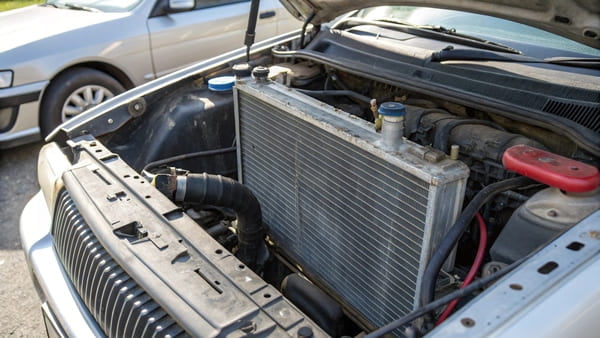
Your car's engine generates an incredible amount of heat just by running. Without a way to manage this heat, the engine would quickly destroy itself. This is where the cooling system, with the radiator as its star player, comes in. It's a critical system that many drivers overlook until it's too late. To really appreciate your car's reliability, it helps to understand the parts that work so hard to keep it running smoothly. Let's dive into what a radiator is, why it's so important, and how it works.
What Is a Radiator in a Car?
Looking under the hood can be confusing with so many parts. You might not know what everything does. Let's make it simple and explain one of the most important components.
A car radiator is the main component of the engine's cooling system. It usually looks like a large, thin grill at the front of the engine bay. Its only job is to get rid of the excess heat carried by the engine coolant.
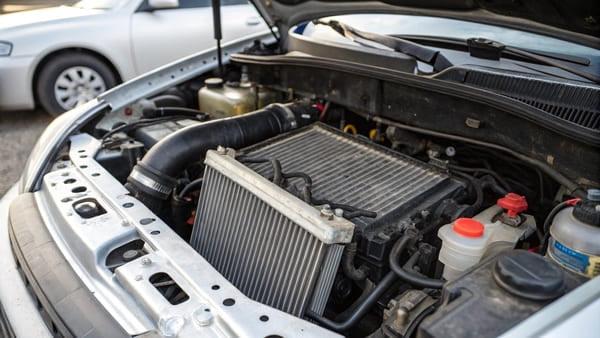
At its core, the radiator is just a device for exchanging heat. It takes hot liquid from the engine, cools it down, and sends it back to continue the cycle. To do this job effectively, it's made of a few key parts that work together. The materials are usually a combination of aluminum and plastic. The aluminum is great for transferring heat, and the plastic is used for the tanks because it's durable and can be molded into complex shapes. As a manufacturer, we know that the plastic parts are surprisingly difficult to make correctly.
| Component | Function |
|---|---|
| Core | The largest part of the radiator. It's made of many small tubes and fins. Hot coolant flows through the tubes, and air flows past the fins to pull the heat away. |
| Inlet/Outlet Tanks | These plastic tanks are on the sides or top and bottom of the core. The inlet tank receives hot coolant from the engine, and the outlet tank sends the cooled liquid back. |
| Fins | These are the thin, wavy metal strips between the tubes in the core. They dramatically increase the surface area, allowing the radiator to transfer heat to the air much more efficiently. |
| Pressure Cap | This special cap keeps the cooling system pressurized. This raises the boiling point of the coolant, making the system more effective at high temperatures. |
Why Is the Radiator Important for Engine Performance?
You might think the radiator is just another part. But ignoring it can lead to major engine failure. Let's look at why it's so important for your car's performance.
The radiator is vital for engine performance because it keeps the engine at its ideal operating temperature. This prevents overheating, protects sensitive engine parts, improves fuel efficiency, and ensures you get consistent power for a longer engine life.
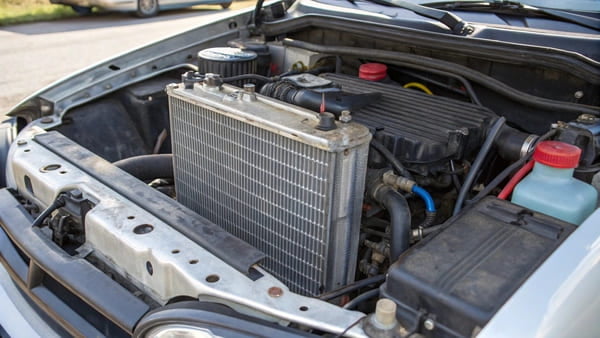
An engine is designed to run within a specific, narrow temperature range. If it runs too cold, combustion is incomplete, fuel economy suffers, and emissions increase. If it runs too hot, the consequences are much worse. Extreme heat causes metal parts to expand, which can lead to severe damage. The oil that lubricates your engine can break down, causing friction and wear. A well-functioning radiator is the key to keeping the engine in that "just right" temperature zone. It's not just about preventing a breakdown on the side of the road. It's about maintaining the long-term health, efficiency, and power of your vehicle's engine every single time you drive.
| Radiator Condition | Effect on Engine Performance |
|---|---|
| Good (Working Correctly) | Engine stays at a stable, optimal temperature. Fuel is burned efficiently. Maximum power is available. Engine parts are protected from heat damage. |
| Bad (Clogged or Leaking) | Engine overheats. Risk of warped cylinder head or blown head gasket. Poor fuel economy. Reduced power. Can lead to complete engine seizure, requiring a replacement. |
How Does a Car Radiator Work?
You see the radiator at the front of the car and you know it's important. But how does it actually cool your engine? The process is much simpler than you might think.
Hot coolant from the engine flows into the radiator. As you drive, or when the cooling fan turns on, air passes over the radiator's fins. This draws heat out of the coolant. The now-cooler fluid then circulates back to the engine.
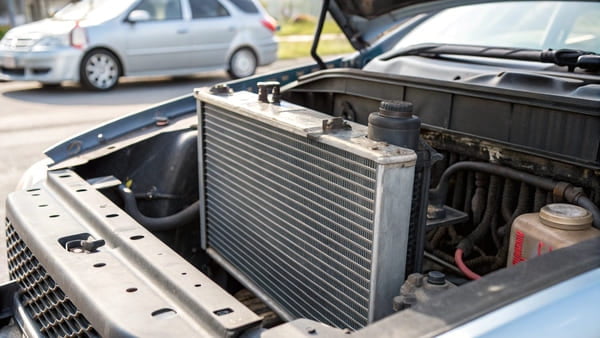
The process is a continuous loop. First, the water pump pushes hot coolant from the engine block through a hose and into the radiator's inlet tank. The coolant then flows through the many small tubes in the radiator's core. At the same time, air is forced through the fins, either from the car moving or from an electric fan. This moving air absorbs the heat from the coolant. By the time the coolant reaches the outlet tank, it's much cooler. It then flows back to the engine to absorb more heat, and the cycle starts all over again.
Making the parts for this system is very challenging. For example, the plastic tanks on the radiator are very hard to manufacture. Standard injection molding machines cannot achieve the precision needed for these automotive parts. There are at least three steps, and the cooling stage is the most difficult. I learned this the hard way on my first project for a client from Pakistan. After we molded the plastic parts, they "shrank" more than expected during cooling. It was a stressful moment. Luckily, the client actually preferred the slightly smaller fit, and it worked perfectly for his assembly. We got lucky, but it taught us a valuable lesson. We have perfected our process since then and never made that mistake again.
Conclusion
Your car's radiator is essential for preventing engine overheating. Understanding how it works and keeping it in good condition is critical for your vehicle's long-term health and performance.