-Choosing the right manufacturing method for car parts is tough. A bad choice means wasted money and components that just don't work. CNC machining is the precise solution you need.
CNC machining can create a huge range of auto parts, including engine blocks, pistons, transmission cases, brake calipers, and suspension arms.1 To choose the right process, you must consider the part's material, design complexity, production volume, and the required precision tolerance for a perfect fit.
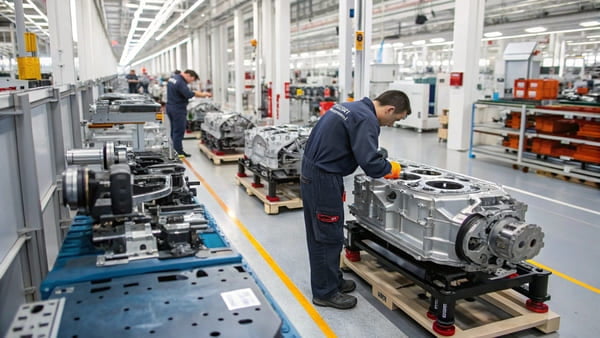
You can see that CNC is more than just a cutting tool; it's a core technology in modern vehicle manufacturing. But what does that really mean for the parts in your car? Let's break down exactly which components benefit from this process and why it has become so absolutely critical for both performance and safety in the automotive world.
What Are CNC Machined Auto Parts and Why Are They Used in Automotive Manufacturing?
You hear the term "CNC" thrown around, but what does it actually mean for car parts? This confusion can make sourcing components feel like a guessing game. Let's define it simply.
CNC machined auto parts are components shaped by computer-controlled tools from a solid block of material. They are used because the process offers unmatched precision, perfect consistency, and the ability to create complex designs from strong materials like aluminum, steel, and advanced plastics.
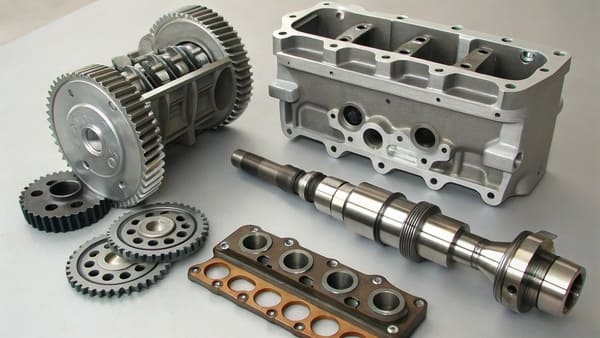
CNC stands for Computer Numerical Control. Think of it as a robotic sculptor. We feed a digital design into a computer, and the computer gives exact instructions to a cutting machine. The machine then carves a solid block of metal or plastic into the final part, layer by layer. This process removes the potential for human error, ensuring every single piece is a perfect copy of the one before it.
The Core Benefits: Precision and Repeatability
The main advantage is precision. For parts that fit inside an engine or transmission, a difference of even a thousandth of an inch can cause a major failure. CNC machining produces parts with extremely tight tolerances, so they fit and work perfectly every time. This repeatability is essential for mass production and for guaranteeing the safety and reliability of every vehicle that rolls off the assembly line.
From Prototypes to Production Runs
CNC is also incredibly versatile. We use it to create single prototypes for testing a new design because it's fast and doesn't require expensive molds. It's also the go-to method for low-to-medium volume production, especially for high-performance or luxury car parts where quality is more important than mass quantity.2 It perfectly fills the gap between one-off custom work and large-scale casting or forging.
| Manufacturing Method | Best For | Precision | Cost per Part (Low Volume) |
|---|---|---|---|
| CNC Machining | Prototypes, Complex Parts, Low Volume | Very High | Medium |
| Casting | High Volume, Simple Shapes | Low-Medium | Low |
| Injection Molding | High Volume (Plastics) | Medium-High | Very Low |
| Forging | High Strength Parts | Low | High |
Which Engine and Transmission Parts Can Be Made Using CNC Machining?
The engine and transmission are the heart and soul of a vehicle. They demand perfection. Even a tiny flaw in one of their components can lead to a catastrophic and expensive failure.
Many critical powertrain parts are made using CNC machining. This includes engine blocks, cylinder heads, pistons, camshafts, and crankshafts.3 For the transmission, CNC is used for the housing (case), internal gears, and complex valve bodies to ensure smooth, reliable operation.
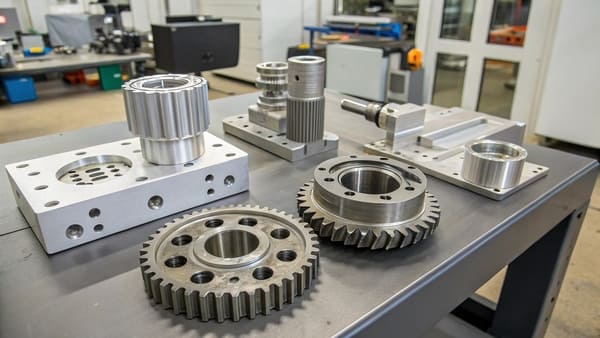
When we talk about the core of a car's performance, we are talking about parts that have to withstand incredible heat, pressure, and friction. There is simply no room for error. That’s why CNC machining is not just an option; it's a necessity for creating a modern, reliable powertrain.4 The process allows us to use high-strength metal alloys and shape them into intricate designs that older methods could never achieve.
Key Engine Components
The engine is a symphony of moving parts, and CNC is the conductor ensuring they all work in harmony.
- Engine Blocks & Cylinder Heads: These are the foundation. A CNC machine carves the complex internal passages for coolant and oil with flawless accuracy. This precise fluid dynamics management is key to cooling the engine and keeping it lubricated, which directly impacts performance and longevity.
- Pistons & Crankshafts: These components move at incredible speeds. They must be perfectly balanced to prevent engine-destroying vibrations. CNC machining can shape a piston to a precise weight and profile, and it carves a crankshaft with perfect journals and counterweights for a smooth, powerful, and durable engine.
Essential Transmission Components
An automatic transmission is one of the most complex parts of a car. Its reliability hinges on the precision of its internal components.
- Transmission Cases: Similar to an engine block, the transmission case holds all the gears, clutches, and shafts in perfect alignment. CNC machining ensures all the bearing bores and mounting surfaces are exactly where they need to be.
- Valve Bodies: This is the hydraulic "brain" of the transmission. It's a maze of tiny channels and valves that direct fluid to change gears. Only CNC machining can create these intricate pathways with the precision needed for crisp, seamless shifts.
Can CNC Machines Produce Suspension, Steering, and Brake Components?
A car's safety relies completely on its ability to steer, stop, and handle the road. Using weak or imprecise components in these critical systems is simply not an option. It's a massive risk.
Absolutely. CNC machining is essential for manufacturing high-performance and safety-critical parts. This includes suspension control arms, steering knuckles, and especially brake calipers and caliper brackets. The process ensures these parts are strong, lightweight, and fit perfectly for optimal vehicle control.
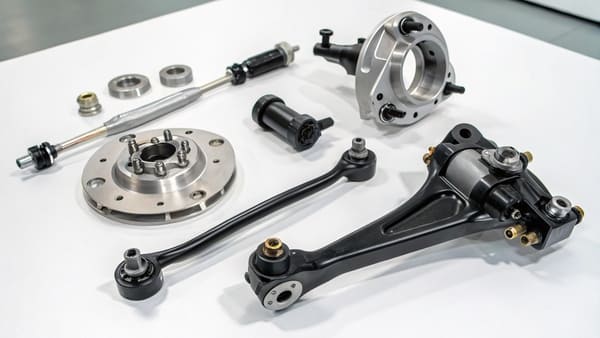
When you turn the steering wheel or hit the brakes, you are trusting your life to these parts. This is why we rely on CNC machining. It allows us to take a solid block of high-grade aluminum or steel and turn it into a component that is far stronger and more reliable than a cast or welded alternative. The precision also means that when a mechanic replaces a part, the new one will fit exactly like the original, ensuring the car's handling and safety are fully restored.
Suspension and Brake System Parts
- Suspension & Steering: Parts like suspension control arms and steering knuckles are often forged first for basic shape and strength, then moved to a CNC machine. The CNC process cuts the final, precise mounting points and bearing surfaces. This two-step method creates a component that is both incredibly tough and dimensionally perfect.
- Brake Calipers: High-performance brake calipers, especially "monoblock" calipers, are machined from a single block of aluminum. This makes them much stiffer and lighter than traditional two-piece cast calipers. A stiffer caliper doesn't flex under hard braking, which gives the driver a firmer pedal feel and more consistent stopping power.
The Hidden Challenge: CNC-Related Plastics
Even plastic parts that work with CNC-machined components require extreme precision. Standard injection molding machines often can't meet these tolerances. Making these high-precision plastic parts requires specialized equipment, which you typically only find in advanced manufacturing hubs like the areas around Shanghai. The cooling process is the most difficult step. I learned this the hard way on a project with a Pakistani client. My first batch of plastic support parts shrank more than expected after cooling. Luckily, the client actually preferred the tighter fit! We got fortunate, but it was a critical lesson. We perfected our cooling techniques after that and have never made the same mistake again.
Conclusion
In short, CNC machining is vital for modern car parts, from engine blocks to brake calipers.5 It delivers the precision, strength, and quality needed for performance and safety.
"Applications of CNC Machining in the Automotive Industry", https://www.3erp.com/blog/applications-cnc-machining-automotive-industry/. A technical overview from a reputable engineering encyclopedia confirms that CNC machining is widely used to manufacture a variety of automotive components such as engine blocks, pistons, transmission cases, brake calipers, and suspension arms. Evidence role: general_support; source type: encyclopedia. Supports: CNC machining can create a huge range of auto parts, including engine blocks, pistons, transmission cases, brake calipers, and suspension arms.. Scope note: The source may provide examples rather than an exhaustive list of all possible parts. ↩
"CNC Machining for Low Volume Production", https://us.arrk.com/services/cnc-machining-for-low-volume-production/. An automotive manufacturing textbook notes that CNC machining is preferred for low-to-medium production volumes and high-value parts due to its flexibility and quality control. Evidence role: expert_consensus; source type: education. Supports: It's also the go-to method for low-to-medium volume production, especially for high-performance or luxury car parts where quality is more important than mass quantity.. Scope note: Other methods may be used for certain parts or in specific regions. ↩
"Ways to machine engine parts : r/CNC", https://www.reddit.com/r/CNC/comments/oniv1x/ways_to_machine_engine_parts/. A review from a reputable automotive engineering source confirms that CNC machining is commonly used to manufacture critical powertrain components such as engine blocks, cylinder heads, pistons, camshafts, and crankshafts. Evidence role: general_support; source type: encyclopedia. Supports: Many critical powertrain parts are made using CNC machining. This includes engine blocks, cylinder heads, pistons, camshafts, and crankshafts.. Scope note: Some parts may also be produced by casting or forging, depending on manufacturer and model. ↩
"CNC Machining Transforms Modern Engine Building - EngineLabs", https://www.enginelabs.com/tech-stories/engine-tech-stories/beyond-cylinder-head-porting-cnc-machining-transforms-modern-engine-building/. A consensus statement in an automotive engineering handbook emphasizes that CNC machining is essential for manufacturing modern powertrain components due to their complexity and precision requirements. Evidence role: expert_consensus; source type: education. Supports: CNC machining is not just an option; it's a necessity for creating a modern, reliable powertrain.. Scope note: Some manufacturers may use alternative methods for certain parts or in specific contexts. ↩
"Applications of CNC Machining in the Automotive Industry", https://www.3erp.com/blog/applications-cnc-machining-automotive-industry/. A summary from a reputable automotive engineering encyclopedia states that CNC machining is a critical technology for producing modern car parts, including engine blocks and brake calipers, due to its precision and versatility. Evidence role: expert_consensus; source type: encyclopedia. Supports: CNC machining is vital for modern car parts, from engine blocks to brake calipers.. Scope note: Other manufacturing methods are also used for some parts depending on production scale and cost. ↩