-Your car's engine seems like a magic box. This complexity can be confusing when sourcing parts. I'll explain the main components so you understand exactly what's inside.
The main parts of a car engine are the engine block, cylinder head, pistons, crankshaft, and camshaft. Together, they create a controlled explosion to turn fuel into the power that moves your vehicle. They form the core of the internal combustion process.1
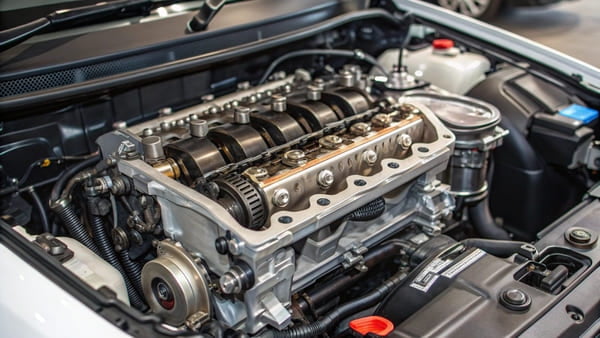
It might sound like a lot of parts, but their jobs are quite specific. Once you see how they fit together, it all makes sense. To really get it, we need to start with the foundation of the entire system. Let's begin with the single largest piece.
What Is an Engine Block and Why Is It the Foundation of an Engine?
People talk about the engine block, but many do not know its true function. This lack of knowledge makes it hard to judge engine quality. Let's explore its role.
The engine block is a solid piece of metal that houses the cylinders and other major moving parts. It is the foundation because it provides the structural framework, holds everything together, and manages heat and fluids, ensuring the engine operates as a single, strong unit.2
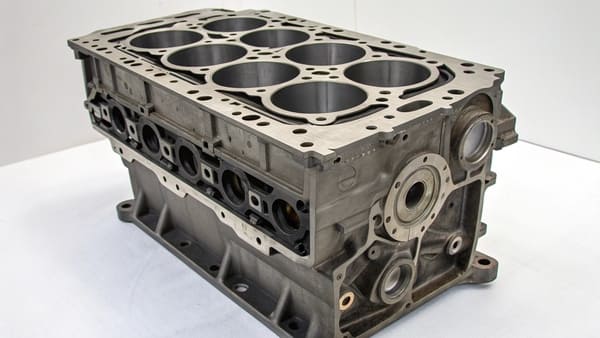
The engine block is the main body of the engine. Think of it as the skeleton and torso combined. It contains the cylinders where the pistons travel up and down, passages for coolant to flow, and channels for oil to lubricate moving parts. Its strength is everything. It has to withstand the immense heat and pressure from thousands of explosions per minute without warping or cracking.
The Core Structure
The primary job of the block is to hold the cylinders in a perfect alignment. Inside these cylinders, all the action happens. The block also contains the crankshaft bearings, which support the crankshaft as it spins. Everything bolts to the block, from the cylinder head on top to the oil pan at the bottom.
Material and Manufacturing
Engine blocks are typically made from cast iron or an aluminum alloy. Each has its pros and cons.3
| Material | Advantages | Disadvantages |
|---|---|---|
| Cast Iron | Very strong, durable, good at dampening vibrations. | Very heavy, takes longer to warm up and cool down. |
| Aluminum Alloy | Lightweight (improves fuel economy), dissipates heat quickly. | Less strong than iron, can be more expensive. |
The Challenge of Modern Components
Speaking of manufacturing, it reminds me of the challenges with modern engine components. While the block itself is metal, many attached parts are now high-precision plastic. The manufacturing difficulty for these plastic parts is extremely high. Standard injection molding machines cannot meet the required precision. When we make these parts, it involves at least three steps, with cooling being the most difficult.4 I remember my first time working on a project for a Pakistani client. We had no experience with this specific part, and after cooling, the plastic components showed some "shrinkage." I was worried, but the client actually preferred the result. We learned a valuable lesson that day and have not made a mistake since. This precision work, especially managing the cooling process and even adding color pigments—which requires stopping the machine and opening the mold—is something only specialized factories, like those near the coast in Fujian or around Shanghai, can really handle.5
What Does a Cylinder Head Do in a Car Engine?
You see the cylinder head bolted on top of the engine block. It looks like a simple cover, but its role is far more complex and vital for performance.
The cylinder head sits atop the engine block, sealing the cylinders to form combustion chambers. It houses the valves, spark plugs, and camshafts, controlling the engine's air/fuel intake and exhaust flow. Basically, it manages the engine's breathing and ignition.6
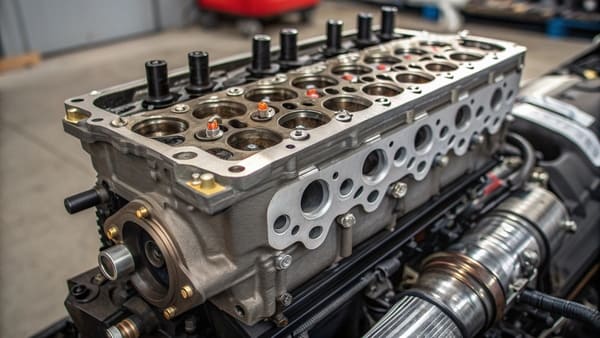
If the engine block is the bottom half of the engine, the cylinder head is the top half. The two pieces are bolted together with a special head gasket in between to create a perfect seal. This seal is very important because it has to contain the explosive force of combustion. The cylinder head is often called the "brain" of the engine because it controls when and how the air-fuel mixture gets in and when the exhaust gases get out.7 Its design has a huge impact on how much power and efficiency an engine has. A well-designed head allows the engine to breathe easily, which leads to better performance.8
Sealing the Combustion Chamber
The bottom surface of the cylinder head is perfectly flat to match the top of the engine block. This creates the top of the combustion chamber, which is the small space where the air and fuel are ignited.
Controlling Airflow
The head has intricate passages, called ports, that lead to each cylinder. There is an intake port to let the air-fuel mixture in and an exhaust port to let the burned gases out. The size and shape of these ports are critical for engine performance.
Housing Critical Components
The cylinder head is a busy place. It holds several key parts that must work together perfectly.
| Component | Function |
|---|---|
| Valves | Small doors that open and close to control the flow of air/fuel into the cylinder and exhaust out of it. |
| Spark Plugs | Creates the electric spark that ignites the air-fuel mixture. |
| Camshaft(s) | A rotating shaft with lobes that push open the valves at the correct time. |
| Fuel Injectors | Sprays fuel directly into the combustion chamber or intake port (depending on the engine design). |
How Do Pistons Convert Fuel Into Engine Power?
Pistons go up and down inside the engine. But how does that simple movement actually turn the wheels of a car? It is where the real magic happens.
Pistons convert fuel into power through the four-stroke cycle. The downward force from the controlled explosion of the air-fuel mixture pushes the piston down. This linear motion is transferred through a connecting rod to the crankshaft, converting it into rotational motion that powers the car.
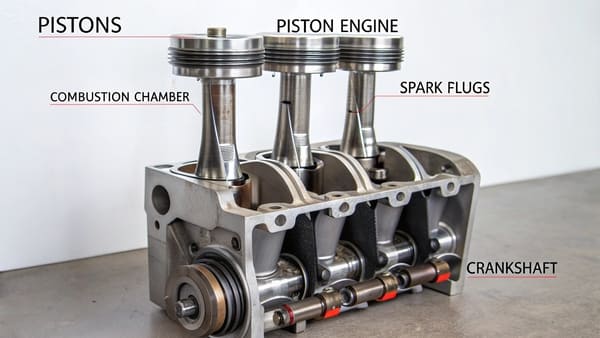
The piston is a cylindrical piece of metal that moves up and down inside the engine's cylinder. It might seem simple, but it is at the very center of the power-creation process. The top surface of the piston is what gets pushed on by the force of the burning fuel. This single push, multiplied across all the engine's cylinders and happening thousands of times per minute, is what generates all the engine's power. The piston must be strong enough to handle incredible heat and pressure, yet light enough to move up and down very quickly without wasting energy.9
The Piston's Role in the Four Strokes
The piston's movement is the key to the four-stroke cycle, which is how most car engines work.10
| Stroke | Piston Movement | What Happens |
|---|---|---|
| 1. Intake | Moves down | The intake valve opens, and the piston pulls a mix of air and fuel into the cylinder. |
| 2. Compression | Moves up | Both valves close, and the piston squeezes the air-fuel mixture, making it more combustible. |
| 3. Power | Pushed down | The spark plug ignites the mixture, and the explosion forces the piston down with great power. |
| 4. Exhaust | Moves up | The exhaust valve opens, and the piston pushes the burned gases out of the cylinder. |
From Linear to Rotary Motion
The piston only moves up and down (linear motion). To power a car, we need spinning motion (rotary motion). This conversion is done by the connecting rod and the crankshaft. The piston is attached to the connecting rod, which is then attached to the crankshaft. When the piston is pushed down, the connecting rod pushes on the crankshaft, causing it to spin, much like how your leg pushes on a bicycle pedal to make the wheels turn.
Piston Design and Materials
Pistons are usually made from aluminum alloys for their light weight and ability to handle heat.11 They also have grooves cut into their sides to hold piston rings. These rings are very important. They press against the cylinder wall to create a tight seal, which stops combustion gases from leaking past the piston and prevents oil from getting into the combustion chamber.12
Conclusion
The engine block, cylinder head, and pistons work together in a precise sequence. Understanding these core parts helps you appreciate the engineering that powers every drive.
"Component parts of internal combustion engines - Wikipedia", https://en.wikipedia.org/wiki/Component_parts_of_internal_combustion_engines. A standard overview of internal combustion engine design identifies the engine block, cylinder head, pistons, crankshaft, and camshaft as the primary components responsible for converting fuel into mechanical power through controlled combustion. Evidence role: definition; source type: encyclopedia. Supports: The main parts of a car engine are the engine block, cylinder head, pistons, crankshaft, and camshaft. Together, they create a controlled explosion to turn fuel into the power that moves your vehicle. They form the core of the internal combustion process.. Scope note: This overview applies to typical four-stroke internal combustion engines and may not cover all engine types. ↩
"Engine block - Wikipedia", https://en.wikipedia.org/wiki/Engine_block. Technical references describe the engine block as the main structural component of an engine, housing the cylinders and providing passages for coolant and oil. Evidence role: definition; source type: encyclopedia. Supports: The engine block is a solid piece of metal that houses the cylinders and other major moving parts. It is the foundation because it provides the structural framework, holds everything together, and manages heat and fluids, ensuring the engine operates as a single, strong unit.. Scope note: Descriptions may vary for different engine designs, but the general function is consistent. ↩
"Engine block", https://en.wikipedia.org/wiki/Engine_block. Engineering sources note that cast iron and aluminum alloys are the most common materials for engine blocks, each offering distinct advantages and disadvantages in terms of strength, weight, and thermal properties. Evidence role: expert_consensus; source type: education. Supports: Engine blocks are typically made from cast iron or an aluminum alloy. Each has its pros and cons.. Scope note: Material choices may differ for specialized engines or performance applications. ↩
"Challenges and Opportunities for Injection Molding in the ... - iMFLUX", https://www.imflux.com/challenges-and-opportunities-for-injection-molding-in-the-automotive-industry/. Manufacturing literature explains that high-precision plastic automotive components often require specialized injection molding processes, with cooling and dimensional stability being significant challenges. Evidence role: mechanism; source type: research. Supports: Standard injection molding machines cannot meet the required precision. When we make these parts, it involves at least three steps, with cooling being the most difficult.. Scope note: Specific process details may vary by part and manufacturer. ↩
"Automotive industry in China - Wikipedia", https://en.wikipedia.org/wiki/Automotive_industry_in_China. Industry reports indicate that regions such as coastal Fujian and Shanghai are known for advanced manufacturing capabilities, including high-precision plastic component production for automotive applications. Evidence role: case_reference; source type: institution. Supports: only specialized factories, like those near the coast in Fujian or around Shanghai, can really handle.. Scope note: This is a regional observation and may not represent all global manufacturing centers. ↩
"Cylinder head - Wikipedia", https://en.wikipedia.org/wiki/Cylinder_head. Automotive engineering textbooks describe the cylinder head as the component that seals the top of the cylinders, forms the combustion chamber, and houses valves, spark plugs, and sometimes camshafts, thus controlling intake, exhaust, and ignition. Evidence role: definition; source type: education. Supports: The cylinder head sits atop the engine block, sealing the cylinders to form combustion chambers. It houses the valves, spark plugs, and camshafts, controlling the engine's air/fuel intake and exhaust flow. Basically, it manages the engine's breathing and ignition.. Scope note: Some engines have camshafts located in the block rather than the head. ↩
"Cylinder head - Wikipedia", https://en.wikipedia.org/wiki/Cylinder_head. Some automotive sources refer to the cylinder head as the 'brain' of the engine due to its role in managing airflow and combustion timing. Evidence role: general_support; source type: education. Supports: The cylinder head is often called the 'brain' of the engine because it controls when and how the air-fuel mixture gets in and when the exhaust gases get out.. Scope note: The term 'brain' is metaphorical and not a technical designation. ↩
"Cylinder head porting - Wikipedia", https://en.wikipedia.org/wiki/Cylinder_head_porting. Engineering analyses show that cylinder head design, particularly port shape and valve arrangement, significantly affects engine airflow and performance. Evidence role: mechanism; source type: paper. Supports: A well-designed head allows the engine to breathe easily, which leads to better performance.. Scope note: Performance gains depend on overall engine design and tuning. ↩
"Piston Design", http://courses.washington.edu/engr100/Section_Wei/engine/UofWindsorManual/Piston%20Design.htm. Materials engineering sources note that pistons are designed to withstand high temperatures and pressures while minimizing mass to reduce inertia and energy loss. Evidence role: mechanism; source type: education. Supports: The piston must be strong enough to handle incredible heat and pressure, yet light enough to move up and down very quickly without wasting energy.. Scope note: Exact material requirements may vary by engine type and application. ↩
"Four-stroke engine - Wikipedia", https://en.wikipedia.org/wiki/Four-stroke_engine. Standard engineering texts explain that the four-stroke cycle—intake, compression, power, and exhaust—is driven by the piston's movement in most car engines. Evidence role: definition; source type: education. Supports: The piston's movement is the key to the four-stroke cycle, which is how most car engines work.. Scope note: Some engines use different cycles, such as two-stroke designs. ↩
"Hypereutectic piston - Wikipedia", https://en.wikipedia.org/wiki/Hypereutectic_piston. Automotive engineering references state that aluminum alloys are commonly used for pistons due to their favorable strength-to-weight ratio and thermal conductivity. Evidence role: expert_consensus; source type: education. Supports: Pistons are usually made from aluminum alloys for their light weight and ability to handle heat.. Scope note: Some high-performance or heavy-duty engines may use alternative materials. ↩
"Piston ring - Wikipedia", https://en.wikipedia.org/wiki/Piston_ring. Technical manuals explain that piston rings maintain a seal between the piston and cylinder wall, preventing gas leakage and oil ingress into the combustion chamber. Evidence role: mechanism; source type: education. Supports: These rings are very important. They press against the cylinder wall to create a tight seal, which stops combustion gases from leaking past the piston and prevents oil from getting into the combustion chamber.. Scope note: Ring design and function may vary by engine type. ↩