-Your car isn't stopping like it used to, and you know ignoring it is dangerous. Choosing the right brake pads and a reliable manufacturer is the key to safe driving.
The "best" brake pads depend on your vehicle, your driving habits, and your budget. Choosing a good manufacturer means looking at their quality control, material expertise, and production capabilities. It's about finding a partner who understands every detail, ensuring your safety on the road.
Finding the right parts for your car can feel overwhelming. There are so many options and technical terms. But it doesn't have to be complicated. The first step is to understand the basics of what you're looking for. Once you know what brake pads do and what they're made of, you can make a much more confident choice. Let's break it down so you can find the perfect fit for your vehicle and a manufacturing partner you can trust.
What Are Brake Pads and Why Are They Important?
You hear a squealing noise every time you hit the brakes. Ignoring it can lead to bigger problems and more expensive repairs. Understanding what brake pads do is the first step.
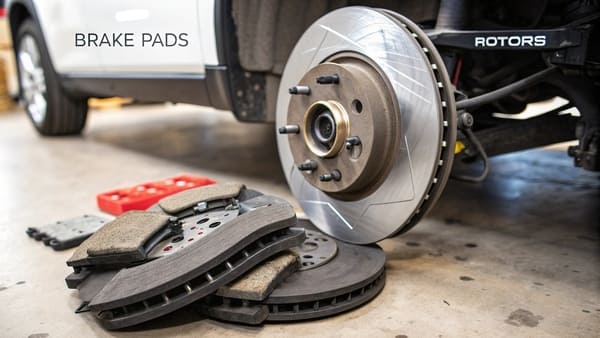
Brake pads are the parts in your braking system that apply pressure and friction to the brake rotors. They are absolutely critical for safety because they are directly responsible for slowing and stopping your car.1
Think of your car's braking system like a bicycle's hand brakes. When you squeeze the brake lever on a bike, two rubber pads press against the wheel's rim, creating friction that slows you down. A car's system is similar but much more powerful. When you press the brake pedal, a part called a caliper squeezes the brake pads against a spinning metal disc called a rotor. This friction converts the car's kinetic energy into heat, bringing the vehicle to a stop. Because they work through friction, brake pads are designed to wear down over time. They are a consumable part, just like the tires on your car or the oil in your engine.2 Ignoring worn brake pads is not just risky; it can cause damage to your rotors and calipers, leading to a much more expensive repair bill.3 As a manufacturer, we see this all the time. A simple brake pad replacement can turn into a full brake system overhaul if neglected. That's why checking them regularly is so important for your safety and your wallet.
Key Signs of Worn Brake Pads
| Sign | Description |
|---|---|
| Squealing or Screeching | A high-pitched noise caused by a built-in metal wear indicator.4 |
| Grinding Noise | A deep, harsh sound indicating the pads are completely worn away.5 |
| Vibration in Pedal | A pulsing or vibrating feeling when you press the brake pedal. |
| Longer Stopping Distance | The car takes more time and distance to come to a complete stop. |
| Brake Warning Light | A light on your dashboard tells you it's time for an inspection. |
What Types of Brake Pads Are Available?
You look online and see terms like "organic," "ceramic," and "semi-metallic." Choosing the wrong one can mean poor performance, loud noises, or a lot of messy dust on your wheels.
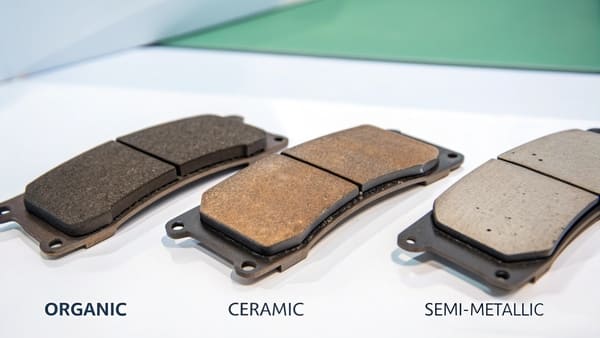
The three main types of brake pads are organic, ceramic, and semi-metallic.6 Organic pads are quiet and affordable. Ceramic pads offer excellent, clean performance. Semi-metallic pads are durable and great for heavy-duty use.7
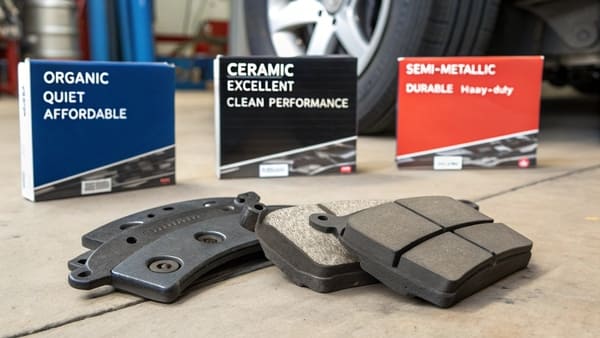
Each type of brake pad is made from a different mix of materials, which gives it unique characteristics. There isn't one "best" type; the right choice depends on the vehicle and how it's used. As a supplier, we help our B2B clients select the right formulations for their target markets, whether they are selling to daily commuters or performance enthusiasts. Understanding the pros and cons of each will help you decide what's best for your product line or your own car. Let's look at the main categories you'll find on the market today.
A Quick Comparison
- Organic (NAO - Non-Asbestos Organic): These are made from a mix of materials like glass, fiber, and rubber, all held together with resin.
- Pros: They are very quiet and produce less dust. They are also gentle on brake rotors and are usually the cheapest option.8
- Cons: They wear out faster than other types and don't perform as well under high heat, so they aren't ideal for aggressive driving or heavy vehicles.
- Semi-Metallic: These pads contain between 30% and 70% metal, including materials like steel, iron, and copper.
- Pros: They are very durable and provide excellent braking performance because the metal content helps dissipate heat quickly. They are a great choice for trucks, SUVs, and performance cars.
- Cons: They can be noisier and produce more brake dust than other types. They are also harder on the brake rotors, causing them to wear out more quickly.9
- Ceramic: These are made from a dense ceramic material with embedded copper fibers.
- Pros: They are extremely quiet, produce a very fine, light-colored dust that doesn't stick to wheels, and last a very long time. They also offer consistent performance across a wide range of temperatures.10
- Cons: They are typically the most expensive option.
Which Brake Pad Material Is Best for Your Vehicle?
You know the types, but you're still not sure which one to pick. Making the wrong choice could mean you've wasted money on performance you don't need or ended up with poor braking.
For daily commuting in a standard car, organic or ceramic pads are great. For trucks, performance cars, or if you tow a trailer, semi-metallic pads are often the better choice.11 It's about balancing your needs.
Choosing the right friction material is important, but it's only half the story. The overall quality of a brake pad comes from how it's made and the quality of all its components, even the small plastic accessory parts. This is where choosing the right manufacturer becomes so critical. From my experience in OEM manufacturing, producing these small plastic accessory components is incredibly difficult. Standard injection molding machines just can't achieve the precision needed. A proper production process requires at least three stages, and the cooling stage is by far the most challenging. The machines capable of this precision are usually found in the coastal areas of China, like Fujian or near Shanghai. Machines from other regions, like Hebei, typically can't meet the tight tolerances required.12
Another difficulty is adding color. When we need to add color powder for a custom order, the machine has to stop. We have to open the mold to add the powder, which completely disrupts the cooling process and makes it even harder to manage. I remember the first time I worked on a project like this with a client from Pakistan. We were still learning, and the plastic accessory parts "shrank" more than we expected after cooling. I was worried, but the client actually loved the result; the slightly smaller size fit their application perfectly. We got lucky, but we learned a valuable lesson. We perfected our cooling process after that and have never had an issue since. It’s this kind of deep, hands-on experience that separates a good manufacturer from a great one. They understand that every detail, down to the smallest plastic clip, affects the final product's quality and safety.
Conclusion
Choosing the right brake pads means understanding your vehicle's needs, knowing the material types, and picking a manufacturer who masters every detail, from the friction material to the smallest plastic accessory.
"[PDF] Technical Service Bulletin - nhtsa", https://static.nhtsa.gov/odi/tsbs/2024/MC-11009357-0001.pdf. According to the National Highway Traffic Safety Administration (NHTSA), brake pads are essential components of a vehicle's braking system, providing the friction necessary to slow and stop the vehicle by pressing against the brake rotors. Evidence role: mechanism; source type: government. Supports: Brake pads are critical for safety because they are directly responsible for slowing and stopping your car.. ↩
"Brake pad - Wikipedia", https://en.wikipedia.org/wiki/Brake_pad. Automotive engineering references, such as those from SAE International, explain that brake pads are consumable components intended to wear down gradually due to friction during braking. Evidence role: mechanism; source type: education. Supports: Brake pads are designed to wear down over time as a consumable part.. Scope note: This explanation is general and may not account for all vehicle designs. ↩
"What happens if you don't replace your brake pads for a really long ...", https://www.reddit.com/r/MechanicAdvice/comments/qjztrc/what_happens_if_you_dont_replace_your_brake_pads/. Automotive maintenance guides from the Car Care Council note that neglecting worn brake pads can result in damage to rotors and calipers, increasing repair costs. Evidence role: mechanism; source type: institution. Supports: Ignoring worn brake pads can cause damage to rotors and calipers, leading to higher repair costs.. Scope note: The extent of damage may vary depending on vehicle and usage. ↩
"Brake Wear/ Indicator Noise- Scraping Sound (Acura TSX) - YouTube", https://www.youtube.com/watch?v=6yXFWUmi7FM. According to automotive repair manuals and the National Institute for Automotive Service Excellence (ASE), many brake pads include a metal wear indicator that emits a high-pitched squeal when the pads are worn. Evidence role: mechanism; source type: education. Supports: A high-pitched noise when braking is often caused by a built-in metal wear indicator.. Scope note: Not all brake pads have wear indicators; some may use electronic sensors or none at all. ↩
"Scraping noise from brakes - but the pads look fine? : r/AskMechanics", https://www.reddit.com/r/AskMechanics/comments/12yyqyh/scraping_noise_from_brakes_but_the_pads_look_fine/. Automotive service organizations explain that a grinding noise during braking typically indicates that the brake pad material is worn away, causing metal-to-metal contact. Evidence role: mechanism; source type: institution. Supports: A deep, harsh sound when braking can indicate that brake pads are completely worn away.. Scope note: Other issues can also cause grinding noises, so diagnosis should be confirmed by inspection. ↩
"Disc brake - Wikipedia", https://en.wikipedia.org/wiki/Disc_brake. Encyclopedic sources such as Wikipedia and automotive engineering textbooks classify brake pads into three main types: organic, ceramic, and semi-metallic, based on their material composition. Evidence role: definition; source type: encyclopedia. Supports: The three main types of brake pads are organic, ceramic, and semi-metallic.. Scope note: Some specialty pads exist, but these are the primary categories for passenger vehicles. ↩
"What's the Difference Between Ceramic & Metallic Brake Pads?", https://tires.bridgestone.com/en-us/learn/automotive/tire-maintenance/ceramic-vs-metallic-brake-pads. Automotive engineering guides and consumer reports summarize that organic pads are generally quieter and less expensive, ceramic pads provide clean and consistent performance, and semi-metallic pads are durable and suitable for heavy-duty applications. Evidence role: general_support; source type: education. Supports: Organic pads are quiet and affordable; ceramic pads offer clean performance; semi-metallic pads are durable and good for heavy-duty use.. Scope note: Performance characteristics can vary by manufacturer and specific formulation. ↩
"Pros & Cons Of Ceramic, Organic & Metallic Brake Pads - Minit-Tune", https://minit-tune.com/blog/the-pros-and-cons-of-ceramic-organic-and-metallic-brake-pads/. Consumer automotive resources and engineering texts note that organic brake pads are typically quieter, produce less dust, are gentle on rotors, and are often less expensive than other types. Evidence role: general_support; source type: education. Supports: Organic brake pads are quiet, produce less dust, are gentle on rotors, and are usually the cheapest option.. Scope note: Actual performance may vary depending on brand and vehicle application. ↩
"Brake Pads: Semi-Metallic vs Ceramic? : r/MechanicAdvice - Reddit", https://www.reddit.com/r/MechanicAdvice/comments/vx34w3/brake_pads_semimetallic_vs_ceramic/. Automotive engineering sources report that semi-metallic brake pads tend to be noisier, produce more dust, and can cause increased rotor wear compared to organic or ceramic pads. Evidence role: general_support; source type: education. Supports: Semi-metallic brake pads can be noisier, produce more dust, and are harder on rotors.. Scope note: The degree of noise and wear depends on specific formulations and vehicle use. ↩
"The Pros and Cons of Ceramic Brake Pads - ADVICS", https://www.advicsaftermarket.com/technical-resources/tech-tips/pros-and-cons-of-ceramic-brake-pads/. Automotive consumer guides and engineering references state that ceramic brake pads are known for quiet operation, minimal and light-colored dust, long lifespan, and consistent performance across temperature ranges. Evidence role: general_support; source type: education. Supports: Ceramic brake pads are quiet, produce fine dust, last long, and perform consistently across temperatures.. Scope note: Performance may vary by manufacturer and driving conditions. ↩
"Which brake pads to choose? : r/MechanicAdvice - Reddit", https://www.reddit.com/r/MechanicAdvice/comments/14n1l8u/which_brake_pads_to_choose/. Automotive maintenance guides and consumer reports recommend organic or ceramic pads for typical passenger vehicles and semi-metallic pads for trucks, performance vehicles, or towing applications due to their durability and heat resistance. Evidence role: expert_consensus; source type: education. Supports: Organic or ceramic pads are suitable for daily commuting; semi-metallic pads are better for trucks, performance cars, or towing.. Scope note: Recommendations may vary based on specific vehicle requirements and driving conditions. ↩
"[PDF] China's Manufacturing Innovation Centers", https://nvlpubs.nist.gov/nistpubs/ams/NIST.AMS.600-17.pdf. Industry reports on Chinese manufacturing note that advanced injection molding and precision manufacturing capabilities are concentrated in coastal regions such as Fujian and Shanghai, while inland regions may have less access to high-precision equipment. Evidence role: historical_context; source type: research. Supports: Precision manufacturing for brake pad accessory parts is more common in coastal regions of China, such as Fujian and Shanghai.. Scope note: There are exceptions, and capabilities can change over time as technology spreads. ↩