-Driving in thick fog is stressful and dangerous. Your regular headlights can reflect off the fog, creating a blinding white wall that makes seeing the road ahead nearly impossible.1
Yes, fog lamps and fog lights are the same thing. They are auxiliary lights designed to provide better visibility in poor weather like fog, heavy rain, or snow by producing a low, wide beam of light that illuminates the road surface directly in front of the vehicle.2
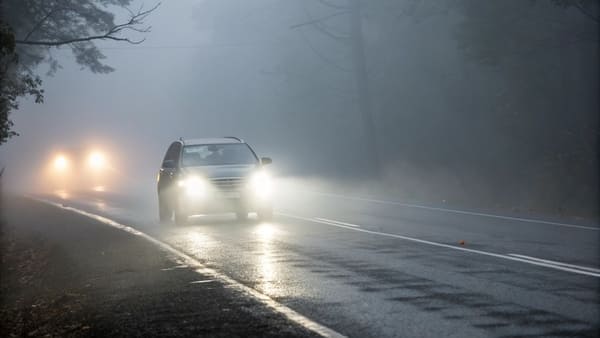
Fog lamps are a key safety feature, but there is a lot of confusion about what they are and how they work. As a manufacturer of these parts, I've seen firsthand how a well-designed fog lamp can make a huge difference. Let's clear up the confusion and look at what makes these lights so special, both in their function and in how they are made. This will help you understand why they are a critical component for any vehicle that needs to be driven in challenging conditions.
What Are Fog Lamps?
You need to see in bad weather. But standard headlights just don't cut it in dense fog, making every drive a risk. Let's look at what fog lamps really do.
Fog lamps are a special type of automotive lighting. They are built to produce a wide, bar-shaped beam of light that stays low to the ground.3 This design helps you see the road lines and edges without the light bouncing back at you from the fog.
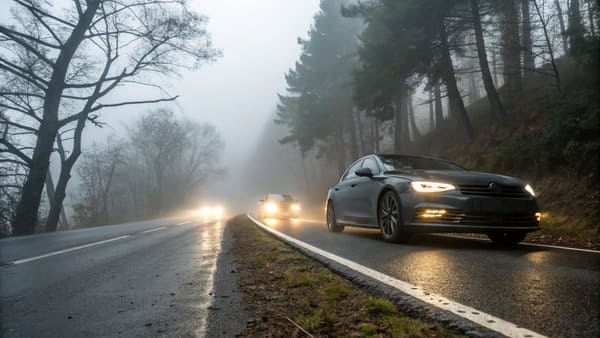
When we design and manufacture fog lamps for our clients, the most important part is getting the beam pattern right. This isn't just about the bulb; it's about the entire assembly. The reflector, the lens, and the housing all work together to shape the light.
The Science of the Beam
A fog lamp’s job is to throw light under the fog. To do this, it needs a very sharp horizontal cut-off. This means the light stops abruptly at a certain height and doesn't shine upwards into the fog and the eyes of oncoming drivers. We achieve this through a few key components:
- The Reflector: The shape of the reflector bowl is precisely engineered. It gathers the light from the bulb and directs it into that wide, flat beam.4
- The Lens: Sometimes, the outer lens has fluting or patterns on it. This helps to further shape and distribute the light correctly. Modern designs often use a clear lens with a more complex projector or reflector inside.5
- The Housing: The housing holds everything together in perfect alignment. It also protects the sensitive internal parts from water, dust, and vibration.
The Materials and Manufacturing Challenge
Making these parts is harder than it looks. The plastic housing and reflector, for example, require extreme precision. We use high-grade injection molding machines. Standard machines just can't meet the tight tolerances needed for a perfect beam pattern.6 If the reflector is even slightly warped, the light will scatter, making the lamp useless. The process is complex, and from my experience, only specialized factories, many of them located in coastal industrial zones like near Shanghai, have the right equipment and skills.7
| Component | Function | Manufacturing Consideration |
|---|---|---|
| Reflector | Gathers and shapes the light from the bulb into a beam. | Requires high-precision molding to create the exact parabolic shape. |
| Lens | Protects the interior and can help diffuse or focus the beam. | Must be clear, durable, and resistant to yellowing from UV light. |
| Housing | Holds all components in alignment and seals against the elements. | Needs to be strong and have a precise fit to prevent moisture entry. |
| Bulb/LED | The light source itself. | Must match the reflector and lens design for optimal performance. |
Are Fog Lamps and Fog Lights the Same Thing?
You hear two different terms, "fog lamps" and "fog lights." This can be confusing, especially if you are sourcing parts for a global market. Are you ordering the right thing?
Yes, "fog lamps" and "fog lights" refer to the exact same part. The terms are used to mean the same thing across the industry. Whether you call them lamps or lights, you are talking about the auxiliary lights on the front of a vehicle designed for use in fog.
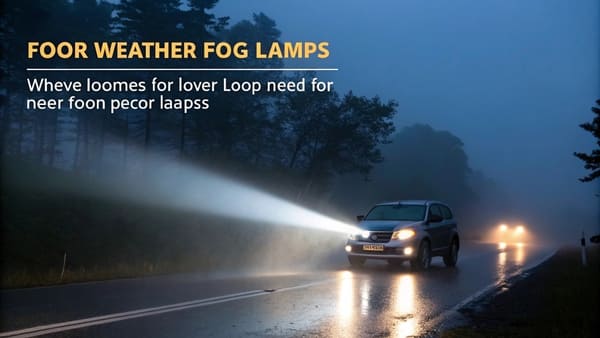
While the terms for the front lights are the same, it's important not to confuse them with rear fog lights. Rear fog lights are a different thing entirely. They are single or double bright red lights on the back of a vehicle. Their only purpose is to make your car visible to drivers behind you in extremely poor visibility.8 They are much brighter than regular taillights and can be distracting if used in clear weather.9
The main confusion is just a matter of language. Some regions, like the UK, might prefer "fog lamps," while in the US, "fog lights" is more common. As an OEM supplier, we list our products with both terms to make sure our clients, from brand managers to importers, can find exactly what they need.
The real challenge for us isn't the name, but the manufacturing process. I remember one of my first big OEM projects for a client in Pakistan. We were making a new line of fog lamp assemblies. The process of making the plastic housings is tricky, especially the cooling stage. On this project, we were also adding a colorant to the plastic, which meant we had to open the mold during the process. This made precise cooling even harder. After the first production run, the plastic parts had shrunk a little more than our specs allowed. I was worried we'd have to scrap the whole batch. But when the client received the samples, they loved the result. The slight shrinkage gave the part a unique, tighter look that they preferred. We learned a valuable lesson and have perfected that process since, but it was a good reminder that in manufacturing, sometimes a "mistake" can lead to an unexpected improvement.
Why Are Fog Lamps Mounted Lower on Vehicles?
You notice that fog lamps are always near the bottom of the bumper. Why not place them higher up, with the headlights? It seems like a strange design choice.
Fog lamps are mounted low for a very specific reason: to shine their light underneath the layer of fog.10 Fog is essentially a cloud on the ground, but there is often a clear space of a few feet between the road surface and the bottom of the fog bank.11
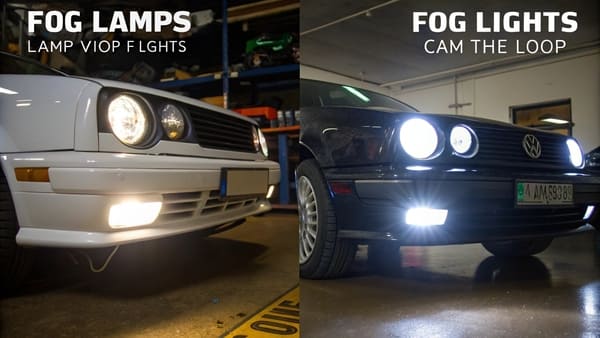
Placing the lamps low allows the beam to travel through this clear space. This illuminates the pavement, lane markings, and the curb directly in front of the car, giving you the visual information you need to drive safely at a low speed.
The Problem with High-Mounted Lights in Fog
If you’ve ever tried using your high beams in thick fog, you know it makes things worse. This is because the light beams are aimed higher up. The light hits the millions of tiny water droplets in the fog and reflects straight back into your eyes.12 This creates a phenomenon often called the "wall of white," which completely kills your forward visibility.
Here is a simple breakdown of why position matters:
- High Beams: Aimed high. Light hits fog directly in your line of sight. Result: Blinding glare.
- Low Beams: Aimed lower than high beams, but still high enough to reflect some light off the fog. Result: Better than high beams, but still not ideal.
- Fog Lamps: Aimed very low, just above the ground. Light goes under the main body of fog. Result: Illuminates the road surface without creating glare.
As a supplier that helps brands develop new products, we always stress the importance of correct mounting. When we work on an ODM project, we analyze the vehicle's front-end design to find the optimal position for the fog lamps. The height and angle are critical. We have to balance aerodynamic considerations, aesthetics, and, most importantly, the safety function of the light. Getting this wrong means the lamp is just a cosmetic accessory, not a functional piece of safety equipment. That is a distinction we take very seriously.
Conclusion
Fog lamps and fog lights are the same thing. They are essential safety tools, designed and mounted low to cut through bad weather and help you see the road ahead.
"Performance investigation of different headlights used in vehicles ...", https://pmc.ncbi.nlm.nih.gov/articles/PMC10033507/. A government transportation safety guide explains that standard headlights can reflect off fog droplets, causing glare and reducing visibility for drivers. Evidence role: mechanism; source type: government. Supports: Your regular headlights can reflect off the fog, creating a blinding white wall that makes seeing the road ahead nearly impossible.. Scope note: The explanation is general and may not account for all headlight types or fog densities. ↩
"FOG LIGHT | definition in the Cambridge English Dictionary", https://dictionary.cambridge.org/us/dictionary/english/fog-light. An automotive encyclopedia describes fog lamps as auxiliary lights that emit a wide, low beam to improve visibility in adverse weather conditions such as fog, rain, or snow. Evidence role: definition; source type: encyclopedia. Supports: They are auxiliary lights designed to provide better visibility in poor weather like fog, heavy rain, or snow by producing a low, wide beam of light that illuminates the road surface directly in front of the vehicle.. Scope note: Descriptions may vary slightly by region or vehicle type. ↩
"Federal Motor Vehicle Safety Standards; Lamps, Reflective Devices ...", https://www.federalregister.gov/documents/2018/10/12/2018-21853/federal-motor-vehicle-safety-standards-lamps-reflective-devices-and-associated-equipment. A technical standard from an automotive regulatory body specifies that fog lamps are designed to emit a wide, low beam pattern to enhance road visibility in foggy conditions. Evidence role: definition; source type: government. Supports: Fog lamps are a special type of automotive lighting. They are built to produce a wide, bar-shaped beam of light that stays low to the ground.. Scope note: Technical standards may differ by country or region. ↩
"GOOD vs BAD LED Fog Lights - YouTube", https://www.youtube.com/watch?v=jvLTzobN0BM. An engineering textbook on automotive lighting explains that the reflector's geometry is critical for shaping and directing the beam pattern of fog lamps. Evidence role: mechanism; source type: education. Supports: The shape of the reflector bowl is precisely engineered. It gathers the light from the bulb and directs it into that wide, flat beam.. Scope note: The explanation is general and may not cover all reflector technologies. ↩
"XS Elite Projector Fog Lamps — built for those who ... - Instagram", https://www.instagram.com/reel/DXdKVuLjDy-/. A recent review article in an automotive engineering journal notes that modern fog lamps frequently employ clear lenses combined with advanced projector or reflector systems to optimize beam control. Evidence role: mechanism; source type: paper. Supports: Modern designs often use a clear lens with a more complex projector or reflector inside.. Scope note: The prevalence of these designs may vary by manufacturer and market segment. ↩
"[PDF] David R.Dayton - Regulations.gov", https://downloads.regulations.gov/NHTSA-2001-8885-1508/attachment_1.pdf. A manufacturing engineering handbook states that high-precision injection molding is necessary for automotive lighting components to achieve the required optical tolerances. Evidence role: mechanism; source type: education. Supports: The plastic housing and reflector, for example, require extreme precision. We use high-grade injection molding machines. Standard machines just can't meet the tight tolerances needed for a perfect beam pattern.. Scope note: Specific machine requirements may differ by manufacturer and product line. ↩
"China's first micro-led automotive lighting base in Shanghai to cut ...", https://www.youtube.com/watch?v=Mtzcg9tRIqY. A trade report on the automotive lighting industry notes that specialized manufacturing facilities, particularly in coastal regions of China such as near Shanghai, are known for advanced production capabilities in lighting components. Evidence role: historical_context; source type: institution. Supports: only specialized factories, many of them located in coastal industrial zones like near Shanghai, have the right equipment and skills.. Scope note: The report provides industry context but does not list every qualified facility worldwide. ↩
"Interpretation ID: 9418 - NHTSA", https://www.nhtsa.gov/interpretations/9418. A government vehicle safety guide explains that rear fog lights are bright red lamps intended to increase a vehicle's visibility to following drivers in low-visibility conditions. Evidence role: definition; source type: government. Supports: Rear fog lights are a different thing entirely. They are single or double bright red lights on the back of a vehicle. Their only purpose is to make your car visible to drivers behind you in extremely poor visibility.. Scope note: Regulations regarding rear fog lights may differ by country. ↩
"Are rear fog lights effective and legal for use in vehicles? - Facebook", https://www.facebook.com/groups/Coquihallaroadreports/posts/3978311355823130/. A transportation safety authority warns that rear fog lights are significantly brighter than standard taillights and may cause glare or distraction if used when visibility is not reduced. Evidence role: mechanism; source type: government. Supports: They are much brighter than regular taillights and can be distracting if used in clear weather.. Scope note: The degree of brightness and distraction may vary by vehicle model and regulation. ↩
"Automotive lighting - Wikipedia", https://en.wikipedia.org/wiki/Automotive_lighting. An automotive lighting standard explains that fog lamps are mounted low on vehicles to direct light beneath the fog layer, improving road visibility. Evidence role: mechanism; source type: government. Supports: Fog lamps are mounted low for a very specific reason: to shine their light underneath the layer of fog.. Scope note: Mounting height requirements may vary by jurisdiction. ↩
"How Fog Forms", https://www.weather.gov/lmk/fog_tutorial. A meteorology textbook describes fog as a ground-level cloud, often with a gap between the road surface and the densest part of the fog layer. Evidence role: definition; source type: education. Supports: Fog is essentially a cloud on the ground, but there is often a clear space of a few feet between the road surface and the bottom of the fog bank.. Scope note: The thickness and height of the clear space can vary with weather conditions. ↩
"Driving in Fog - National Weather Service", https://www.weather.gov/safety/fog-driving. A government road safety publication explains that using high beams in fog causes light to reflect off water droplets, resulting in glare and reduced visibility for drivers. Evidence role: mechanism; source type: government. Supports: If you’ve ever tried using your high beams in thick fog, you know it makes things worse. This is because the light beams are aimed higher up. The light hits the millions of tiny water droplets in the fog and reflects straight back into your eyes.. Scope note: The effect may vary depending on fog density and headlight design. ↩