-Struggling to tell which "classic" motorcycles are truly iconic? Many brands use the retro label, but only a few have the history to back it up, leaving you confused.
The best retro motorcycle brands include Triumph, Harley-Davidson, Royal Enfield, and Indian1. These brands are defined by their deep history, signature engine designs like V-twins and parallel-twins2, and timeless aesthetics that have influenced motorcycle culture for decades, blending heritage with modern reliability.
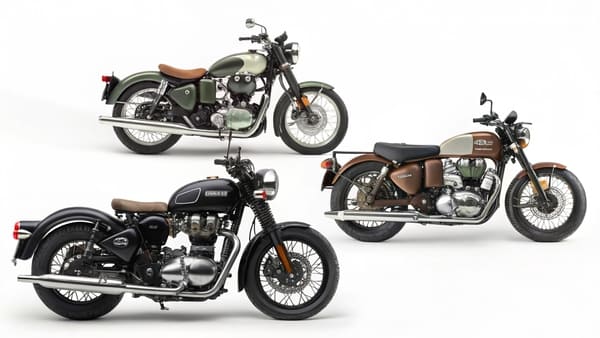
The appeal of a retro motorcycle goes far beyond just its looks. It's about a feeling, a connection to a simpler time, and the mechanical beauty of the machine itself. But what really separates a true icon from a modern imitation? It's a combination of history, engineering, and a story that resonates with riders.
As a manufacturer, I've seen firsthand how difficult it is to replicate that classic feel. It's not just about bolting on some spoked wheels. The real magic is in the details, and getting those details right is an art form. Let's explore what makes these brands legendary and why they continue to capture our imagination.
What Makes a Motorcycle Brand Retro and Iconic?
Ever wonder what "retro" really means in the motorcycle world? It's easy to get lost in marketing buzzwords, but the real thing is more than just a paint job.
A brand becomes retro and iconic through a mix of historical significance, a unique and consistent design language, and a lasting cultural impact3. It's about building machines that are so distinctive they become timeless, recognized and loved across generations of riders.
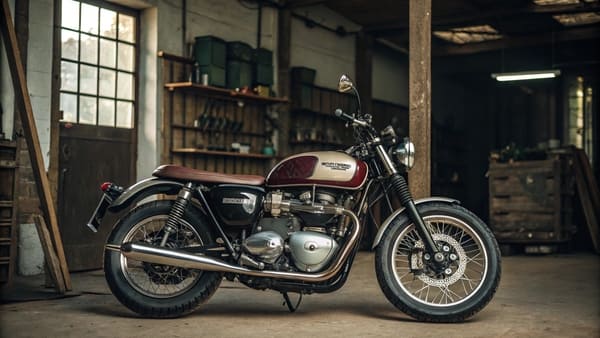
To truly understand what makes a motorcycle brand iconic, we need to look deeper than the surface. It's not just about being old. A truly "retro" bike often uses modern technology but wraps it in a design that honors its past. "Iconic" status is earned over decades, through racing championships, appearances in famous movies, or by becoming the symbol of a cultural movement. It’s about a design philosophy that doesn't chase trends. For us in manufacturing, recreating these classic lines and shapes is a serious challenge. The precise curves of a fuel tank or the specific finish on an engine case require incredible attention to detail to capture that authentic feel. It's a testament to the original designers that their work is still so difficult and rewarding to reproduce today.
| Characteristic | What It Really Means for a Motorcycle |
|---|---|
| Timeless Design | The bike has a silhouette that looks good in any decade, not just when it was new. |
| Signature Engine | The engine is not just for power; it's the heart of the bike's look and feel (e.g., a V-twin). |
| Rich Heritage | The brand has a long history with stories, racing wins, and a loyal following. |
| Cultural Impact | The motorcycles have been featured in movies, music, and subcultures, making them famous. |
Which Are the Best Retro Motorcycle Brands in History?
With so many manufacturers out there, who are the true legends? It can be tough to sort through the noise and find the brands that have genuinely shaped motorcycle history.
Historically, the best retro motorcycle brands include pioneers like Triumph, Harley-Davidson, Indian, and Royal Enfield. They are joined by Italian masters like Moto Guzzi and Ducati, and Japanese innovators like Honda and Kawasaki, who created their own classics4.
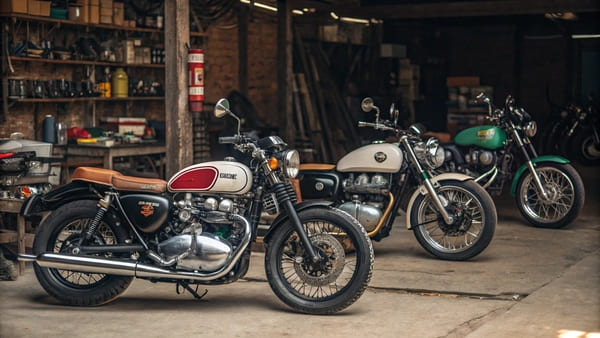
These brands didn't just build motorcycles; they built legacies. Each one has a unique story and a signature style that sets it apart. American brands like Harley-Davidson and Indian became famous for their big V-twin engines and laid-back cruiser style. The British, with Triumph, Norton, and BSA, dominated the world with their agile and stylish parallel-twin roadsters5. In Italy, Moto Guzzi created its quirky transverse V-twin, while Ducati became known for performance and racing passion. Later, the Japanese brands entered the scene and created their own legendary machines, like the Honda CB750 and the Kawasaki Z1, which became classics in their own right. These bikes are more than just machines; they represent a certain freedom and attitude. Below is a list of some of the brands that have defined timeless design over the years.
| Brand | Country of Origin | Signature Style | Famous Model Example |
|---|---|---|---|
| Triumph | United Kingdom | Parallel-twin, classic roadster | Bonneville |
| Harley-Davidson | USA | V-twin, cruiser | Sportster |
| Indian | USA | V-twin, cruiser/bagger | Scout |
| Royal Enfield | UK / India | Single-cylinder, classic | Bullet 350 |
| Moto Guzzi | Italy | Transverse V-twin | V7 |
| Ducati | Italy | L-twin, sport classic | Scrambler |
| BMW | Germany | Boxer twin | R nineT |
| Norton | United Kingdom | Parallel-twin, cafe racer | Commando |
| Kawasaki | Japan | Inline-four, UJM | Z900RS |
| Honda | Japan | Inline-four, UJM | CB1100 |
| Yamaha | Japan | Single/Parallel-twin | XSR900 |
| Husqvarna | Sweden | Modern-retro, scrambler | Svartpilen |
| BSA | United Kingdom | Single-cylinder, classic | Gold Star |
| MV Agusta | Italy | High-performance, art | Superveloce |
| Brough Superior | United Kingdom | Luxury, V-twin | SS100 |
Why Is Triumph Considered the King of Retro Motorcycles?
You hear the name Triumph everywhere in the modern classic scene, but why? It seems like they have a special formula that other brands struggle to match.
Triumph is considered the king of retro because it perfectly blends its rich heritage and iconic Bonneville design with modern performance and reliability. They've successfully created an entire range of bikes that feel genuinely classic yet work like brand-new machines.
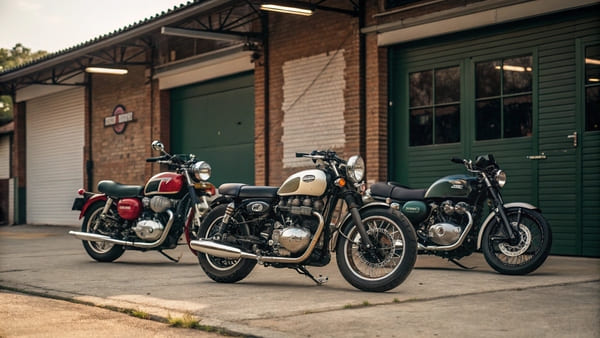
Triumph's success isn't an accident. They have a history that includes legends like Steve McQueen and Marlon Brando, which gives them real credibility. But instead of just resting on that history, they've used it as a foundation to build an entire family of modern classics, from the Bonneville and Thruxton to the Scrambler. They nail the aesthetics, especially the iconic parallel-twin engine and teardrop tank.
Speaking from a manufacturing perspective, getting those aesthetics right is extremely difficult, especially for plastic parts that need to look like classic metal. The precision required is immense. I learned this the hard way on a project making retro plastic fairings. Standard injection molding machines just aren't good enough. You need high-precision machines, the kind you typically find in the Fujian coastal area or around Shanghai. The cooling stage is the most difficult part. Adding color powder to the plastic is also a challenge because you have to stop the machine and open the mold, which makes uniform cooling even harder. On my first project for a client from Pakistan, the parts shrank more than we planned. I was worried, but he actually loved the slightly distorted, "aged" look it created! It was a lucky mistake, but it taught me how much precision goes into making something look authentically old. Triumph has clearly mastered this process.
Conclusion
From the heritage of iconic brands to the challenges of modern manufacturing, retro motorcycles are a fascinating blend of art and engineering. They connect us to history while delivering a timeless riding experience.
"The Complete Encyclopedia of Classic Motorcycles ...", https://www.amazon.com/Complete-Encyclopedia-Classic-Motorcycles/dp/903661497X. A variety of sources, including historical overviews and motorcycle encyclopedias, identify Triumph, Harley-Davidson, Royal Enfield, and Indian as brands with significant heritage and influence in the retro motorcycle segment. Evidence role: expert_consensus; source type: encyclopedia. Supports: The best retro motorcycle brands include Triumph, Harley-Davidson, Royal Enfield, and Indian.. Scope note: While these brands are widely recognized, the definition of 'best' is subjective and may vary by region or rider preference. ↩
"List of motorcycles by type of engine", https://en.wikipedia.org/wiki/List_of_motorcycles_by_type_of_engine. Technical and historical sources describe V-twin and parallel-twin engines as signature configurations for brands such as Harley-Davidson and Triumph, respectively, contributing to their distinctive identities. Evidence role: mechanism; source type: education. Supports: These brands are defined by their deep history, signature engine designs like V-twins and parallel-twins, and timeless aesthetics.. Scope note: Engine design preferences have evolved, and not all models from these brands use these configurations. ↩
"In your opinion what is the best brand? : r/motorcycle", https://www.reddit.com/r/motorcycle/comments/1iig3ar/in_your_opinion_what_is_the_best_brand/. Scholarly articles and motorcycle encyclopedias outline that historical significance, consistent design language, and cultural impact are key factors in a brand's iconic status. Evidence role: expert_consensus; source type: encyclopedia. Supports: A brand becomes retro and iconic through a mix of historical significance, a unique and consistent design language, and a lasting cultural impact.. Scope note: There is no universally accepted definition of 'retro and iconic,' but these criteria are commonly cited. ↩
"Moto Guzzi", https://en.wikipedia.org/wiki/Moto_Guzzi. Encyclopedic and historical sources recognize Moto Guzzi, Ducati, Honda, and Kawasaki as brands that have produced classic motorcycles with distinctive styles and significant influence. Evidence role: historical_context; source type: encyclopedia. Supports: Italian masters like Moto Guzzi and Ducati, and Japanese innovators like Honda and Kawasaki, who created their own classics.. Scope note: The classification of 'masters' and 'innovators' is interpretive, but these brands are widely acknowledged for their contributions. ↩
"1960s Japanese motorcycles dominated UK designs", https://www.facebook.com/groups/299719343510731/posts/2592803180868991/. Motorcycle history texts document that British brands such as Triumph, Norton, and BSA were known for their parallel-twin roadsters, which were popular and influential in the mid-20th century. Evidence role: historical_context; source type: encyclopedia. Supports: The British, with Triumph, Norton, and BSA, dominated the world with their agile and stylish parallel-twin roadsters.. Scope note: Dominance varied by market and era, but these brands were highly influential in the global motorcycle scene. ↩