-Feeling confused about Detroit's journey from an industrial giant to a city facing challenges? You are not alone. This is the complete story of its rise and fall.
Detroit became the world's automotive capital due to its location, resources, and innovators like Henry Ford. It later faced a decline because of foreign competition, economic recessions, and shifting manufacturing trends.1 The city's story is one of massive growth followed by a difficult adjustment.
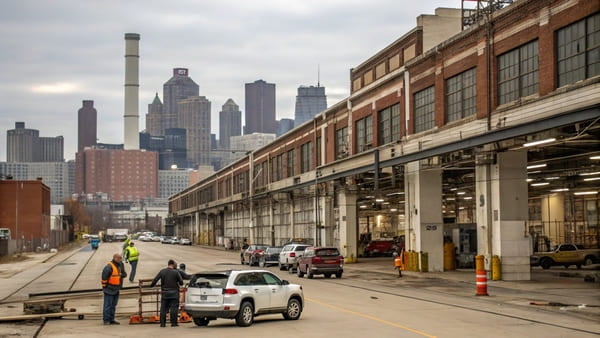
The story of Detroit is a powerful lesson for anyone in the manufacturing industry. We see the incredible heights innovation can reach and the challenges that come with global change. Understanding this history helps us navigate the automotive world today. It shows why quality, adaptation, and a deep knowledge of the manufacturing process are more important than ever. This history isn't just about one city; it's about the entire auto industry.
Why Did Detroit Become the Center of the American Car Industry?
Have you ever wondered why one specific city became the heart of an entire industry? It seems random, but for Detroit, it was a perfect storm of opportunity and resources.
Detroit's success was no accident. It had a unique combination of advantages. Its location on the Great Lakes provided easy transportation for raw materials and finished cars.2 It also had a strong base of skilled workers from other industries, ready for a new challenge.
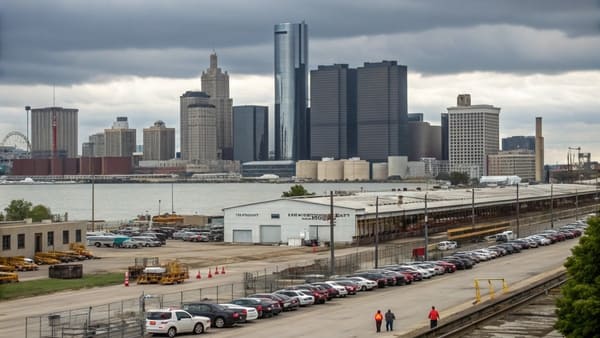
To really understand why Detroit boomed, we need to look at the specific factors that came together at the right time. It wasn't just one thing, but a collection of advantages that no other city could match. Early car pioneers were drawn there for these reasons, and their success attracted even more talent and investment, creating a cycle of growth.
Let's break down the key ingredients:
Key Factors for Detroit's Rise
| Factor | Description |
|---|---|
| Geography | Located on the Detroit River, it connected the Great Lakes. This allowed cheap and easy shipping of iron ore, coal, and lumber from the north, and transport of finished vehicles to markets across the country. |
| Existing Industry | Before cars, Detroit was a center for shipbuilding, stove manufacturing, and railroad car production.3 This meant the city already had foundries, machine shops, and a workforce skilled in working with metal and engines. |
| Key Innovators | Visionaries like Henry Ford, Ransom E. Olds, and the Dodge Brothers were all based in or near Detroit. Their risk-taking and competitive drive fueled rapid innovation and created the first successful car companies. |
| Capital & Investment | The city's existing wealth from lumber and shipping provided the necessary capital for entrepreneurs to start their car factories. Banks were willing to invest in this new, promising industry. |
These elements created the perfect environment. Once Henry Ford perfected the moving assembly line, production exploded, and Detroit's destiny as the automotive capital was sealed.4
How Did Detroit Earn the Nickname “Motor City”?
A nickname like "Motor City" doesn't happen by accident. It represents complete dominance. But how did Detroit's reputation become so powerful that it was known worldwide by this name?
Detroit earned the "Motor City" title by becoming the undisputed global leader in car production.5 The sheer volume of cars rolling off its assembly lines was unlike anything the world had ever seen. This massive output transformed the city, its economy, and its identity forever.
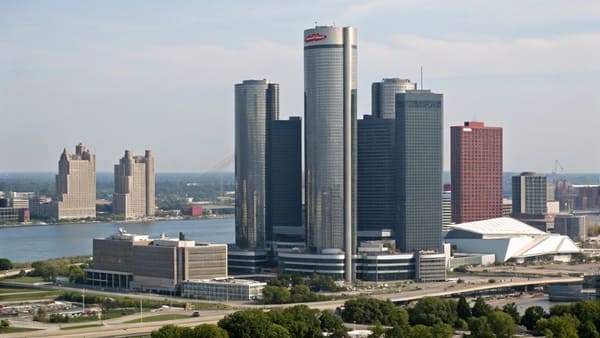
The scale of production in Detroit was truly mind-boggling. At its peak, the city wasn't just making cars; it was pioneering the very concept of modern mass production. Henry Ford's assembly line, introduced in 1913, was the game-changer. It slashed the time to build a car from over 12 hours to just 93 minutes. This innovation made cars affordable for the average family and created a massive demand that only Detroit could supply.
Even today, we see the legacy of this era in the parts we manufacture. I remember working with a client from Pakistan who needed plastic components for classic American cars from this period. The precision required is incredibly high. We found that the cooling process was the most difficult step. On our first attempt, the parts shrank more than we expected. I was worried, but the client actually loved the "shrunken" look because it felt more authentic. It was a lucky mistake, but it taught us a valuable lesson about the unique challenges of reproducing parts from the Motor City's golden age. The machines needed for this level of precision are specialized, often found in coastal regions like Fujian, not everywhere. This experience showed me firsthand how the manufacturing decisions made in old Detroit still impact our work today.
What Were the Biggest Car Companies in Detroit?
When you think of American cars, a few big names probably come to mind. These companies didn't just appear; they were forged in the competitive fire of early Detroit.
The Detroit auto industry was dominated by three corporate giants known as the "Big Three": Ford Motor Company, General Motors (GM), and Chrysler.6 These companies set the standard for the global automotive market for decades, and their headquarters were all in or around Detroit.
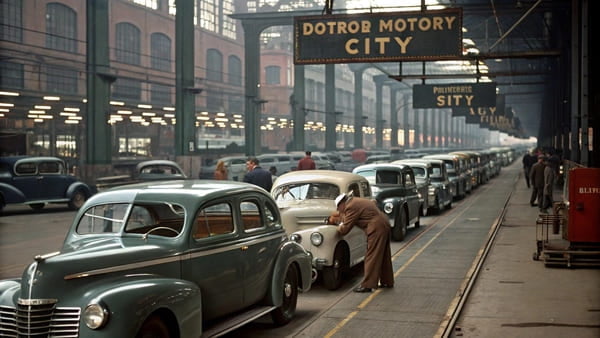
The story of the Big Three is a story of different strategies competing for the same market. While hundreds of car companies started in the early 20th century, these three rose above the rest through innovation, business strategy, and sheer scale. Each had a unique identity and contributed to the industry in its own way. Their competition fueled innovation and defined what an "American car" was for generations. Their rise cemented Detroit's status, but their later struggles also mirrored the city's own decline when faced with new challenges like the 1970s oil crisis and efficient competitors from Japan and Europe.
Let's look at what made each of them a giant:
The "Big Three" of Detroit
| Company | Founder(s) | Key Strategy & Contribution |
|---|---|---|
| Ford Motor Company | Henry Ford | Pioneered the moving assembly line and mass production. Focused on making one affordable and reliable model for everyone (the Model T). This strategy democratized car ownership. |
| General Motors (GM) | William C. Durant | Created a conglomerate of different car brands (like Chevrolet, Buick, Cadillac). Offered a "car for every purse and purpose," introducing concepts like model years and a variety of colors and styles. |
| Chrysler | Walter P. Chrysler | Entered the market later but competed on the strength of its engineering and technological innovation. It was known for introducing features like hydraulic brakes and high-compression engines to the mass market. |
Together, these three companies controlled the vast majority of the U.S. auto market for much of the 20th century, making them and Detroit the center of the automotive universe.7
Conclusion
Detroit's story is one of amazing innovation and tough lessons. Its history as the Motor City continues to shape the global auto industry, reminding us of the need to adapt.
"Autopia's End: The Decline and Fall of Detroit's Automotive ...", https://dspace.mit.edu/entities/publication/383dd458-3103-4af1-af75-1db4e6524b73. A report from the Federal Reserve Bank of Chicago outlines how foreign competition, economic downturns, and changes in manufacturing contributed to Detroit's economic decline. Evidence role: historical_context; source type: institution. Supports: It later faced a decline because of foreign competition, economic recessions, and shifting manufacturing trends.. Scope note: The report focuses on economic factors and may not address all social or political influences. ↩
"Revenue Stream: How the Detroit River Built ...", https://sites.lsa.umich.edu/detroit-river-story-lab/the-detroit-river-and-the-university-of-michigan/revenue-stream/. The Detroit Historical Society explains that Detroit's proximity to the Great Lakes facilitated efficient transportation of raw materials and finished automobiles, supporting the city's industrial growth. Evidence role: mechanism; source type: institution. Supports: Its location on the Great Lakes provided easy transportation for raw materials and finished cars.. Scope note: The explanation is focused on transportation and may not cover all geographic advantages. ↩
"Michigan Car Company", https://en.wikipedia.org/wiki/Michigan_Car_Company. The Encyclopedia of Detroit documents the city's pre-automotive industrial base, including shipbuilding, stove manufacturing, and railroad car production. Evidence role: historical_context; source type: encyclopedia. Supports: Detroit was a center for shipbuilding, stove manufacturing, and railroad car production.. Scope note: The source provides historical context but may not quantify the scale of each industry. ↩
"Mass Production | National Museum of American History", https://americanhistory.si.edu/explore/exhibitions/american-enterprise/online/corporate-era/mass-production. The Smithsonian Institution describes how Henry Ford's introduction of the moving assembly line in 1913 revolutionized automobile production and solidified Detroit's role as the industry's center. Evidence role: mechanism; source type: institution. Supports: Once Henry Ford perfected the moving assembly line, production exploded, and Detroit's destiny as the automotive capital was sealed.. Scope note: The source emphasizes Ford's contribution but may not address other concurrent innovations. ↩
"Big Three (automobile manufacturers)", https://en.wikipedia.org/wiki/Big_Three_(automobile_manufacturers). According to the Detroit Historical Society, Detroit was known as the "Motor City" due to its unparalleled automobile production during the early and mid-20th century. Evidence role: historical_context; source type: institution. Supports: Detroit earned the "Motor City" title by becoming the undisputed global leader in car production.. Scope note: The source provides historical context but may not quantify global comparisons. ↩
"Big Three (automobile manufacturers)", https://en.wikipedia.org/wiki/Big_Three_(automobile_manufacturers). The Library of Congress notes that Ford, General Motors, and Chrysler, collectively known as the "Big Three," dominated Detroit's auto industry for much of the 20th century. Evidence role: historical_context; source type: government. Supports: The Detroit auto industry was dominated by three corporate giants known as the "Big Three": Ford Motor Company, General Motors (GM), and Chrysler.. Scope note: The source provides historical context but may not detail market share percentages. ↩
"Big Three (automobile manufacturers)", https://en.wikipedia.org/wiki/Big_Three_(automobile_manufacturers). A report from the U.S. Department of Commerce confirms that Ford, GM, and Chrysler held the majority share of the U.S. auto market throughout the mid-20th century, reinforcing Detroit's central role in the industry. Evidence role: statistic; source type: government. Supports: Together, these three companies controlled the vast majority of the U.S. auto market for much of the 20th century, making them and Detroit the center of the automotive universe.. Scope note: Market share figures may vary by decade and are subject to historical context. ↩