-Confused by the similar-looking parts behind your car's grille? You see two radiators but aren't sure what they do. This can make finding the right replacement part tricky.
No, an AC condenser and a car radiator are not the same, though they look alike and sit together. The condenser is part of the air conditioning system, while the radiator is part of the engine's cooling system.1 They serve completely different purposes.
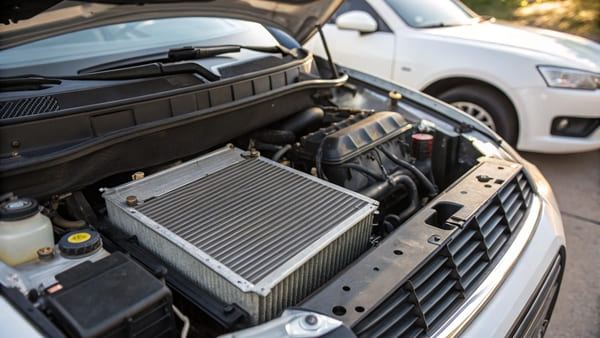
At first glance, it's easy to see why people mix them up. They are both heat exchangers located at the front of the vehicle, and they both rely on airflow to work. But understanding their unique roles is crucial, especially if you are in the business of sourcing or distributing auto parts. A small mix-up can lead to big problems. Let's break down what each component does and why they are fundamentally different.
What Does an AC Condenser Do in a Car?
Is your car's air conditioning blowing warm air? A faulty AC condenser could be the problem. Understanding its job is the first step to diagnosing a weak AC system.
The AC condenser's function is to cool down the hot, high-pressure refrigerant gas from the AC compressor.2 By releasing this heat into the outside air, it turns the gas back into a liquid, which is essential for the AC to produce cold air.3
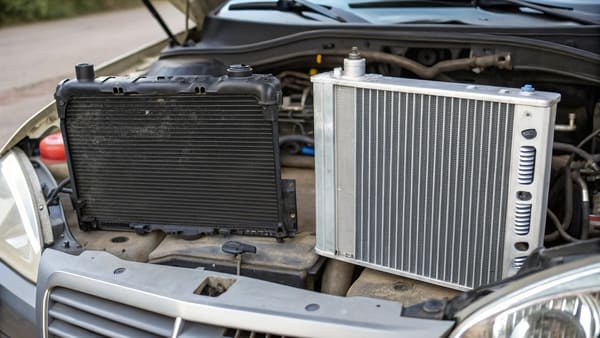
The AC condenser is a key player in your vehicle's air conditioning loop. Think of it as the radiator for your AC system. After the refrigerant is compressed into a hot gas, it flows into the condenser. As you drive or as the cooling fan spins, air passes over the condenser's fins, drawing heat away from the refrigerant inside. This heat exchange is what allows the refrigerant to change state and continue its journey to cool your cabin.
The Role of the Condenser in the AC Loop
The entire AC system is a closed loop, and the condenser's part is critical.4 Here’s a simplified breakdown:
- Compressor: Squeezes low-pressure refrigerant gas into high-pressure, hot gas.
- Condenser: Cools the hot gas, turning it into a high-pressure liquid.
- Expansion Valve: Reduces the pressure of the liquid refrigerant, making it very cold.
- Evaporator: The cold liquid absorbs heat from the cabin air (blowing cold air on you) and turns back into a gas, returning to the compressor.
The condenser must be efficient at releasing heat. If it's blocked by dirt or damaged, it can't do its job, and your AC performance will suffer.
Manufacturing Challenges for Condenser Parts
Many condensers use plastic for parts like the end tanks.5 Manufacturing these plastic components is incredibly difficult. Standard injection molding machines often can't achieve the precision needed for automotive heat-exchange parts.6 The cooling stage of the injection process is the hardest part. I remember my first time producing these parts for a client from Pakistan. We were inexperienced, and the plastic components "shrank" more than expected after cooling. Luckily, the client actually preferred the slightly smaller, denser result. It was a stressful but valuable lesson. We learned that high-precision machines, like those found near Shanghai or in the Fujian coastal region, are essential for this work. Adding color pigments also complicates things, as it requires opening the mold, which can interfere with the critical cooling process.
What Does a Car Radiator Do?
Worried about your engine overheating on a hot day? The radiator is your engine's main defense against heat. A problem with the radiator can lead to very expensive engine damage.
A car radiator is a heat exchanger designed specifically to cool the engine.7 It transfers heat from the hot engine coolant into the surrounding air, which keeps the engine operating at a safe temperature.
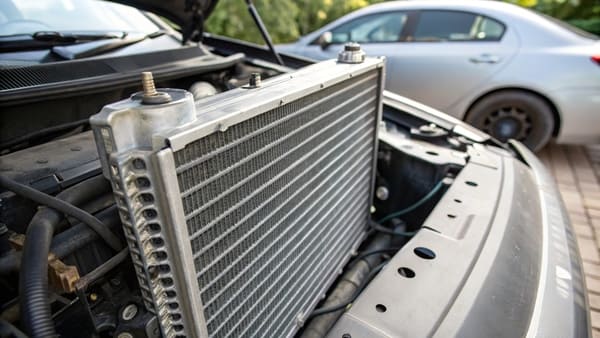
The engine in your car generates an immense amount of heat during operation. The cooling system circulates a special fluid, called coolant or antifreeze, through passages in the engine block to absorb this heat.8 This hot coolant then flows to the radiator. As air passes through the radiator's fins, the heat is transferred from the coolant to the air, cooling the fluid before it’s pumped back to the engine to repeat the cycle. Without a functioning radiator, an engine would quickly overheat and self-destruct.9
How the Radiator Protects Your Engine
The radiator is the heart of the engine's cooling system.10 Its efficiency directly impacts engine health and longevity. Here’s a quick overview of the coolant's path:
| Step | Location | Action |
|---|---|---|
| 1 | Engine Block | Coolant absorbs heat from combustion. |
| 2 | Thermostat | Opens when coolant reaches a certain temperature. |
| 3 | Radiator | Coolant flows through tubes, releasing heat to the air. |
| 4 | Water Pump | Pumps the cooled fluid back to the engine block. |
This continuous cycle ensures the engine stays within its ideal operating temperature range, typically between 195°F and 220°F (90°C to 104°C).
Radiator Construction and Materials
Most modern radiators have an aluminum core, which is excellent for heat transfer, and plastic side tanks.11 Just like with AC condensers, manufacturing these plastic tanks requires high precision. The plastic must be able to withstand constant high temperatures and pressure without cracking or leaking. The injection molding process has to be perfect to ensure a tight seal with the aluminum core. Any flaws in the plastic molding can lead to a coolant leak, which can cause an engine to overheat. This is why we invest in advanced machinery and strict quality control for every cooling system component we produce.
Why Do People Confuse AC Condensers and Radiators?
Ordering the wrong part costs time, money, and creates frustration. The similar look and location of the condenser and radiator are a common trap for both DIY mechanics and even some professionals.
People confuse them because they are both grille-like heat exchangers located at the very front of the car. The AC condenser is usually mounted directly in front of the radiator, making them appear as a single unit to the untrained eye.12
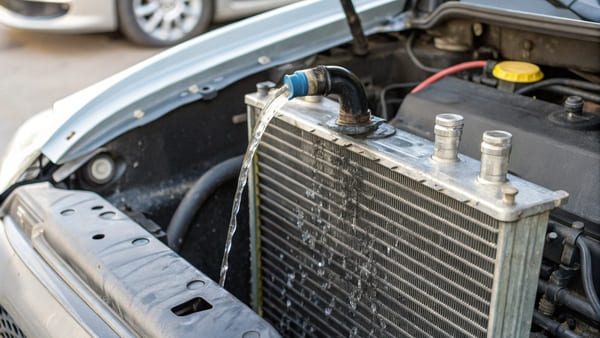
When you look through your car's front grille, you are often looking directly at the AC condenser. The radiator is tucked right behind it, using the same airflow from the cooling fan or the car's movement. This stacked arrangement is efficient for packaging, but it's the primary reason for the confusion. Understanding the subtle but critical differences is key for anyone working with these parts. As a manufacturer, ensuring our B2B clients get the right part is our top priority, because we know a mistake in a bulk order is a serious problem.
Similar Location, Different Jobs
Their proximity is a source of confusion, but their functions are worlds apart. The condenser handles refrigerant for cabin comfort. The radiator handles coolant for engine safety. A failure in one does not directly cause a failure in the other, but a damaged condenser can block airflow to the radiator, potentially impacting engine cooling.
Key Differences at a Glance
To make it perfectly clear, here is a simple table comparing the two components. For our partners—distributors, importers, and brands—having this clear distinction is vital for cataloging and sales.
| Feature | AC Condenser | Car Radiator |
|---|---|---|
| Primary Function | Cools AC refrigerant | Cools engine coolant |
| System | Air Conditioning System | Engine Cooling System |
| Fluid Inside | Refrigerant (e.g., R-134a) | Coolant (Antifreeze + Water) |
| Typical Location | In front of the radiator | Behind the AC condenser |
| Tube Diameter | Generally smaller | Generally larger |
| Failure Symptom | AC blows warm air | Engine overheats |
This table is a great tool to help your own customers or staff understand the difference. The details matter, from the thickness of the tubes to the type of fluid they carry. Getting it right ensures the vehicle runs as it should.
Conclusion
In short, the AC condenser cools the air for your cabin, while the radiator cools the engine itself. Knowing this simple difference is vital for vehicle maintenance and sourcing parts.
"Automotive air conditioning - Wikipedia", https://en.wikipedia.org/wiki/Automotive_air_conditioning. A technical overview from an automotive engineering textbook confirms that the AC condenser is integral to the vehicle's air conditioning system, whereas the radiator is a core component of the engine cooling system. Evidence role: definition; source type: education. Supports: The condenser is part of the air conditioning system, while the radiator is part of the engine's cooling system.. ↩
"How Does Car AC Work? | UTI - Universal Technical Institute", https://www.uti.edu/blog/automotive/air-conditioning. Automotive HVAC system guides describe the AC condenser's role as cooling and condensing high-pressure refrigerant gas from the compressor into a liquid. Evidence role: mechanism; source type: education. Supports: The AC condenser's function is to cool down the hot, high-pressure refrigerant gas from the AC compressor.. ↩
"How Does Car AC Work? | UTI - Universal Technical Institute", https://www.uti.edu/blog/automotive/air-conditioning. Engineering references on automotive air conditioning explain that the condenser releases heat to the outside air, causing the refrigerant to condense into a liquid, which is necessary for cooling. Evidence role: mechanism; source type: education. Supports: By releasing this heat into the outside air, it turns the gas back into a liquid, which is essential for the AC to produce cold air.. ↩
"How Does Car AC Work? | UTI - Universal Technical Institute", https://www.uti.edu/blog/automotive/air-conditioning. Automotive air conditioning system diagrams from educational sources illustrate the closed-loop nature of the system and the critical role of the condenser in refrigerant cycling. Evidence role: general_support; source type: education. Supports: The entire AC system is a closed loop, and the condenser's part is critical.. ↩
"Automotive air conditioning - Wikipedia", https://en.wikipedia.org/wiki/Automotive_air_conditioning. Materials engineering sources note that modern automotive AC condensers often incorporate plastic end tanks for weight and manufacturing efficiency. Evidence role: general_support; source type: education. Supports: Many condensers use plastic for parts like the end tanks.. Scope note: Material choices may vary by manufacturer and vehicle model. ↩
"Heat Exchanger For Injection Mould Machine(999+) - Alibaba.com", https://www.alibaba.com/showroom/heat-exchanger-for-injection-mould-machine.html. Manufacturing research indicates that automotive heat-exchanger components require high-precision injection molding beyond standard capabilities to ensure proper fit and function. Evidence role: mechanism; source type: research. Supports: Standard injection molding machines often can't achieve the precision needed for automotive heat-exchange parts.. Scope note: Precision requirements may depend on specific part design and application. ↩
"Radiator (engine cooling) - Wikipedia", https://en.wikipedia.org/wiki/Radiator_(engine_cooling). Automotive engineering textbooks define the radiator as a heat exchanger whose primary purpose is to cool the engine by transferring heat from the coolant to the air. Evidence role: definition; source type: education. Supports: A car radiator is a heat exchanger designed specifically to cool the engine.. ↩
"Internal combustion engine cooling - Wikipedia", https://en.wikipedia.org/wiki/Internal_combustion_engine_cooling. Automotive cooling system guides explain that coolant (antifreeze) is circulated through the engine block to absorb heat and prevent overheating. Evidence role: mechanism; source type: education. Supports: The cooling system circulates a special fluid, called coolant or antifreeze, through passages in the engine block to absorb this heat.. ↩
"What could possibly be wrong with my car, it started overheating ...", https://www.quora.com/What-could-possibly-be-wrong-with-my-car-it-started-overheating-sometimes-ago-I-have-flushed-the-radiator-but-it-keeps-overheating-and-throwing-out-water-from-the-radiator-is-the-problem-from-the-water-pump-or-the. Automotive maintenance guides warn that a failed radiator leads to rapid engine overheating, which can cause severe engine damage or failure. Evidence role: mechanism; source type: education. Supports: Without a functioning radiator, an engine would quickly overheat and self-destruct.. Scope note: Severity and speed of damage may depend on engine design and operating conditions. ↩
"How Does a Car Radiator Work? | UTI - Universal Technical Institute", https://www.uti.edu/blog/automotive/radiators. Automotive engineering sources describe the radiator as the central component of the engine cooling system, responsible for heat dissipation. Evidence role: general_support; source type: education. Supports: The radiator is the heart of the engine's cooling system.. Scope note: Other components, such as the water pump and thermostat, are also essential to the cooling system. ↩
"Radiator - Wikipedia", https://en.wikipedia.org/wiki/Radiator. Materials engineering references state that modern automotive radiators commonly use aluminum cores for heat transfer and plastic side tanks for weight and manufacturing efficiency. Evidence role: general_support; source type: education. Supports: Most modern radiators have an aluminum core, which is excellent for heat transfer, and plastic side tanks.. Scope note: Material choices may vary by manufacturer and vehicle model. ↩
"Radiator and AC condenser mounting diagram needed - Facebook", https://www.facebook.com/groups/313581313213995/posts/628725961699527/. Automotive repair manuals and diagrams show that the AC condenser is typically installed in front of the radiator, which can cause confusion due to their similar appearance and location. Evidence role: case_reference; source type: education. Supports: The AC condenser is usually mounted directly in front of the radiator, making them appear as a single unit to the untrained eye.. Scope note: Mounting arrangements may vary by vehicle make and model. ↩