-Choosing the right brake pads can feel overwhelming. A wrong decision can impact safety and your wallet. This guide will help you make the perfect choice for your needs.
The best brake pad for your application depends on the vehicle type, your driving style, and your budget. For balanced, quiet performance in most passenger cars, ceramic pads1 are ideal. For heavy-duty use or high performance, semi-metallic pads2 are superior. Organic pads are a good, quiet budget option.
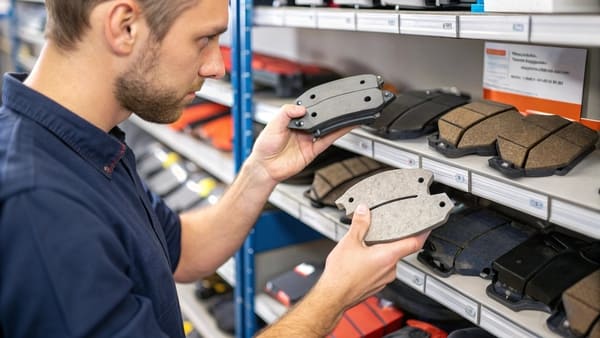
Selecting the right brake pads is one of the most critical decisions for any vehicle, whether you're a daily commuter or managing a fleet of commercial trucks. As a manufacturer, I've seen firsthand how a small component can make a huge difference in performance and safety. The science behind each pad type is complex, but understanding the basics is simple. Let's break down the options so you can choose with confidence.
What Are the Main Types of Brake Pads and How Do They Differ in Real Use?
At a glance, all brake pads might look the same. But their internal materials create huge differences in stopping power and feel. Let's explore what sets them apart.
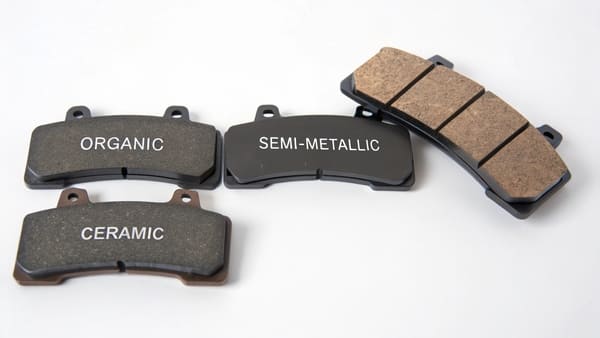
The three main types are organic, semi-metallic, and ceramic. Organic pads feel soft and are very quiet. Semi-metallic pads provide a strong, aggressive bite for powerful stopping. Ceramic pads offer a smooth, clean, and quiet performance that’s very consistent across different temperatures.
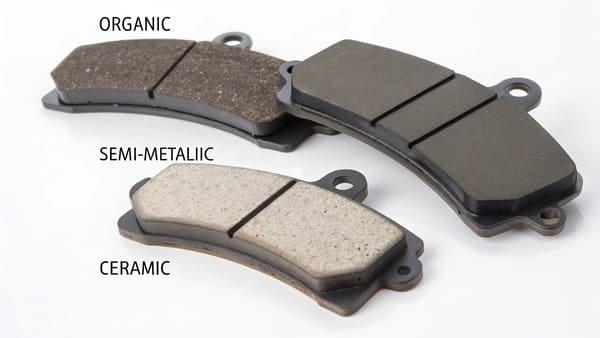
In our factory, we work with these materials every day, and the manufacturing process itself is incredibly challenging. For example, producing brake pads requires high-precision injection molding machines3. The standard machines simply can't achieve the necessary accuracy. The cooling stage4 is the most difficult part. I remember my first project with a client from Pakistan. We were still learning, and the pads "shrank" more than expected after cooling. Luckily, the client loved the result, but it taught us a valuable lesson about process control. This experience is why we know the material composition5 isn't just about performance—it dictates the entire manufacturing approach.
Here is a simple breakdown of the main types:
| Brake Pad Type | Key Materials | Real-World Feel & Use |
|---|---|---|
| Organic (NAO) | Rubber, glass, carbon, Kevlar | Soft pedal feel, very quiet. Best for light, small cars and drivers who prioritize low noise over high performance. |
| Semi-Metallic | Steel wool, iron, copper | Firm pedal feel, strong initial bite6. Excellent for heavy vehicles, towing, and performance driving due to great heat management. |
| Ceramic | Ceramic fibers, non-ferrous fillers | Smooth, firm, and consistent pedal feel. Great for daily drivers and luxury cars, providing quiet operation and very low brake dust7. |
Which Brake Pad Material Performs Best Under Different Driving Conditions?
Your daily route and driving habits are not the same as everyone else's. Using a brake pad designed for the wrong conditions is inefficient and can even be dangerous.
For daily city commuting, ceramic or organic pads8 excel with their quiet operation and low dust. For aggressive driving, mountain roads, or towing heavy loads, semi-metallic pads2 are the best choice. Their ability to handle high heat prevents brake fade9 and ensures reliable stopping power.
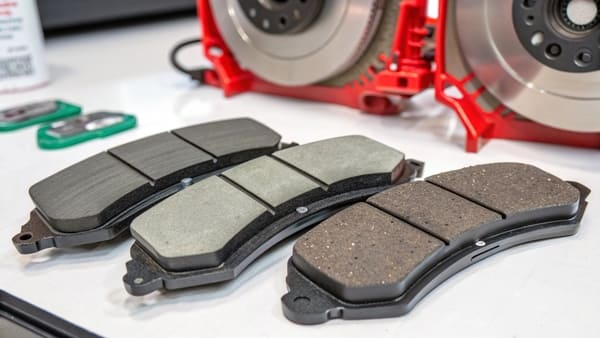
Matching the pad to the driving condition is a science. In our development process, we don't just test for stopping power; we simulate different environments to see how the pads behave over time. For high-performance applications, the physical precision of the pad is non-negotiable. An improperly cooled pad can have tiny imperfections that cause noise or uneven wear inside the caliper. This is why we only use high-precision machines, mostly found in specialized industrial zones, not the common ones you see everywhere. It ensures that a semi-metallic pad meant for a race track performs just as flawlessly as a ceramic pad designed for a quiet luxury sedan. Every application has unique demands, and the manufacturing process must respect that.
Let's look at which pad works best for specific situations:
| Driving Condition | Recommended Pad Type | Why It Works Best |
|---|---|---|
| City Commuting | Ceramic, Organic | Frequent stops demand quiet operation and low dust. Performance is less critical than comfort. |
| Highway Driving | Ceramic, Semi-Metallic | Requires durability and consistent performance at stable speeds and temperatures. |
| Spirited / Track Driving | Semi-Metallic | Needs to handle extreme heat to prevent brake fade9 and provide a strong, reliable bite every time. |
| Towing / Heavy Loads | Semi-Metallic | The extra weight generates a lot of heat when braking. Semi-metallic pads are excellent at dissipating this heat. |
How Do Ceramic, Semi-Metallic, and Organic Brake Pads Compare in Cost and Lifespan?
Your budget is an important factor in any decision. But choosing the cheapest brake pad today might lead to more frequent replacements and higher costs down the road.
Generally, organic pads8 are the most affordable but have the shortest lifespan. Semi-metallic pads sit in the middle for both price and durability. Ceramic pads usually have the highest initial cost but often last the longest and are gentlest on brake rotors, offering great long-term value.
When I talk with our clients, who are usually distributors and brand owners, I always advise them to think about total value10, not just the unit price. A slightly more expensive ceramic pad can significantly reduce customer complaints about dust and noise, protecting a brand's reputation. For a company managing a fleet, a durable semi-metallic pad means vehicles spend less time in the shop for brake service. The upfront investment in a better manufacturing process, like our precise color powder addition technique11 that requires stopping the machine and opening the mold, directly translates into a more reliable and valuable final product. This precision reduces warranty claims12 and builds customer trust, which is far more valuable than saving a few cents on production.
Here’s a comparison of the overall value proposition for each type:
| Pad Type | Initial Cost | Lifespan | Rotor Wear | Overall Value |
|---|---|---|---|---|
| Organic (NAO) | Low | Shortest | Low | Best for budget-conscious drivers with light vehicles who don't drive many miles. |
| Semi-Metallic | Medium | Medium-Long | High | Ideal for performance and heavy-duty users who need reliable stopping power and accept some noise and dust. |
| Ceramic | High | Longest | Very Low | Excellent long-term investment for daily drivers seeking quiet, clean, and durable performance. Saves money on rotor replacement. |
Conclusion
Choosing the right brake pad is about matching the material to your vehicle, driving style, and budget. An informed choice ensures optimal safety, performance, and long-term value for your application.
Learn why ceramic pads are ideal for daily drivers and luxury vehicles, offering quiet operation, low dust, and long-lasting performance. ↩
Discover why semi-metallic pads are preferred for towing, racing, and heavy vehicles due to their strong bite and excellent heat management. ↩
Understand how advanced manufacturing technology ensures consistent quality and performance in brake pads, reducing defects and improving safety. ↩
Learn how the cooling stage affects brake pad quality, including issues like shrinkage and imperfections that impact performance and lifespan. ↩
Find out how the choice of materials influences stopping power, noise, durability, and the entire production process of brake pads. ↩
Learn why a strong initial bite is crucial for performance driving and heavy-duty applications, and which pads excel in this area. ↩
See how ceramic pads keep wheels cleaner and reduce maintenance, making them a top choice for drivers who value appearance and convenience. ↩
Explore why organic pads are a quiet, budget-friendly option for light vehicles, and understand their limitations in durability and performance. ↩
Understand the dangers of brake fade during aggressive driving or towing, and how semi-metallic pads maintain reliable stopping power. ↩
Discover how considering lifespan, performance, and maintenance costs leads to smarter brake pad choices and greater long-term savings. ↩
Explore how this advanced technique improves product reliability, reduces warranty claims, and enhances brand reputation. ↩
Find out how investing in better manufacturing processes reduces defects, customer complaints, and costly warranty issues for brands and fleets. ↩