-Worried that your front brakes are wearing out too fast? It’s a common concern, but it's usually not a sign of a problem. It’s actually by design.1
Your front brakes do most of the work to stop your car, so they naturally wear out faster than the rear ones.2 This is because when you brake, the car's weight shifts forward, putting more pressure and force on the front axle, requiring stronger brakes up front.3
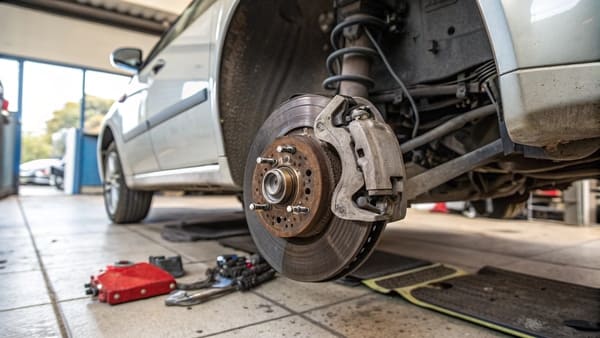
Understanding this difference is key to smart vehicle maintenance. It helps you know what to expect during service checks and why replacing front brake pads is a more frequent job than replacing the rear ones. Let's dive deeper into how your car’s braking system is engineered for safety and performance.
What Are Front and Back Brakes and How Do They Work?
You press the brake pedal every day, but what really happens? It feels simple, but it's a complex system. Understanding it helps you appreciate the engineering behind your car's safety.
Your car's brakes use a hydraulic system. When you press the pedal, it pushes fluid through tubes to calipers. The calipers then squeeze brake pads against a spinning disc (rotor) attached to the wheel, creating friction that slows and stops your car.4
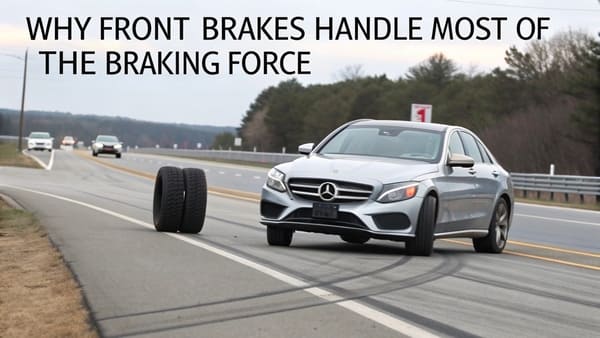
Let's break that process down further. It's a chain reaction that turns the force from your foot into the friction needed to stop a multi-ton vehicle. It’s a perfect example of using fluid mechanics to multiply force, a principle that has been at the core of braking systems for decades.
The Basic Braking Process
The magic is in the hydraulics. Here is a simple step-by-step look at what happens when you hit the brakes:
- Pedal Pressure: Your foot pushes the brake pedal, which moves a piston inside the master cylinder.
- Fluid in Motion: The master cylinder is filled with brake fluid. The piston forces this fluid into a network of brake lines that run to each wheel.
- Calipers Activate: At each wheel, the hydraulic pressure pushes against pistons inside a brake caliper.
- Pads Squeeze: The caliper pistons force the brake pads, which are lined with high-friction material, to clamp down on the brake rotor.
- Friction Creates Stop: The rotor spins with the wheel. As the pads squeeze the rotor, the immense friction converts the car's kinetic energy into heat, slowing the wheel down and stopping the car.
This entire process happens in an instant, providing you with the control you need on the road.
What Is the Difference Between Front and Rear Brakes?
You might think brakes are the same at all four corners of your car. But they have key differences. Knowing these differences explains why they wear differently and have distinct service needs.
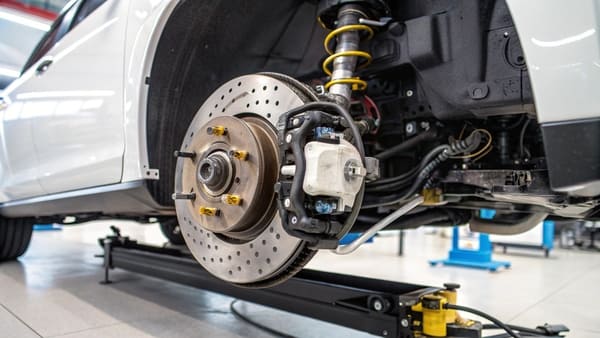
The main difference is that front brakes are larger and more powerful to handle more force. They often use ventilated rotors to cool down faster. Rear brakes are smaller and can be either disc or simpler drum brakes, as they do less work.5
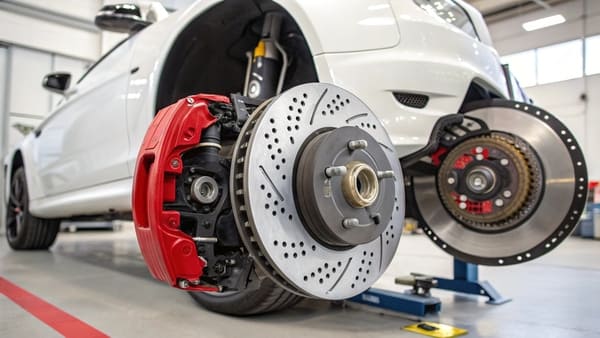
Even small parts within these systems have big jobs. The plastic components in a brake assembly, for example, need incredible manufacturing precision. I remember a project with a client from Pakistan. We were making plastic brake accessories, and the injection molding process was tricky. The cooling stage is the hardest part. If it’s not perfect, the part can shrink. On our first run, the parts shrunk more than expected. I was worried, but the client actually preferred the slightly smaller, denser result. It was a lucky accident that taught us a lot, and we’ve perfected the process since. Precision in every part, big or small, is what makes a brake system reliable.
Front vs. Rear: A Head-to-Head Comparison
To make it clearer, let's compare them side-by-side.
| Feature | Front Brakes | Rear Brakes |
|---|---|---|
| Braking Force | Handles 60-80% of the stopping force.6 | Handles the remaining 20-40%. |
| Size & Weight | Larger rotors and calipers for more power. | Smaller and lighter components. |
| Heat Dissipation | Often use ventilated rotors to cool quickly. | Usually solid rotors or drums, as they generate less heat. |
| Wear Rate | Wear out much faster due to heavier use.7 | Last significantly longer, often 2-3 times as long.8 |
| Common Type | Almost always disc brakes on modern cars.9 | Can be disc or drum brakes, especially on smaller cars. |
These design choices aren't random. They are carefully calculated to ensure your car stops safely and efficiently without losing control. The larger, more robust front brakes are built to take the heat, literally, while the rear brakes provide stability.
Why Do Front Brakes Handle Most of the Braking Force?
It seems strange that the work isn't split 50/50. Is it a design flaw? Actually, it's a clever use of physics that makes your car safer to drive and stop.
When you brake, your car’s momentum causes the weight to shift to the front. This "weight transfer" pushes the front tires harder into the road, giving them more grip.10 The brake system is designed to send more force to the front to use this extra grip effectively.
Think about what happens when you stop suddenly while walking; your body lurches forward. A car does the same thing. The entire mass of the vehicle pitches forward, putting immense load on the front axle. Engineers don't fight this force; they use it. By designing the braking system to be front-biased, they ensure the wheels with the most grip are doing the most work.
Understanding Weight Transfer
This principle is fundamental to vehicle dynamics. Imagine the car's center of gravity. As you decelerate, this center of gravity effectively shifts forward.
This has two major effects:
- Increased Front Grip: The front tires are pressed down onto the pavement with more force. More force means more friction, which translates to better grip and more effective braking.
- Decreased Rear Grip: Conversely, the rear of the car gets lighter. The rear tires have less force pushing them onto the road, which reduces their available grip.
If you applied equal braking force to all four wheels, the rear wheels would lock up easily because they are lighter and have less grip.11 A locked rear wheel can cause a dangerous spin. To prevent this, a component called a proportioning valve limits the amount of hydraulic pressure sent to the rear brakes.12 This ensures the front brakes do the heavy lifting while the rear brakes contribute just enough to help stop the car without losing stability. This front-biased design is a critical safety feature in every modern car.
Conclusion
In short, your front brakes are bigger, stronger, and wear out faster because they handle most of the stopping force. This is due to weight transfer, a key principle of physics.
"Disc brake - Wikipedia", https://en.wikipedia.org/wiki/Disc_brake. Automotive engineering sources explain that front brake wear is typically greater than rear brake wear due to the design of most vehicles, which allocate more braking force to the front wheels; this is not generally considered a defect but a normal aspect of brake system operation. Evidence role: expert_consensus; source type: encyclopedia. Supports: Front brakes wearing out faster than rear brakes is usually by design and not a sign of a problem.. Scope note: This explanation applies to most passenger vehicles but may not cover all vehicle types or unusual wear patterns. ↩
"[PDF] Traction/Braking Force Distribution for Optimal Longitudinal Motion ...", https://huei.engin.umich.edu/wp-content/uploads/sites/186/2015/02/vehicle.pdf. Vehicle dynamics literature states that front brakes handle the majority of braking force in most cars, leading to faster wear compared to rear brakes. Evidence role: mechanism; source type: education. Supports: Front brakes do most of the work to stop a car, causing them to wear out faster than rear brakes.. Scope note: The proportion of braking handled by the front brakes can vary by vehicle design and load conditions. ↩
"Weight transfer - Wikipedia", https://en.wikipedia.org/wiki/Weight_transfer. Physics and automotive engineering sources describe how braking causes weight transfer to the front axle, increasing the load and friction on the front tires, which necessitates stronger front brakes. Evidence role: mechanism; source type: education. Supports: Braking shifts a car's weight forward, increasing pressure on the front axle and requiring stronger brakes up front.. Scope note: The degree of weight transfer depends on vehicle design, speed, and braking force. ↩
"Hydraulic brake - Wikipedia", https://en.wikipedia.org/wiki/Hydraulic_brake. Automotive encyclopedias and engineering textbooks describe the hydraulic brake system as using fluid pressure to actuate calipers, which press brake pads against rotors to create friction and stop the vehicle. Evidence role: definition; source type: encyclopedia. Supports: Most cars use a hydraulic brake system where pressing the pedal actuates calipers to squeeze pads against rotors, creating friction to stop the car.. Scope note: Some vehicles may use alternative braking systems, such as air brakes or regenerative braking, but hydraulic disc brakes are standard in most passenger cars. ↩
"Front and Rear Brakes: Difference, Types, and More - CarParts.com", https://www.carparts.com/blog/front-and-rear-brakes-difference-types-and-more/?srsltid=AfmBOooGhrGMnxDIVRXH0HR2NSvtnaaEUWqiFcukGGesJwgCPFOhp9i2. Automotive engineering references note that front brakes are typically larger and more robust, often using ventilated rotors for heat dissipation, while rear brakes are smaller and may use drum designs due to their lighter workload. Evidence role: mechanism; source type: encyclopedia. Supports: Front brakes are larger and more powerful, often ventilated, while rear brakes are smaller and may use drum designs.. Scope note: Brake system designs can vary by vehicle type and manufacturer. ↩
"[PDF] Traction/Braking Force Distribution for Optimal Longitudinal Motion ...", https://huei.engin.umich.edu/wp-content/uploads/sites/186/2015/02/vehicle.pdf. Vehicle dynamics textbooks and engineering sources estimate that front brakes handle approximately 60-80% of the total braking force in typical passenger vehicles. Evidence role: statistic; source type: education. Supports: Front brakes handle 60-80% of the stopping force in most cars.. Scope note: The exact percentage varies with vehicle design, load, and driving conditions. ↩
"Is it normal for rear brake pads to wear faster than the front? - Reddit", https://www.reddit.com/r/MechanicAdvice/comments/5uydeh/is_it_normal_for_rear_brake_pads_to_wear_faster/. Automotive maintenance guides and engineering sources confirm that front brake pads typically wear out faster than rear pads due to their greater workload. Evidence role: general_support; source type: education. Supports: Front brake pads wear out much faster than rear pads due to heavier use.. Scope note: Wear rates can vary depending on driving habits and vehicle type. ↩
"Are brake pads needing to be replaced at 30k miles reasonable?", https://www.reddit.com/r/AskMechanics/comments/1av5k2p/are_brake_pads_needing_to_be_replaced_at_30k/. Automotive service manuals and maintenance resources report that rear brake pads often last two to three times longer than front pads in typical usage scenarios. Evidence role: statistic; source type: education. Supports: Rear brake pads often last significantly longer, sometimes 2-3 times as long as front pads.. Scope note: Actual lifespan depends on driving style, vehicle type, and maintenance practices. ↩
"Disc brake - Wikipedia", https://en.wikipedia.org/wiki/Disc_brake. Automotive encyclopedias and industry reports state that modern passenger vehicles predominantly use disc brakes on the front wheels, with drum brakes becoming rare except on some economy models. Evidence role: expert_consensus; source type: encyclopedia. Supports: Modern cars almost always use disc brakes on the front wheels.. Scope note: Some entry-level or older vehicles may still use drum brakes on the front. ↩
"Weight transfer", https://en.wikipedia.org/wiki/Weight_transfer. Vehicle dynamics textbooks explain that braking causes weight transfer to the front axle, increasing the normal force on the front tires and thus their available grip. Evidence role: mechanism; source type: education. Supports: Braking-induced weight transfer increases the load and grip on the front tires.. Scope note: The amount of increased grip depends on vehicle design and braking intensity. ↩
"Electronic brakeforce distribution - Wikipedia", https://en.wikipedia.org/wiki/Electronic_brakeforce_distribution. Automotive engineering sources describe that applying equal braking force to all wheels can cause the rear wheels to lock up first due to reduced load and grip during braking. Evidence role: mechanism; source type: education. Supports: Applying equal braking force to all wheels can cause rear wheel lockup due to reduced grip during braking.. Scope note: This effect is most pronounced in vehicles with a high center of gravity or during hard braking. ↩
"What Does a Proportioning Valve Do | Wilwood Brakes - YouTube", https://www.youtube.com/watch?v=1oahuttkEws. Automotive engineering references explain that a proportioning valve is used in brake systems to limit hydraulic pressure to the rear brakes, preventing premature lockup and improving stability. Evidence role: mechanism; source type: encyclopedia. Supports: A proportioning valve limits hydraulic pressure to the rear brakes to prevent lockup.. Scope note: Some modern vehicles use electronic brake force distribution instead of a mechanical proportioning valve. ↩