-Feeling nostalgic for the bold lines of 70s cars? You know they're special, but it's hard to explain why they stand out so much from other classic eras.
These cars represent a unique transition from raw 60s muscle power to a new era defined by fuel efficiency and safety regulations1. This blend of bold styling and forced innovation created a distinct and memorable chapter in American automotive history that collectors and enthusiasts still celebrate today.
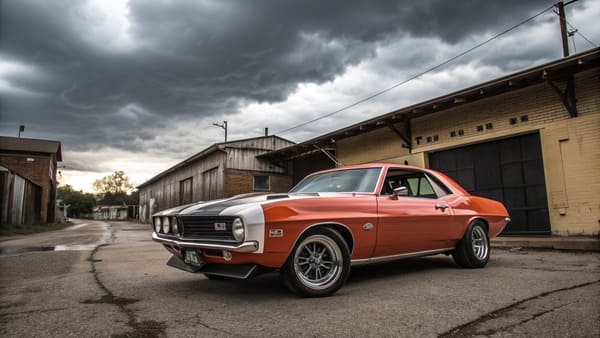
The 1970s were a wild ride for the American auto industry. It was a decade caught between two worlds. On one hand, you had the leftover swagger of the 1960s muscle car era. On the other, you had a wave of new challenges that would change cars forever. It’s this collision of forces that makes these vehicles so interesting. They have a story to tell, one of power, crisis, and adaptation. Let's dig into what makes this decade so unforgettable and why these cars continue to capture our imagination.
What Made 1970s Cars So Different From Every Other Era?
You see a 70s car and instantly know it. But what exactly gives it that unique vibe? It’s a look and feel that no other decade quite managed to capture.
1970s cars are different because they mixed big, bold, leftover 60s designs with new, strict government rules. This forced car makers to add big safety bumpers and reduce engine power, creating a very unique look and feel that wasn't seen before or after.
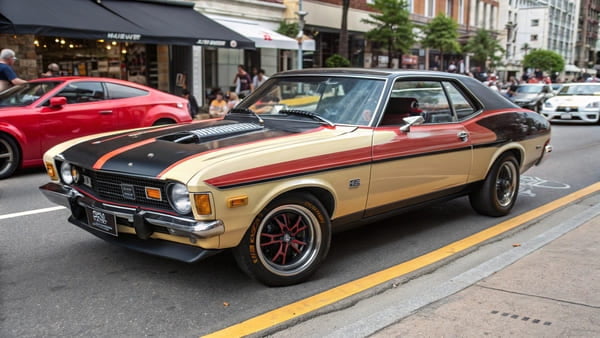
The cars from the early 70s still had the DNA of their 1960s ancestors. They were big, with long hoods and short rear decks. Bold colors like "Plum Crazy" purple and "Hemi Orange" were everywhere, often paired with vinyl roofs and wild stripe packages. But under the surface, big changes were happening. New government agencies were created to focus on safety and the environment2. This led to visible changes like the massive 5-mph safety bumpers that were added to cars starting in 19733. These bumpers completely changed the look of many models, sometimes for the worse. Inside, the focus shifted to plastic dashboards and interiors, which were cheaper to produce.
This era's unique materials make restoring these cars a real challenge. I remember working on an order for a client from Pakistan. We were manufacturing plastic interior accessory parts for a classic 70s model. The precision required is incredibly high, and the old designs don't always work well with modern injection-molding machines. The cooling process is the hardest part. On that first run, the parts "shrank" more than we expected after cooling. I was worried, but the client loved it! He said the slight imperfection made them look more authentic. We’ve since perfected the process, but it taught me how much specialized skill goes into recreating the feel of that decade.
| Feature | Late 1960s Style | Mid 1970s Style |
|---|---|---|
| Bumpers | Sleek, chrome, integrated into the body | Large, protruding, "5-mph" safety bumpers |
| Roof | Painted steel or convertible top | Heavy use of padded vinyl roofs |
| Engine | High-compression, high-horsepower V8s | Low-compression, lower-horsepower V8s |
| Colors | Bright, vibrant, psychedelic colors | More muted earth tones (browns, greens, golds) |
How Did the 1973 Oil Crisis Completely Change the Car Industry?
You've probably heard about the oil crisis, but it’s hard to imagine its impact. One day gas was cheap and plentiful, and the next, it was a different world.
The 1973 oil crisis made gas prices skyrocket, causing a huge panic4. People stopped buying big, gas-guzzling American cars and started buying smaller, fuel-efficient cars from Japan5. This forced American car companies to completely change their focus from power to economy almost overnight.
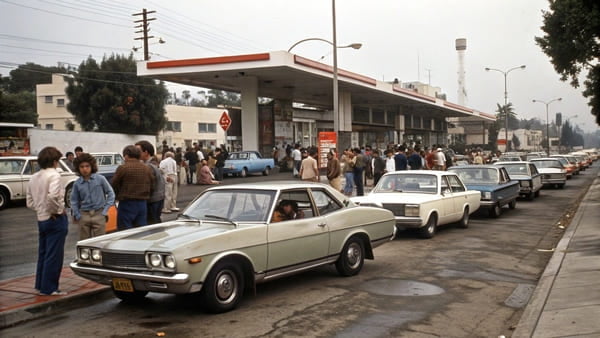
In October 1973, a group of oil-producing countries in the Middle East, known as OPEC, declared an oil embargo. They stopped shipping oil to the United States and other countries. The effect was immediate and shocking. Gas prices quadrupled, and supply became scarce. Suddenly, those big V8 engines that got 10 miles per gallon were a huge problem. People waited in gas lines for hours, and some states even started rationing gas. The public’s taste in cars changed in a flash. The dream of a big, powerful American car was replaced by the practical need for a small, efficient one.
This is when Japanese automakers like Toyota, Honda, and Datsun (now Nissan) saw their chance. Their small, reliable, and fuel-efficient cars were exactly what Americans now wanted. U.S. automakers were caught completely off guard6. They scrambled to respond, rushing their own small cars to market, like the Ford Pinto and Chevrolet Chevette. They also started "downsizing" their famous models7. The Ford Mustang, once a powerful muscle car, was reborn in 1974 as the smaller, four-cylinder "Mustang II." This dramatic pivot from power to economy defined the second half of the 1970s and set the stage for the auto industry for decades to come. As a parts manufacturer, we still see the legacy of this era in designs that prioritize weight reduction and efficiency.
| Vehicle Type | Typical 1972 MPG | Typical 1976 MPG |
|---|---|---|
| Full-Size Sedan | 10-12 MPG | 13-15 MPG |
| Muscle Car | 8-11 MPG | N/A (most were discontinued) |
| New Compact Car | N/A | 25-30 MPG |
| Japanese Import | 20-25 MPG | 30-40 MPG |
Why Did Muscle Cars Lose So Much Horsepower During the 1970s?
A 1970s muscle car can look incredibly aggressive. But when you check the specs, the horsepower numbers are often surprisingly low. It feels like a contradiction.
Muscle cars lost horsepower due to a perfect storm of factors. New emissions laws required power-robbing changes, high insurance costs made them too expensive to own, and the oil crisis killed the public's desire for thirsty engines. It was a multi-front attack on performance.
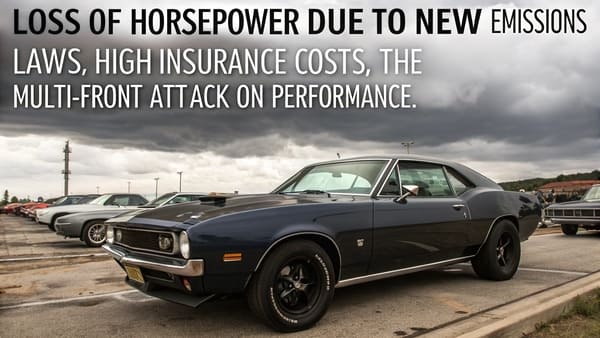
The decline of the muscle car wasn't caused by one single thing, but by several major changes happening all at once. It was a tough time to be a fan of horsepower.
The Clean Air Act and Unleaded Gas
The first hit came from environmental regulations. The Clean Air Act of 1970 demanded a huge reduction in vehicle emissions8. To meet these new standards, car companies had to make big changes to their engines. They lowered the compression ratios so the engines could run on new, unleaded gasoline9. They also had to add catalytic converters to the exhaust systems10. These early converters were very restrictive and acted like a cork in the exhaust, choking the engine and reducing its power significantly.
Soaring Insurance Costs
At the same time, insurance companies were getting nervous about high-performance cars11. They started adding massive surcharges for cars with big engines and high horsepower ratings. This made muscle cars incredibly expensive for the young buyers who were their main customers. A powerful car could cost as much to insure as it did to buy. This pushed many buyers toward slower, more practical models.
A New Way of Measuring Power
A final, and often misunderstood, reason for the drop was a change in how horsepower was measured. Until 1972, manufacturers used "gross" horsepower ratings. This was measured from a bare engine on a stand, with no belts, air filter, or full exhaust system. In 1972, the industry switched to the more realistic "net" horsepower rating, which measured power from the engine as it was installed in the car, with all its accessories attached12. This change alone caused a huge drop in the advertised numbers, even if the engine itself was identical to the previous year's model. Today, when we engineer performance parts like air intakes or cooling systems for these classics, we're essentially undoing the restrictions of the 70s to unlock their true potential.
| Car Model Example | 1971 "Gross" HP | 1972 "Net" HP |
|---|---|---|
| Chevy Corvette 454 | 365 HP | 270 HP |
| Ford Mustang 351 | 285 HP | 266 HP |
| Plymouth 'Cuda 340 | 275 HP | 240 HP |
Conclusion
The 1970s were a turning point, defined by bold style, new regulations, and an energy crisis. This created a unique generation of cars that tells a fascinating story of American history.
"Malaise era - Wikipedia", https://en.wikipedia.org/wiki/Malaise_era. A historical overview of the American automotive industry in the 1970s describes the decade as a period of transition from high-powered muscle cars to vehicles shaped by new fuel efficiency and safety regulations, supporting the claim of a unique shift in design priorities during this era. Evidence role: historical_context; source type: encyclopedia. Supports: These cars represent a unique transition from raw 60s muscle power to a new era defined by fuel efficiency and safety regulations.. Scope note: While the source provides context for the transition, it may not address every specific model or manufacturer. ↩
"National Highway Traffic Safety Administration - Wikipedia", https://en.wikipedia.org/wiki/National_Highway_Traffic_Safety_Administration. The establishment of the National Highway Traffic Safety Administration (NHTSA) in 1970 and the Environmental Protection Agency (EPA) in 1970 is documented as a response to growing concerns over vehicle safety and environmental impact, supporting the claim that new agencies were created for these purposes. Evidence role: historical_context; source type: government. Supports: New government agencies were created to focus on safety and the environment.. Scope note: The source confirms agency creation but may not detail all their specific automotive initiatives. ↩
"[PDF] EVALUATION OF THE BUMPER STANDARD - CrashStats - NHTSA", https://crashstats.nhtsa.dot.gov/Api/Public/Publication/805866. Federal Motor Vehicle Safety Standard No. 215 mandated 5-mph bumpers for passenger cars beginning with the 1973 model year, supporting the claim regarding the timing and nature of this safety feature. Evidence role: historical_context; source type: government. Supports: Massive 5-mph safety bumpers were added to cars starting in 1973.. Scope note: The regulation applied primarily to passenger cars and not all vehicle types. ↩
"1973 Oil Crisis - Wikipedia", https://en.wikipedia.org/wiki/1973_oil_crisis. Historical accounts confirm that the 1973 oil embargo led to a rapid and significant increase in gasoline prices in the United States, resulting in widespread public concern and panic buying. Evidence role: historical_context; source type: encyclopedia. Supports: The 1973 oil crisis made gas prices skyrocket, causing a huge panic.. Scope note: The extent of panic varied by region and is described in general terms. ↩
"Malaise era - Wikipedia", https://en.wikipedia.org/wiki/Malaise_era. Automotive industry analyses show a marked increase in sales of Japanese compact cars in the United States following the 1973 oil crisis, as consumers sought more fuel-efficient alternatives to traditional American vehicles. Evidence role: statistic; source type: research. Supports: People stopped buying big, gas-guzzling American cars and started buying smaller, fuel-efficient cars from Japan.. Scope note: Sales data may vary by year and region, but the overall trend is well documented. ↩
"Malaise era - Wikipedia", https://en.wikipedia.org/wiki/Malaise_era. Industry reports and historical analyses indicate that U.S. automakers were slow to adapt to the sudden demand for fuel-efficient vehicles after the oil crisis, supporting the claim that they were largely unprepared for the market shift. Evidence role: expert_consensus; source type: research. Supports: U.S. automakers were caught completely off guard by the shift to fuel-efficient cars.. Scope note: Some manufacturers began developing smaller cars, but the overall industry response lagged behind consumer demand. ↩
"Malaise era - Wikipedia", https://en.wikipedia.org/wiki/Malaise_era. Automotive histories document that major U.S. manufacturers began downsizing popular models in the mid-to-late 1970s, reducing vehicle size and weight to improve fuel efficiency. Evidence role: historical_context; source type: encyclopedia. Supports: They also started "downsizing" their famous models.. Scope note: The timing and extent of downsizing varied by manufacturer and model. ↩
"Summary of the Clean Air Act | US EPA", https://www.epa.gov/laws-regulations/summary-clean-air-act. The Clean Air Act of 1970 established federal standards for automobile emissions, requiring significant reductions in pollutants from new vehicles, as documented in government and environmental sources. Evidence role: historical_context; source type: government. Supports: The Clean Air Act of 1970 demanded a huge reduction in vehicle emissions.. Scope note: The Act set targets but implementation timelines varied. ↩
"Effects Of Using Unleaded and Low-lead Gasoline, and ... - epa nepis", https://nepis.epa.gov/Exe/ZyPURL.cgi?Dockey=2000U8MD.TXT. Engineering analyses confirm that automakers reduced engine compression ratios in the 1970s to accommodate unleaded gasoline, which had lower octane ratings than leaded fuel. Evidence role: mechanism; source type: education. Supports: They lowered the compression ratios so the engines could run on new, unleaded gasoline.. Scope note: The extent of compression ratio changes varied by manufacturer and engine type. ↩
"Catalytic converter - Wikipedia", https://en.wikipedia.org/wiki/Catalytic_converter. Regulatory histories indicate that catalytic converters became standard on most new American cars starting with the 1975 model year, in response to federal emissions requirements. Evidence role: historical_context; source type: government. Supports: They also had to add catalytic converters to the exhaust systems.. Scope note: Some models and regions adopted the technology at different times. ↩
"Measuring Price Change in the CPI: Motor vehicle insurance", https://www.bls.gov/cpi/factsheets/motor-vehicle-insurance.htm. Industry reports and automotive histories note that insurance companies increased premiums and surcharges for high-performance vehicles in the early 1970s, contributing to the decline of the muscle car market. Evidence role: historical_context; source type: research. Supports: Insurance companies were getting nervous about high-performance cars and started adding massive surcharges for cars with big engines and high horsepower ratings.. Scope note: The magnitude of surcharges varied by insurer and region. ↩
"Horsepower - Wikipedia", https://en.wikipedia.org/wiki/Horsepower. Automotive engineering sources confirm that U.S. manufacturers adopted the SAE net horsepower rating in 1972, measuring engine output with all accessories and emissions controls installed, resulting in lower published figures. Evidence role: mechanism; source type: education. Supports: The industry switched to the more realistic "net" horsepower rating, which measured power from the engine as it was installed in the car, with all its accessories attached.. Scope note: The change affected published ratings but not necessarily actual engine performance. ↩