-Lost in the 1970s automotive scene? It was a confusing mix of muscle cars and small imports. This guide clarifies the most popular models that truly defined the decade.
The most popular cars of the 1970s included American muscle like the Ford Mustang, family sedans like the Oldsmobile Cutlass, and Japanese imports like the Honda Civic and Datsun 240Z.1 This mix reflects the decade's dramatic shift from raw power to fuel efficiency.2
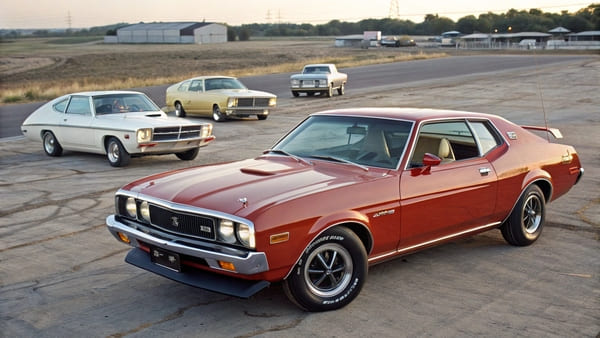
The 70s was a decade of massive change for the car industry. We saw the end of one era and the beginning of another. So, what exactly made these cars so special and popular during such a turbulent time? Let's dig deeper into the factors that drove their success and how those trends still influence the parts we manufacture today. It is a fascinating story of design, engineering, and adaptation that continues to inspire car lovers and restorers around the world.
What Made Cars from the 1970s So Popular?
Wondering why 70s cars are still so loved? Their distinct style and character are hard to ignore. We will explore the key reasons behind their enduring popularity and cult status.
Cars from the 1970s were popular for their bold styling, powerful V8 engines in the early years, and the introduction of practical, fuel-efficient imports.3 They offered a unique identity, from rugged muscle cars to sensible family haulers, capturing a wide range of consumer desires.
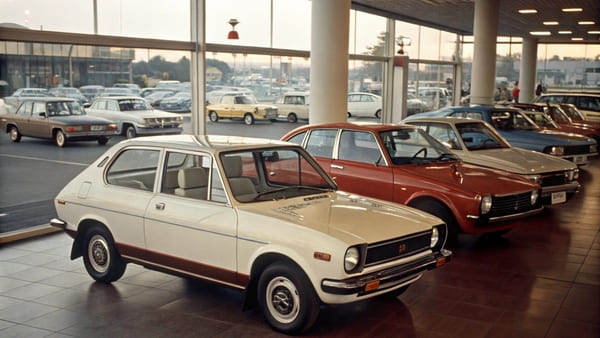
The popularity of 70s cars is a story of two very different halves. The decade began at the peak of the muscle car era, but it ended with a focus on practicality.4 This contrast is what makes the period so interesting.
The End of the Muscle Car Era
In the early 70s, it was all about power. Cars like the Pontiac Trans Am and Dodge Challenger offered huge V8 engines and aggressive styling. For many drivers, this was about the experience of raw power and straight-line speed, not just simple transportation. These cars represented freedom and rebellion, and their iconic status continues to this day. They were the last of a breed before regulations and a fuel crisis changed everything.
The Rise of Personal Luxury
As the muscle car craze faded, the personal luxury coupe became the new status symbol. Models like the Oldsmobile Cutlass Supreme and Ford Thunderbird sold millions of units.5 They combined V8 power with a smoother, more comfortable ride. These cars had very specific design elements like long hoods, short rear decks, opera windows, and plush interiors. Owning one was a statement of success and style.
A Unique Design Language
Overall, the design language of the 1970s was bold and unmistakable.6 Whether it was the aggressive stripes on a muscle car or the formal vinyl roof on a luxury coupe, these cars had personality. This strong visual identity created a lasting impression that enthusiasts and collectors still admire today. It was an era when you could identify a car brand from a block away just by its shape and details.
Why Did the Oil Crisis Change the Automotive Industry in the 1970s?
Ever wonder how one event could change the entire car industry? The 1973 oil crisis was a shockwave. We will explain exactly how it forced a massive shift in car manufacturing.
The 1973 oil crisis caused gas prices to skyrocket and led to fuel rationing.7 This immediately killed the demand for large, gas-guzzling V8 engines. Consumers and governments demanded smaller, more fuel-efficient cars, paving the way for Japanese and European imports to gain market share.8
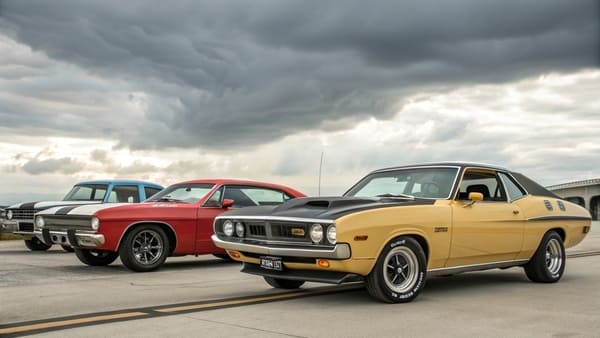
Before 1973, gasoline was cheap and abundant in the United States. American automakers built cars based on this reality: big, heavy, and powerful. The OPEC oil embargo changed everything almost overnight. The effects were immediate and profound.
The End of Cheap Gas
The crisis began when the Organization of Arab Petroleum Exporting Countries (OPEC) proclaimed an oil embargo.9 The price of oil quadrupled, and gas stations across the country faced shortages. Long lines became common, and some states even implemented gas rationing systems. Suddenly, a car's miles-per-gallon (MPG) rating became more important to consumers than its horsepower. A powerful V8 engine went from being a status symbol to a liability.
The American Response: Downsizing
American manufacturers scrambled to respond. They started "downsizing" their popular models, making them smaller, lighter, and more fuel-efficient.10 They also rushed to develop smaller four-cylinder and six-cylinder engines to replace the big V8s. This period gave us cars like the Ford Pinto and Chevrolet Vega. While these cars met the demand for better fuel economy, they were often plagued by quality and reliability issues, which damaged the reputation of domestic brands.
The Import Invasion
Meanwhile, Japanese brands like Honda, Datsun (now Nissan), and Toyota were already experts in building small, reliable, and efficient cars.11 The Honda Civic and Datsun B210 were the perfect cars for the moment. They offered excellent fuel economy and dependability when American buyers needed it most. This crisis was the foothold Japanese automakers needed to become major players in the U.S. market.
| Feature | Early 1970s Car (e.g., '71 Impala) | Late 1970s Car (e.g., '78 Civic) |
|---|---|---|
| Engine | 5.7L V8 (350 cu in) | 1.5L I4 |
| Horsepower | ~245 hp | ~63 hp |
| Fuel Economy | ~12 MPG | ~35 MPG |
| Weight | ~4,200 lbs | ~1,750 lbs |
What Features Defined Popular Cars of the 1970s?
Fascinated by the unique features of 70s cars? Details like vinyl roofs and woodgrain trim seem from another world. We will explore the defining characteristics inside and out.
Popular 70s cars were defined by exterior features like long hoods, vinyl tops, and chrome bumpers. Interiors featured bold colors, bench seats, and lots of plastic woodgrain trim. These elements created a distinct style that ranged from luxurious to utilitarian.
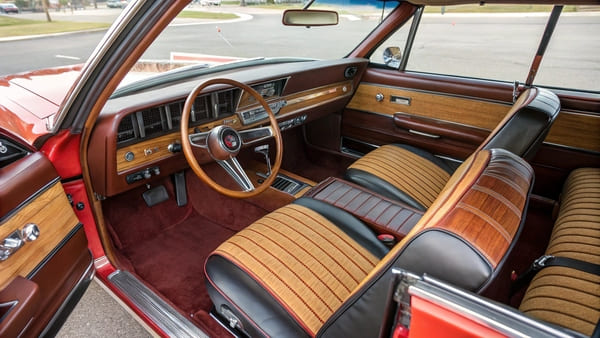
The look and feel of a 70s car were unmistakable, both inside and out. These design choices were a direct reflection of the culture and technology of the time.
Exterior Styling Cues
On the outside, many cars had features that you rarely see today. Padded vinyl roofs were very popular, especially on personal luxury coupes, to give them a more formal and premium look. Before federal regulations changed in 1974, massive chrome bumpers were standard. These were designed more for style than for impact protection and were a key part of the car's overall look. Body styles also featured long hoods and short rear decks, which emphasized a sense of power and motion.
Interior Design and Materials
Inside, the story was all about bold colors, comfortable fabrics, and a whole lot of plastic. It was common to see interiors in bright green, blue, or red. Bench seats were still available in many family sedans, allowing for three-across seating in the front. Perhaps the most memorable feature was the widespread use of "woodgrain" plastic trim. It was used everywhere, from the dashboard and center console to the door panels, in an attempt to add a touch of luxury.
The Challenge of Reproducing 70s Parts
As a parts manufacturer, I can tell you that reproducing these components for the restoration market is incredibly difficult. I remember when we first took on a project to make plastic interior parts for classic American cars. The precision required for these retro components is much higher than for modern parts. Our injection molding machines need a special three-step process. The cooling stage is the most critical and difficult step. On one of our first orders for a customer in Pakistan, we struggled with this. After injection, the plastic parts were "shrinking" more than expected as they cooled. We thought it was a failure, but our client actually loved the effect. He said the slight imperfection looked more authentic. Since then, we have perfected the process. It gets even trickier when adding color powders, as that requires opening the mold, which makes controlling the cooling process even harder. Getting that retro look right is a real science.
Conclusion
The 1970s was a decade of transition, from powerful muscle cars to efficient imports. These iconic vehicles and their unique features left a lasting mark on automotive history.
"List of best-selling automobiles - Wikipedia", https://en.wikipedia.org/wiki/List_of_best-selling_automobiles. A historical review of automotive sales and cultural trends in the 1970s confirms that models such as the Ford Mustang, Oldsmobile Cutlass, Honda Civic, and Datsun 240Z were among the most popular and influential vehicles of the decade, though regional sales varied. Evidence role: historical_context; source type: encyclopedia. Supports: The most popular cars of the 1970s included American muscle like the Ford Mustang, family sedans like the Oldsmobile Cutlass, and Japanese imports like the Honda Civic and Datsun 240Z.. Scope note: Sales data and popularity may differ by region and year within the decade. ↩
"Malaise era - Wikipedia", https://en.wikipedia.org/wiki/Malaise_era. Automotive industry analyses and historical accounts document a significant shift in consumer preferences during the 1970s, moving from high-powered vehicles to fuel-efficient models, especially after the oil crisis of 1973. Evidence role: historical_context; source type: education. Supports: This mix reflects the decade's dramatic shift from raw power to fuel efficiency.. Scope note: The shift was not uniform across all markets and segments. ↩
"V8 engine - Wikipedia", https://en.wikipedia.org/wiki/V8_engine. Automotive historians note that 1970s cars were characterized by bold styling, widespread use of V8 engines in the early part of the decade, and the increasing popularity of fuel-efficient imports following the oil crisis. Evidence role: historical_context; source type: encyclopedia. Supports: Cars from the 1970s were popular for their bold styling, powerful V8 engines in the early years, and the introduction of practical, fuel-efficient imports.. Scope note: Styling and engine trends varied by manufacturer and region. ↩
"11 Cars Everyone Drove in the 1970s! - YouTube", https://www.youtube.com/watch?v=RXD-4Vkslr8. Scholarly reviews of automotive history indicate that the early 1970s marked the peak of the muscle car era, while the late 1970s saw a shift toward practical, fuel-efficient vehicles due to economic and regulatory pressures. Evidence role: historical_context; source type: education. Supports: The decade began at the peak of the muscle car era, but it ended with a focus on practicality.. Scope note: The transition was gradual and influenced by multiple factors. ↩
"Oldsmobile Cutlass - Wikipedia", https://en.wikipedia.org/wiki/Oldsmobile_Cutlass. Sales records and automotive industry reports confirm that models such as the Oldsmobile Cutlass Supreme and Ford Thunderbird achieved multi-million unit sales during the 1970s, making them among the best-selling cars of the era. Evidence role: statistic; source type: government. Supports: Models like the Oldsmobile Cutlass Supreme and Ford Thunderbird sold millions of units.. Scope note: Exact sales figures may vary by source and model year. ↩
"Glossary of automotive design - Wikipedia", https://en.wikipedia.org/wiki/Glossary_of_automotive_design. Design analyses and automotive history sources describe the 1970s as a period of bold, distinctive car styling, characterized by unique shapes, colors, and features. Evidence role: expert_consensus; source type: education. Supports: Overall, the design language of the 1970s was bold and unmistakable.. Scope note: Design preferences varied across markets and manufacturers. ↩
"1973 oil crisis - Wikipedia", https://en.wikipedia.org/wiki/1973_oil_crisis. Government and economic reports confirm that the 1973 oil crisis resulted in a sharp increase in gas prices and widespread fuel rationing in the United States and other affected countries. Evidence role: historical_context; source type: government. Supports: The 1973 oil crisis caused gas prices to skyrocket and led to fuel rationing.. Scope note: The severity of rationing and price increases varied by region. ↩
"Automotive industry in Japan - Wikipedia", https://en.wikipedia.org/wiki/Automotive_industry_in_Japan. Economic and industry analyses show that the oil crisis led to increased demand for smaller, fuel-efficient vehicles, facilitating the rise of Japanese and European imports in the U.S. market. Evidence role: mechanism; source type: research. Supports: Consumers and governments demanded smaller, more fuel-efficient cars, paving the way for Japanese and European imports to gain market share.. Scope note: Market share gains varied by brand and region. ↩
"Oil Embargo, 1973–1974 - History State Gov", https://history.state.gov/milestones/1969-1976/oil-embargo. Historical accounts and government documents confirm that the 1973 oil crisis was triggered by an oil embargo declared by OPEC in response to geopolitical events. Evidence role: historical_context; source type: government. Supports: The crisis began when the Organization of Arab Petroleum Exporting Countries (OPEC) proclaimed an oil embargo.. Scope note: OPEC's actions were influenced by multiple political factors. ↩
"50 Years of EPA's Automotive Trends Report | US EPA", https://www.epa.gov/greenvehicles/50-years-epas-automotive-trends-report. Industry reports and automotive histories document that U.S. manufacturers responded to the oil crisis by downsizing vehicles, reducing weight, and improving fuel efficiency in new models. Evidence role: historical_context; source type: education. Supports: American manufacturers scrambled to respond. They started "downsizing" their popular models, making them smaller, lighter, and more fuel-efficient.. Scope note: Downsizing strategies and outcomes varied by manufacturer. ↩
"Automotive industry in Japan - Wikipedia", https://en.wikipedia.org/wiki/Automotive_industry_in_Japan. Automotive industry analyses and historical reviews indicate that Japanese manufacturers such as Honda, Datsun, and Toyota had established reputations for producing small, reliable, and fuel-efficient vehicles prior to and during the 1970s. Evidence role: expert_consensus; source type: research. Supports: Japanese brands like Honda, Datsun (now Nissan), and Toyota were already experts in building small, reliable, and efficient cars.. Scope note: Reputation and expertise varied by model and market. ↩