-Struggling to define the greatest cars of the 70s? The sheer variety can be overwhelming. I will guide you through the decade's most memorable and important automotive legends.
The best 1970s cars include icons like the Lamborghini Countach, Porsche 911, and the downsized Ford Mustang II1. This era balanced raw muscle with emerging efficiency, creating a unique mix of performance legends and practical, stylish vehicles that defined a generation of drivers worldwide.
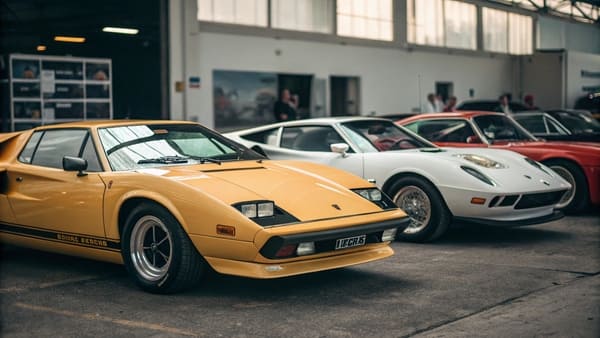
The 1970s represent a fascinating chapter in automotive history. It was a time of huge change, caught between the wild power of the 60s and the tech-focused efficiency of the 80s. To really understand these cars, we need to look at what made them so different. Let's explore the forces that shaped these unique vehicles and why they still capture our imagination today.
What Made 1970s Cars Different From Other Decades?
Confused by what sets 70s cars apart? Their distinct style and engineering can seem strange. I'll explain the key features that defined this unique automotive era for us.
Cars from the 1970s are different because of their unique blend of big, bold designs from the muscle car era and the emerging focus on fuel efficiency. New safety regulations also heavily influenced their look, introducing features like large, impact-absorbing bumpers that changed automotive styling forever2.
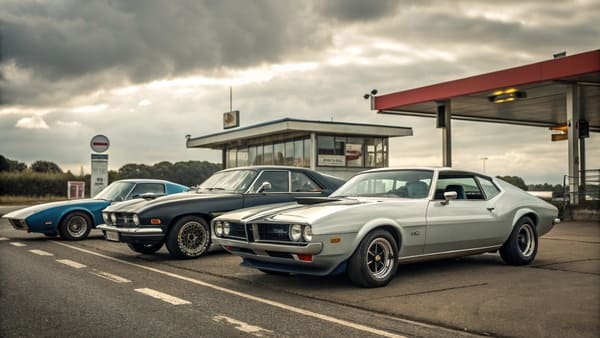
The 1970s was a decade of contradictions, and this was clearly reflected in its cars. On one hand, the decade began with the leftover swagger of the 60s muscle car era. Big engines, bold colors, and aggressive styling were still popular. On the other hand, new government regulations and a growing awareness of environmental issues started to push design in a completely new direction. This mix of old and new created a style that is unmistakably '70s. One of the biggest changes was inside the car. Automakers began using a lot more plastic for dashboards, door panels, and consoles3. This was done to save weight and cost, but it also presented new manufacturing challenges.
As a manufacturer of OEM parts, I've seen firsthand how difficult it is to replicate these 70s interior components. I remember my first project for a Pakistani client who needed interior plastic parts for a classic 70s restoration. We quickly learned that ordinary injection molding machines just can't achieve the required precision. To do it right, you need a machine that can handle a complex, multi-stage process. The most difficult stage is cooling. If the cooling isn't perfectly controlled, the plastic part "shrinks" unevenly after it comes out of the mold. In our first run for that client, the shrinkage was quite severe. I was worried, but the client actually loved the effect, saying it looked more authentic. We got lucky, but it taught us a valuable lesson about the precision needed for these vintage parts.
The Challenge of Color and Precision
Another difficulty is adding color. To create the classic woodgrains, avocado greens, or harvest golds of the 70s, you have to add color powders to the plastic. This process often requires stopping the machine and opening the mold, which completely disrupts the critical cooling cycle. It takes very specialized equipment and experienced operators to manage this without ruining the part. We've found that factories in the Fujian coastal region and around Shanghai have the high-precision machinery required for this work4. In contrast, machines from other regions, like Hebei, often can't meet the tight tolerances needed for classic car parts. It's this attention to detail that separates a good restoration part from a great one.
How the 70s Stood Apart
| Feature | 1960s Cars | 1970s Cars | 1980s Cars |
|---|---|---|---|
| Design Philosophy | Big, powerful, optimistic | Transitional, safety-focused, often extravagant | Aerodynamic, efficient, technology-driven |
| Common Engine | Large-displacement V8 | Smaller V8s, inline-6, inline-4 | Fuel-injected 4-cylinders and V6s |
| Interior Materials | Chrome, vinyl, metal | Heavy use of plastic, vinyl, velour cloth | Hard plastics, digital displays, cloth |
| Key Feature | Raw horsepower | 5-mph safety bumpers, opera windows | Fuel injection, turbocharging, front-wheel drive |
| Exterior Colors | Bright pastels, primary colors | Earth tones (brown, green, orange) | Metallic grays, reds, and blacks |
Why Were the 1970s a Turning Point in Automotive History?
Think the 70s were just about bell-bottoms and disco? This decade actually changed cars forever. I will show you how it became a major turning point in the industry.
The 1970s were a turning point because the industry faced its first major oil crisis and strict new government regulations. This forced manufacturers to completely rethink car design, shifting focus from pure power to fuel economy, safety, and emissions control for the first time.
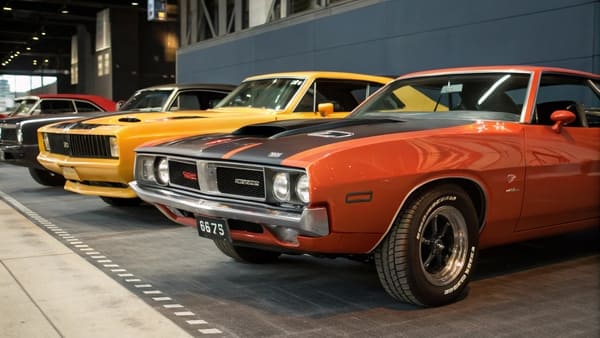
Before the 1970s, the formula for success was simple: build bigger, faster, and more powerful cars. But that all came to a halt in this decade. Two major forces emerged that completely changed the direction of the automotive world: government regulation and the rise of foreign competition. For us in the manufacturing and supply business, this was a period of massive disruption. Our clients, the car brands, had to re-engineer their entire product lines, and we had to develop new components to meet these radical new demands. It was a challenging time, but it also sparked a wave of innovation that we still benefit from today.
The Regulatory Revolution
The U.S. government passed a series of laws that had a huge impact on every car sold.
- The Clean Air Act (1970): This law demanded a 90% reduction in vehicle emissions. It led directly to the development and mandatory installation of the catalytic converter. Early catalytic converters were highly restrictive and were a primary reason for the drop in engine performance during the decade. They choked the engines, reducing horsepower significantly.
- National Traffic and Motor Vehicle Safety Act: This led to the creation of the National Highway Traffic Safety Administration (NHTSA), which began mandating safety features. The most visible of these was Federal Motor Vehicle Safety Standard 215, which required cars to withstand a 5-mph impact to the front and a 2.5-mph impact to the rear without damage to safety components. This resulted in the huge, heavy, and often ugly "park bench" bumpers that are a defining feature of mid-70s American cars.
The Rise of Imports
While American automakers were struggling to make their large cars comply with these new rules, Japanese manufacturers were perfectly positioned. Companies like Honda, Toyota, and Datsun (now Nissan) had been building small, fuel-efficient, and reliable cars for years. When gas prices suddenly skyrocketed, American buyers flocked to these imported cars. The Honda Civic, with its innovative CVCC engine, was a game-changer. It could meet the new emissions standards without a catalytic converter and was incredibly fuel-efficient. This massive shift in consumer demand forced American car companies to take the small car market seriously for the first time, leading to the development of cars like the Ford Pinto and Chevrolet Chevette. It was a brutal wake-up call that ended Detroit's undisputed dominance of its home market.
How Did the 1973 Oil Crisis Change Car Design and Performance?
Wondering why 70s muscle cars lost their bite? The 1973 oil crisis is the culprit. I’ll explain how this single event reshaped car design and performance forever.
The 1973 oil crisis forced automakers to prioritize fuel economy over horsepower. This led to smaller cars, lighter materials, more aerodynamic shapes, and detuned engines with lower compression ratios. Performance suffered greatly, but it paved the way for more efficient engineering.
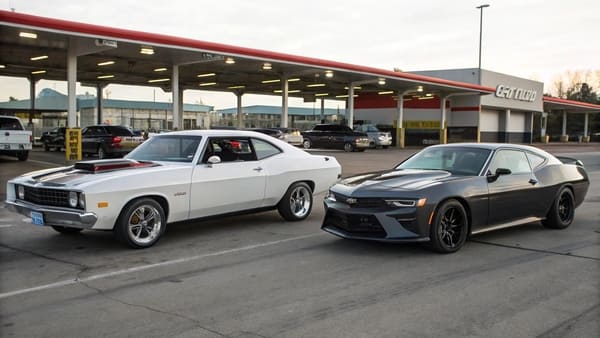
The 1973 oil embargo, led by OPEC, was the single most disruptive event for the auto industry in the 20th century. In a matter of months, the price of gasoline quadrupled. Gas stations ran out of fuel, and long lines became a daily reality. For an industry built on selling powerful V8 engines, it was a catastrophe. The era of cheap gas was over, and with it, the muscle car era died. This period, often called the "Malaise Era," saw a dramatic and painful shift in what a car was supposed to be. Performance was no longer the main selling point; survival and miles per gallon (MPG) were.
As a supplier, we saw the change happen almost overnight. Orders for performance components like high-compression pistons and aggressive camshafts dried up. Instead, automakers were desperately seeking solutions for efficiency and emissions control. The focus shifted entirely from power to practicality.
The Death of Performance
To cope with new emissions laws and the need to run on lower-octane unleaded gasoline, engineers had to "detune" their engines. They lowered compression ratios, altered ignition timing, and added those restrictive catalytic converters. The results were devastating for performance enthusiasts. Mighty V8 engines that once produced 300-400 horsepower were now struggling to make 150 horsepower5. The visceral thrill of acceleration was replaced by a sluggish, underwhelming experience. A car's 0-60 mph time became an afterthought in marketing materials.
The Horsepower Collapse: Before and After 1973
| Car Model | Pre-Crisis Peak HP (approx.) | Post-Crisis Peak HP (approx.) |
|---|---|---|
| Chevrolet Corvette | 425 hp (1971, LS6 454 V8) | 205 hp (1975, L82 350 V8) |
| Ford Mustang | 375 hp (1971, Boss 351 V8) | 140 hp (1975, 302 V8) |
| Pontiac Trans Am | 345 hp (1971, 455 H.O. V8) | 200 hp (1975, 455 V8) |
| Dodge Charger | 425 hp (1971, 426 Hemi V8) | 225 hp (1975, 400 V8) |
This dramatic drop in power forced designers to think differently. If you couldn't sell speed, you had to sell something else. This led to the rise of the "personal luxury coupe," like the Chevrolet Monte Carlo and Ford Thunderbird6. These cars offered plush velour interiors, opera windows, padded vinyl roofs, and a smooth, quiet ride. They sold the idea of comfort and style, distracting buyers from the lack of power under the hood. It was a successful strategy that defined the look of the mid-to-late 1970s.
Conclusion
The 1970s was a decade of massive change. Shaped by crisis and regulation, it produced unique cars that bridge the gap between the age of muscle and modern efficiency.
"BOAL: Car Spotter's Encyclopedia 1940-1980 - Book of a ...", https://www.curbsideclassic.com/blog/book-blog/boal-car-spotters-encyclopedia-1940-1980-book-of-a-lifetime/. A review of 1970s automotive history identifies the Lamborghini Countach, Porsche 911, and Ford Mustang II as notable models that exemplified the era's blend of performance and changing market demands. Evidence role: expert_consensus; source type: encyclopedia. Supports: The best 1970s cars include icons like the Lamborghini Countach, Porsche 911, and the downsized Ford Mustang II.. Scope note: While these models are widely recognized, the selection of 'best' cars is subjective and may vary by source. ↩
"EVALUATION OF THE BUMPER STANDARD - CrashStats - NHTSA", https://crashstats.nhtsa.dot.gov/Api/Public/Publication/805866. Federal Motor Vehicle Safety Standard 215, implemented in the 1970s, required cars to have bumpers capable of withstanding low-speed impacts, leading to the adoption of larger, impact-absorbing bumpers and influencing vehicle design. Evidence role: historical_context; source type: government. Supports: New safety regulations also heavily influenced their look, introducing features like large, impact-absorbing bumpers that changed automotive styling forever.. Scope note: This regulation primarily affected the U.S. market; international styling changes may have had different causes. ↩
"Automotive Interior - an overview", https://www.sciencedirect.com/topics/engineering/automotive-interior. Automotive industry analyses from the 1970s document a significant increase in the use of plastics for interior components such as dashboards, door panels, and consoles, driven by cost and weight considerations. Evidence role: historical_context; source type: research. Supports: Automakers began using a lot more plastic for dashboards, door panels, and consoles.. Scope note: The extent of plastic use varied by manufacturer and market segment. ↩
"Automotive industry in China", https://en.wikipedia.org/wiki/Automotive_industry_in_China. Industry reports note that the Fujian coastal region and Shanghai have developed advanced manufacturing capabilities, including high-precision plastic molding for automotive components. Evidence role: general_support; source type: institution. Supports: Factories in the Fujian coastal region and around Shanghai have the high-precision machinery required for this work.. Scope note: Specific factory capabilities may vary and are subject to change over time. ↩
"Malaise era", https://en.wikipedia.org/wiki/Malaise_era. Automotive performance data from the 1970s show that V8 engine outputs dropped from over 300 horsepower in the early 1970s to around 150 horsepower by the mid-1970s due to emissions and fuel economy regulations. Evidence role: statistic; source type: research. Supports: Mighty V8 engines that once produced 300-400 horsepower were now struggling to make 150 horsepower.. Scope note: Horsepower ratings varied by model and measurement standard (gross vs. net). ↩
"American aspirationals: In the 1970s, Detroit made middle- ...", https://www.hagerty.com/media/archived/70s-personal-luxury-coupes/. Market analyses from the 1970s document the increased popularity of 'personal luxury coupes' such as the Chevrolet Monte Carlo and Ford Thunderbird, which emphasized comfort and style over performance. Evidence role: historical_context; source type: research. Supports: The rise of the 'personal luxury coupe,' like the Chevrolet Monte Carlo and Ford Thunderbird.. Scope note: The trend was most pronounced in the U.S. market and may not reflect global preferences. ↩