-Driving at night when your headlights suddenly cut out is terrifying. You're instantly in the dark, unable to see the road, creating a very dangerous situation for you and others.
The first thing you must do is turn on your hazard lights, slow down gradually, and pull over to a safe location completely off the road1. Do not panic or brake suddenly. Once stopped, you can try to diagnose the issue or call for assistance. Your safety is the priority.
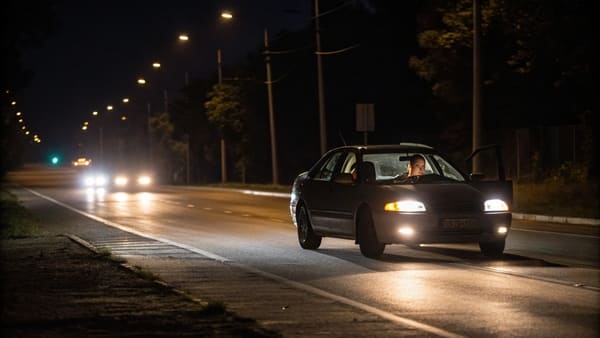
Getting stuck in the dark is one of the worst feelings for any driver. It feels like the car has completely failed you at the worst possible moment. But this situation doesn't have to end in disaster. Understanding the immediate steps to take, the reasons why you shouldn't keep driving, and what causes this problem in the first place will give you the confidence to handle it safely. Let's walk through exactly what you need to do to stay safe and get back on the road.
What Should You Do Immediately If Your Headlights Suddenly Fail?
The road ahead disappears in an instant. Your heart pounds in your chest as you realize your headlights are completely gone. Panic is a natural reaction, but you need to act fast.
Immediately grip the steering wheel firmly to maintain control, activate your hazard lights, and begin to slow down. Look for a safe place to pull over, like the road's shoulder or a parking lot, and get your vehicle completely out of the flow of traffic.
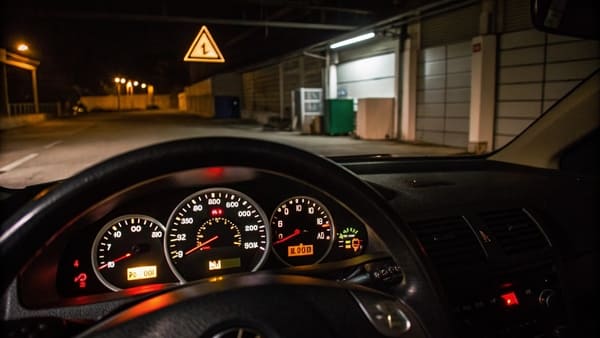
When your lights go out, your brain needs a moment to catch up. The most important thing is not to make any sudden moves. Slamming on the brakes could cause you to lose control or get rear-ended by a driver who can no longer see you clearly2. Here is a more detailed breakdown of the immediate safety procedure you should follow.
Your Step-by-Step Safety Plan
- Don't Panic, Stay Straight: Keep a firm grip on the steering wheel and focus on keeping the car moving in a straight line. Use the faint glow of the dashboard, moonlight, or other cars' lights to maintain your lane position as best as you can.
- Become Visible: Your first action should be to hit the hazard light button. This is a universal signal for distress and is your best tool for letting other drivers know something is wrong.3 If your high beams or fog lights work on a separate circuit, try turning them on4. Even turning on your interior dome light can help make your car slightly more visible from the side5.
- Slow Down Gradually: Take your foot off the accelerator and let the car slow down naturally. Use the brakes gently and smoothly. This gives you more time to react and helps prevent a collision from behind.
- Find a Safe Haven: Scan for the safest possible place to stop. An ideal spot is a well-lit parking lot, a gas station, or a wide, flat shoulder far from moving traffic. Avoid stopping in a lane, on a curve, or near a hilltop where visibility is poor.
- Pull Over Completely: Once you find a spot, pull over as far as you can. Your goal is to be completely out of the path of other vehicles. Once you're stopped, put the car in park and engage the parking brake. Leave your hazard lights on.
Is It Safe to Keep Driving Without Working Headlights?
You're safely on the shoulder, but home is still miles away. The thought of just driving slowly on the back roads is tempting. You might think you can manage, but is it really worth it?
No, it is never safe to continue driving without functional headlights at night or in low-light conditions6. Doing so makes you practically invisible to others and severely limits your ability to see road hazards, creating an extreme risk of a catastrophic accident.
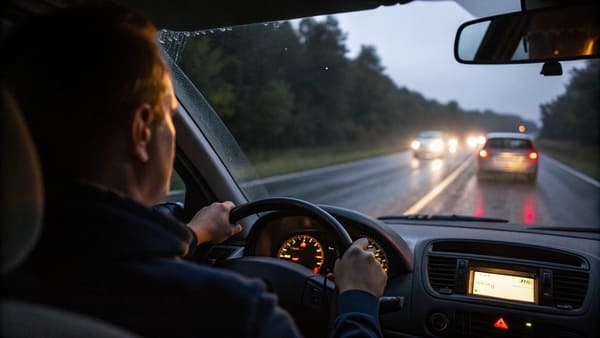
The decision to keep driving might seem like a small risk, but the consequences can be life-altering. The dangers are not just about what you can't see; they are also about how others can't see you. It's a risk to yourself, your passengers, and every other person on the road. The legal trouble you could face is also significant. Let's compare the realities of driving with and without proper lighting to make the danger perfectly clear.
Risk Analysis: Driving With vs. Without Headlights
| Feature | Driving WITH Headlights | Driving WITHOUT Headlights |
|---|---|---|
| Your Visibility | You can see hundreds of feet ahead, identifying curves, debris, animals, and pedestrians in time to react. | Your vision is limited to a few feet. Potholes, sharp turns, and obstacles appear with no time to avoid them. |
| Visibility to Others | Other drivers can see you from a long distance, allowing them to judge your speed and position accurately. | Your vehicle is a dark object. Another driver may not see you until they are just seconds from impact, especially at intersections. |
| Reaction Time | You have ample time to brake or swerve to avoid a hazard that appears in your headlight beams. | Your reaction time is effectively zero for any obstacle that is beyond the ambient light. You are driving blind. |
| Legal Status | You are driving legally and in compliance with traffic safety laws. | You are breaking the law. You can receive a heavy fine, points on your license, and possibly be charged with reckless endangerment7. |
In short, driving without headlights is not a calculated risk; it's a gamble with the worst possible odds. The only safe choice is to stay put and call for roadside assistance.
Why Do Headlights Suddenly Stop Working?
You're safely stopped, the immediate danger has passed, but now you're wondering what went wrong. It seems like such a major failure, but is it a sign of a bigger problem with your car?
Headlights typically stop working for simple reasons like a burnt-out bulb, a blown fuse, or a bad relay8. More complex issues can include a faulty switch on your steering column, damaged wiring, or even a failing alternator that isn't producing enough power for the electrical system.
Understanding why headlights fail can help you troubleshoot and sometimes even fix the problem right on the side of the road. More importantly, it highlights the importance of quality parts. From my experience in manufacturing automotive components, a headlight isn't just a bulb; it's a complex system where every part's quality matters for reliability.
From Simple Fixes to Manufacturing Flaws
The cause of a headlight failure can range from something very simple to a deeper issue related to the quality of the parts themselves.
- The Simple Stuff: Often, both headlights use the same fuse. If that fuse blows, you lose both lights at once. This is the first thing to check9. If you have a spare fuse and know how to change it, you might be able to fix the problem in minutes. Sometimes, the issue is the headlight relay, a small electrical switch that can wear out.
- The Deeper Issues: If it's not a fuse or bulb, the problem could be in the wiring harness or the headlight switch itself. These parts wear out over time and can cause an intermittent or complete failure. A failing alternator can also be a cause, as it won't supply enough electricity to power the lights and other systems10.
- The Manufacturing Angle: The quality of the headlight assembly itself is a huge factor in its long-term reliability. As a manufacturer, I know that making the main plastic headlight housing is extremely difficult. It requires high-precision injection molding machines. I remember my first project for a Pakistani client where we were making these parts. Our cooling process wasn't perfect yet, and the plastic covers "shrank" a bit after molding. I was very worried, but the client actually liked the final look. We were lucky, but it taught me a huge lesson. If that cooling process is wrong, it can create stress in the plastic or a poor seal. A bad seal lets moisture in, which corrodes the electrical contacts inside and leads to the exact kind of failure we are talking about11. Even adding color to the plastic requires stopping the machine and opening the mold, which makes the cooling process even harder to control12. A cheap, poorly made headlight assembly is an invitation for future problems.
Conclusion
If your headlights fail, immediately turn on your hazards, slow down, and pull over safely. Never continue driving. The cause can be simple, but it underscores the importance of reliable, quality parts.
"[PDF] Nighttime Glare and Driving Performance: Research Findings", https://www.nhtsa.gov/sites/nhtsa.gov/files/811043.pdf. Government and traffic safety organizations recommend that drivers activate hazard lights, reduce speed gradually, and pull over to a safe location off the road if headlights fail at night, as this minimizes the risk of collision and increases visibility to other drivers. Evidence role: expert_consensus; source type: government. Supports: The first thing you must do is turn on your hazard lights, slow down gradually, and pull over to a safe location completely off the road.. Scope note: This advice is based on general safety guidelines and may vary depending on local traffic laws. ↩
"Drowsy Driving: Avoid Falling Asleep Behind the Wheel | NHTSA", https://www.nhtsa.gov/risky-driving/drowsy-driving. Traffic safety research indicates that sudden braking in low-visibility situations increases the risk of rear-end collisions and loss of vehicle control, especially when following drivers cannot see your vehicle clearly. Evidence role: mechanism; source type: paper. Supports: Slamming on the brakes could cause you to lose control or get rear-ended by a driver who can no longer see you clearly.. Scope note: The risk level may depend on traffic density and speed at the time of the incident. ↩
"Emergency vehicle lighting - Wikipedia", https://en.wikipedia.org/wiki/Emergency_vehicle_lighting. Automotive safety manuals and government guidelines state that hazard lights are used to signal distress and alert other drivers to a stopped or disabled vehicle, especially in emergency situations. Evidence role: definition; source type: government. Supports: Your first action should be to hit the hazard light button. This is a universal signal for distress and is your best tool for letting other drivers know something is wrong.. Scope note: Hazard light usage laws may differ by country or state. ↩
"Headlight wiring with separate on/off switch and hi/lo beam switch", https://www.facebook.com/groups/419707808197452/posts/2114627912038758/. Automotive repair guides explain that high beams and fog lights often operate on separate electrical circuits from low-beam headlights, so they may function even if the main headlights fail. Evidence role: mechanism; source type: education. Supports: If your high beams or fog lights work on a separate circuit, try turning them on.. Scope note: This may not apply to all vehicle makes and models; drivers should consult their owner's manual. ↩
"why did parents think it was illegal to drive with the interior light on?", https://www.facebook.com/groups/goodoldday/posts/3640798222738861/. Some traffic safety resources suggest that turning on the interior dome light can marginally increase a vehicle's visibility to others in emergency situations at night, though its effectiveness is limited compared to exterior lights. Evidence role: general_support; source type: education. Supports: Even turning on your interior dome light can help make your car slightly more visible from the side.. Scope note: The increase in visibility is minimal and not a substitute for functioning exterior lights. ↩
"Section 2.11 | Georgia Department of Driver Services", https://dds.georgia.gov/section-211. Traffic safety authorities and law enforcement agencies universally advise that driving without functional headlights at night is extremely dangerous and illegal, as it severely reduces visibility and increases accident risk. Evidence role: expert_consensus; source type: government. Supports: No, it is never safe to continue driving without functional headlights at night or in low-light conditions.. Scope note: Legal requirements may vary by jurisdiction, but the safety risk is widely recognized. ↩
"Code of Virginia Code - Article 7. Reckless Driving and Improper ...", https://law.lis.virginia.gov/vacodefull/title46.2/chapter8/article7/. Most jurisdictions have laws requiring the use of headlights at night, and violations can result in fines, license points, and, in severe cases, charges such as reckless driving or endangerment. Evidence role: statistic; source type: government. Supports: You are breaking the law. You can receive a heavy fine, points on your license, and possibly be charged with reckless endangerment.. Scope note: Penalties vary by state or country; reckless endangerment charges depend on circumstances. ↩
"Headlights Not Working? Check These Solutions - AutoZone", https://www.autozone.com/diy/lighting/headlights-not-working-check-these-solutions. Automotive repair manuals and technical guides list common causes of headlight failure as burnt-out bulbs, blown fuses, and faulty relays. Evidence role: mechanism; source type: education. Supports: Headlights typically stop working for simple reasons like a burnt-out bulb, a blown fuse, or a bad relay.. Scope note: Less common causes may also exist depending on vehicle design. ↩
"both headlights out at the same time. Is there a fuse? - Toyota Forum", https://www.toyotanation.com/threads/both-headlights-out-at-the-same-time-is-there-a-fuse.1745916/. Automotive electrical system diagrams show that many vehicles use a single fuse for both headlights, so a blown fuse can cause both lights to fail simultaneously. Evidence role: mechanism; source type: education. Supports: If that fuse blows, you lose both lights at once. This is the first thing to check.. Scope note: Some vehicles have separate fuses for each headlight; always check the owner's manual. ↩
"Symptoms of a BAD ALTERNATOR (With Proven Fixes) - YouTube", https://www.youtube.com/watch?v=inJj_baQDXk. Automotive technical resources confirm that a failing alternator can lead to insufficient electrical power for headlights and other vehicle systems, resulting in dimming or loss of lighting. Evidence role: mechanism; source type: education. Supports: A failing alternator can also be a cause, as it won't supply enough electricity to power the lights and other systems.. Scope note: Alternator failure may also cause other symptoms beyond headlight loss. ↩
"What the hell is this in my headlight connector? - Reddit", https://www.reddit.com/r/MechanicAdvice/comments/1pfakme/what_the_hell_is_this_in_my_headlight_connector/. Engineering and automotive maintenance literature explains that poor sealing in headlight assemblies allows moisture ingress, which can corrode electrical contacts and cause headlight failure. Evidence role: mechanism; source type: research. Supports: A bad seal lets moisture in, which corrodes the electrical contacts inside and leads to the exact kind of failure we are talking about.. Scope note: The severity of corrosion depends on environmental exposure and material quality. ↩
"Color Matching for Injection Molding - Fictiv", https://www.fictiv.com/articles/color-matching-for-injection-molding. Plastics engineering textbooks note that introducing colorants during injection molding often requires process adjustments, such as stopping the machine and opening the mold, which can affect cooling rates and part quality. Evidence role: mechanism; source type: education. Supports: Even adding color to the plastic requires stopping the machine and opening the mold, which makes the cooling process even harder to control.. Scope note: Manufacturing processes may vary depending on equipment and production scale. ↩