-Choosing brake pads feels complicated, leading to poor stopping power or annoying squeals. You deserve confidence in your car's most important safety feature, not confusion at the auto parts store.
The best type of brake pad depends on your vehicle and driving style. For most daily commuters, ceramic pads are ideal for their quiet operation and low dust1. For performance or heavy-duty use, semi-metallic pads offer superior stopping power and durability2.
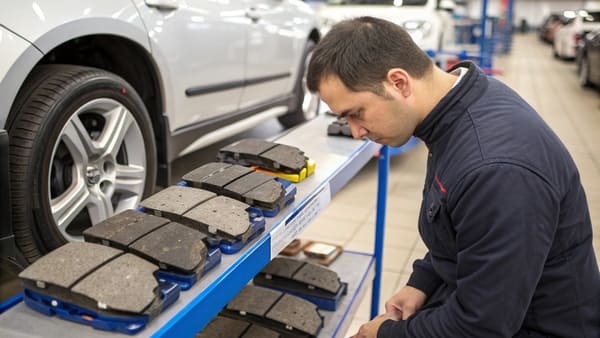
Making the right choice is easier than you think once you understand the basics. The decision between ceramic, semi-metallic, or organic pads will impact your daily driving experience, from noise levels to how often you clean your wheels. Let's break down what you need to know to choose with confidence and ensure your vehicle stops exactly how it should.
What Is a Brake Pad and Why Does the Material Matter?
You hear about brake pads all the time, but do you really know what they do? Not understanding this can make you an easy target for upselling or mismatched parts.
A brake pad is a key part of your disc brake system that creates friction against the brake rotor to slow your car3. The material is critical because it defines stopping power, noise, dust, wear life, and overall performance4.
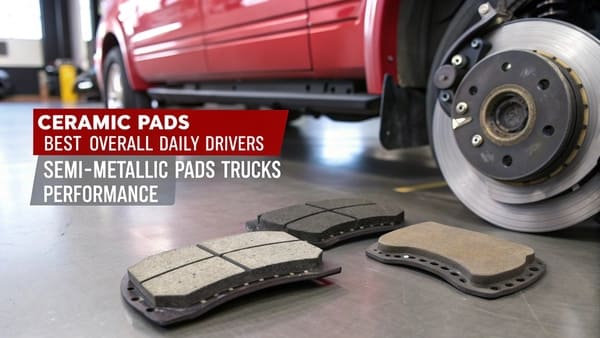
A brake pad is basically a steel backing plate with a block of friction material bonded or riveted to it. When you press the brake pedal, the caliper squeezes the pads against the spinning rotor, and this friction converts your car's kinetic energy into heat, slowing you down. The composition of that friction material is everything. It's a carefully engineered recipe. In my manufacturing work, I've seen how complex even the smallest components are. I once had a project with a client from Pakistan making the plastic accessory parts for a brake pad assembly. The precision required for the injection molding was incredibly high, especially during the cooling phase. One batch "shrank" more than we planned. I was nervous, but the client ended up preferring the tighter fit! It was a lucky mistake, but it taught me that every detail, from the friction compound to the smallest plastic clip, affects the final performance.
Key Factors Defined by Brake Pad Material
| Factor | What It Means | Why It Matters for You |
|---|---|---|
| Stopping Power | How effectively the pad grabs the rotor. | Essential for safety, especially in emergencies. |
| Noise & Vibration | The amount of squeal, squeak, or shudder produced. | Affects your driving comfort and peace of mind. |
| Dust | The amount of dark dust that covers your wheels. | A cosmetic issue, but very noticeable. |
| Wear Life | How long the pad and the rotor last. | Impacts your long-term maintenance costs. |
| Heat Fade | How well the pad performs under high temperatures. | Crucial for performance driving or towing. |
What Are the Main Types of Brake Pads?
Walking into an auto parts store can be confusing with a wall of options. They all look similar, but the prices and promises vary wildly. Are you paying for better performance or just marketing?
The three main types of brake pads are Organic (NAO), Semi-Metallic, and Ceramic5. Each uses a different friction formula, offering a unique trade-off between performance, quietness, dust, and cost to suit different drivers and vehicles.
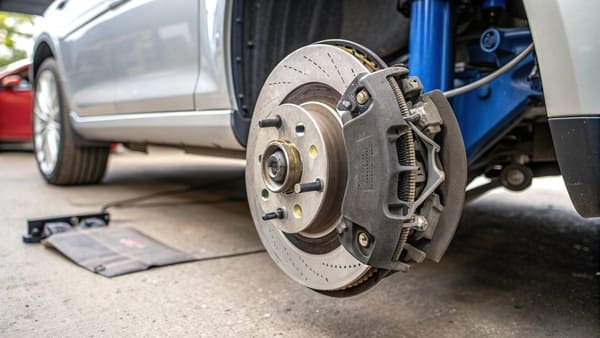
Understanding these three categories will instantly clear up 90% of the confusion. As a manufacturer, we work with these different material compositions every day. The machinery, temperatures, and pressures needed to create a durable semi-metallic pad are completely different from what's required for a quiet ceramic one. This is where our OEM experience is vital—we engineer the perfect formulation to match a specific vehicle's weight, horsepower, and intended use. Think of these three types as different tools for different jobs.
1. Organic Brake Pads (NAO)6
These are made from a mix of non-metallic fibers like rubber, glass, and Kevlar, all held together with a resin. They are the modern version of old asbestos pads.
- Best for: Older, lighter vehicles and drivers who prioritize a quiet, smooth stop above all else.
- Pros: Very quiet, gentle on brake rotors, and typically the cheapest option.
- Cons: Wear out the fastest, create a lot of dust, and don't perform well under high heat or heavy braking.
2. Semi-Metallic Brake Pads7
These pads contain between 30% and 70% metal, including steel, iron, or copper, mixed with other fillers.
- Best for: Performance driving, heavy vehicles like trucks and SUVs, and drivers who need strong, reliable stopping power.
- Pros: Excellent stopping power, durable, and great at dissipating heat to prevent brake fade.
- Cons: Can be noisy, produce more dark-colored dust, and are harder on brake rotors, causing them to wear faster.
3. Ceramic Brake Pads8
These are made from dense ceramic fibers and other non-ferrous filler materials. They represent a more modern, advanced technology.
- Best for: Daily commuters and luxury cars where comfort, quietness, and clean wheels are the top priorities.
- Pros: Extremely quiet, produce very little light-colored dust, long-lasting, and stable across a wide range of temperatures.
- Cons: The most expensive option and may not provide the aggressive "bite" that performance drivers prefer.
Which Type of Brake Pad Is Best Overall?
So, after all that, you just want the simple answer: which one is the absolute best? The truth is, what's "best" for a race car would be a terrible choice for your daily commute.
There is no single "best" brake pad for everyone. For most daily drivers, ceramic pads offer the best overall balance of quietness, low dust, and long life. For trucks or performance cars, semi-metallic pads are often the superior choice9.
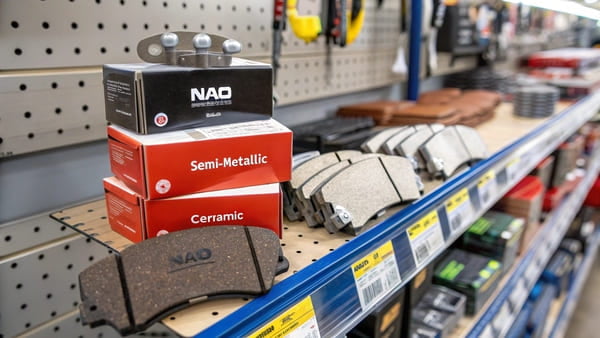
The "best" pad is the one that best matches your vehicle and your driving habits. It's a balancing act of performance, comfort, and cost. When we work with automotive brands to develop a new product line, this is our primary focus. A client developing a new fleet of delivery vans has very different needs than one launching a luxury sedan. For the van, we would engineer a durable semi-metallic pad focused on stopping power with heavy loads. For the sedan, we'd formulate a premium ceramic pad for a silent, smooth, and clean experience. Your personal vehicle deserves the same level of specific consideration.
How to Choose for Your Vehicle:
| If you are a... | Your Priority is... | The Best Choice is... | Why? |
|---|---|---|---|
| Daily Commuter | Quiet ride, clean wheels, long life | Ceramic | Offers the most comfortable and clean driving experience for everyday use. |
| Spirited Driver | Aggressive stopping power, heat resistance | Semi-Metallic | Provides the best performance and "bite" for aggressive braking and high speeds. |
| Truck/SUV Owner | Durability, stopping heavy loads, towing | Semi-Metallic | Handles the high heat and pressure of stopping a heavy vehicle without fading. |
| Budget-Conscious Driver | Low upfront cost | Organic (NAO) | The most affordable option that gets the job done for basic, light-duty driving. |
Conclusion
Choosing the right brake pad means matching the material—ceramic, semi-metallic, or organic—to your vehicle and driving style. This simple step ensures optimal safety, performance, and driver satisfaction.
"Disc brake - Wikipedia", https://en.wikipedia.org/wiki/Disc_brake. According to automotive engineering sources, ceramic brake pads are known for their quiet operation and low dust production compared to other types of brake pads. Evidence role: expert_consensus; source type: encyclopedia. Supports: Ceramic pads are ideal for their quiet operation and low dust.. Scope note: This generalization may not apply to all ceramic pads or vehicle models. ↩
"Brake pad - Wikipedia", https://en.wikipedia.org/wiki/Brake_pad. Automotive research indicates that semi-metallic brake pads typically provide higher stopping power and durability, especially under demanding conditions, compared to organic and ceramic pads. Evidence role: expert_consensus; source type: encyclopedia. Supports: Semi-metallic pads offer superior stopping power and durability.. Scope note: Performance may vary depending on specific formulations and vehicle applications. ↩
"Disc brake - Wikipedia", https://en.wikipedia.org/wiki/Disc_brake. Standard automotive references define a brake pad as a component of disc brake systems that creates friction against the rotor to slow or stop the vehicle. Evidence role: definition; source type: encyclopedia. Supports: A brake pad is a key part of your disc brake system that creates friction against the brake rotor to slow your car.. ↩
"Brake pad - Wikipedia", https://en.wikipedia.org/wiki/Brake_pad. Automotive engineering literature explains that brake pad material composition significantly affects stopping power, noise, dust generation, wear life, and overall braking performance. Evidence role: mechanism; source type: education. Supports: The material is critical because it defines stopping power, noise, dust, wear life, and overall performance.. Scope note: The degree of influence may vary with specific materials and vehicle systems. ↩
"Disc brake - Wikipedia", https://en.wikipedia.org/wiki/Disc_brake. Automotive encyclopedias and technical guides commonly classify brake pads into three main types: organic (NAO), semi-metallic, and ceramic. Evidence role: definition; source type: encyclopedia. Supports: The three main types of brake pads are Organic (NAO), Semi-Metallic, and Ceramic.. Scope note: Some sources may mention additional subtypes or variations. ↩
"Differences in Wear and Material Integrity of NAO and Low-Steel ...", https://pmc.ncbi.nlm.nih.gov/articles/PMC8509441/. Technical sources describe organic (NAO) brake pads as being made from non-metallic fibers such as rubber, glass, and Kevlar, bonded with resin. Evidence role: definition; source type: encyclopedia. Supports: Organic brake pads (NAO) are made from a mix of non-metallic fibers like rubber, glass, and Kevlar, held together with resin.. Scope note: Exact composition may vary by manufacturer. ↩
"What's the Difference Between Ceramic & Metallic Brake Pads?", https://tires.bridgestone.com/en-us/learn/automotive/tire-maintenance/ceramic-vs-metallic-brake-pads. Semi-metallic brake pads are typically composed of 30% to 70% metal content, including steel, iron, or copper, mixed with other fillers, as described in automotive engineering literature. Evidence role: definition; source type: encyclopedia. Supports: Semi-metallic brake pads contain between 30% and 70% metal, including steel, iron, or copper, mixed with other fillers.. Scope note: Formulations may differ among manufacturers and applications. ↩
"Brake pad - Wikipedia", https://en.wikipedia.org/wiki/Brake_pad. Ceramic brake pads are described in technical sources as being made from dense ceramic fibers and non-ferrous filler materials, offering advanced braking technology. Evidence role: definition; source type: encyclopedia. Supports: Ceramic brake pads are made from dense ceramic fibers and other non-ferrous filler materials.. Scope note: Exact formulations may vary by manufacturer. ↩
"Best brake pads you can get. I missed the stopping power my 2 ...", https://www.reddit.com/r/ChevyTrucks/comments/1ch7r0m/best_brake_pads_you_can_get_i_missed_the_stopping/. Technical sources and automotive guides recommend semi-metallic brake pads for trucks and performance cars due to their durability and heat resistance under heavy loads. Evidence role: expert_consensus; source type: education. Supports: For trucks or performance cars, semi-metallic pads are often the superior choice.. Scope note: Recommendations may differ based on specific vehicle requirements. ↩