-A failing clutch disc can stop your entire operation. This means costly downtime and emergency repairs1. But you can avoid these headaches by choosing the right part from the start.
To choose the right truck clutch disc, you must match the part number, vehicle specifications (engine torque, GVW), and application type2 (on-highway vs. off-highway). Always verify these details with your supplier to ensure compatibility and prevent premature failure.
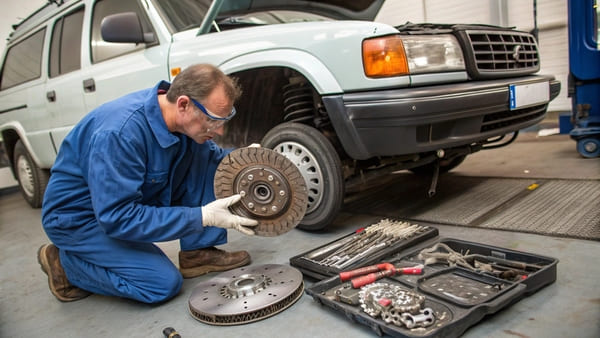
Now you have the short answer. But the details are what really matter for heavy-duty applications. Getting this component right is not just about fitment; it's about safety, performance, and the long-term health of your vehicle's transmission. Let's dig into what a clutch disc actually does and why selecting the correct one is so critical for your fleet's performance and your bottom line. Understanding these details will help you partner with a manufacturer who can meet your exact needs.
What Is a Truck Clutch Disc and How Does It Work in Heavy-Duty Vehicles?
The term "clutch disc" is common, but what does it really do? Not knowing its function can make purchasing decisions feel like a gamble. Let's clarify its vital role.
A truck clutch disc is the component that connects and disconnects the engine from the transmission. It has friction material that grips the flywheel and pressure plate3, allowing power to transfer. In heavy-duty vehicles, it manages immense torque to get the truck moving smoothly.
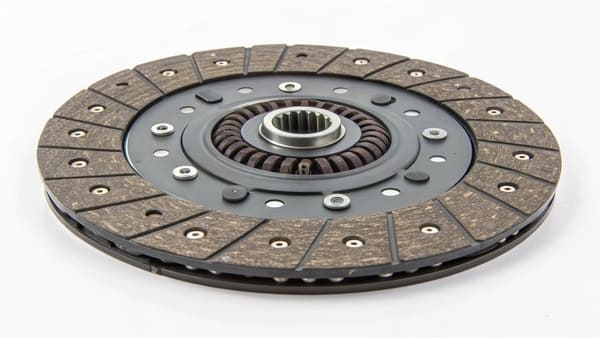
The clutch disc is the heart of the manual transmission system. It looks simple, but it has several key parts that must work together perfectly to handle the massive forces inside a heavy-duty truck. Think of it as the critical link between the engine's power and the wheels on the road.
The Core Components
- Friction Material: This is the surface that makes physical contact with the engine's flywheel. Its job is to grip tightly without slipping but also release smoothly. The quality and composition of this material directly impact the clutch's lifespan, heat resistance, and performance.
- Torsional Dampers4: These are the springs you see in the center of the disc. They are not just for show; they absorb engine vibrations and driveline shocks. This makes gear shifts smoother and protects the expensive transmission components from damage.
- Hub (Splined Hub)5: This is the metal center part that slides onto the transmission's input shaft. The number and shape of these splines must be an exact match.
Manufacturing these is incredibly difficult. We learned that the precise ratio of friction materials6 is a trade secret. Also, the cooling and shaping process requires high-precision machinery, which isn't common. If the density isn't controlled perfectly, the disc will wear out too fast or fail to engage properly.
How Do You Identify the Correct Truck Clutch Disc for Your Vehicle Model?
Have you ever ordered a part only to find it doesn't fit? This common mistake delays repairs, costs money in shipping returns, and keeps your truck off the road longer.
To identify the correct clutch disc, use the vehicle's VIN to get the OEM part number7. Cross-reference this number with aftermarket catalogs. Also, confirm the disc diameter, spline count on the hub, and the type of damper springs8 needed for your specific truck's application.
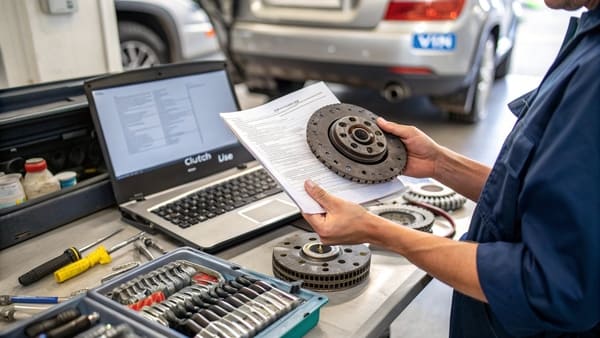
Getting the right clutch disc is about more than just matching the truck model. You have to be precise to avoid serious driveline issues. A small mistake here can lead to big problems down the road, like transmission damage or getting stranded. Here’s a structured way to ensure you get the right part every single time, which is something we guide our B2B clients on daily.
Key Identification Steps
| Step | Detail | Why It's Important |
|---|---|---|
| 1. VIN & OEM Part Number | Use the Vehicle Identification Number (VIN) to find the original part number from the manufacturer. | This is the most reliable method. It eliminates guesswork and ensures the part meets the truck's original factory specifications. |
| 2. Physical Specifications | Physically measure the disc's diameter and count the splines on the hub of your old part. | Different transmissions and engines, even in the same truck model, can require different sizes and spline counts. "Close enough" is not good enough. |
| 3. Application Details | Consider the truck's Gross Vehicle Weight (GVW) and typical use9 (e.g., highway, city, off-road). | A truck hauling logs off-road needs a more durable clutch with different damping characteristics than one doing long-haul highway routes. |
I learned this the hard way. Early in my career, I worked with a client from Pakistan. We supplied clutch discs that, due to my inexperience at the time, wore out faster than a standard disc. I thought it was a complete failure. But the client was actually happy. Their specific application and local repair practices meant they preferred a disc that was easier to engage, even if it meant a shorter lifespan. This taught me to always confirm every detail of the application with the client, not just the part number.
Which Truck Brands and Models Require Specific Clutch Disc Specifications?
Are all heavy-duty clutch discs the same? Thinking so is a common and costly mistake that leads to poor performance, driver complaints, and premature failure. Specific brands and models have very unique requirements.
Brands like Freightliner, Kenworth, and Volvo often use proprietary clutch systems. For example, some models require self-adjusting clutches or specific damper spring rates10. Always check the service manual or consult a specialist for these brands to ensure you get the correct specifications.
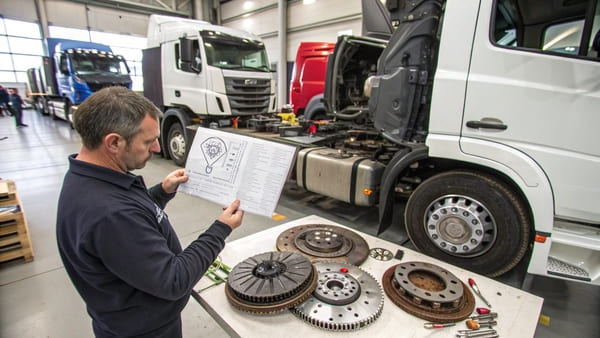
While many parts are standardized across the industry, major truck manufacturers often engineer their drivelines with specific components. They do this to optimize performance, fuel efficiency, and driver comfort. You cannot just pick a generic clutch disc off the shelf and expect it to work perfectly in these highly-engineered systems. This is especially true for newer trucks with automated manual transmissions.
Brand-Specific Considerations
- Volvo/Mack: Many of their trucks use the I-Shift automated manual transmission11. This system relies on precise computer control for clutch engagement. The clutch disc must be perfectly matched to the control module's software, or you will get fault codes and poor shifting.
- Freightliner/Kenworth/Peterbilt (PACCAR): These brands often use Eaton Fuller transmissions12. While these are common, there are dozens of variations. Some require "soft rate" dampers for smoother engagement in line-haul trucks, while others need "stiff rate" dampers for heavy-haul applications.
- European vs. American Trucks: European brands like Scania and MAN13 often have different clutch designs and material specifications compared to their American counterparts. They might focus more on longevity and smooth engagement, requiring materials with specific friction coefficients.
This is where our role as an OEM/ODM supplier14 becomes critical. A client with a fleet of Volvo trucks will need a disc with different friction and damping properties than a client with a fleet of Kenworths used for logging. Our high-precision machines, located in the most advanced manufacturing hubs15, allow us to produce parts that meet these exact, demanding factory specifications for our partners worldwide.
Conclusion
Choosing the right clutch disc comes down to matching part numbers, understanding your truck's application, and working with a reliable supplier. This ensures durability and avoids costly downtime.
Learn how to prevent expensive breakdowns and keep your fleet running smoothly by understanding the risks of clutch disc failure. ↩
Discover why precise matching prevents premature failure and ensures optimal performance for your heavy-duty truck. ↩
Understand how friction material quality impacts clutch lifespan, heat resistance, and overall truck performance. ↩
Find out how torsional dampers protect your transmission and improve driving comfort by absorbing vibrations. ↩
Learn why the splined hub's fitment is critical for proper power transfer and avoiding driveline issues. ↩
Explore how material ratios affect durability and engagement, and why manufacturing precision is essential. ↩
Avoid costly mistakes by learning the most reliable method for identifying the right clutch disc for your truck. ↩
Ensure compatibility and prevent driveline failures by understanding these critical physical specifications. ↩
Select the right clutch disc by considering your truck's workload and operating environment. ↩
Learn about advanced clutch technologies and why certain trucks need specialized components for optimal performance. ↩
Understand the unique needs of Volvo trucks and why the right clutch disc is crucial for automated transmissions. ↩
Get insights into common transmission types and their specific clutch disc requirements for American trucks. ↩
Learn about the unique design and material requirements for European heavy-duty trucks. ↩
Find out how working with a specialized supplier ensures you get parts tailored to your fleet's exact needs. ↩
See how advanced manufacturing technology leads to better quality, durability, and fitment for critical truck components. ↩