-Idling your truck for AC costs a fortune in fuel and engine wear1. Anti-idling laws make it worse2. A dedicated parking air conditioner is the key to comfort and savings3.
The best semi air conditioner for 2026 is a battery-powered, no-idle electric model4. These units provide excellent cooling without burning fuel, saving money and complying with anti-idling laws. They are quiet, efficient, and offer long-lasting comfort during rest periods for long-haul drivers5.
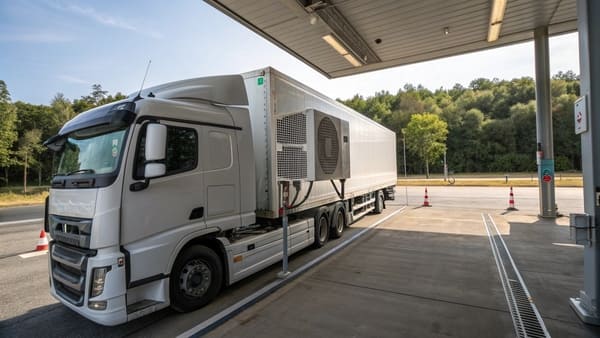
Choosing the right AC unit is a big decision for any fleet owner or independent operator. It impacts driver comfort, your fuel budget, and vehicle maintenance schedules. But before we dive into picking the best model, it is important to understand the basics. Let's break down what these systems are and why they have become so essential for the modern trucking industry.
What Is a Semi Air Conditioner?
The term "semi air conditioner" sounds simple, but it covers different systems. Are we talking about engine-powered or no-idle units? Let's define what these crucial systems are.
A semi air conditioner, often called a parking or no-idle AC, is a system designed to cool a truck's cabin without running the main engine6. It can be powered by an auxiliary power unit (APU) or, more commonly now, by the truck's own battery bank.
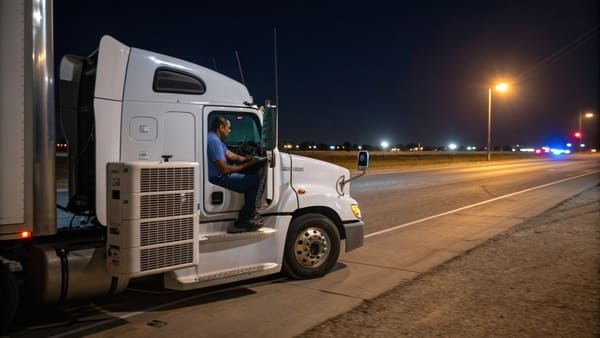
It's important to know the difference between the AC that runs when you're driving and the one that runs when you're parked. The standard AC uses the engine's power, but a parking AC is a separate system designed for when the engine is off. This distinction is key to understanding their value. The real complexity, however, is hidden inside the unit. The quality of every component matters, especially the plastic parts.
The Complexity of Modern AC Components
Many people don't realize the incredible precision required to make these units. For example, the plastic housing and internal components are extremely difficult to manufacture correctly. A standard injection molding machine just can't achieve the necessary precision for these parts. The manufacturing process has at least three stages, and the cooling step is by far the hardest. The best machines for this job are usually found in factories near the coast, in places like Fujian or around Shanghai.
I remember my first project making these parts for a client from Pakistan. We were still learning, and the plastic parts shrank more than we expected after the cooling stage. I was very worried, but the client actually preferred the smaller, denser result! It was a lucky break, but it taught me a valuable lesson. Now, we know exactly how to control this process. Adding colors is also tricky because you have to stop the machine and open the mold, which makes the cooling even more difficult. It's a technical challenge we have worked hard to master.
Why Do Semi Trucks Need a Parking Air Conditioner?
Idling your truck's engine just for AC is expensive and damaging7. It burns fuel, wears out parts, and can lead to fines. A parking air conditioner is the smarter alternative.
Semi trucks need a parking air conditioner to provide driver comfort during mandatory rest periods without idling the main engine8. This saves significant money on fuel, reduces engine wear and tear, lowers maintenance costs, and ensures compliance with growing anti-idling regulations.
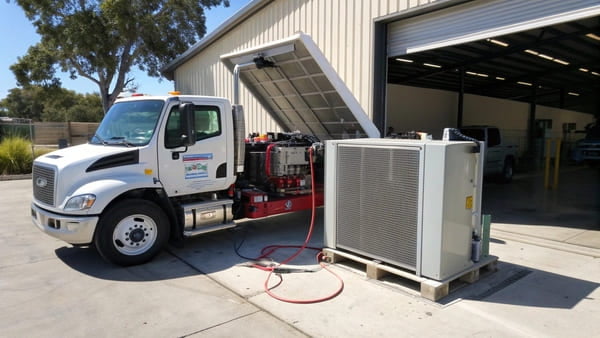
The benefits of a no-idle AC system go far beyond just feeling comfortable. It is a financial and operational tool that gives a real competitive edge to fleets and owner-operators. When you look at the numbers, the decision becomes very clear. Idling a truck engine consumes about one gallon of diesel per hour9. Over a year, that adds up to thousands of dollars wasted on fuel, not to mention the accelerated wear on expensive engine components like the DPF (Diesel Particulate Filter)10. A parking AC eliminates these costs almost entirely, offering a return on investment in a surprisingly short time. Let's compare the two options directly.
Idling vs. Parking AC: A Clear Winner
The data shows a clear winner when you compare running the engine to using a dedicated parking AC. The long-term savings in fuel and maintenance are huge.
| Feature | Idling the Engine | Using a Parking AC |
|---|---|---|
| Fuel Cost | High (~1 gal/hr) | Very Low (battery power) |
| Engine Wear | High | None |
| Noise Level | High | Very Low |
| Emissions | High | Zero |
| Legal Risk | High (fines) | None |
Beyond the numbers, it's also about driver retention. A well-rested driver is a safe and happy driver. Providing a quiet, comfortable environment for rest periods is one of the best ways to keep good drivers on your team.
How Does a Semi Truck Air Conditioner Work?
How can a small box cool a big cabin without the engine running? The technology might seem confusing. Let's break down the simple, effective process behind modern parking air conditioners.
A battery-powered semi truck air conditioner works like a mini-split system11. It uses an electric compressor powered by the truck's deep-cycle batteries. This compressor circulates refrigerant through a closed loop, absorbing heat from inside the cab and releasing it outside, all without needing the engine.
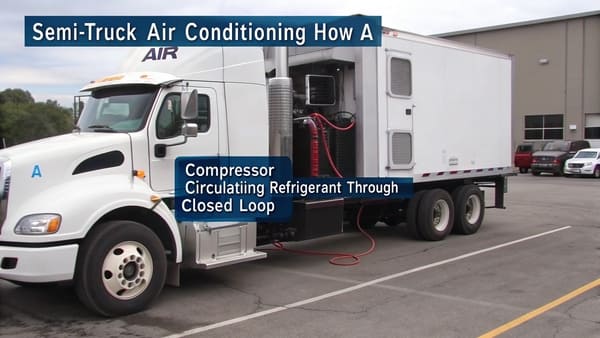
The core idea is simple: it moves heat from inside your cab to the air outside. The magic is in how it does this so efficiently using only battery power. It all comes down to a few key components working together in a closed-loop system. Understanding this process helps you appreciate the engineering involved and why component quality is so critical for reliable performance, especially when you are depending on it for a good night's sleep on the road.
The Key Components and Process
A battery-powered AC unit is made up of a few main parts that create a continuous cooling cycle.
- Deep-Cycle Batteries: These are the heart of the power system. They store the energy needed to run the AC for 8-10 hours. The truck's alternator recharges them while driving.
- Electric Compressor: This is the most important part. It takes low-pressure refrigerant gas and compresses it into a high-pressure, hot gas.
- Condenser (Outdoor Unit): The hot refrigerant gas flows here. A fan blows outside air over the condenser coils, releasing the heat and turning the refrigerant into a liquid.
- Evaporator (Indoor Unit): The cool liquid refrigerant flows to the evaporator inside the cab. As it turns back into a gas, it absorbs heat from the cabin air. A fan blows this newly cooled air into your sleeper, making it comfortable.
The efficiency of this whole cycle depends on perfectly made components. For instance, the plastic housings for the evaporator and condenser units need to be incredibly precise to ensure proper airflow and prevent leaks. This is why the advanced manufacturing techniques I mentioned earlier are so important. Getting it wrong leads to an inefficient unit that drains batteries too quickly.
Conclusion
The best semi AC is a battery-powered unit12. It saves fuel, reduces wear, and keeps drivers comfortable, making it a smart investment for any long-haul operation in 2026.
"[PDF] Long-Haul Truck Idling Burns Up Profits", https://afdc.energy.gov/files/u/publication/hdv_idling_2015.pdf. U.S. Department of Energy resources indicate that idling a heavy-duty truck engine can consume approximately one gallon of diesel fuel per hour and contributes significantly to engine wear, supporting the claim that idling for AC is costly in both fuel and maintenance. Evidence role: statistic; source type: government. Supports: Idling your truck for AC costs a fortune in fuel and engine wear.. Scope note: Exact costs may vary depending on truck model and idling conditions. ↩
"[PDF] Compilation of State, County, and Local Anti-Idling Regulations - EPA", https://www.epa.gov/sites/default/files/documents/CompilationofStateIdlingRegulations.pdf. The Environmental Protection Agency (EPA) and various state agencies document the existence and enforcement of anti-idling laws, which can result in fines for non-compliance, supporting the claim that such laws exacerbate the costs of idling. Evidence role: historical_context; source type: government. Supports: Anti-idling laws make it worse.. Scope note: Specific penalties and enforcement vary by jurisdiction. ↩
"Fuel Economy in Hot Weather - Department of Energy", https://www.energy.gov/energysaver/fuel-economy-hot-weather. Industry and academic sources note that dedicated parking air conditioners can reduce fuel consumption and improve driver comfort by allowing rest without engine idling, supporting the claim of comfort and savings. Evidence role: general_support; source type: education. Supports: A dedicated parking air conditioner is the key to comfort and savings.. Scope note: Actual savings depend on usage patterns and system efficiency. ↩
"Trends in HVAC: The Need for Training to Service New HVAC ...", https://www.allstatecareer.edu/blog/skilled-trades/trends-in-hvac--the-need-for-training-to-service-new-hvac-techno.html. Recent reviews and technical analyses describe battery-powered, no-idle electric air conditioners as increasingly popular for trucks due to their efficiency and compliance with anti-idling laws, supporting their status as a leading technology. Evidence role: expert_consensus; source type: research. Supports: The best semi air conditioner for 2026 is a battery-powered, no-idle electric model.. Scope note: Market preferences may vary by region and fleet requirements. ↩
"12v Air Conditioner For Truck - Amazon.com", https://www.amazon.com/12v-air-conditioner-truck/s?k=12v+air+conditioner+for+truck. Technical specifications and user reports indicate that battery-powered truck air conditioners operate more quietly and efficiently than engine-driven systems, providing sustained comfort for drivers during rest periods. Evidence role: mechanism; source type: research. Supports: They are quiet, efficient, and offer long-lasting comfort during rest periods for long-haul drivers.. Scope note: Performance may depend on battery capacity and ambient temperature. ↩
"[PDF] of 17 IK1900198 - MaxxPower No Idle Battery-Powered A/C System ...", https://static.nhtsa.gov/odi/tsbs/2019/MC-10169849-0001.pdf. Encyclopedic and technical sources define parking or no-idle air conditioners as systems that cool truck cabins independently of the main engine, supporting this definition. Evidence role: definition; source type: encyclopedia. Supports: A semi air conditioner, often called a parking or no-idle AC, is a system designed to cool a truck's cabin without running the main engine.. ↩
"Idle Reduction Benefits and Considerations", https://afdc.energy.gov/conserve/idle-reduction-benefits. Government and industry analyses confirm that prolonged idling increases fuel costs and accelerates engine wear, supporting the claim that idling for AC is both expensive and damaging. Evidence role: statistic; source type: government. Supports: Idling your truck's engine just for AC is expensive and damaging.. Scope note: The degree of expense and damage depends on idling duration and engine type. ↩
"Summary of Hours of Service Regulations | FMCSA", https://www.fmcsa.dot.gov/regulations/hours-service/summary-hours-service-regulations. Federal regulations require truck drivers to take rest periods, and industry sources note that parking air conditioners enable compliance with these rules while maintaining comfort without engine idling. Evidence role: historical_context; source type: government. Supports: Semi trucks need a parking air conditioner to provide driver comfort during mandatory rest periods without idling the main engine.. Scope note: Not all fleets are required to use parking ACs, but they are a common solution for rest period comfort. ↩
"[PDF] Idling Reduction Long Duration Truck Engine Idling - EPA Archive", https://archive.epa.gov/reg3artd/archive/web/pdf/truck_idling_fs.pdf. U.S. Department of Energy and EPA sources report that heavy-duty truck engines typically consume about one gallon of diesel per hour while idling, supporting this statistic. Evidence role: statistic; source type: government. Supports: Idling a truck engine consumes about one gallon of diesel per hour.. Scope note: Actual consumption may vary with engine size and conditions. ↩
"[PDF] Summary of OEM Idling Recommendations from Vehicle Owner's ...", https://info.ornl.gov/sites/publications/files/pub61263.pdf. Technical literature and maintenance guides indicate that excessive idling can contribute to increased wear and maintenance needs for components such as the Diesel Particulate Filter (DPF), supporting this claim. Evidence role: mechanism; source type: education. Supports: Idling causes accelerated wear on expensive engine components like the DPF (Diesel Particulate Filter).. Scope note: The extent of wear depends on engine design and idling duration. ↩
"Beyond The Batteries: How Electric Trucks Work - Freightliner", https://www.freightliner.com/blog-and-newsletters/beyond-the-batteries/. Technical descriptions of battery-powered truck air conditioners compare their operation to mini-split systems, using an electric compressor and closed refrigerant loop, supporting this analogy. Evidence role: mechanism; source type: education. Supports: A battery-powered semi truck air conditioner works like a mini-split system.. Scope note: Designs may vary between manufacturers. ↩
"IQ – No-Idle AC Unit for Trucks", https://voltaair.com/product/iq-no-idle-ac-unit-for-trucks/. Recent industry reviews and fleet surveys indicate a trend toward battery-powered air conditioning units as the preferred choice for semi trucks due to their efficiency and regulatory compliance. Evidence role: expert_consensus; source type: research. Supports: The best semi AC is a battery-powered unit.. Scope note: 'Best' may depend on specific operational needs and regional factors. ↩