-Hearing strange noises from under your vehicle? It could be a dry drive shaft, leading to costly repairs1. Proper lubrication is the simple, effective fix that saves you money and trouble.
For most drive shaft U-joints and slip yokes, the best grease is a high-quality NLGI Grade 2 lithium-complex grease. It should contain EP (Extreme Pressure) additives and have good resistance to water washout2. This ensures it protects against wear under heavy loads and stays in place.

Getting under your truck for maintenance might seem like a chore, but some tasks are too important to ignore. Lubricating your drive shaft is one of them. It's a quick job that prevents major headaches down the road. Let's walk through why it's so critical and how to do it right.
Why Does a Drive Shaft Need Regular Greasing?
Feeling a "clunk" when you shift from drive to reverse? That sound is often a cry for help from a dry slip yoke.3 This neglect can lead to component failure and leave you stranded.
Regular greasing is preventative maintenance. It forces out moisture and grit that cause corrosion and wear.4 At the same time, it replenishes the lubricating film that prevents damaging metal-on-metal contact inside the U-joints and slip yoke, ensuring a long, quiet service life.
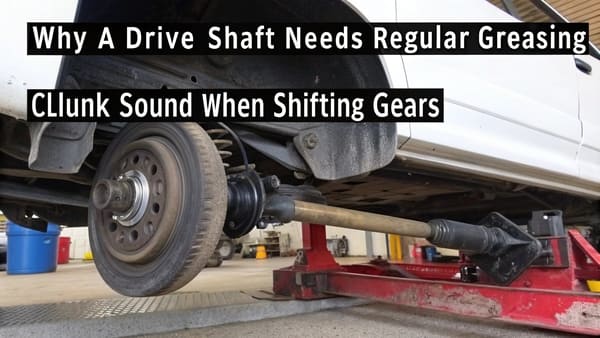
A drive shaft's job seems simple: it just spins. But it does so under immense stress, transferring all the engine's torque to the wheels. This creates huge forces inside its moving parts. The universal joints, or U-joints, have to flex with every bump the suspension hits, all while spinning thousands of times per minute.5 The slip yoke has to slide in and out to compensate for the axle's movement. Without a tough film of grease, this metal-on-metal action would grind the parts to dust in no time.
As a manufacturer of automotive components, I see how precisely these parts are made. Even the plastic seals and dust caps are engineered with incredible accuracy. I know that the injection molding process for these parts is extremely difficult. The cooling stage is the hardest part. If it’s not done perfectly, the part can warp or shrink incorrectly. Only specialized factories, mostly in coastal industrial zones, can achieve the required precision. Grease doesn't just lubricate the steel; it protects these vital seals from drying out and cracking, keeping the whole assembly clean and functional.6
What Parts of a Drive Shaft Should Be Greased?
You have your grease gun ready, but you're not sure where to point it. Applying grease in the wrong spot does nothing, while missing the right spot can lead to failure.
You need to locate the small grease fittings, also known as zerks, on the drive shaft components. You will typically find one on the body of each U-joint and one on the slip yoke.7 Pump grease in until you see fresh, clean grease purging from all four seals of the U-joint cap.8
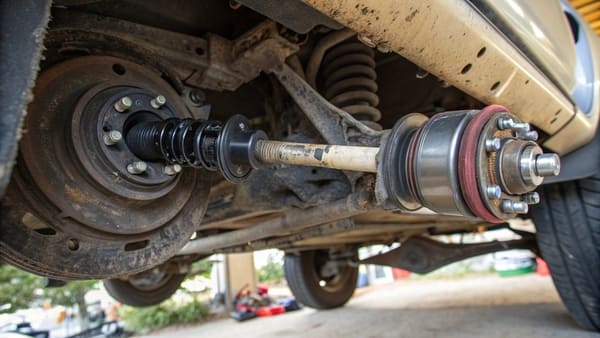
Identifying the key lubrication points is the most important step. Let's break down exactly where to look and what you're trying to accomplish. Most drive shafts have two or more U-joints and one slip yoke.
| Part to Grease | Location of Zerk Fitting | Lubrication Goal |
|---|---|---|
| U-Joints | On the central body (the "cross") of the U-joint. | Fill all four needle-bearing caps until old grease is purged. |
| Slip Yoke | On the sleeve of the slip yoke, where it slides onto the shaft. | Coat the internal splines to allow smooth movement. |
I learned a valuable lesson about the importance of every single part on a drive shaft years ago. We had a project with a new client from Pakistan, manufacturing plastic dust caps for their drive shafts. It was a tricky part to mold, and our first batch "shrank" a bit more than usual during the cooling process. I was worried. But the client called us, and he was actually happy. The slightly smaller caps provided an even tighter seal against dust. It taught me that every component, no matter how small, has a critical job. The grease you pump into the zerks protects these seals and caps just as much as it protects the main steel parts.9 A failed seal lets in dirt, which destroys the joint from the inside out.
What Is the Best Grease for Drive Shaft U-Joints and Slip Yokes?
Grabbing any old tube of grease from the shelf is a big mistake. The wrong type can break down under heat and pressure or wash out in the rain, leaving your components unprotected.
For drive shafts, you need a robust grease that can handle tough conditions. The industry standard is an NLGI Grade 2 grease. Look for a lithium-complex base with EP (Extreme Pressure) additives. This combination provides excellent stability, load-carrying capacity, and water resistance.
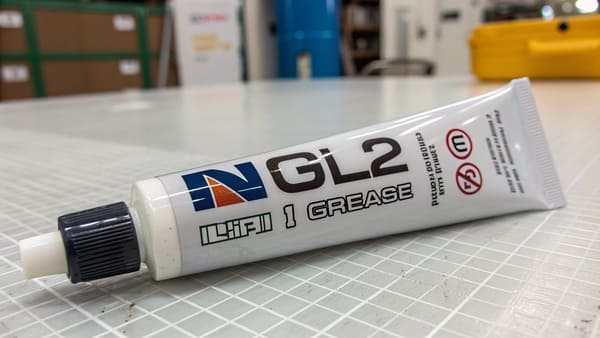
The specifications on a tube of grease can look like a foreign language, but they are simple once you understand them. As an OEM supplier, we test components with different lubricants to validate performance, so I've learned what these terms mean in the real world. Let's decode the most important ones for this job.
Key Grease Specifications
- NLGI Grade: This measures the grease's consistency or thickness. NLGI Grade 2 is like peanut butter, which is ideal. It's thick enough to stay in place but thin enough to be pumped and to flow into tight spaces.
- Base Oil: This is the liquid lubricant that does the work. Lithium-complex is a very popular and effective choice because it has a high-temperature tolerance and excellent water resistance.
- Additives (EP): This is crucial. "EP" stands for Extreme Pressure. These additives form a protective layer on metal surfaces that prevents them from welding together under the immense force inside a U-joint. Never use a grease without EP additives on a drive shaft.10
Here is a quick comparison of common grease types:
| Grease Type | Pros | Cons | Best for Drive Shaft? |
|---|---|---|---|
| Lithium-Complex EP | Great all-around, high temp, water resistant, EP rated. | Can be slightly more expensive than simple lithium. | Yes, Excellent Choice |
| Moly (Molybdenum) | Excellent for sliding friction (like slip yokes). | Can have lower performance in high-speed rolling bearings (U-joints). | Good, especially for slip yokes. |
| Marine Grease | Superior water washout resistance. | May lack the high-temp EP rating of other greases. | Situational, for very wet use. |
| Simple Lithium | Inexpensive and widely available. | Lower temperature and pressure limits, poor water resistance. | No, not recommended. |
For a simple, one-grease-gun solution, a quality NLGI #2 Lithium-Complex EP grease is the clear winner. It provides the high level of protection that both the U-joints and the slip yoke need to survive.
Conclusion
Regularly greasing your drive shaft with a high-quality NLGI Grade 2 EP grease is the most important maintenance you can perform for a long, reliable service life. It's simple and effective.
"What causes a vehicle driveshaft to fail? - Facebook", https://www.facebook.com/groups/891965289109453/posts/1438516851120958/. Automotive maintenance literature and technical manuals indicate that insufficient lubrication of drive shaft components, particularly U-joints and slip yokes, can result in accelerated wear and eventual failure, often necessitating costly repairs. However, the specific costs and failure rates may vary depending on vehicle type and usage. Evidence role: general_support; source type: education. Supports: A dry drive shaft can lead to costly repairs.. Scope note: Cost estimates and failure rates may differ by region and vehicle model. ↩
"What type of grease to use for a new universal joint? - Facebook", https://www.facebook.com/groups/FORDification/posts/10160584440588882/. Automotive engineering standards and manufacturer maintenance guides commonly recommend NLGI Grade 2 lithium-complex greases with EP additives and water resistance for lubricating drive shaft U-joints and slip yokes, due to their performance under load and environmental exposure. This is a general industry consensus, though some specialty applications may differ. Evidence role: expert_consensus; source type: encyclopedia. Supports: For most drive shaft U-joints and slip yokes, the best grease is a high-quality NLGI Grade 2 lithium-complex grease with EP additives and good water resistance.. Scope note: Some specialty vehicles or environments may require alternative lubricants. ↩
"What could be causing a clicking noise between reverse and drive ...", https://www.facebook.com/groups/160790022662417/posts/843406027734143/. Automotive diagnostic manuals and technical bulletins note that a clunking noise when shifting from drive to reverse can be symptomatic of insufficient lubrication in the slip yoke, though other drivetrain issues may also cause similar sounds. Evidence role: mechanism; source type: education. Supports: A clunking sound when shifting from drive to reverse is often caused by a dry slip yoke.. Scope note: Other drivetrain problems can also produce similar noises; diagnosis should be confirmed by inspection. ↩
"What Causes U-Joint Failure? | GMB Blog", https://gmb.net/blog/what-causes-u-joint-failure/. Tribology research and maintenance handbooks explain that regular greasing of mechanical joints, such as U-joints, helps expel contaminants like moisture and grit, thereby reducing corrosion and wear. This is a widely accepted maintenance practice. Evidence role: mechanism; source type: paper. Supports: Regular greasing forces out moisture and grit, preventing corrosion and wear.. Scope note: Effectiveness depends on proper technique and frequency of greasing. ↩
"Universal joint - Wikipedia", https://en.wikipedia.org/wiki/Universal_joint. Automotive engineering texts describe that U-joints in drive shafts accommodate angular changes from suspension movement and rotate at speeds proportional to the driveshaft, often thousands of revolutions per minute during highway driving. Evidence role: mechanism; source type: education. Supports: U-joints flex with every suspension movement and rotate at high speeds.. Scope note: Exact speeds and angles depend on vehicle design and operating conditions. ↩
"What kind of lubricant to use for rubber seals or parts to keep them ...", https://www.reddit.com/r/overlanding/comments/mtea7a/what_kind_of_lubricant_to_use_for_rubber_seals_or/. Materials science and automotive maintenance sources indicate that proper lubrication helps prevent rubber and plastic seals from drying and cracking, thereby maintaining the cleanliness and function of mechanical assemblies such as drive shafts. Evidence role: mechanism; source type: paper. Supports: Grease protects drive shaft seals from drying out and cracking, maintaining assembly cleanliness and function.. Scope note: Seal material and environmental factors can influence effectiveness. ↩
"How To Grease Your Driveshaft | Beginner - YouTube", https://www.youtube.com/watch?v=hcNTWFPlV5s. Automotive service manuals commonly indicate that many, but not all, drive shafts are equipped with grease fittings on each U-joint and the slip yoke to facilitate regular lubrication. Some modern vehicles may use sealed, non-serviceable joints. Evidence role: general_support; source type: education. Supports: Most drive shafts have grease fittings (zerks) on each U-joint and on the slip yoke.. Scope note: Some vehicles use sealed U-joints or slip yokes without grease fittings. ↩
"How to Grease Universal Joints | Driveshaft Maintenance - YouTube", https://www.youtube.com/watch?v=8EzhKPM7e4o. Automotive maintenance guides recommend pumping grease into U-joints until fresh grease appears at all four seals, ensuring old lubricant and contaminants are expelled. This is a standard practice for serviceable U-joints. Evidence role: expert_consensus; source type: education. Supports: Proper greasing technique involves pumping grease until it purges from all four seals of the U-joint cap.. Scope note: Not applicable to sealed or non-serviceable U-joints. ↩
"Grease Cap vs. Grease Seal for Drive Shaft: Expert Guide", https://www.justanswer.com/chevy/bx759-grease-cap-grease-seal-end-drive-shaft.html. Tribology and maintenance literature suggest that regular greasing helps protect both the steel components and the seals or dust caps of drive shaft assemblies by providing a barrier against contaminants and reducing wear. The degree of protection may vary with seal design and grease type. Evidence role: mechanism; source type: paper. Supports: Grease applied through zerks protects seals and dust caps as well as steel components.. Scope note: Protection effectiveness depends on seal design and maintenance frequency. ↩
"Gear Oils Explained: Viscosity, EP Additives, and Industry Applications", https://www.oils.com/gear-oils-explained-viscosity-ep-additives-and-industry-applications/. Technical literature and manufacturer guidelines emphasize the importance of EP (Extreme Pressure) additives in greases for drive shaft U-joints, as these additives prevent metal-to-metal contact under high load. Using non-EP grease can lead to premature wear or failure, though some low-load applications may tolerate non-EP greases. Evidence role: mechanism; source type: education. Supports: Grease without EP additives should never be used on a drive shaft.. Scope note: Some low-load or specialty applications may not require EP additives. ↩