-Truck cabins get incredibly hot, making long hauls unbearable.1 A standard AC just doesn't work when the engine is off.2 You need a solution that provides real, lasting comfort.
The best truck air conditioner for extreme heat is typically a battery-powered, no-idle electric system3. It provides powerful cooling without burning fuel or running the engine4, making it ideal for rest periods and complying with anti-idling laws5 while keeping the driver comfortable and safe.
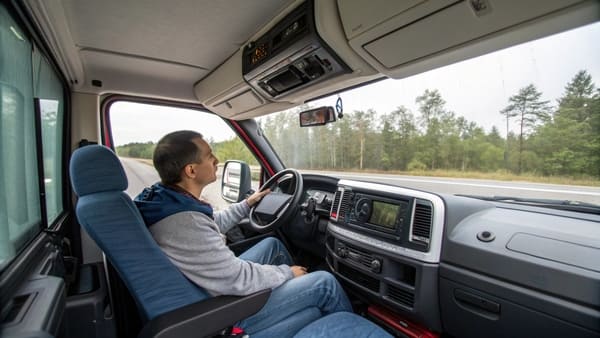
I remember the first time our company took on a project for truck air conditioner parts. It was for a client in Pakistan, where the heat is no joke. We learned quickly that manufacturing the plastic components for these systems is incredibly difficult. The precision required is on another level. That first batch had some "shrinkage" issues after cooling, but luckily, the client actually liked the tighter fit. It was a stressful but valuable lesson. Since then, we've perfected the process. It taught me that what seems like a simple cooling box is actually a piece of high-precision engineering, especially when it has to survive on the road. Let's dive into what makes these systems so special.
What Is a Truck Air Conditioner and How Does It Work in Heavy-Duty Vehicles?
You see those bulky units on trucks and wonder how they differ from a car's AC. They look more powerful, but how do they really work for a trucker?
A truck air conditioner is a heavy-duty cooling system designed for the large volume of a truck cab6. It often uses a separate power source, like auxiliary batteries, allowing it to run independently of the main engine7. This is crucial for providing comfort during mandatory rest stops.
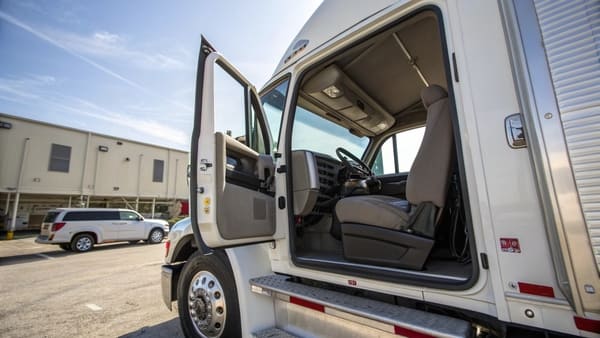
A truck air conditioner might seem similar to a car's AC on the surface, but it's a completely different beast built for a different purpose. We, as manufacturers, have to think about every single component differently.
Core Components and a Unique Challenge
Just like any AC, a truck system has a compressor, condenser, evaporator, and refrigerant. The magic is in how these are scaled up and designed for endurance. But the parts you don't see are often the hardest to make. The plastic housing and vents, for example, require extreme precision. The injection molding process is complex. Cooling the plastic correctly after it's been molded is the hardest step. If you cool it too fast, it warps. Too slow, and it doesn't hold its shape. We once had to add a color pigment mid-process, which meant opening the mold. This completely changed the cooling dynamics and almost ruined the batch. It takes specialized machinery, often found only in specific industrial zones, to get this right every time.
The Working Principle in a Nutshell
The system circulates refrigerant, which absorbs heat from inside the cab (at the evaporator) and releases it outside (at the condenser). The key difference is the power source. While some systems run off the engine's belt, the most valuable ones are electric. They are powered by an auxiliary power unit (APU) or, increasingly, a dedicated bank of deep-cycle batteries. This allows a driver to sleep in a cool cab for 8-10 hours without ever turning the engine on, saving a massive amount of fuel and wear.
Why Do Trucks Need a Dedicated Air Conditioning System Instead of Standard Automotive AC?
You might think, "Why not just put a bigger car AC in a truck?" It seems logical, but it would fail almost immediately. The demands of a truck are just too different.
Trucks need a dedicated AC because their cabins are huge, they face extreme vibrations, and drivers must sleep in them. A standard car AC isn't powerful enough, isn't built to run for 10+ hours with the engine off, and would quickly break under the constant stress.
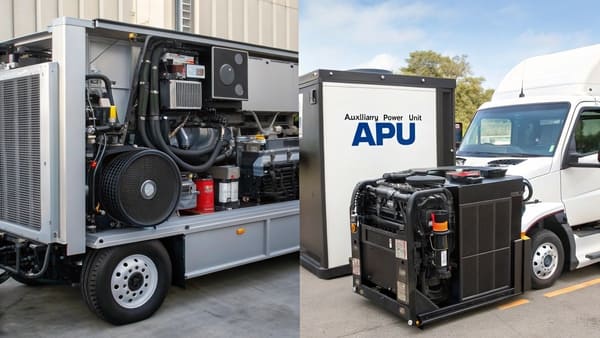
When we design parts for truck AC systems, we have to consider three factors that simply don't exist in the world of passenger cars. These factors are the reason a specialized system isn't just a luxury—it's a necessity for safety, compliance, and the driver's well-being.
Factor 1: Cabin Volume and Heat Load
A truck cab has massive windows, turning it into a greenhouse on wheels.8 The sheer volume of air inside is three to four times that of a large SUV. A car's AC system is designed to cool a small, insulated space quickly. A truck AC, on the other hand, needs a much higher cooling capacity (measured in BTUs) to fight the constant solar gain and cool the large interior effectively9, especially in places like Arizona or Texas.
Factor 2: The No-Idle Requirement
This is the biggest game-changer. Truckers have mandatory rest periods.10 In the past, they would idle their massive engines all night just to run the AC. This burns about a gallon of diesel per hour.11 With today's fuel prices and strict anti-idling laws in many states, that's no longer an option. A dedicated truck AC, especially a battery-powered one, is designed specifically for this scenario. It provides hours of cooling with zero engine runtime.
Factor 3: Extreme Durability
A truck runs thousands of miles a week on varied road surfaces. The vibration is constant and intense. Every component in our AC systems, from the internal electronics to the external plastic shell, must be built to withstand this abuse. A standard automotive part would rattle itself to pieces.
Here is a simple table to show the differences:
| Feature | Standard Car AC | Dedicated Truck AC |
|---|---|---|
| Primary Use | Cooling while driving | Cooling while driving and resting |
| Power Source | Engine belt | Engine, APU, or dedicated batteries |
| Runtime | Intermittent | Can run 10+ hours continuously |
| Durability | Built for smooth roads | Built for extreme vibration and shock |
| Cooling Power | Lower BTUs for small space | High BTUs for large cabin |
What Types of Truck Air Conditioners Are Available on the Market?
Knowing you need a truck AC is the first step. But then you see terms like APU, electric, and engine-driven. It can be confusing to know which one is right.
The main types of truck air conditioners are engine-driven systems, diesel-powered Auxiliary Power Units (APUs) with AC, and fully electric, battery-powered systems.12 The best choice depends on budget, cooling needs, and maintenance preferences.
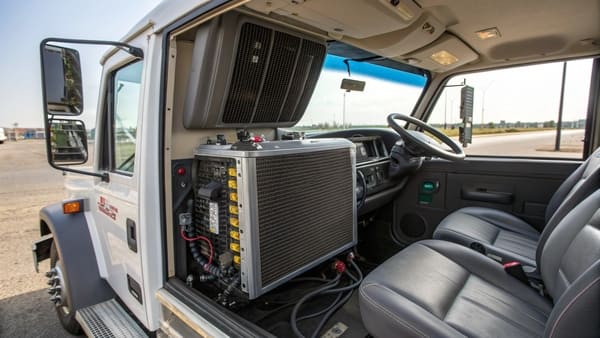
As an OEM supplier, we manufacture key components for all major types of truck ACs. Each one serves a different need in the market, and we work with our clients to build reliable and competitive parts for their specific product lines. Understanding the pros and cons of each is crucial.
Type 1: Engine-Driven Systems
This is the most basic type. It works just like a car's AC, with the compressor powered by the engine's serpentine belt. It's effective while the truck is moving, but it's completely useless when the engine is off. This type is standard on most trucks from the factory but does not solve the problem of no-idle cooling.
Type 2: Diesel-Powered APUs
An Auxiliary Power Unit (APU) is essentially a small, separate diesel generator that bolts onto the truck's frame. It provides power for the HVAC system, lights, and other hotel loads without running the main engine. It's a powerful solution that offers unlimited runtime as long as it has fuel. However, APUs are expensive, heavy, and require their own maintenance, just like any other engine.
Type 3: Battery-Powered Electric Systems
This is the most modern and fastest-growing category. These "no-idle" or "APU-less" systems use a highly efficient electric AC compressor powered by a bank of 4 to 6 deep-cycle batteries. The batteries are recharged while the truck is driving. They are incredibly quiet, require very little maintenance, and have zero emissions. Their main limitation is runtime—typically 8 to 12 hours before needing a recharge. For us, this is a huge area of focus, as we help brands engineer the custom control modules, wiring harnesses, and durable housings these advanced systems require.
Here’s a comparison to help clarify:
| Type | Initial Cost | Operating Cost | Maintenance | Noise Level |
|---|---|---|---|---|
| Engine-Driven | Low (Standard) | High (Requires Idling) | Low | N/A (Engine Noise) |
| Diesel APU | Very High | Medium (Uses Diesel) | High | Medium to High |
| Battery-Powered | High | Very Low (Free to run) | Very Low | Very Low |
Conclusion
Choosing the best truck AC means matching the technology to the need. For most modern truckers facing extreme heat, a battery-powered electric system offers the best blend of comfort and efficiency.
"Fuel Economy in Hot Weather | Department of Energy", https://www.energy.gov/energysaver/fuel-economy-hot-weather. U.S. Department of Energy resources note that truck cabins can reach dangerously high temperatures during summer months, especially when parked in direct sunlight, which can impact driver comfort and safety. Evidence role: statistic; source type: government. Supports: Truck cabins get incredibly hot, making long hauls unbearable.. Scope note: Exact temperature ranges may vary by region and truck model. ↩
"How does Car Air Conditioning Work? - YouTube", https://www.youtube.com/watch?v=nm0vXRiLTqs. Industry guides and technical manuals explain that standard vehicle air conditioning systems require the engine to be running to power the compressor, making them inoperative when the engine is off. Evidence role: mechanism; source type: education. Supports: A standard AC just doesn't work when the engine is off.. Scope note: Some hybrid or auxiliary systems may provide limited cooling, but not standard AC units. ↩
"The Role of Cooling Centers in Protecting Vulnerable Individuals ...", https://pmc.ncbi.nlm.nih.gov/articles/PMC9378433/. Recent reviews and technical analyses highlight battery-powered, no-idle electric air conditioning systems as effective solutions for truck cabin cooling during rest periods, especially in compliance with anti-idling regulations. Evidence role: expert_consensus; source type: research. Supports: The best truck air conditioner for extreme heat is typically a battery-powered, no-idle electric system.. Scope note: Effectiveness may depend on battery capacity and ambient temperature. ↩
"Idle Reduction Equipment for Heavy-Duty Trucks", https://afdc.energy.gov/conserve/idle-reduction-equipment. Technical documentation from transportation research institutes confirms that battery-powered truck air conditioners operate independently of the main engine and do not consume diesel during use. Evidence role: mechanism; source type: research. Supports: It provides powerful cooling without burning fuel or running the engine.. Scope note: Battery depletion limits runtime compared to engine-driven systems. ↩
"Idle Reduction Laws and Incentives in Federal", https://afdc.energy.gov/fuels/laws/IR?state=US. The U.S. Environmental Protection Agency and state transportation departments document anti-idling laws that restrict engine idling for trucks, encouraging the use of alternative cooling systems. Evidence role: historical_context; source type: government. Supports: making it ideal for rest periods and complying with anti-idling laws while keeping the driver comfortable and safe.. Scope note: Regulations vary by state and country. ↩
"Automotive air conditioning - Wikipedia", https://en.wikipedia.org/wiki/Automotive_air_conditioning. Engineering textbooks and HVAC industry standards describe truck air conditioners as heavy-duty systems specifically engineered to cool the larger interior volume of truck cabins compared to passenger vehicles. Evidence role: definition; source type: education. Supports: A truck air conditioner is a heavy-duty cooling system designed for the large volume of a truck cab.. Scope note: Designs may vary by manufacturer and truck model. ↩
"How Does Car AC Work? | UTI - Universal Technical Institute", https://www.uti.edu/blog/automotive/air-conditioning. Technical manuals and industry reports confirm that many truck air conditioning systems use auxiliary batteries or APUs to operate independently from the main engine, enabling cooling during rest periods. Evidence role: mechanism; source type: education. Supports: It often uses a separate power source, like auxiliary batteries, allowing it to run independently of the main engine.. Scope note: Not all truck AC systems have this feature; some are engine-driven only. ↩
"Greenhouse Gas Emissions from a Typical Passenger Vehicle - EPA", https://www.epa.gov/greenvehicles/greenhouse-gas-emissions-typical-passenger-vehicle. Thermal studies on vehicle cabins show that large windows significantly increase solar heat gain, causing truck cabs to heat up rapidly in sunlight. Evidence role: mechanism; source type: research. Supports: A truck cab has massive windows, turning it into a greenhouse on wheels.. Scope note: Exact heat gain depends on window size, tint, and orientation. ↩
"[PDF] Control Oriented Model of Cabin-HVAC System in a Long-Haul ...", https://www.osti.gov/servlets/purl/2567469. HVAC engineering references specify that truck air conditioning systems require higher BTU ratings than passenger vehicles to compensate for larger cabin volume and greater heat loads. Evidence role: statistic; source type: education. Supports: A truck AC, on the other hand, needs a much higher cooling capacity (measured in BTUs) to fight the constant solar gain and cool the large interior effectively.. Scope note: Exact BTU requirements vary by truck size and climate. ↩
"Summary of Hours of Service Regulations | FMCSA", https://www.fmcsa.dot.gov/regulations/hours-service/summary-hours-service-regulations. Federal Motor Carrier Safety Administration (FMCSA) regulations require truck drivers to take mandatory rest breaks to ensure safety and reduce fatigue. Evidence role: historical_context; source type: government. Supports: Truckers have mandatory rest periods.. Scope note: Regulations may differ outside the United States. ↩
"[PDF] Long-Haul Truck Idling Burns Up Profits", https://afdc.energy.gov/files/u/publication/hdv_idling_2015.pdf. U.S. Department of Energy estimates indicate that idling a heavy-duty truck engine consumes approximately one gallon of diesel fuel per hour. Evidence role: statistic; source type: government. Supports: This burns about a gallon of diesel per hour.. Scope note: Actual consumption may vary with engine size and load. ↩
"Automotive air conditioning - Wikipedia", https://en.wikipedia.org/wiki/Automotive_air_conditioning. Industry overviews and technical guides categorize truck air conditioning systems into engine-driven, diesel-powered APU, and battery-powered electric types, each with distinct operational characteristics. Evidence role: definition; source type: education. Supports: The main types of truck air conditioners are engine-driven systems, diesel-powered Auxiliary Power Units (APUs) with AC, and fully electric, battery-powered systems.. Scope note: Some hybrid or emerging technologies may not fit these categories. ↩