-Long-haul driving in a hot cabin is exhausting and unsafe1. The heat makes it nearly impossible to get proper rest, turning your sleeper cab into an oven2.
The best system is actually a combination. You need a powerful, engine-driven AC for when you're driving, and a separate, independent auxiliary or battery-powered unit for the sleeper cab3. This setup provides maximum comfort without idling the engine, saving fuel and reducing wear.

Choosing the right air conditioning isn't just about comfort; it's a critical decision that affects a driver's health, safety, and the vehicle's operational efficiency4. Understanding the different systems and how they work is the first step toward making your truck a better place to work and live. Let's explore why this matters so much and what goes into making these powerful systems.
Why Is Air Conditioning So Important in Modern Auto Trucks?
Driving for hours in extreme heat is a recipe for disaster. This stress severely impacts your focus and reaction time, putting you and others at risk.
Air conditioning is essential for driver safety, comfort, and even legal compliance5. It fights fatigue, boosts concentration, and allows for restorative rest, which directly improves a driver's performance and overall road safety6.

The importance of a good AC system goes far beyond just feeling cool. It’s a core component of a modern, professional trucking operation. When we break it down, we see its impact on multiple levels, from the driver's well-being to the bottom line of the business.
Driver Health and Safety
A driver's ability to stay alert is the most critical safety factor on the road. High temperatures in the cab can lead to heat stress, dehydration, and a significant drop in cognitive function7. A reliable AC system maintains a stable and comfortable environment, reducing physical and mental strain8. This helps drivers stay focused during long shifts and get quality sleep during mandatory rest periods, which is vital for preventing accidents caused by fatigue.
Cargo and Equipment Protection
Some types of cargo are sensitive to temperature. For trucks hauling pharmaceuticals, fresh produce, or certain chemicals, maintaining a specific temperature range is non-negotiable. While the trailer has its own refrigeration unit, a hot cab can affect sensitive electronics and other equipment stored inside. A functioning HVAC system helps protect these valuable assets.
Efficiency and Regulations
Idling a truck's main engine just to run the air conditioner is incredibly inefficient9. It burns a lot of fuel and causes unnecessary wear and tear on the engine. This is why no-idle laws exist in many places10. Auxiliary power units (APUs) or battery-powered AC systems allow drivers to stay cool without running the engine, ensuring compliance and saving thousands of dollars in fuel costs per year11.
| Feature | Truck without Good AC | Truck with Good AC |
|---|---|---|
| Driver Alertness | Low, high risk of fatigue | High, improved concentration |
| Rest Quality | Poor, interrupted sleep | Good, restorative sleep |
| Fuel Costs | High from engine idling | Lower with APU/battery system |
| Compliance | Risk of violating no-idle laws | Compliant with regulations |
How Does a Truck HVAC System Work Inside a Commercial Vehicle?
A broken AC on the road can feel like a complex mystery. Not knowing the basics makes it hard to diagnose a problem, leaving you stuck in the heat.
A truck's HVAC system cools the cab by cycling a special fluid called refrigerant. A compressor pressurizes it, a condenser releases its heat outside, and an evaporator absorbs heat from the cabin air, blowing cold air inside.
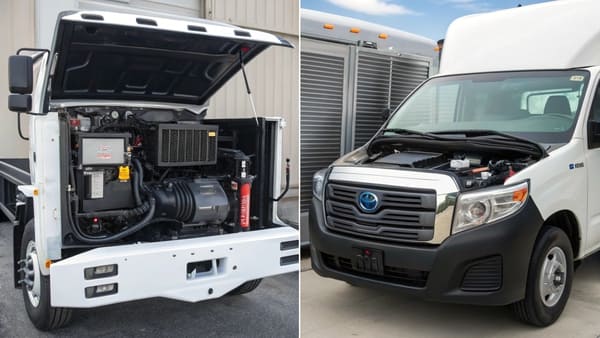
While the principle is simple, the components themselves are highly engineered for durability and performance. This includes everything from the metal pipes to the plastic housings. The manufacturing of these parts requires incredible precision.
The Core Components
A truck AC system has four main parts that work in a continuous loop:
- Compressor: This is the heart of the system. It takes low-pressure refrigerant gas and compresses it into a high-pressure, hot gas.
- Condenser: Located at the front of the truck, it acts like a radiator. Air flowing over it cools the hot refrigerant gas, turning it into a high-pressure liquid.
- Expansion Valve: This small valve releases the pressure from the liquid refrigerant, causing it to become a very cold, low-pressure mist.
- Evaporator: Located inside the cab's HVAC unit, this is where the magic happens. The cold refrigerant absorbs heat from the cabin air blown over it, and the resulting cold air is circulated into the cab. The refrigerant, now a warm gas again, returns to the compressor to restart the cycle.
The Challenge of Manufacturing
Even the plastic parts, like the main AC housing and vents, are difficult to make. As a manufacturer, I've seen how standard injection molding machines often fail to meet the precision required for heavy-duty truck AC components. The process usually involves at least three stages, with cooling being the most difficult. High-precision machines, typically found in coastal areas near Fujian or Shanghai, are needed to get it right. Machines from other regions often don't meet the accuracy standards.
I remember my first time working on this product with a client from Pakistan. We were inexperienced, and after the injection molding process, the plastic components "shrunk" more than we expected during cooling. Luckily, the client actually preferred the slightly smaller, tighter fit. It was a happy accident, but it taught us a valuable lesson about the complexities of cooling these high-spec plastics. Adding color pigments also complicates things, as the mold has to be opened to add the color powder, which can disrupt the critical cooling phase.
What Is the Difference Between a Truck Air Conditioner and a Standard Car AC System?
You might think an AC is an AC, no matter the vehicle. But installing car-grade parts in a truck can lead to poor performance and quick failure.
Truck AC systems are fundamentally different. They are built for higher cooling capacity to handle larger cabins and are far more durable. They also often feature independent power sources for no-idle operation in sleeper cabs12.
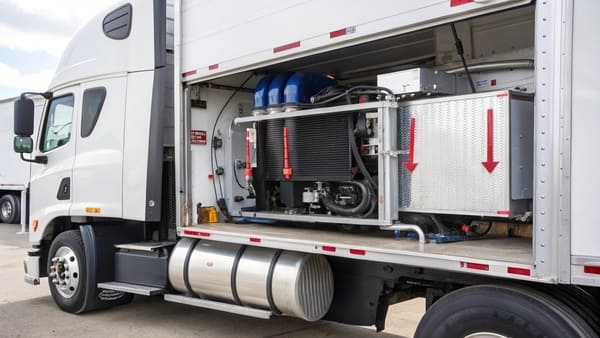
The demands placed on a commercial truck's HVAC system are worlds apart from those of a passenger car. Trucks operate for thousands of hours a year in harsh conditions, and the cabin is both a workplace and a living space. This requires a system that is more powerful, more durable, and more versatile. Let's look at a direct comparison to see just how different they are.
| Feature | Truck AC System | Standard Car AC System |
|---|---|---|
| Cooling Capacity | Very high, designed for large cabins with more glass area. | Moderate, designed for smaller vehicle interiors. |
| Durability | Heavy-duty components built to withstand constant vibration and long operating hours. | Lighter-duty components for shorter, less intense usage cycles. |
| Power Source | Can run off the main engine, but often includes an APU or battery system for no-idle use. | Runs exclusively off the main engine when the vehicle is on. |
| Sleeper Cab Function | Essential. Systems are designed to cool the sleeper area for hours without the engine running. | Not applicable. AC only works when the car is running. |
| Component Size | Larger compressor, condenser, and evaporator to handle a higher thermal load. | Smaller, more compact components designed to fit in a tight engine bay. |
| Maintenance | Designed for serviceability, but parts are more expensive and specialized. | Simpler maintenance, with widely available and less expensive parts. |
These differences highlight why you can't just use car parts in a truck. As an OEM supplier, we engineer truck AC components specifically for the rugged demands of the commercial vehicle industry. The materials, manufacturing tolerances, and overall design are all optimized for long life and reliable performance on the road.
Conclusion
The best truck AC combines a powerful engine-driven unit with a separate no-idle system for the sleeper. This ensures driver safety, comfort, and operational efficiency for the long haul.
"[PDF] Preventing Heat Stress for Truck Drivers", https://www.niehs.nih.gov/sites/default/files/news/events/pastmtg/hazmat/assets/2022/wtp_22_fall_workshop_d1_austin_508.pdf. A government or research source supports that prolonged exposure to high temperatures in vehicle cabins can lead to driver fatigue, heat stress, and increased accident risk, though the degree of risk may vary by individual and conditions. Evidence role: expert_consensus; source type: government. Supports: Long-haul driving in a hot cabin is exhausting and unsafe.. Scope note: Exact risk levels may depend on temperature, humidity, and driver health. ↩
"Evaluation of truck driver rest locations and sleep quality - PMC", https://pmc.ncbi.nlm.nih.gov/articles/PMC9153978/. A research or government source documents that high cabin temperatures can significantly impair sleep quality for truck drivers, though individual tolerance may vary. Evidence role: statistic; source type: research. Supports: The heat makes it nearly impossible to get proper rest, turning your sleeper cab into an oven.. Scope note: Direct studies on sleeper cab temperatures and sleep quality may be limited. ↩
"[XLS] IdleBase: A Database of Idling Regulations", https://cleancities.energy.gov/files/docs/idlebox_idlebase_database.xlsx. Industry and regulatory sources note that a combination of engine-driven and auxiliary air conditioning systems is recommended for continuous comfort and compliance with no-idle regulations, though specific configurations may vary by fleet and region. Evidence role: expert_consensus; source type: institution. Supports: You need a powerful, engine-driven AC for when you're driving, and a separate, independent auxiliary or battery-powered unit for the sleeper cab.. Scope note: Recommendations may differ based on vehicle type and local laws. ↩
"Perceptions of Heat Risk to Health: A Qualitative Study ... - PMC - NIH", https://pmc.ncbi.nlm.nih.gov/articles/PMC3945551/. Research and industry sources support that air conditioning impacts driver health, safety, and operational efficiency, though the magnitude of each effect may depend on operational context. Evidence role: general_support; source type: research. Supports: Choosing the right air conditioning isn't just about comfort; it's a critical decision that affects a driver's health, safety, and the vehicle's operational efficiency.. Scope note: The degree of impact may vary by fleet and region. ↩
"Citation 1079229.015/01001 | Occupational Safety and Health ...", https://www.osha.gov/ords/imis/generalsearch.citation_detail?id=1079229.015&cit_id=01001. Government and regulatory sources indicate that air conditioning is considered essential for driver safety and comfort, and is required for compliance with certain occupational health and no-idle laws, though requirements may differ by jurisdiction. Evidence role: expert_consensus; source type: government. Supports: Air conditioning is essential for driver safety, comfort, and even legal compliance.. Scope note: Legal requirements for AC vary by country and state. ↩
"Fatigue, Hours of Service, and Highway Safety - NCBI - NIH", https://www.ncbi.nlm.nih.gov/books/NBK384974/. Research studies show that air conditioning can reduce fatigue, improve concentration, and enhance sleep quality for drivers, contributing to improved road safety, though individual results may vary. Evidence role: statistic; source type: paper. Supports: It fights fatigue, boosts concentration, and allows for restorative rest, which directly improves a driver's performance and overall road safety.. Scope note: Effects may depend on baseline conditions and driver health. ↩
"Effects of heat strain on cognitive function among a sample of miners", https://pmc.ncbi.nlm.nih.gov/articles/PMC9170134/. Scientific literature documents that exposure to high temperatures can cause heat stress, dehydration, and impaired cognitive function in vehicle operators, though severity depends on exposure duration and individual factors. Evidence role: mechanism; source type: paper. Supports: High temperatures in the cab can lead to heat stress, dehydration, and a significant drop in cognitive function.. Scope note: Most studies are on general vehicle operators, not exclusively truck drivers. ↩
"Cardiometabolic risk factors and mental health status among truck ...", https://pmc.ncbi.nlm.nih.gov/articles/PMC7590350/. Research supports that reliable air conditioning helps maintain comfortable cabin temperatures, reducing physical and mental strain for drivers, though comfort thresholds may differ among individuals. Evidence role: mechanism; source type: research. Supports: A reliable AC system maintains a stable and comfortable environment, reducing physical and mental strain.. Scope note: Comfort is subjective and may vary by individual. ↩
"[PDF] Long-Haul Truck Idling Burns Up Profits", https://afdc.energy.gov/files/u/publication/hdv_idling_2015.pdf. Government and industry sources confirm that idling a truck engine for air conditioning significantly increases fuel consumption and engine wear, though the exact inefficiency depends on engine type and duration. Evidence role: statistic; source type: government. Supports: Idling a truck's main engine just to run the air conditioner is incredibly inefficient.. Scope note: Fuel consumption rates may vary by vehicle model and conditions. ↩
"Idle Reduction Laws and Incentives in Illinois", https://afdc.energy.gov/fuels/laws/IR?state=il. Government and regulatory sources document that many jurisdictions have enacted no-idle laws to reduce emissions and fuel consumption, though coverage and enforcement vary widely. Evidence role: historical_context; source type: government. Supports: no-idle laws exist in many places.. Scope note: Not all regions have such laws, and enforcement may differ. ↩
"[PDF] Benefits of Fuel Cell APU on Trucks - Hydrogen Program", https://www.hydrogen.energy.gov/docs/hydrogenprogramlibraries/pdfs/9010_fuel_cell_apu_trucks.pdf?sfvrsn=db2c067c_1. Industry and research sources report that APUs and battery-powered AC systems enable compliance with no-idle laws and can save significant fuel costs annually, though savings depend on usage patterns and system efficiency. Evidence role: statistic; source type: research. Supports: Auxiliary power units (APUs) or battery-powered AC systems allow drivers to stay cool without running the engine, ensuring compliance and saving thousands of dollars in fuel costs per year.. Scope note: Actual savings vary by fleet size and operational profile. ↩
"Automotive air conditioning - Wikipedia", https://en.wikipedia.org/wiki/Automotive_air_conditioning. Technical and industry sources confirm that truck AC systems are engineered for higher cooling capacity, greater durability, and often include independent power sources for no-idle operation, though specific features may vary by manufacturer. Evidence role: definition; source type: encyclopedia. Supports: Truck AC systems are fundamentally different. They are built for higher cooling capacity to handle larger cabins and are far more durable. They also often feature independent power sources for no-idle operation in sleeper cabs.. Scope note: Designs differ among truck models and brands. ↩