-Struggling to find the right catalytic converter for a 2003 CR-V? Mismatched parts cause failed emissions tests and engine problems. We have the exact-fit solution you need.
Yes, finding the right catalytic converter for a 2003 Honda CR-V1 involves matching the specific engine type (like the K24A1) and OEM part numbers2. For B2B buyers, ensuring manufacturing precision3 is key to avoiding fitment issues and ensuring long-term performance.
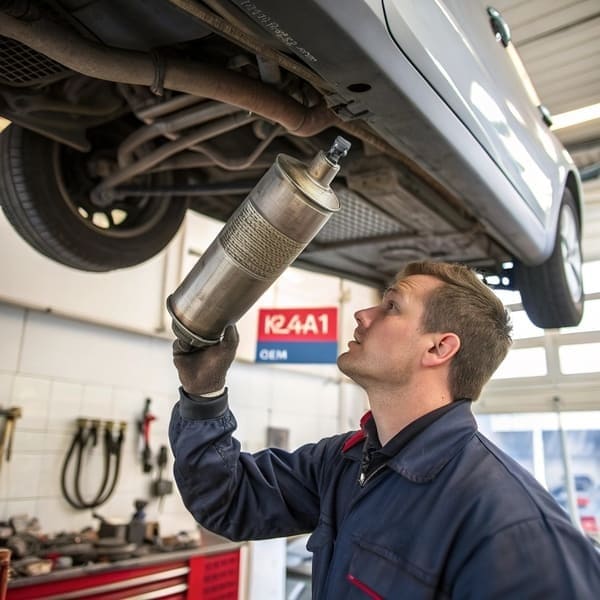
Getting the right part number is just the start. The real challenge, especially for wholesalers and importers, is ensuring the quality and precision of the part itself. Let's dive into what makes a catalytic converter truly compatible and reliable, so you can stock your inventory with confidence.
What Catalytic Converter Fits a 2003 Honda CR-V Exactly?
Are you worried about ordering converters that don't fit? This leads to costly returns and unhappy customers. Let's pinpoint the exact specifications for a perfect match every time.
The correct catalytic converter for a 2003 Honda CR-V1 is typically one designed for the 2.4L K24A1 engine4. It must meet specific emissions standards and have the correct flange and pipe configuration5 for a direct, bolt-on installation.
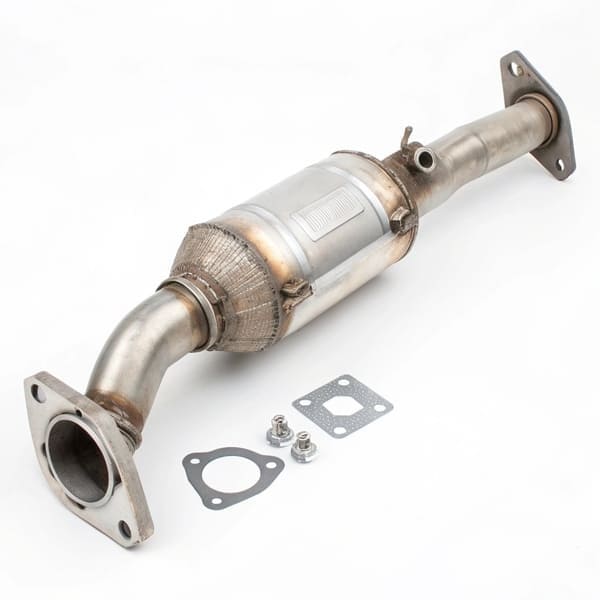
When we talk about an "exact fit," we mean more than just the model year. For a part as complex as a catalytic converter, which is integrated with the exhaust manifold, precision is everything. A "direct-fit6" part should bolt on perfectly, with no need for cutting, welding, or bending. This is what your customers, the installers, expect. For the 2003 Honda CR-V, this means sourcing a part specifically made for its 2.4L K24A1 engine4.
Key Specifications for an Exact Match
To guarantee a perfect fit, we focus on several critical details during production. As an importer or distributor, these are the details you should verify with any supplier.
| Specification | Importance | Why It Matters for B2B Buyers |
|---|---|---|
| Engine Code | High | The 2.4L K24A1 engine4 has specific exhaust manifold dimensions. |
| Fitment Type | High | Direct-fit ensures easy installation, reducing labor costs and customer complaints. |
| Flange Type & Angle | High | Incorrect flanges mean the converter cannot be bolted to the engine or exhaust system. |
| O2 Sensor Port | High | The port must be in the correct location and have the right thread for the sensor. |
Achieving this level of precision is not easy. It requires high-quality molds and jigs. We've seen firsthand how a small error of just a few millimeters in a mold can make an entire batch of converters useless. That's why we invest heavily in high-precision machinery7, the kind you typically find in top-tier factories in the Shanghai and Fujian regions, to ensure every unit we ship matches OEM specifications perfectly.
Which OEM Numbers Match This Catalytic Converter Replacement?
Confused by long lists of OEM numbers? Ordering the wrong part based on an incorrect number can halt your supply chain and create dead stock. Let's clarify which numbers confirm a match.
For the 2003 Honda CR-V, key OEM part numbers2 for the catalytic converter assembly often include 18190-PPA-3058 and 18190-PPA-A01. Cross-referencing these numbers is the most reliable way for importers to confirm compatibility before placing a large volume order.
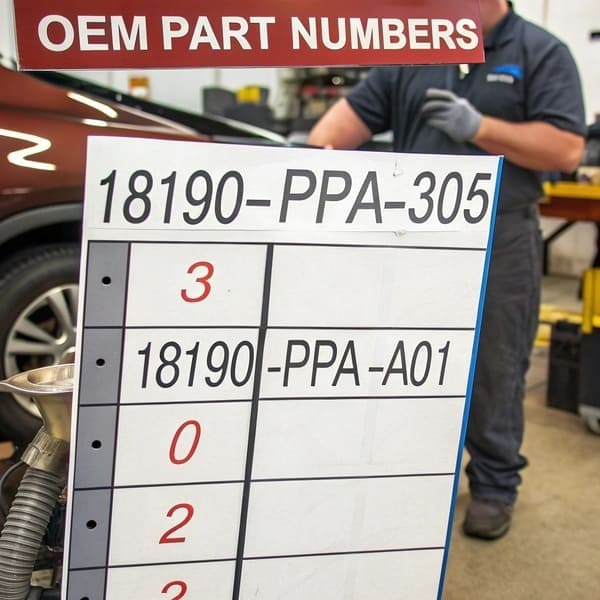
Original Equipment Manufacturer (OEM) numbers are the gold standard for identifying automotive parts. For anyone in the B2B auto parts business, these numbers are your most reliable tool. They remove all the guesswork and ensure that the aftermarket part you are sourcing is designed to be a true replacement for the original. Using these numbers helps you avoid costly mistakes and build a reputation for supplying the right parts.
Common OEM and Aftermarket Cross-References
When you're sourcing parts, you'll need to match the OEM number to the supplier's part number. A good manufacturer will always provide this cross-reference.
| Part Type | Part Number | Cross-References To |
|---|---|---|
| Honda OEM Part | [18190-PPA-305](https://www.ebay.com/itm/127618331700?chn=ps&mkevt=1&mkcid=28&google_free_listing_action=view_item)8 |
2002-2004 Honda CR-V (2.4L) |
| Honda OEM Part | 18190-PPA-A01 |
2002-2006 Honda CR-V (2.4L) |
| Aftermarket Example | [Walker 16398](https://shop.advanceautoparts.com/p/walker-ultra-epa-direct-fit-catalytic-converter-with-integrated-exhaust-manifold-16398/10044164-P)9 |
18190-PPA-3058, 18190-PPA-A01 |
| Our Factory Part | [Your Part Number] |
18190-PPA-3058, 18190-PPA-A01 |
As a manufacturer, we don't just look at the number. We use it to access the original engineering blueprints. We then ensure our molds, materials, and quality checks are all aligned to produce a part that is a one-to-one replacement for that OEM component. This deep commitment to the original specifications is what separates a reliable long-term partner from a supplier who might cause you inventory headaches. It's about more than just a number; it's about a commitment to quality.
Is This Catalytic Converter Compatible with All Engine Types of the 2003 CR-V?
Assuming one part fits all engine variants is a big risk. This mistake can lead to a warehouse full of useless inventory. Let's check compatibility to protect your investment.
No, it is not compatible with all engine types globally. The 2003 Honda CR-V primarily used the 2.4L K24A1 engine4 in North America, but other markets had different engines (e.g., 2.0L K20A4). Always verify the target market's specific engine before ordering.
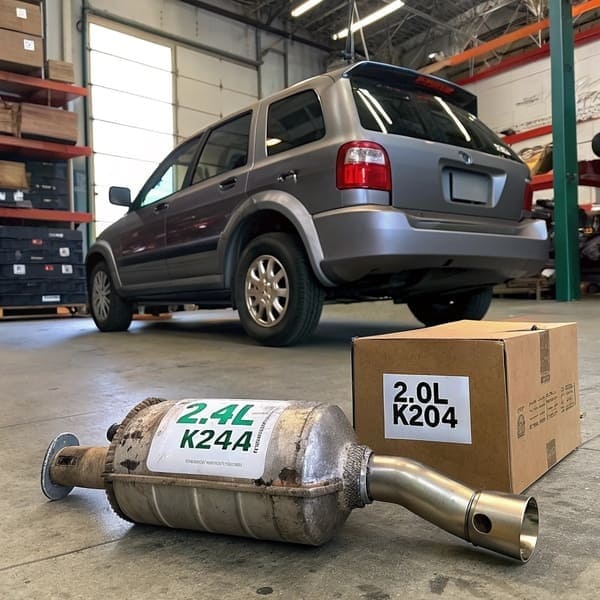
This is where dealing with an experienced OEM/ODM supplier becomes critical. While North America predominantly received the 2.4L K24A1 engine4 in the 2003 CR-V, other markets in Europe and Asia were offered different powertrains, like the 2.0L K20A4. The exhaust manifolds and catalytic converters for these engines are completely different. But the real complexity lies in the manufacturing process itself.
The Hidden Challenge: Manufacturing Precision
Producing a catalytic converter is a difficult, multi-stage process. The hardest part is controlling the structural accuracy during the cooling and shaping stage. The fit between the outer metal shell and the inner ceramic catalyst carrier must be perfect. To achieve this, we sometimes have to stop the production line, open the hot mold to make micro-adjustments, and then resume. This procedure makes the cooling process very tricky to manage.
I remember one of our first projects for this part with a client from Pakistan. Our initial production run had a very small flaw—the fit between the shell and the carrier wasn't as tight as our internal standards demanded. We were worried about telling the client, but when we did, he was actually happy. For some reason, that slightly looser fit worked better for their local repair methods. It was a lucky break for us and a big learning moment. We’ve since perfected the process to meet any specification, but it taught me that the challenges in manufacturing are immense. This is the kind of deep production knowledge that ensures you, as a B2B buyer, get a product that is truly reliable and fit for your market.
Conclusion
Finding the right catalytic converter means matching OEM numbers and engine codes. More importantly, it requires a manufacturing partner who masters the complex production process for a perfect, reliable fit.
Discover which catalytic converter is recommended for your 2003 Honda CR-V to ensure emissions compliance and avoid costly installation issues. ↩
Understanding OEM part numbers is crucial for avoiding mismatches and ensuring you order the exact replacement part for your vehicle. ↩
Explore how manufacturing precision impacts the reliability and fit of catalytic converters, reducing returns and customer complaints. ↩
Learn about the K24A1 engine to ensure you select compatible parts and understand its unique requirements for catalytic converters. ↩
Learn how the correct flange and pipe configuration ensures a perfect fit and prevents installation problems for your CR-V. ↩
Find out why direct-fit catalytic converters simplify installation and improve customer satisfaction by eliminating modification needs. ↩
See how advanced machinery ensures every catalytic converter matches OEM specs, boosting reliability and reducing defects. ↩
Find out which Honda models use this OEM part number to ensure you source the correct catalytic converter for your inventory. ↩
Check if Walker 16398 matches OEM specs and is a reliable aftermarket option for your CR-V customers. ↩