-Finding the right supplier is a huge challenge. You need high-quality Tesla parts1, but you worry about getting a bad batch. I will show you how to navigate this process.
Yes, Made-in-China.com can be a starting point, but it is very difficult to find a truly reliable Tesla parts supplier there. Success depends on your ability to verify their specific high-precision manufacturing capabilities2, which standard platform audits do not cover. You must look deeper.
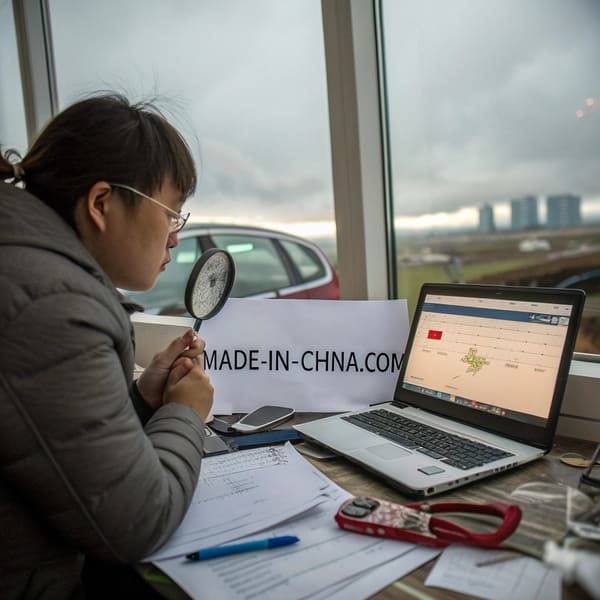
Many of my clients start their search on large B2B websites3. It makes sense because these platforms are huge and seem to offer endless options. But when it comes to high-spec components4 like those for Tesla vehicles, the search becomes much more complicated than just browsing a directory. You need to understand the platform's limits and know what questions to ask. Let's break down the process, so you can avoid common pitfalls and find a partner who can actually deliver the quality you need.
Why Do Global Buyers Use Made-in-China to Source Tesla Parts Suppliers?
You need to find a list of potential factories, fast. Searching on your own is slow and frustrating. So, you turn to a big platform that promises thousands of suppliers.
Buyers use Made-in-China.com because it offers a massive, consolidated directory of Chinese manufacturers5. It simplifies the initial search and contact process, providing a quick way to gather quotes and see company profiles6. It feels like a safe and efficient first step for global sourcing.
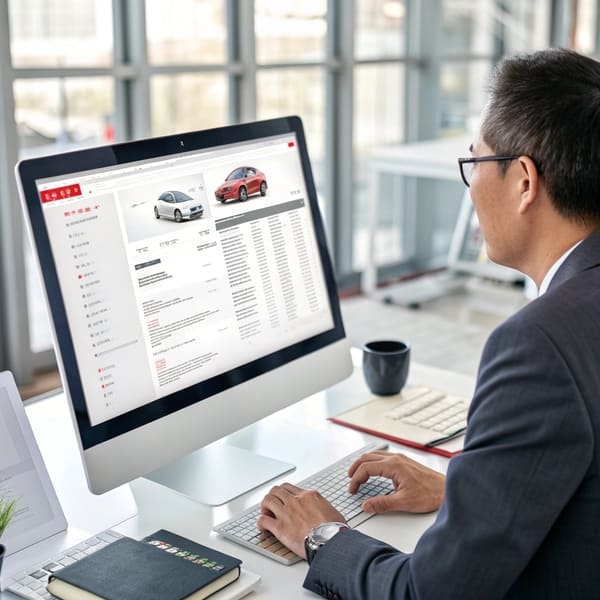
As a manufacturer, I see why global buyers are drawn to platforms like Made-in-China.com. It is the largest and most well-known B2B directory for Chinese goods. When you are sitting in another country, it feels like an open door to thousands of factories. The main appeal is efficiency. Instead of spending weeks using search engines to find individual factory websites, you can get a long list of potential suppliers in a few minutes. You can filter by product, location, and certifications. This convenience is a powerful draw for busy purchasing managers and business owners. The platform also makes it easy to send out inquiries to multiple suppliers7 at once. This helps you quickly compare initial price quotes and get a feel for the market. It is a very effective tool for the early stages of sourcing.
The Realities of Using a B2B Directory
| Pros of Using Made-in-China.com | Cons for Sourcing High-Precision Parts |
|---|---|
| Huge selection of suppliers | Many listings are from trading companies8 |
| Easy to send multiple inquiries | Basic profiles lack technical depth9 |
| Filters for initial screening | "Verified" status can be misleading |
| Free to use for buyers | High risk of low-quality responses10 |
How Does Made-in-China Verify Chinese Manufacturers and Suppliers?
You see "Audited Supplier" badges and feel relieved. But what does that audit actually check? Let's look behind the label to understand what it really means for you.
Made-in-China verifies suppliers by checking their business licenses and using third-party services like SGS or TÜV Rheinland11 for on-site audits. This confirms the company is real and has a physical location. However, it does not guarantee their ability to produce high-precision parts.
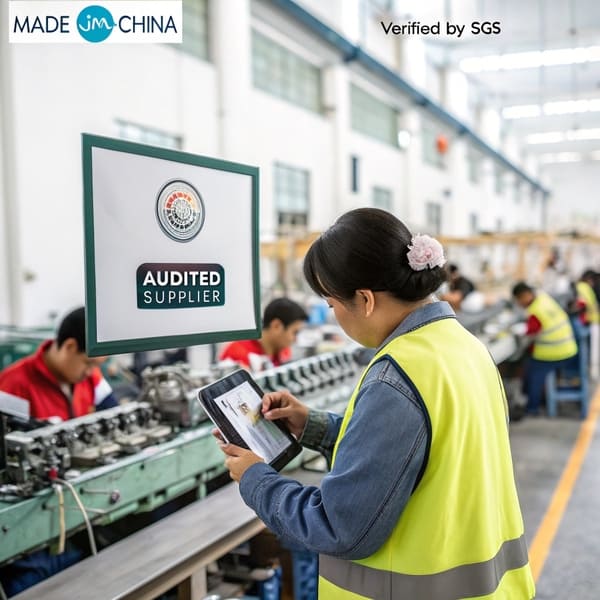
I've been through these audits many times. The process is straightforward. First, the platform verifies that our business license is valid and that we are a legally registered company in China. This is the most basic check. The more detailed step is the on-site audit. A third-party inspector visits our factory. They walk through the facility, take pictures of our production lines, and check our quality control certificates, like ISO 900112. They confirm we have a certain number of employees, specific types of machinery, and a real factory address. This information is then compiled into a report available on our profile. It proves we are not just a person in an apartment with a laptop. But here is the critical part: these audits are general. The inspector confirms we have CNC machines, but they do not test the machine's operational accuracy down to the micron level. They confirm we have a quality control process, but they do not validate its effectiveness for a complex part like a Tesla suspension component.
What Standard Audits Cover vs. What They Miss
| What Audits Typically Verify | What They Don't Verify for Tesla Parts |
|---|---|
| Company's legal existence | Actual machine precision and stability |
| Factory location and size | Specific process controls for an item |
| Main product categories | Engineer's experience with EVs |
| Basic quality certificates | Raw material traceability and grade |
| Number of employees | Mold design and tooling accuracy |
Can Buyers Really Trust Tesla Parts Suppliers Found on Made-in-China?
You found an audited supplier with a good price. But you still feel uncertain. Will their parts fit perfectly? Here is how to move past the profile and find real, trustworthy capability.
You can trust that the company likely exists, but you cannot trust their capability for high-precision parts based on their profile alone. You must conduct your own deep verification, focusing on their specific machinery, process controls, and experience with similar complex components.
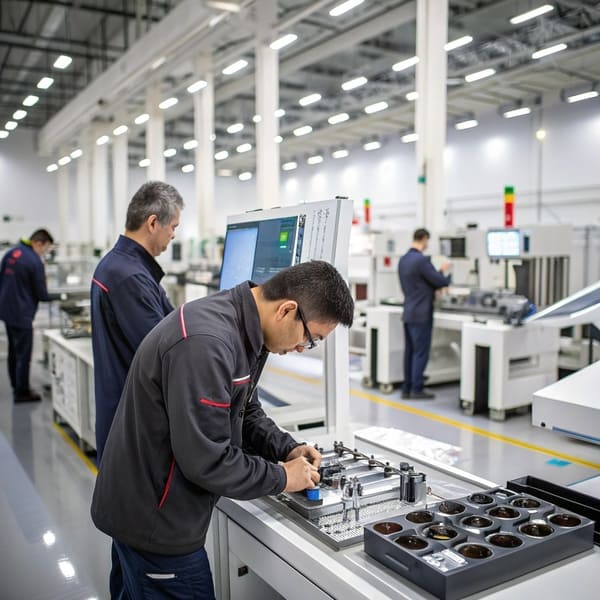
Finding a supplier for Tesla parts is extremely difficult. Standard production equipment just isn't good enough. The precision and stability required are on another level. In my experience, manufacturing these parts involves at least three critical stages. The most difficult one is precision molding and dimensional stability control13. This is where most suppliers fail. The machines capable of this work are not common. You typically find them in factories in the coastal areas of Fujian province and around Shanghai. If a supplier tells you their factory is in Hebei, for example, their machines are generally not going to meet the precision requirements.
Verifying a supplier's true capability is the hardest part. A real audit requires a deep dive into their processes. Sometimes, this means we have to stop production and open up the molds for inspection. This can be a complex request and can even affect the precision of the tooling if not handled carefully.
I learned this the hard way. On my first project for Tesla-compatible parts, I was working with a client from Pakistan. I was confident in our process, but after assembly, the parts showed a noticeable "dimensional deviation14." They were slightly off. I was worried, but the client ended up loving the result for his specific application. It was pure luck. That experience taught me a valuable lesson. Since then, we have perfected our process, and that kind of error has never happened again. It showed me just how small the margin for error is and why deep verification is not optional.
Your Deeper Verification Checklist
| Verification Step | What to Ask or Do | Why It's Important |
|---|---|---|
| Machinery Audit | Ask for a list of machine models and their locations. "Are your high-precision molding machines from the Shanghai or Fujian region?" | This filters out suppliers with inadequate equipment. Geography is a clue to capability. |
| Process Control Review | Request their specific quality control documents for ensuring dimensional stability. | This shows if they have a real, documented process for precision, not just a general QC plan. |
| Sample Part Analysis | Order a sample part. Don't just look at it—measure it with calipers. Compare it to OEM specs. | This is the ultimate test. The physical part tells you more than any certificate or sales pitch. |
| Past Project Inquiry | Ask for case studies or references for similar high-precision automotive parts, especially for EVs. | This proves they have real-world experience and are not just trying to win a new type of business. |
Conclusion
Made-in-China is a useful tool to start your search, but it is not the final answer. Finding a true partner for Tesla parts requires your own deep, process-focused investigation.
Discover trusted suppliers to ensure your Tesla parts meet strict quality standards and avoid costly mistakes. ↩
Learn how to assess a supplier's ability to deliver the precision needed for Tesla components. ↩
Explore top platforms to streamline your search for qualified suppliers and save time. ↩
Find out how to locate and evaluate suppliers for advanced EV parts like those used in Tesla vehicles. ↩
Access a large pool of potential suppliers to compare options and get competitive quotes. ↩
Understand what information matters most when reviewing supplier profiles to avoid misleading claims. ↩
Maximize your efficiency by learning how to contact several suppliers at once and compare responses. ↩
Avoid middlemen and ensure you are dealing directly with factories for better pricing and quality control. ↩
Ensure your supplier has the expertise and resources to meet demanding technical requirements. ↩
Discover strategies to filter out unreliable suppliers and focus on those who deliver quality. ↩
Learn about independent audit processes to verify supplier legitimacy and quality control. ↩
Find out how ISO 9001 ensures consistent quality and reliability in manufacturing processes. ↩
Understand why these processes are critical for producing high-quality Tesla parts. ↩
Learn about the risks of dimensional errors and how to prevent them in your supply chain. ↩