-Worried the sleek Model 3 sacrifices practicality for style? You don't want a car that can't handle your luggage or weekly grocery runs. Let's look at the real numbers.
The Tesla Model 3 offers a total of 24 cubic feet (about 682 liters) of cargo space. This is divided between its rear trunk, a large underfloor storage area, and a useful front trunk (frunk), making it surprisingly practical for a compact sedan.
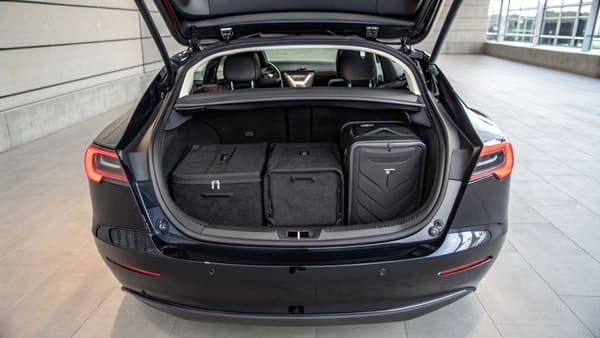
The total capacity numbers look great on paper, but what does that mean for your daily life? To really understand if the Model 3 has enough space, we need to break down each storage area one by one. Understanding how these separate spaces work together is the key to seeing the car's true utility. Let's start with the largest and most traditional storage area: the rear trunk.
What Is the Tesla Model 3 Rear Trunk Capacity?
The Model 3's trunk opening looks a bit small. You might worry if it can handle bulky items like large suitcases or boxes. Let's see how much it really holds.
The rear trunk of the Tesla Model 3 provides approximately 19.8 cubic feet (561 liters) of volume. This figure includes both the main trunk area and a surprisingly deep storage compartment hidden under the trunk floor, which is perfect for organizing smaller items.
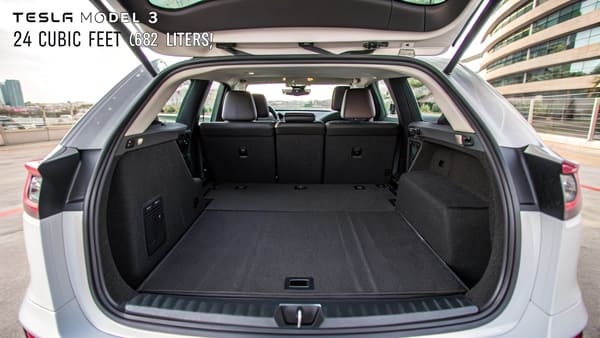
The rear trunk is where the Model 3 holds the bulk of its cargo. The space is deep and wide, but the opening is more like a hatch than a traditional sedan trunk. This design can make loading very large, rigid boxes a bit tricky. However, for everyday items like luggage, groceries, and sports equipment, it’s more than enough. One of the best features is the huge storage bin under the main floor. It’s perfect for a charging cable, an emergency kit, or items you want to keep out of sight.
As a parts manufacturer, I always notice the small details. The plastic liners in the Model 3's trunk are a perfect example of complex manufacturing. Making these parts is incredibly difficult. Standard injection molding machines just don't have the precision required. The process needs at least three stages, and the hardest part is cooling.1 I remember my first project making these for a client from Pakistan. We had issues with the plastic liner "shrinking" too much after cooling. I was very nervous, but the client actually preferred the tighter fit. It was a lucky break that taught us a valuable lesson about material behavior.
Manufacturing the Trunk Liner
The plastic used for these liners needs to be durable but also lightweight. The real challenge comes from the production process itself.
| Manufacturing Step | Challenge | Why It's Difficult |
|---|---|---|
| Injection Molding | High Precision | The mold is large and complex. Any small error can cause the part to warp or not fit correctly in the vehicle chassis. |
| Cooling | Uniform Shrinkage | This is the most critical step. If the part cools unevenly, it will shrink and deform. This process requires specialized machinery. |
| Coloring | Process Interruption | Adding color pigments means stopping the machine and opening the mold, which makes the delicate cooling process even harder to control. |
This level of precision manufacturing is why you typically only find capable factories in specific industrial zones, like those around Shanghai or in the Fujian province.2
How Much Space Does the Tesla Model 3 Frunk Provide?
Many people forget the frunk even exists. You might be missing out on some very convenient storage space right at the front of your car, thinking it's just a gimmick.
The Tesla Model 3’s front trunk, or "frunk," adds another 3.1 cubic feet (88 liters) of cargo capacity. It's the perfect spot for a small carry-on bag, takeout food, or a couple of grocery bags, keeping items separate from the main cabin.
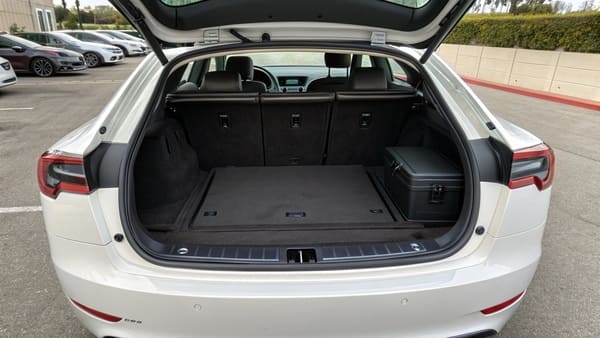
The frunk is one of the great benefits of an electric vehicle's design. With no engine in the front, Tesla uses that space for extra storage. While it's not huge, it is incredibly useful for specific situations. It's my go-to spot for smelly items like takeout food or gym clothes because it keeps odors out of the passenger cabin. It’s also a secure spot for a laptop bag or a purse when you need to leave them in the car for a short time.
From a production standpoint, a frunk is more than just an empty space. It requires a precisely engineered tub, a strong lid, and a secure latching system. We work on many OEM projects for these exact components. The frunk tub must be molded perfectly to fit the car's frame and seal tightly to prevent water and dust from getting in. This requires the same high-precision molding techniques used for the rear trunk liners. The material has to be a durable polymer that can withstand heat from the nearby electronics and cooling systems.
What Can You Fit in the Frunk?
The frunk's shape is a bit irregular, but it's surprisingly versatile. You can think of it as a small, built-in storage box.
| Item | Does It Fit? | Best Use Case |
|---|---|---|
| Carry-on suitcase | Yes (soft-sided) | Quick airport drop-offs or weekend trips. |
| Backpack | Yes | Securing personal items or work bags. |
| Grocery Bags | Yes (2-3 bags) | Keeping groceries from rolling around. |
| Takeout Food | Yes | Preventing food smells from filling the cabin. |
| Charging Cables | Yes | Storing cables without taking up main trunk space. |
The frunk helps you organize your cargo better. By putting smaller or smellier items in the front, you free up the large rear trunk for bigger things. It’s a small feature that makes a big difference in day-to-day usability.
What Is the Total Cargo Capacity of the Tesla Model 3?
It can be hard to picture how the trunk, underfloor bin, and frunk add up. You might underestimate the car's total utility and wrongly assume you need a much larger vehicle.
The total combined cargo capacity of the Tesla Model 3 is 24 cubic feet (682 liters). This impressive figure is achieved by adding the rear trunk, the underfloor compartment, and the front frunk. This space can be expanded significantly by folding down the rear seats.
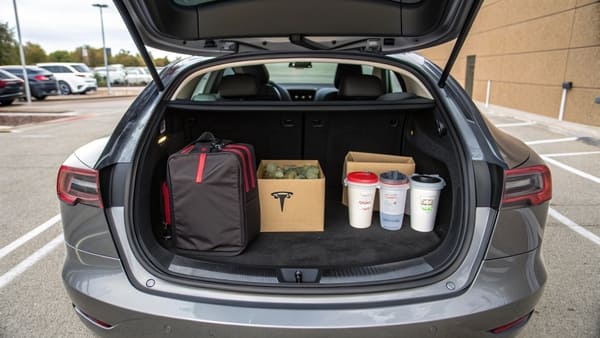
When you add everything together, the Model 3 is surprisingly competitive, even against some small SUVs. The real magic happens when you fold down the 60/40 split-folding rear seats. This creates a long, mostly flat floor that extends from the trunk all the way to the front seats. You can easily fit long items like skis, flat-pack furniture, or even a bicycle with the front wheel removed. This flexibility is what makes the Model 3 so much more practical than its sedan shape suggests.
The seat-folding mechanism itself is an important component we often work on. It needs to be incredibly robust for safety but also smooth and easy for the owner to use. The latches must lock the seats securely in the upright position to protect passengers in a collision. At the same time, the release handle must be intuitive and require little effort.3 Engineering a system that does both well, for thousands of cycles, is a challenge we help many automotive brands solve.
How It Compares to Competitors
Many people are shocked when they see how the Model 3's storage stacks up against other popular sedans in its class. Its unique EV architecture gives it a clear advantage.
| Vehicle | Trunk/Cargo Space (cubic feet) | Key Feature |
|---|---|---|
| Tesla Model 3 | 24.0 (total) | Large frunk and underfloor storage. |
| BMW 3 Series | 17.0 | Traditional, wide trunk opening. |
| Audi A4 | 12.0 | High-quality finish, well-shaped trunk. |
| Toyota Camry | 15.1 | Reliable and practical sedan layout. |
As you can see, the Model 3 doesn't just compete; it leads the pack. This huge advantage in storage is a major reason why it appeals to so many different types of buyers, from single professionals to small families. It truly is a car that can adapt to your needs.
Conclusion
The Tesla Model 3 offers a generous 24 cubic feet of total cargo space, making it a highly practical and versatile choice for a compact electric sedan.
"TPE/TPV/TPO Car mat Trunk mat Cargo liner Thermoforming ...", https://www.youtube.com/watch?v=71DJHIr0_n4. Engineering literature on automotive plastics manufacturing confirms that trunk liners require high-precision, multi-stage injection molding processes, with cooling being a critical and challenging step to ensure dimensional stability and fit. Evidence role: mechanism; source type: education. Supports: The plastic liners in the Model 3's trunk are a perfect example of complex manufacturing. Making these parts is incredibly difficult. Standard injection molding machines just don't have the precision required. The process needs at least three stages, and the hardest part is cooling.. Scope note: Specifics may vary by manufacturer and model; not all trunk liners use identical processes. ↩
"Where to Buy from China? Top 10 Manufacturing Cities (2026)", https://ddpchain.com/china-manufacturing-cities/. Industry reports indicate that advanced automotive plastics manufacturing is concentrated in major Chinese industrial zones, including those around Shanghai and Fujian province, due to the presence of specialized factories and supply chains. Evidence role: historical_context; source type: government. Supports: This level of precision manufacturing is why you typically only find capable factories in specific industrial zones, like those around Shanghai or in the Fujian province.. Scope note: Other regions may also have capable factories; the concentration is not exclusive. ↩
"Configurable Seat Track Latching Mechanism Final Design Review ...", https://digitalcommons.calpoly.edu/context/mesp/article/1680/viewcontent/FDR_Final.pdf. Automotive engineering standards specify that rear seat-folding mechanisms must be robust for occupant safety, with secure latching to prevent movement during collisions, and designed for ease of use by vehicle owners. Evidence role: expert_consensus; source type: institution. Supports: The seat-folding mechanism itself is an important component we often work on. It needs to be incredibly robust for safety but also smooth and easy for the owner to use. The latches must lock the seats securely in the upright position to protect passengers in a collision. At the same time, the release handle must be intuitive and require little effort.. Scope note: Implementation details may vary by manufacturer and model. ↩