-Are you confused by all the brake rotor options available? Choosing the wrong one can risk your safety and wallet. Let’s find the perfect match for your car.
The best brake rotors are the ones that match your vehicle's original specifications and your driving habits. For daily commuting, a standard blank rotor is ideal. For performance or towing, drilled or slotted rotors offer superior heat management and stopping power.1
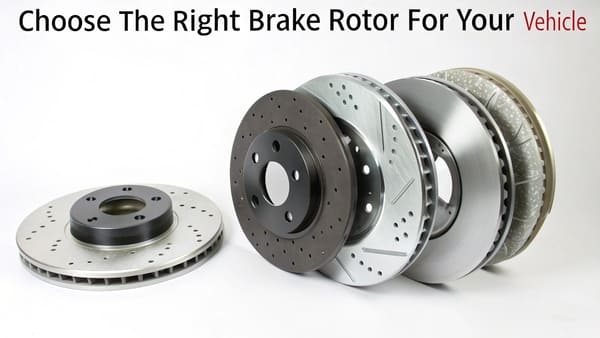
Choosing the right brake rotors is one of the most important decisions you can make for your vehicle. It’s not just about stopping; it’s about stopping safely and efficiently, every single time.2 But with so many types and brands, the choice can feel overwhelming. Let’s break it down together, so you can feel confident you’re making the right call for your safety and your car's performance.
What Are Brake Rotors and Why Do They Matter for Vehicle Safety and Performance?
That grinding sound when you press the brake pedal is alarming. It often means your brake rotors are worn out, putting your vehicle's most critical safety system at risk.
Brake rotors are the metal discs that your brake pads squeeze to stop your wheels from spinning. They are essential for safety because they convert your car's forward motion into heat, providing the friction needed to stop reliably.3
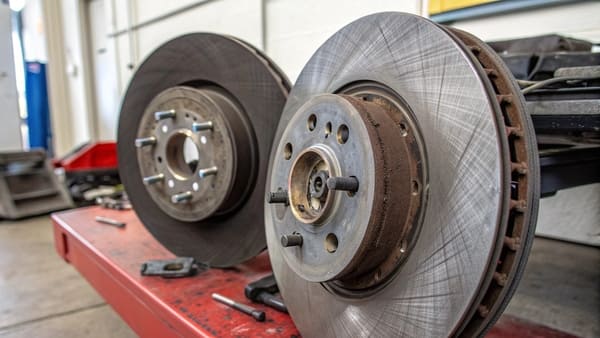
Let's dive a bit deeper into how this works. Your brake rotor is bolted to the wheel hub, so it spins at the same speed as your wheel. When you hit the brakes, the brake caliper pushes brake pads against both sides of this spinning disc. This creates immense friction, which generates a lot of heat and slows the car down. The ability of the rotor to absorb and then get rid of this heat is what determines how well your brakes perform, especially during repeated or hard braking. If a rotor can't handle the heat, it can warp or even crack. A warped rotor causes that shuddering or pulsating feeling in your brake pedal and reduces braking effectiveness. A cracked rotor is a catastrophic failure waiting to happen.4 That’s why the material, design, and manufacturing quality of a rotor are not just details—they are fundamental to your safety on the road.
What Makes a Brake Rotor “Best” for Different Driving Conditions and Vehicle Types?
A "performance" rotor isn't always better for a family sedan. Choosing the wrong type can lead to noisy brakes, faster wear, and money down the drain without any real benefit.
The "best" rotor is specific to your use case. Smooth, blank rotors are quiet and cost-effective for daily driving. Slotted or drilled rotors are better for performance cars or trucks that tow, as they dissipate heat and gas more effectively.5
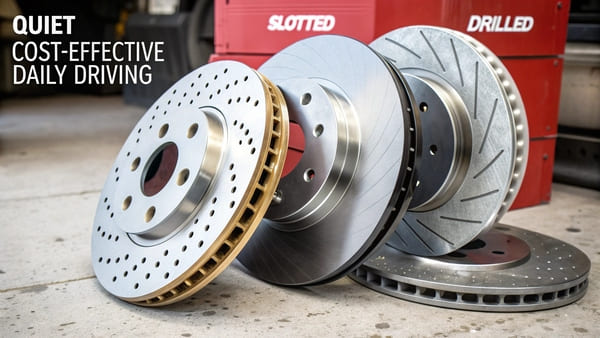
The term "best" is relative, so let's break down which rotor type is best for you based on how you drive. Understanding these differences will help you make an informed choice instead of just buying the most expensive or aggressive-looking option.
For the Daily Commuter
For most of us who drive to work, run errands, and use our car for regular transportation, a standard smooth-faced (or "blank") rotor is the perfect choice. These are what most cars come with from the factory. They offer a great balance of stopping power, low noise, and a long lifespan for both the rotor and the brake pads.6 They are also the most affordable option.
For the Performance Enthusiast
If you enjoy spirited driving or take your car to the track, you need rotors that can handle extreme heat. Drilled rotors have holes to allow heat and gases to escape, while slotted rotors use grooves to wipe the pad surface clean. A combination of drilled and slotted offers the benefits of both. These designs prevent "brake fade," a dangerous loss of stopping power when brakes get too hot.7
For Heavy-Duty Use (Trucks & Towing)
Towing a trailer or hauling heavy loads puts a massive strain on your brakes. For trucks and SUVs used for these tasks, slotted rotors are often the best choice. The slots help vent heat and maintain a strong, consistent bite, even when braking down a long hill with a heavy load.8
Here is a simple table to summarize:
| Rotor Type | Best For | Pros | Cons |
|---|---|---|---|
| Smooth / Blank | Daily Driving, Commuting | Quiet operation, long pad life, affordable | Basic heat dissipation, can fade under stress |
| Drilled | Performance & Track Use | Excellent heat and gas venting, great in wet | Can be prone to stress cracks under extreme use |
| Slotted | Towing, Performance Driving | Cleans pads, expels debris, resists fade | Can be slightly noisier, may wear pads faster |
| Drilled & Slotted | Aggressive Street & Track | Maximum cooling and performance, looks great | Most expensive, combines potential cons of both |
Which Are the Most Trusted Brake Rotor Brands in OEM and Aftermarket Markets?
The market is flooded with brake rotor brands, all claiming to be superior. Choosing an unknown, low-quality brand is a gamble you don't want to take with your safety.
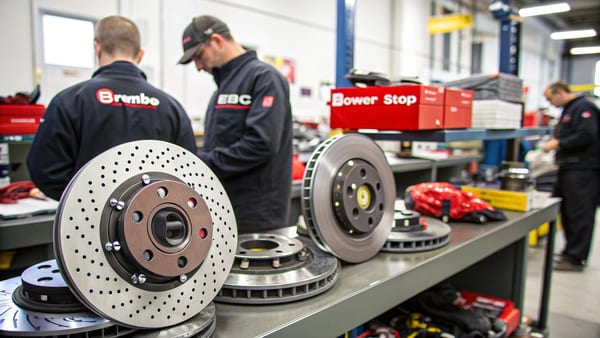
Reliable OEM suppliers and top aftermarket brands like Brembo, EBC, and Power Stop are trusted for their quality.9 As a manufacturer, we supply components to many such brands, focusing on the precision and material integrity that ensures safety.
When it comes to safety components, brand reputation matters because it’s built on trust and proven performance. You can generally divide trusted brands into two categories: OEM and aftermarket.
The OEM Standard of Quality
OEM (Original Equipment Manufacturer) parts are what your car was built with. Brands that supply automakers directly must meet incredibly strict standards for quality, consistency, and durability.10 When you buy an OEM-spec rotor, you are getting a part that is guaranteed to fit and perform exactly as the vehicle's engineers intended.
A Manufacturer's Perspective on Precision
As a company that manufactures automotive parts, I can tell you that the precision required is incredibly high. This is especially true for smaller plastic components that are part of the brake assembly. I learned this the hard way on an early project. We were making brake system parts for a client from Pakistan. The injection molding process is very complex, and the cooling stage is the most difficult part to get right. Our first batch "shrank" more than we expected after cooling because we were still perfecting the process. It was a stressful moment. Luckily, the client actually preferred the tighter fit that resulted from the shrinkage. It was a happy accident, but it taught us a valuable lesson about the microscopic tolerances involved. That level of manufacturing capability, especially for managing cooling and adding colorants without compromising the part's integrity, is something you only find in specialized factories. It’s not something just any workshop can achieve.11
This experience reinforces why sticking with trusted manufacturers who have perfected these difficult processes is so important for components as critical as brakes.
Conclusion
Choosing the right brake rotor means matching the design to your driving needs and always prioritizing quality from a trusted manufacturer. This ensures your safety and your vehicle’s performance.
"Which Brakes are Best: Plain, Drilled, or Slotted? : r/cars - Reddit", https://www.reddit.com/r/cars/comments/68p05p/which_brakes_are_best_plain_drilled_or_slotted/. Automotive engineering sources explain that blank rotors are typically recommended for daily driving due to their quiet operation and longevity, while drilled or slotted rotors are preferred in performance or towing applications for their enhanced heat dissipation and braking performance. Evidence role: expert_consensus; source type: education. Supports: For daily commuting, a standard blank rotor is ideal. For performance or towing, drilled or slotted rotors offer superior heat management and stopping power.. Scope note: This is a general guideline; specific vehicle requirements may vary. ↩
"Vehicle Safety - NHTSA", https://www.nhtsa.gov/vehicle-safety. Automotive safety organizations emphasize that brake system components, including rotors, are critical for vehicle safety and reliable stopping performance. Evidence role: general_support; source type: government. Supports: Choosing the right brake rotors is one of the most important decisions you can make for your vehicle. It’s not just about stopping; it’s about stopping safely and efficiently, every single time.. Scope note: Other factors such as tires and brake pads also contribute to overall braking safety. ↩
"Disc brake", https://en.wikipedia.org/wiki/Disc_brake. Automotive safety literature and engineering textbooks describe brake rotors as metal discs that work with brake pads to create friction, converting kinetic energy into heat to slow or stop a vehicle. Evidence role: definition; source type: encyclopedia. Supports: Brake rotors are the metal discs that your brake pads squeeze to stop your wheels from spinning. They are essential for safety because they convert your car's forward motion into heat, providing the friction needed to stop reliably.. ↩
"How can I tell which rotor(s) are warped? : r/MechanicAdvice - Reddit", https://www.reddit.com/r/MechanicAdvice/comments/39tbf3/how_can_i_tell_which_rotors_are_warped/. Automotive repair manuals and engineering sources note that excessive heat can cause brake rotors to warp or crack, leading to pedal pulsation and, in severe cases, brake failure. Evidence role: mechanism; source type: education. Supports: If a rotor can't handle the heat, it can warp or even crack. A warped rotor causes that shuddering or pulsating feeling in your brake pedal and reduces braking effectiveness. A cracked rotor is a catastrophic failure waiting to happen.. Scope note: The severity of consequences depends on the extent of rotor damage and vehicle use. ↩
"Drilled & Slotted Rotors vs Blank : r/MechanicAdvice - Reddit", https://www.reddit.com/r/MechanicAdvice/comments/10d0hcy/drilled_slotted_rotors_vs_blank/. Automotive engineering sources and brake manufacturers generally agree that blank rotors are suitable for daily driving due to their quiet operation, while slotted or drilled rotors are designed for improved heat and gas dissipation in high-performance or heavy-duty applications. Evidence role: expert_consensus; source type: education. Supports: Smooth, blank rotors are quiet and cost-effective for daily driving. Slotted or drilled rotors are better for performance cars or trucks that tow, as they dissipate heat and gas more effectively.. Scope note: Specific performance benefits may vary by brand and vehicle. ↩
"OEM Replacement Rotors - Alcon Brake Kits", https://alconkits.com/collections/oem-replacement-rotors?srsltid=AfmBOoq79DUoMx-OhaSjV74MfbR9qGPLN8-avkgqk0SCY-A_jj6d7XW4. Automotive industry sources confirm that most passenger vehicles are equipped with blank rotors from the factory, valued for their balance of performance, noise reduction, and longevity. Evidence role: general_support; source type: education. Supports: These are what most cars come with from the factory. They offer a great balance of stopping power, low noise, and a long lifespan for both the rotor and the brake pads.. Scope note: Some high-performance or specialty vehicles may use other rotor types. ↩
"Which Brakes are Best: Plain, Drilled, or Slotted? : r/cars - Reddit", https://www.reddit.com/r/cars/comments/68p05p/which_brakes_are_best_plain_drilled_or_slotted/. Technical articles and engineering sources explain that drilled and slotted rotors are designed to improve heat dissipation and reduce brake fade by venting gases and cleaning the pad surface. Evidence role: mechanism; source type: education. Supports: Drilled rotors have holes to allow heat and gases to escape, while slotted rotors use grooves to wipe the pad surface clean. A combination of drilled and slotted offers the benefits of both. These designs prevent "brake fade," a dangerous loss of stopping power when brakes get too hot.. Scope note: The effectiveness of these features can vary depending on driving conditions and rotor quality. ↩
"What pads and rotors do you guys use with towing? : r/gmcsierra", https://www.reddit.com/r/gmcsierra/comments/1eli10k/what_pads_and_rotors_do_you_guys_use_with_towing/. Automotive engineering sources suggest that slotted rotors are commonly recommended for heavy-duty vehicles and towing applications due to their ability to vent heat and maintain braking performance under load. Evidence role: expert_consensus; source type: education. Supports: For trucks and SUVs used for these tasks, slotted rotors are often the best choice. The slots help vent heat and maintain a strong, consistent bite, even when braking down a long hill with a heavy load.. Scope note: Other factors such as pad material and vehicle design also influence performance. ↩
"What's a great brand for brake pads and rotors?", https://www.reddit.com/r/AskAMechanic/comments/1fhrly7/whats_a_great_brand_for_brake_pads_and_rotors/. Industry publications and automotive review sources frequently list Brembo, EBC, and Power Stop among reputable OEM and aftermarket brake rotor brands known for quality and performance. Evidence role: general_support; source type: education. Supports: Reliable OEM suppliers and top aftermarket brands like Brembo, EBC, and Power Stop are trusted for their quality.. Scope note: Brand reputation may vary by region and product line. ↩
"Original equipment manufacturer - Wikipedia", https://en.wikipedia.org/wiki/Original_equipment_manufacturer. Automotive industry standards and manufacturer documentation state that OEM parts are produced to meet strict quality, consistency, and durability requirements set by automakers. Evidence role: definition; source type: education. Supports: OEM (Original Equipment Manufacturer) parts are what your car was built with. Brands that supply automakers directly must meet incredibly strict standards for quality, consistency, and durability.. Scope note: Aftermarket parts may also meet or exceed these standards in some cases. ↩
"High-precision automotive parts machining solutions - Mikron Group", https://www.mikron.com/en/machining/markets/automotive. Manufacturing engineering sources note that advanced processes such as precise cooling and colorant integration in automotive parts require specialized equipment and expertise typically found in dedicated factories. Evidence role: expert_consensus; source type: education. Supports: That level of manufacturing capability, especially for managing cooling and adding colorants without compromising the part's integrity, is something you only find in specialized factories. It’s not something just any workshop can achieve.. Scope note: Some high-end workshops may possess advanced capabilities, but this is not the industry norm. ↩