-That squealing sound from your brakes is annoying. It can ruin a peaceful drive. We have the solution to make your ride silent and smooth again.
The quietest brake pads are typically ceramic or NAO (Non-Asbestos Organic) types1. Top manufacturers like Bosch, Ferodo, and specialized OE suppliers produce them using advanced formulas and noise-dampening technologies2 to ensure a silent, stable stop every time.
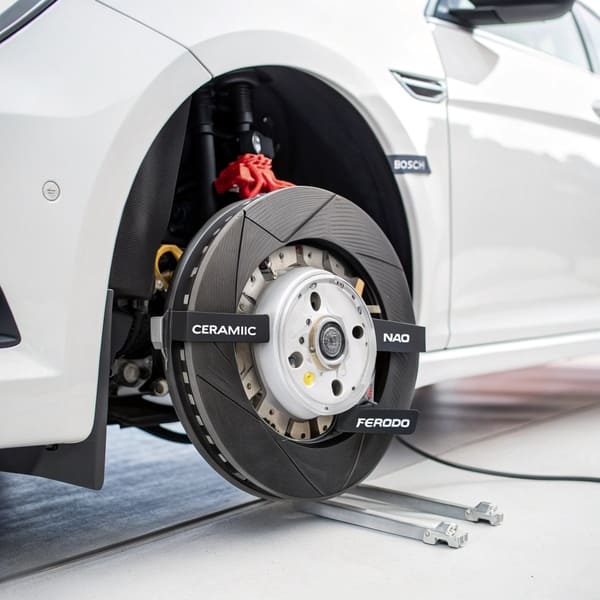
Now that you know which brake pads are the quietest, you might be wondering why brakes make noise in the first place. Understanding the root cause is the first step to finding a permanent solution. Let's look at the reasons behind that frustrating squeal and how to address them.
Why Do Brake Pads Make Noise While Driving?
That high-pitched squeal from your brakes is not just annoying. It can be a sign of a problem. Ignoring it could lead to bigger and more expensive issues down the road.
Brake pads make noise primarily due to high-frequency vibrations between the pad, rotor, and caliper3. This can be caused by worn-out parts4, cheap materials, improper installation5, or environmental factors like moisture and dirt. It's the system's way of signaling friction issues.
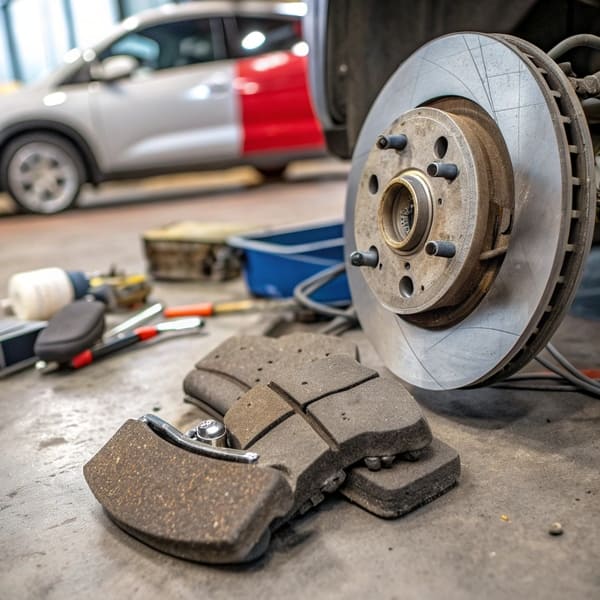
The noise you hear from your brakes is almost always the result of vibration. Think of it like running a wet finger around the rim of a wine glass. The friction causes the glass to vibrate at a high frequency, creating a sound. Your brake system works in a similar way. When the brake pad presses against the spinning rotor, a stick-slip phenomenon6 can occur, creating vibrations that travel through the caliper and other components. If these vibrations are within the range of human hearing, you get that irritating squeal. As a manufacturer, our job is to engineer pads that either prevent these vibrations or shift them to a frequency you can't hear. This involves much more than just the pad material itself; it includes the design of shims, chamfers, and slots on the pad's surface7.
Material and Wear Factors
The materials used in the brake pad and the condition of the brake rotor are huge factors. Cheaper, low-quality semi-metallic pads8 often contain large metal flakes that can scrape against the rotor, causing a grinding noise. As brake pads wear down, the metal wear indicator9—a small tab designed for this purpose—will contact the rotor and create a loud squeal to let you know it's time for a replacement. Furthermore, if a rotor's surface becomes uneven or "glazed" from overheating, it creates a surface that doesn't grip the pad properly, leading to vibrations and noise.
Environmental and Installation Issues
Sometimes, the problem isn't the pad at all. Moisture from rain or morning dew can cause a thin layer of rust to form on cast iron rotors overnight. This usually causes a light grinding sound for the first few stops until it's worn off. Brake dust and road grime can also get trapped between the pad and rotor, causing noise. Finally, improper installation5 is a common cause. If the mechanic doesn't clean and lubricate the caliper slide pins10 or fails to install the anti-rattle clips11 correctly, the brake pad won't sit securely, allowing it to vibrate and make noise. This is why professional installation is just as important as the quality of the parts.
What Types of Brake Pads Are Available on the Market?
Choosing brake pads can be confusing with so many options. The wrong choice can mean poor performance, excessive dust, or constant noise. Let's clear up the confusion and help you understand the main categories.
The market offers three main types of brake pads: organic (NAO), semi-metallic, and ceramic12. Each type has different characteristics in terms of noise, performance, dust, and lifespan, designed for various driving needs from daily commuting to high-performance applications.
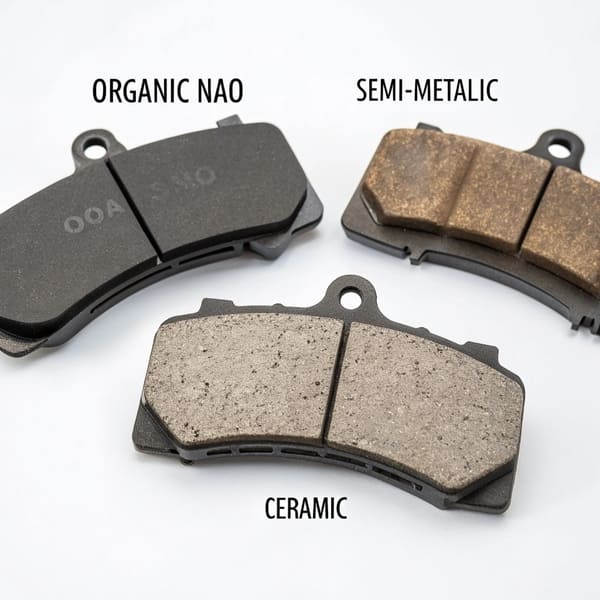
When we develop brake pads for our clients, the first question is always about the intended application. A vehicle used for heavy towing needs something completely different from a luxury sedan used for city driving. The choice of brake pad type directly impacts stopping power, noise levels, rotor wear13, and the amount of brake dust on the wheels. Understanding the fundamental differences between the three main types is crucial for any brand, distributor, or importer looking to build a competitive product line. Each material has a specific formula of fibers, fillers, and binders14 that dictates its performance. Let's break down what makes each type unique and what kind of driver they are best suited for. This knowledge is key to matching the right product to the right market.
Comparing Brake Pad Materials
To make it simple, I've put together a table that outlines the key differences between the three main types of brake pads. This helps our partners quickly identify which product category aligns with their customers' needs.
| Feature | Organic (NAO) | Semi-Metallic | Ceramic |
|---|---|---|---|
| Noise Level | Very Low | Moderate to High | Lowest |
| Brake Dust | Moderate | High | Low |
| Performance | Good (Cold) | Excellent (Hot/Cold) | Very Good (Consistent) |
| Rotor Wear | Low | High | Very Low |
| Cost | Low | Moderate | High |
| Best For | Daily Commuting | Performance, Towing | Luxury, Daily Driving |
A Deeper Look at Each Type
Organic pads, also known as Non-Asbestos Organic (NAO), are made from a mix of fibers and materials like rubber, carbon compounds, and fiberglass. They are generally the quietest and softest pads, which means they are very kind to brake rotors. However, they wear out faster and produce a fair amount of dust. They are a great choice for many daily drivers who prioritize a quiet, smooth stop over high-performance braking.
Semi-metallic pads contain a high percentage of metal fibers, typically steel, copper, or iron. This metal content gives them excellent heat transfer capabilities and a much stronger "bite." They are the top choice for performance driving, trucks, and vehicles that do a lot of towing. The downside is that they are the noisiest of the three, produce the most brake dust, and are harder on brake rotors.
Ceramic pads are made from a dense ceramic material with embedded copper fibers. They represent a great balance of features. They are extremely quiet, produce very little light-colored dust15, and last a long time. Their performance is stable across a wide range of temperatures, though they may not have the same aggressive initial bite as semi-metallic pads8. This makes them ideal for luxury vehicles and daily drivers who want clean wheels and a silent ride.
Which Brake Pad Materials Produce the Least Noise?
You want a silent ride, but which brake pad material actually delivers it? Choosing the wrong one will just bring back the squeal you hate and lead to customer complaints.
Ceramic and high-quality Non-Asbestos Organic (NAO) brake pads produce the least noise. Their materials create friction at frequencies outside human hearing. However, achieving consistent silence requires advanced manufacturing processes16 that go far beyond just the basic material choice.
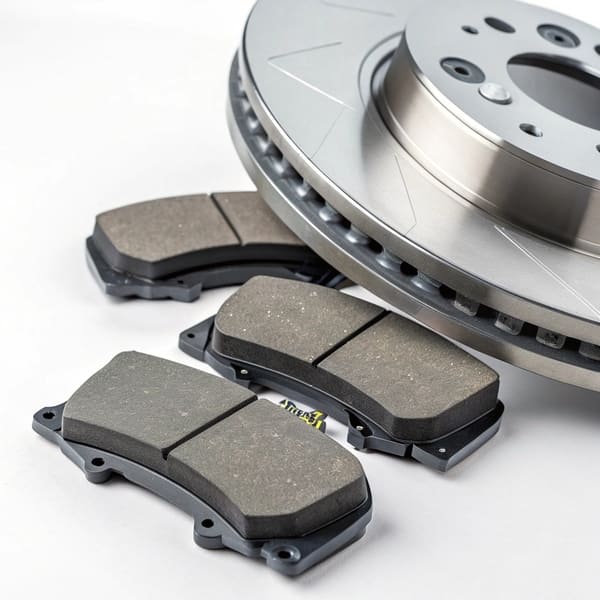
When we talk about "quiet" brake pads, we are really talking about sophisticated engineering. The development and mass production of truly silent brake pads is incredibly difficult. For standard semi-metallic pads8, simply adding noise-dampening shims or cutting chamfers into the pad edge is not enough to meet top-tier quietness standards. True silence comes from controlling the friction material at a microscopic level. It requires a deep understanding of material science and precise manufacturing control. This is the difference between a product that is quiet for the first 1,000 miles and one that stays quiet for its entire lifespan. It's a challenge we've spent years mastering.
Advanced Manufacturing is Key
Producing a consistently quiet brake pad involves at least three core manufacturing stages, and each one must be perfect. The single most difficult step is controlling the consistency of the copper-free NAO or ceramic formula17 during the mixing and molding process. The temperature of the mold and the precise ratio of fibers and binders must be perfectly calibrated. Any small deviation can ruin the pad's vibration-damping properties. This is why the quietest and most reliable brake pads are typically made by major international manufacturers like Bosch, Ferodo, or noise-reduction specialists like NRS Brakes. In China, only companies with OE supply capabilities, like Jinqilin or Xinxin Brake, can achieve this level of quality. A small factory that just adds a fancy shim to a basic pad simply cannot deliver the consistent quietness and braking stability that a premium product requires.
Our Experience with Quiet Pad Development
I remember the first time we took on a silent brake pad project for a client from Pakistan. We were still learning, and after delivery, we got feedback about a "low-temperature, light-braking squeal." It was a tough lesson. We learned that factors like matching the noise-dampening piston inserts and ensuring the proper formation of a transfer film on the rotor18 are critical. During formula adjustments, the entire production line has to stop. We then have to recalibrate mold temperatures and fiber ratios, which makes it challenging to maintain both vibration suppression and high-temperature quietness. Fortunately for us, our Pakistani client's customers used the vehicles for low-load city commuting, and they actually preferred the slight feedback. It was a lucky break, but we learned a huge amount from that experience and have never made that mistake again.
Conclusion
To get the quietest ride, choose high-quality ceramic or NAO pads from a reputable manufacturer. Proper engineering and advanced material science are the true keys to silent, reliable braking performance.
Learn why these materials are considered the quietest and how they can improve your driving experience with less noise and smoother stops. ↩
Discover how advanced noise-dampening features can eliminate brake squeal and provide a more comfortable ride. ↩
Understanding this root cause helps you prevent brake noise and avoid costly repairs in the future. ↩
Find out why replacing worn components is essential for quiet, safe braking and long-term vehicle health. ↩
Learn the importance of professional installation to ensure your brakes remain silent and effective. ↩
Understanding this effect can help you diagnose and resolve persistent brake squeal issues. ↩
Explore how these design features contribute to quieter braking and improved performance. ↩
See if semi-metallic pads are right for your driving needs, especially for performance or towing. ↩
Learn how this feature alerts you when it's time to replace your brake pads, preventing damage and noise. ↩
Proper maintenance of slide pins ensures quiet, smooth operation and prevents uneven pad wear. ↩
Learn how these small components play a big role in keeping your brakes quiet and secure. ↩
Compare the main types of brake pads to choose the best one for your vehicle and driving style. ↩
Learn which brake pads are gentlest on your rotors, saving you money on replacements. ↩
Understand the science behind brake pad materials and how they impact noise, dust, and durability. ↩
Find out how ceramic pads keep your wheels cleaner compared to other types. ↩
See how precision manufacturing leads to consistently silent and reliable brake performance. ↩
Explore the environmental and performance benefits of copper-free brake pad technology. ↩
Learn how this microscopic layer ensures quiet, smooth braking and extends pad life. ↩