-Driving safely means knowing your surroundings. But you can't always see what's behind you. The interior car mirror is your simple, essential tool for a clear view of the road behind.
An interior car mirror, most commonly called a rearview mirror, is a mirror mounted inside your vehicle, usually on the windshield. Its main purpose is to allow you, the driver, to see directly behind your car through the rear window without turning your head.1
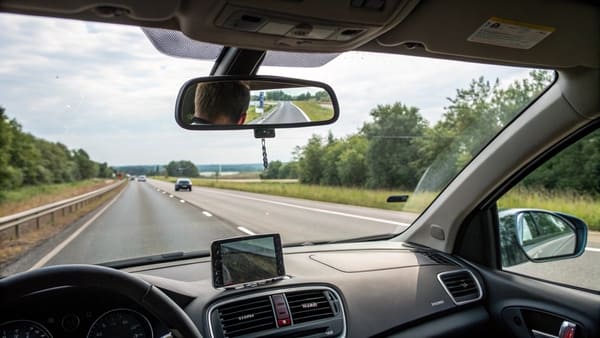
This small device seems simple, but there is a lot of engineering and technology packed into it. It's more than just a piece of glass. From its official name to the complex way it's made, the interior mirror has a fascinating story. Let's explore what makes this part so important for every driver and how we manufacture it.
What Is an Interior Car Mirror?
You need to focus on the road ahead, but what's happening behind you is just as important. A quick glance away can be risky if you don't get the information you need instantly.
An interior car mirror is a critical safety device.2 It is fixed inside the car, giving you a clear view through the rear window. This helps you monitor traffic, change lanes safely, and be aware of your complete surroundings while you drive.
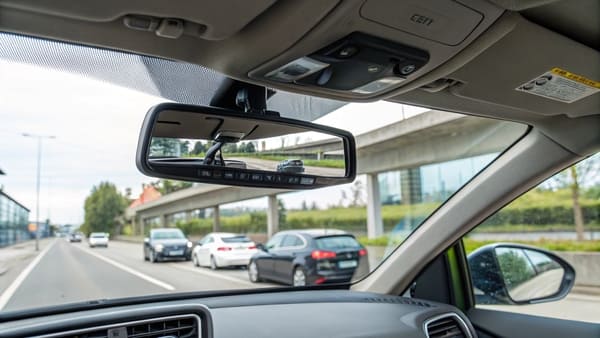
The interior mirror does more than just show you other cars. It serves several key functions that make driving safer and more convenient. The most basic function is providing a "day" and "night" mode.3
Deeper Dive: Day/Night Modes and Modern Features
Most manual mirrors are prismatic.4 This means they are wedge-shaped in cross-section, with a reflective surface on the back. During the day, you see a clear reflection. At night, if a car's headlights behind you are too bright, you can flip a small tab. This tab tilts the mirror, so you see a dimmer reflection from the front glass surface instead of the main mirror. This reduces glare and prevents you from being blinded.
Modern cars often feature auto-dimming mirrors.5 These are called electrochromic mirrors. They use sensors and an electric charge to darken the mirror automatically when they detect bright light from behind.6
Here is a simple breakdown:
| Mirror Type | How It Works | Best For |
|---|---|---|
| Manual (Prismatic) | You physically flip a tab to switch between day and night modes. | Cost-effective, reliable, standard on most base model cars. |
| Auto-Dimming | Sensors detect glare and automatically darken the mirror using an electrochromic gel. | Convenience, enhanced safety at night, common in modern or high-end vehicles. |
Today, many interior mirrors also include extra features like a compass display, the outside temperature, or even a screen for a backup camera.7
Is an Interior Car Mirror the Same as a Rearview Mirror?
People use different names for car parts. This can get confusing when you are trying to buy a replacement or just talk about your car. So, are these two terms the same thing?
Yes, an "interior car mirror" and a "rearview mirror" are almost always referring to the same part. "Rearview mirror" is just the more common, everyday name for it. It describes what the mirror does: it helps you view the rear of your car.
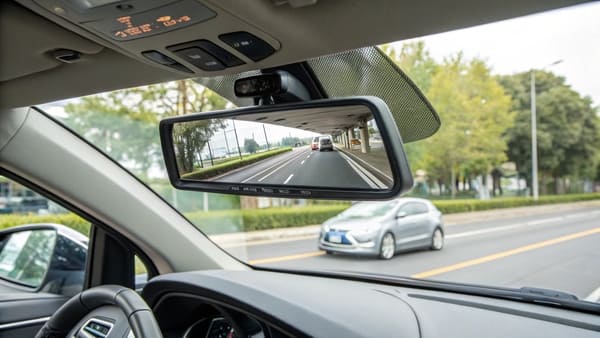
While people use the names interchangeably, it helps to be specific. The term "interior car mirror" describes the mirror's location. This is useful to distinguish it from the other mirrors on your car. Your vehicle has multiple mirrors that help you see what's behind you, but only one is located inside.
Deeper Dive: Interior vs. Exterior Mirrors
The main difference is between the mirror inside your car and the ones outside. The outside mirrors are called side mirrors or wing mirrors.8 As a manufacturer, the requirements for these two types of mirrors are completely different. The materials, regulations, and features all vary. For example, the interior mirror is designed to break away safely in an accident to protect the driver.9 Side mirrors are often convex to provide a wider field of view10 and may include heating elements or blind-spot indicators.
Here's how they compare:
| Feature | Interior Rearview Mirror | Exterior Rearview Mirror (Side Mirror) |
|---|---|---|
| Location | Inside the cabin, on the windshield or roof liner. | Outside the car, on the driver and passenger doors. |
| Primary View | Directly behind the car, through the rear window. | The sides and blind spots of the car. |
| Glass Type | Usually flat or prismatic (for day/night function). | Often convex (curved outward) to provide a wider view. |
| Common Features | Manual or auto-dimming, compass, camera display. | Heated, power-adjustable, integrated turn signals, blind-spot monitoring. |
Understanding this difference is key for us when developing and producing parts. Each mirror has a specific job and must meet different safety and performance standards.
What Is the Interior Car Mirror Called?
You need to find a replacement part, but you are not sure of the exact name. Using the wrong term might get you the wrong component, wasting time and money. So, what are the official names?
The most common name you will hear and see is simply the "rearview mirror."11 If you want to be more technical, you can call it an "interior mirror." For specific types, it might be a "day/night mirror" or an "electrochromic mirror" if it's auto-dimming.
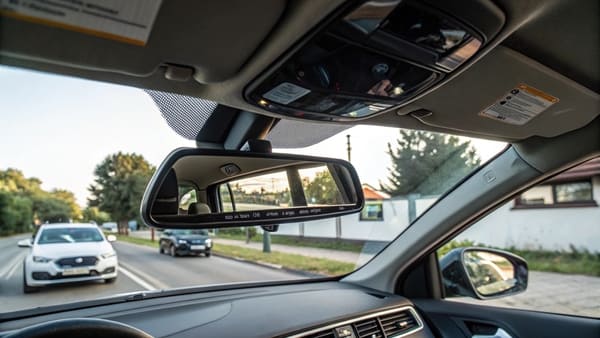
While the names are simple, the process of making these mirrors is not. As a manufacturer, I can tell you that producing the plastic components for an interior mirror is surprisingly complex. The housing and mounting brackets require incredible precision that most people would never guess.12
Deeper Dive: The Manufacturing Challenge
The plastic parts for a rearview mirror must be perfect. We use high-precision injection molding machines for this job. A standard machine just cannot meet the required tolerances. The whole process involves several stages, but the most difficult one is cooling. If the plastic cools unevenly, it can shrink or warp, and the part will not fit correctly.
I learned this the hard way on one of my first projects. We were making mirror components for a client from Pakistan. I was still inexperienced, and our process wasn't perfect. The plastic parts showed significant "shrinkage" after cooling. I was worried, but the client actually loved the unique, slightly textured finish it created. We got lucky, but it taught me a valuable lesson about the importance of precise temperature control.
Another challenge is adding color. To make a mirror housing in a specific color, like beige or grey, we have to add color pigments to the plastic. This requires stopping the machine, opening the mold, and mixing the pigment. This interruption makes the cooling process even harder to manage. It's a delicate balance of precision, temperature, and timing.
Conclusion
The interior car mirror, or rearview mirror, is a vital safety tool. Its simple look hides a lot of technology and a complex manufacturing process that demands precision at every step.
"Rearview mirror - Wikipedia", https://en.wikipedia.org/wiki/Rearview_mirror. According to automotive safety guidelines, the interior rearview mirror is designed to provide the driver with a view of the area directly behind the vehicle through the rear window, minimizing the need for head movement. Evidence role: definition; source type: encyclopedia. Supports: Its main purpose is to allow you, the driver, to see directly behind your car through the rear window without turning your head.. Scope note: This definition is based on general automotive standards and may vary slightly by vehicle design. ↩
"Federal Motor Vehicle Safety Standard No. 111, Rear Visibility", https://www.federalregister.gov/documents/2019/10/10/2019-22036/federal-motor-vehicle-safety-standard-no-111-rear-visibility. Automotive safety authorities recognize the interior rearview mirror as an essential safety device for monitoring traffic behind the vehicle. Evidence role: expert_consensus; source type: government. Supports: An interior car mirror is a critical safety device.. Scope note: While widely accepted, the degree of criticality may depend on vehicle type and local regulations. ↩
"Rearview mirror - Wikipedia", https://en.wikipedia.org/wiki/Rearview_mirror. Standard rearview mirrors often include a manual day/night mode to reduce glare from headlights at night, as described in automotive engineering references. Evidence role: mechanism; source type: encyclopedia. Supports: The most basic function is providing a "day" and "night" mode.. Scope note: Not all vehicles are equipped with this feature, especially older or basic models. ↩
"Rearview mirror - Wikipedia", https://en.wikipedia.org/wiki/Rearview_mirror. Prismatic mirrors, which use a wedge-shaped design to enable day/night modes, are commonly used in manual rearview mirrors according to automotive engineering literature. Evidence role: mechanism; source type: education. Supports: Most manual mirrors are prismatic.. Scope note: Some vehicles may use alternative designs or technologies. ↩
"Clemson Vehicular Electronics Laboratory: Auto-Dimming Mirrors", https://cecas.clemson.edu/cvel/auto/systems/auto-dimming-mirror.html. Auto-dimming (electrochromic) mirrors have become increasingly common in modern vehicles, particularly in higher-end models, as noted in automotive technology reviews. Evidence role: statistic; source type: research. Supports: Modern cars often feature auto-dimming mirrors.. Scope note: Prevalence varies by market and vehicle segment; not universal in all modern cars. ↩
"Clemson Vehicular Electronics Laboratory: Auto-Dimming Mirrors", https://cecas.clemson.edu/cvel/auto/systems/auto-dimming-mirror.html. Electrochromic mirrors use sensors to detect glare and apply an electric charge to darken the glass, as explained in automotive engineering textbooks. Evidence role: mechanism; source type: education. Supports: They use sensors and an electric charge to darken the mirror automatically when they detect bright light from behind.. Scope note: The technical implementation may vary by manufacturer. ↩
"Rearview mirror - Wikipedia", https://en.wikipedia.org/wiki/Rearview_mirror. Recent automotive industry reports indicate that interior rearview mirrors increasingly incorporate features such as compass displays, temperature readings, and backup camera screens. Evidence role: statistic; source type: research. Supports: Today, many interior mirrors also include extra features like a compass display, the outside temperature, or even a screen for a backup camera.. Scope note: Feature availability depends on vehicle make, model, and trim level. ↩
"Side-view mirror - Wikipedia", https://en.wikipedia.org/wiki/Side-view_mirror. Side mirrors, also known as wing mirrors, are the standard terms for exterior mirrors mounted on the sides of vehicles, as defined in automotive glossaries. Evidence role: definition; source type: encyclopedia. Supports: The outside mirrors are called side mirrors or wing mirrors.. Scope note: Terminology may differ by region (e.g., 'wing mirror' is more common in British English). ↩
"Federal Motor Vehicle Safety Standard; Rearview Mirrors", https://www.federalregister.gov/documents/2009/03/04/E9-4500/federal-motor-vehicle-safety-standard-rearview-mirrors. Vehicle safety standards require that interior rearview mirrors be designed to break away or detach in a collision to reduce injury risk to occupants. Evidence role: mechanism; source type: government. Supports: the interior mirror is designed to break away safely in an accident to protect the driver.. Scope note: Specific requirements may vary by country and vehicle class. ↩
"[PDF] Blindzone Glare Elimination Mirror Method | NHTSA", https://www.nhtsa.gov/sites/nhtsa.gov/files/blindzoneglaremirrormethod.pdf. Convex glass is commonly used in side mirrors to increase the driver's field of view, as described in automotive engineering sources. Evidence role: mechanism; source type: education. Supports: Side mirrors are often convex to provide a wider field of view. Scope note: Some markets or vehicles may use flat or aspheric mirrors instead. ↩
"Rearview mirror - Wikipedia", https://en.wikipedia.org/wiki/Rearview_mirror. 'Rearview mirror' is the most widely used term for the interior mirror in both consumer and technical automotive literature. Evidence role: definition; source type: encyclopedia. Supports: The most common name you will hear and see is simply the "rearview mirror.". Scope note: Alternative terms may be used in technical documentation or other languages. ↩
"Interpretation ID: 8517a - NHTSA", https://www.nhtsa.gov/interpretations/8517a. Manufacturing tolerances for interior mirror housings and mounting brackets are stringent to ensure proper fit and safety, as outlined in automotive manufacturing standards. Evidence role: mechanism; source type: education. Supports: The housing and mounting brackets require incredible precision that most people would never guess.. Scope note: The exact tolerances and processes may vary by manufacturer and vehicle model. ↩