-Confused about carbon fiber options for your car? Choosing the wrong type can mean wasting money. This guide will help you understand the key differences to make an informed decision.
Dry carbon fiber is the superior choice for performance, offering maximum strength and minimal weight due to its high-pressure manufacturing process.1 Wet carbon fiber is more affordable and visually appealing, making it a popular option for cosmetic upgrades where weight savings are less critical.2

Now that you know the basic difference, you might think it's just about price and weight. But the story is much deeper than that. The real difference lies in how they are made, which affects everything from durability to the final look. Let's break down each type to see what you're really paying for.
What Is Carbon Fiber and Why Is It Used in Automotive Parts?
You see "carbon fiber" on everything from race cars to aftermarket spoilers. But you might not be sure what makes it so special. Let's look at why this material is a top choice in the auto world.
Carbon fiber is a composite material made of strong carbon filaments woven together and set in a polymer resin. It's used in cars because it has an incredible strength-to-weight ratio, making parts much lighter than steel or aluminum without sacrificing strength, which improves performance.
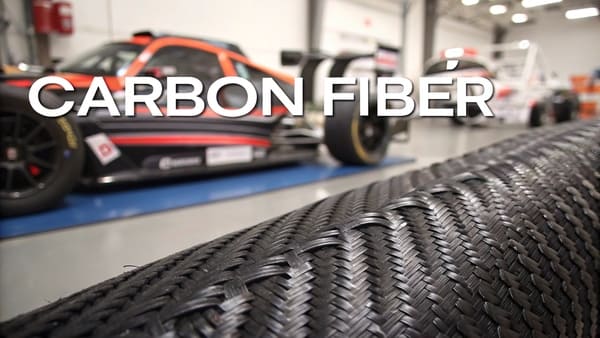
When we talk about performance, weight is the enemy. Lighter cars accelerate faster, stop quicker, and handle better. This is where carbon fiber shines. It’s a game-changer compared to traditional metals. For example, a carbon fiber hood can be less than half the weight of its steel counterpart while being just as strong, if not stronger.3 This material isn't just one thing; it's a composite, a team of materials working together. You have the carbon fabric for strength and the resin that holds it all together in a solid shape. This combination is what gives it its amazing properties. Its distinct woven look has also become a symbol of high performance and luxury, adding a premium aesthetic to any vehicle.4
| Property | Carbon Fiber | Aluminum | Steel |
|---|---|---|---|
| Strength | Very High | Medium | High |
| Weight | Very Low | Low | High |
| Stiffness | Very High | Medium | High |
| Cost | Very High | Medium | Low |
What Is Dry Carbon Fiber and How Is It Made?
You hear that "dry carbon" is the best, but the price is extremely high. You might wonder if it's really worth it. Let's examine the manufacturing process that makes it the top choice for serious performance.
Dry carbon fiber is made using pre-impregnated, or "pre-preg," carbon sheets that are cured under intense heat and pressure in an autoclave.5 This method removes all excess resin and air bubbles, creating the lightest and strongest possible carbon part.
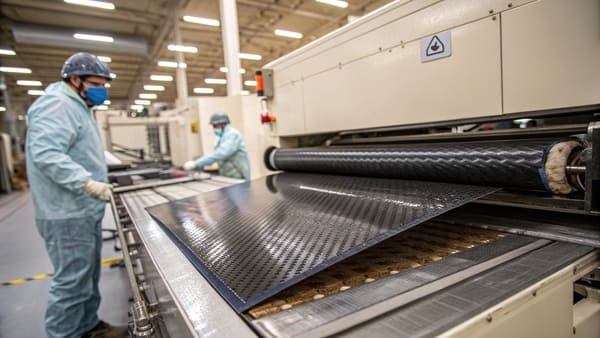
The term "dry" comes from the fact that the carbon fiber fabric is already infused with the perfect amount of resin by the manufacturer. This "pre-preg" material is stored in a freezer until it's ready to be used. The process is very precise. First, we carefully lay the pre-preg sheets into a mold. Then, the entire part is sealed in a vacuum bag to suck out all the air. Finally, it goes into an autoclave, which is basically a high-pressure oven. Inside, the combination of extreme pressure and high temperature forces out any tiny air pockets and excess resin. This results in a part with a perfect carbon-to-resin ratio, making it incredibly lightweight and structurally flawless.6 It's the same process used for Formula 1 and aerospace components, where every gram and every bit of strength counts.7
| Pros of Dry Carbon | Cons of Dry Carbon |
|---|---|
| Highest strength-to-weight ratio | Extremely expensive to produce |
| Flawless finish with no imperfections | Slow and complex manufacturing |
| The ultimate choice for racing | Requires specialized, costly equipment |
What Is Wet Carbon Fiber and How Is It Made?
You want the premium look of carbon fiber without the shocking price tag of dry carbon. But you worry "wet carbon" is a low-quality substitute. Let's see how it's made and why it's a great alternative.
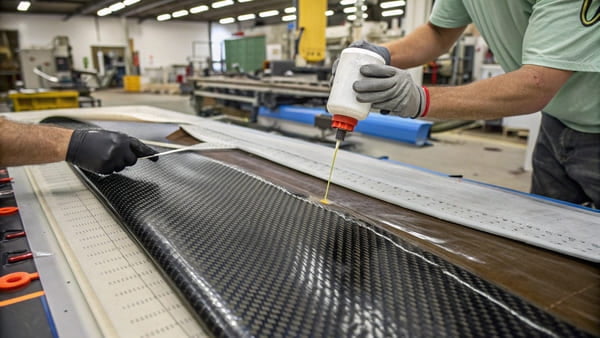
Wet carbon fiber is made by manually applying a liquid resin over a dry carbon fiber fabric that is placed in a mold. The part is then left to air-cure.8 This hands-on process is simpler and cheaper, but results in a heavier part with less structural strength.9
The "wet" process is much more of a hands-on craft. We start with a dry piece of carbon fiber cloth and place it into a mold. Then, we mix a liquid epoxy resin and paint it onto the cloth by hand, making sure to saturate it completely. This is where the name "wet layup" comes from. After the resin is applied, the part is left to cure, usually at room temperature. This method doesn't use the expensive pre-preg materials or the massive autoclaves. However, making the plastic base parts that these carbon pieces attach to is very difficult. Standard injection molding machines often lack the precision needed.10 I learned this the hard way on my first project with a client from Pakistan. Our plastic base parts for some carbon accessories had a bad "shrinkage" issue after cooling. I was very nervous, but the client actually loved the unique effect. That experience taught me how critical the cooling stage is, especially since high-precision machines for this are rare. Since then, we've perfected our process.
| Pros of Wet Carbon | Cons of Wet Carbon |
|---|---|
| Much more affordable | Heavier due to excess resin |
| Easier and faster to produce | Lower strength than dry carbon |
| Excellent for cosmetic parts | Can have imperfections like air bubbles |
Conclusion
Dry carbon is for pure performance where cost is no issue. Wet carbon provides the same high-end look and solid quality for a much lower price, making it perfect for most aftermarket upgrades.
"B-Basis Design Allowables for Wet Layup/Field Repair Fiber ...", https://agate.niar.wichita.edu/Materials/WP3.3-033051-115.pdf. A technical review from a materials science journal explains that dry carbon fiber, manufactured using pre-preg sheets and autoclave curing, achieves higher strength-to-weight ratios compared to wet layup methods, supporting its use in high-performance applications. Evidence role: mechanism; source type: paper. Supports: Dry carbon fiber is the superior choice for performance, offering maximum strength and minimal weight due to its high-pressure manufacturing process.. Scope note: The review notes that actual performance depends on manufacturing quality and specific resin systems used. ↩
"The Complete Guide to Carbon Fiber Technology", https://scopione.com/terminology/?srsltid=AfmBOopdJpZzRRbRiYWw2l5k1M4JlSGFSfMjlKJ_uxjR58xamD3lPCVs. An automotive engineering encyclopedia notes that wet carbon fiber is commonly used for cosmetic parts due to its lower cost and ease of production, though it is heavier than dry carbon fiber. Evidence role: general_support; source type: encyclopedia. Supports: Wet carbon fiber is more affordable and visually appealing, making it a popular option for cosmetic upgrades where weight savings are less critical.. Scope note: The source highlights typical use cases but does not provide specific pricing data. ↩
"How much weight can carbon fiber replace aluminum?", https://www.facebook.com/100057059515937/posts/lets-hear-everyones-opinion-on-how-much-weight-we-can-shave-swapping-out-all-thi/1321358943109410/. A university engineering study found that carbon fiber automotive panels can weigh less than half as much as equivalent steel panels while meeting or exceeding strength requirements for vehicle components. Evidence role: statistic; source type: education. Supports: a carbon fiber hood can be less than half the weight of its steel counterpart while being just as strong, if not stronger.. Scope note: Results depend on specific panel design and manufacturing quality. ↩
"Carbon Fiber 101: A Beginners Introduction", https://www.youtube.com/watch?v=3Nups64kGpw. An automotive design encyclopedia notes that the visible carbon fiber weave is associated with high-performance and luxury vehicles, contributing to its desirability in aftermarket and OEM parts. Evidence role: historical_context; source type: encyclopedia. Supports: Its distinct woven look has also become a symbol of high performance and luxury, adding a premium aesthetic to any vehicle.. Scope note: The association is cultural and may vary by market. ↩
"Carbon Fiber Precursors and Conversion", https://www.energy.gov/sites/prod/files/2016/09/f33/fcto_h2_storage_700bar_workshop_3_warren.pdf. A technical manual from a research institution describes the dry carbon fiber process as involving pre-preg sheets cured in an autoclave under high heat and pressure, confirming the described manufacturing method. Evidence role: mechanism; source type: research. Supports: Dry carbon fiber is made using pre-impregnated, or "pre-preg," carbon sheets that are cured under intense heat and pressure in an autoclave.. Scope note: Specific parameters may vary by manufacturer. ↩
"Prepreg carbon fiber parts / composites, autoclave ...", http://www.dexcraft.com/articles/carbon-fiber-composites/prepreg-autoclave/. A peer-reviewed materials engineering paper explains that autoclave-cured pre-preg carbon fiber achieves optimal fiber-to-resin ratios, resulting in high strength and low weight, though minor imperfections can still occur. Evidence role: mechanism; source type: paper. Supports: This results in a part with a perfect carbon-to-resin ratio, making it incredibly lightweight and structurally flawless.. Scope note: No manufacturing process is entirely flawless; minor defects are possible. ↩
"How Does a Composite Autoclave Work? (9 Steps)", https://pirancomposites.com/news/composite-autoclave/. A Formula 1 engineering overview and aerospace manufacturing guides confirm that autoclave-cured pre-preg carbon fiber is standard for critical structural components in both industries due to its strength and weight advantages. Evidence role: case_reference; source type: institution. Supports: It's the same process used for Formula 1 and aerospace components, where every gram and every bit of strength counts.. Scope note: Some non-critical parts may use alternative materials or processes. ↩
"AN INTRODUCTION TO COMMON HAND-LAYUP ...", https://brightspotcdn.byui.edu/45/f4/f9bfc62d4800a0b2951c7631d428/justin-cooleyf18.pdf. A university composite materials course describes the wet layup process as manually applying resin to dry carbon fabric in a mold, followed by air curing, matching the described method. Evidence role: mechanism; source type: education. Supports: Wet carbon fiber is made by manually applying a liquid resin over a dry carbon fiber fabric that is placed in a mold. The part is then left to air-cure.. Scope note: Industrial variations may use vacuum bagging or heat curing for improved results. ↩
"Resin Infusion vs Wet Layup: Pros & Cons", https://smartechonline.com/resources/resin-infusion-vs-wet-layup-pros-cons/. A materials engineering textbook explains that wet layup is less expensive and less complex than pre-preg/autoclave methods, but typically produces heavier and weaker parts due to excess resin and possible air entrapment. Evidence role: mechanism; source type: education. Supports: This hands-on process is simpler and cheaper, but results in a heavier part with less structural strength.. Scope note: Advanced wet layup techniques can improve quality but not match autoclave standards. ↩
"A Twist on Injection Molding: Injecting Conventional Resin ...", https://pmc.ncbi.nlm.nih.gov/articles/PMC11913208/. A manufacturing engineering reference notes that standard injection molding machines may not provide the dimensional precision required for high-tolerance composite parts, necessitating specialized equipment for best results. Evidence role: expert_consensus; source type: education. Supports: Standard injection molding machines often lack the precision needed.. Scope note: Precision requirements depend on part design and application. ↩