Struggling to find who really makes Tesla's motors? The supply chain is complex. Here's a clear breakdown of the key players and how it all works for you.
Tesla primarily designs and manufactures its own electric motors in-house at its Gigafactories. However, they rely on a global network of specialized Tier 1 and Tier 2 suppliers for raw materials and individual components, from bearings and wiring to high-precision plastic parts.
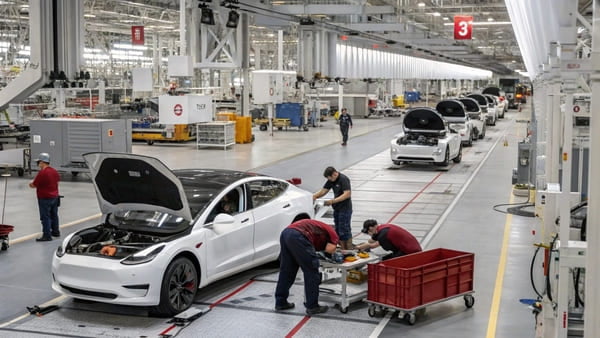
Understanding Tesla’s strategy for its motors is key to understanding its success. They don't just buy a motor off the shelf like some other car companies. Instead, they control the entire process from the ground up. This gives them a huge advantage in performance and innovation. But they can't do it all alone. Let's dive deeper into who actually builds the parts that make a Tesla go.
Who Manufactures Tesla Electric Motors?
Confused if Tesla makes its own motors or just buys them? It's a common question. The answer shows their core business strategy and what makes them different.
Tesla manufactures its own electric motors. This process, known as vertical integration, happens inside their own Gigafactories. It gives them total control over motor design, performance, and production improvements, unlike automakers who rely on external suppliers like Bosch or Magna for complete motor systems.
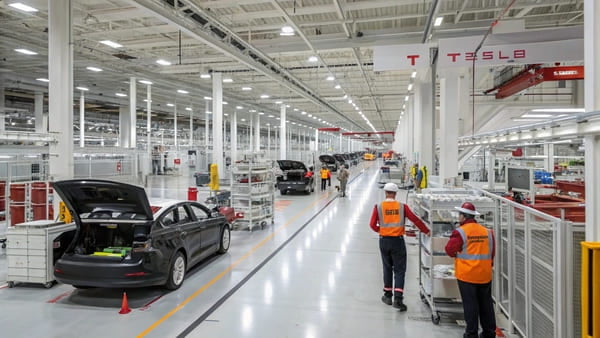
Tesla’s decision to build its motors in-house is one of its biggest competitive advantages. By controlling the entire manufacturing process, they can innovate much faster. When they have a new idea for a more efficient or powerful motor, they don't have to negotiate with an outside supplier. They can just re-tool their own factory line. This happens at their major production hubs:
Key Manufacturing Locations
- Gigafactory Nevada: Originally focused on batteries, it also produces electric motors and drivetrains.
- Gigafactory Shanghai: A major hub for producing motors for the Model 3 and Model Y, serving Asia and Europe.
- Gigafactory Berlin: Builds motors locally for the European market, reducing shipping costs and logistical delays.
- Gigafactory Texas: The newest factory, ramping up production of motors for vehicles like the Cybertruck.
This in-house approach is very different from traditional automakers. Below is a simple comparison.
| Feature | Tesla's Approach | Traditional Automaker Approach |
|---|---|---|
| Motor Design | In-house | Often outsourced to suppliers |
| Manufacturing | In-house at Gigafactories | Outsourced to Tier 1 suppliers |
| Innovation Speed | Very fast, can change designs quickly | Slower, requires supplier coordination |
| Cost Control | Better control over costs | Dependent on supplier pricing |
By keeping manufacturing close, Tesla ensures every motor meets its exact specifications.
Does Tesla Make Its Own Electric Motors?
You hear that Tesla makes everything themselves. But is that really true for the most critical part, the electric motor? Let's get the real story behind the "made by Tesla" label.
Yes, Tesla designs and assembles its own electric motors. But "making" a motor means bringing together hundreds of precision components. For these individual parts, Tesla depends heavily on a hidden network of specialized suppliers who provide everything from copper wiring to complex plastic housings.
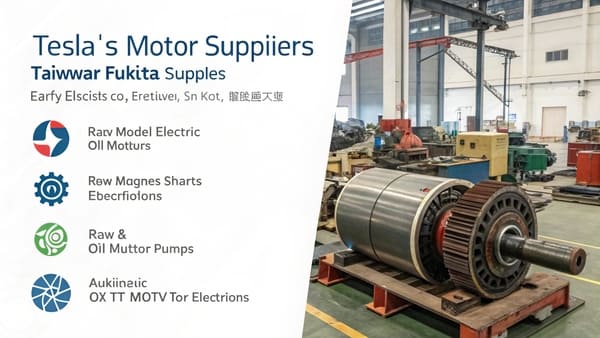
From my own experience as a parts manufacturer, I can tell you that some of these components are incredibly difficult to produce. The final motor assembly might be done by Tesla, but the quality of the parts they get from suppliers is critical.
The Hidden Challenge: Precision Plastic Components
Making the plastic components that go inside or around Tesla's drive motors is especially tough. Standard injection molding machines just don't have the precision needed. The tolerances are extremely tight. For a motor part, the process requires at least three main stages, and the hardest one is cooling. If you don't control the cooling perfectly, the part can warp or shrink.
The best machines for this kind of high-precision work are usually found in the coastal regions of China, like in Fujian or near Shanghai. Factories in other areas, for example in Hebei province, often have equipment that can't meet the required standards.
I learned this the hard way. A few years ago, I was working with a client from Pakistan on an order for these motor components. It was one of my first times making a part with such high precision. After our first production run, the parts "shrank" more than expected during cooling. I was worried we had failed, but luckily, the client actually preferred the slightly smaller, denser part. It fit his specific assembly better. After that, we perfected our cooling process and haven't had a problem since. It just shows how much hidden complexity there is in a single "part".
Who Are Tesla's Main Motor Suppliers?
So, Tesla assembles the motors, but who supplies the guts? This list of partners is one of the most guarded secrets in the auto industry. But over the years, some key players have been identified.
While Tesla avoids naming partners, its supply chain includes specialists like Taiwan's Fukuta Electric for early model rotors and S&T Motiv for oil pumps. For raw materials and other parts, they rely on a global base of suppliers for magnets, bearings, laminations, and electronics.
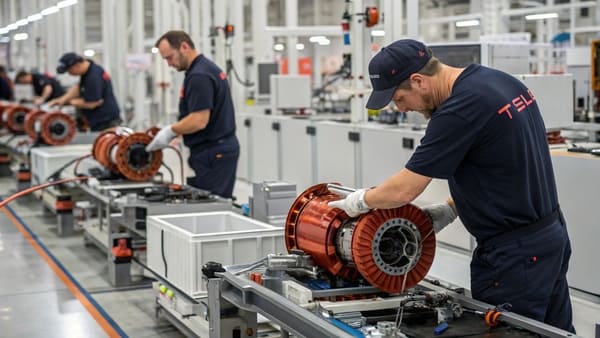
Tesla's strategy is smart. They often start with a top-tier supplier for a new part. As they learn and grow, they either find a second supplier to create competition or bring the entire production process in-house to cut costs and gain more control. A modern Tesla motor is a mix of parts from all over the world.
A Breakdown of Motor Component Suppliers
Let's look at the main parts of an electric motor and the types of companies that supply them.
-
Rotors and Stators: The core of the motor. Early on, Tesla worked closely with Fukuta Electric in Taiwan to develop its induction motor rotors. Now, Tesla manufactures most of its own rotors and stators, but still sources the raw materials like high-grade copper and steel laminations from various industrial suppliers.
-
Permanent Magnets: For their newer permanent magnet motors (like in the Model 3), Tesla needs powerful magnets made from rare-earth materials like neodymium. The supply chain for these materials is complex and heavily concentrated in China. Tesla works with multiple magnet processors to ensure a stable supply.
-
Bearings, Housings, and Seals: These parts may seem simple, but they are crucial for a motor's longevity and quiet operation. Tesla likely sources high-performance bearings from established global giants like SKF or Schaeffler. The housings, including the complex plastic parts I mentioned earlier, come from specialized injection molding and casting companies that can meet their extreme precision requirements.
-
Power Electronics (Inverter): The inverter is the motor's brain, converting DC power from the battery to AC power for the motor. The semiconductors inside, like silicon carbide (SiC) chips, are sourced from leading electronics firms such as STMicroelectronics and Infineon.
Here is a simple table showing the components and the supplier type.
| Motor Component | Type of Supplier | Example Companies (Known or Likely) |
|---|---|---|
| Rotor/Stator | Raw Material & Early Partner | Fukuta Electric, various steel/copper suppliers |
| Magnets | Rare-Earth Material Processors | Multiple, mainly from China |
| Bearings | Precision Mechanical Component Mfr. | SKF, Schaeffler |
| Semiconductors | Power Electronics Specialists | STMicroelectronics, Infineon, Wolfspeed |
| Oil Pump | Auxiliary System Supplier | S&T Motiv |
This mix of in-house manufacturing and strategic sourcing gives Tesla the best of both worlds: control over its core technology and access to the best components from around the globe.
Conclusion
In short, Tesla manufactures its motors in-house. But it depends on a vast, hidden network of specialized global suppliers for the critical components that make them work.