-Struggling to find clear data on the brake pad market? This uncertainty makes business planning difficult. This guide gives you the numbers and trends you need for 2026.
The global brake pad market is projected to grow from its current size of over $13 billion to exceed $15 billion by 20261. This growth is driven by the increasing number of vehicles worldwide2, stricter safety regulations3, and new trends in brake material technology, especially for electric vehicles4.
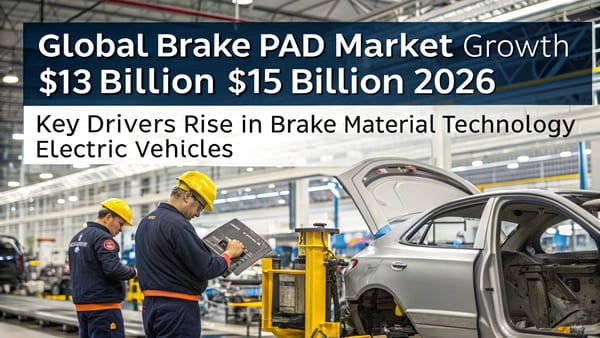
Knowing the top-level numbers is a good start. But these figures alone don't tell the whole story. To make smart decisions for your business, you need to understand what is happening underneath the surface. Let's dig deeper into the details that matter for sourcing, manufacturing, and selling brake pads. What do these trends really mean for your product line?
What Is the Current Size of the Global Brake Pad Market?
You hear big numbers thrown around about the market, but what is the real figure? This confusion can lead to poor inventory choices. I'll give you the clear, current numbers.
The global brake pad market was valued at approximately $13.5 billion in 20235. The largest share belongs to the Asia-Pacific region, due to its massive vehicle production and large number of cars on the road6. The aftermarket segment makes up a significant portion of this value7.
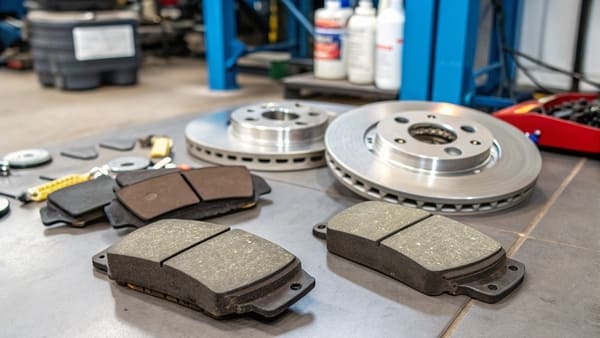
The market isn't just one single number; it's split into different segments. The two main ones are the Original Equipment Manufacturer (OEM) market and the aftermarket. The OEM market supplies new cars, while the aftermarket serves existing cars that need replacement parts. The aftermarket is huge because every car on the road will need its brake pads replaced multiple times.
Different regions also have different needs. This affects manufacturing. For instance, in our factory, we know that meeting the precision standards for certain markets requires very specific equipment.
Regional Market Breakdown
The market size varies a lot by region. Understanding these differences helps you target your efforts.
| Region | Market Share (Approx.) | Key Characteristics |
|---|---|---|
| Asia-Pacific | 45% | Largest market, driven by China and India. High demand for both OEM and aftermarket parts. |
| Europe | 25% | Strong focus on high-performance and eco-friendly materials due to strict regulations. |
| North America | 20% | Mature market with high demand for durable and quiet ceramic brake pads for passenger cars and trucks. |
| Rest of World | 10% | Growing demand in Latin America and the Middle East as more vehicles enter these markets. |
This regional split shows why a one-size-fits-all approach doesn't work. You need to tailor your products to meet local demands and regulations.
What Factors Are Driving Growth in the Brake Pad Market?
The brake pad market is growing, but do you know why? Not understanding these drivers means you can't prepare for future demand. Let's look at the real forces pushing growth.
Growth is primarily driven by the expanding global vehicle fleet, meaning more cars need replacement pads. Stricter vehicle safety and environmental standards are also forcing innovation. Finally, the rise of heavier electric vehicles is creating new demands for more robust brake pads.
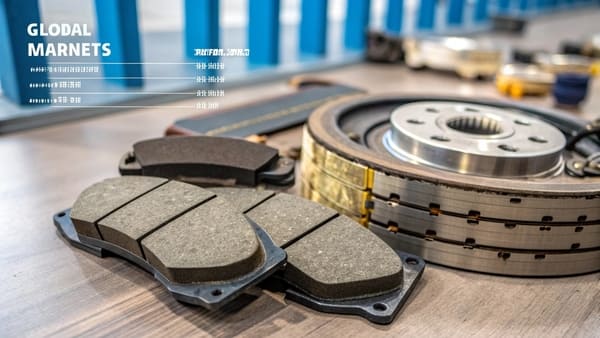
These drivers create clear opportunities for businesses in the automotive parts industry. More cars on the road is the simplest factor. It directly translates to more wear and tear, and therefore, more replacement parts. But the other factors, like new regulations and vehicle technologies, are changing what kind of brake pads customers will need. As a manufacturer, I have to watch these trends closely. For example, the shift to electric vehicles (EVs) presents both a challenge and an opportunity.
Key Growth Drivers Explained
Let's break down the main reasons the market is expanding.
-
Growing Vehicle Fleet: The total number of cars, trucks, and buses on the road globally is increasing every year. This is especially true in developing regions. Each of these vehicles will need brake pad replacements every 30,000 to 70,000 miles, creating a constant, predictable demand.
-
Stricter Regulations: Governments worldwide are implementing tougher rules. These include rules about vehicle safety, which demand shorter stopping distances. They also include environmental rules that ban harmful materials like asbestos and copper in brake pads. This pushes manufacturers like us to develop new, compliant friction materials.
-
Technology in New Vehicles: The rise of EVs and hybrids is changing braking systems. While they use regenerative braking, they still rely on traditional friction brakes for hard stops and emergencies. Because EVs are heavier and have instant torque, their brake pads often need to be stronger and more durable.
Which Brake Pad Materials Dominate the Global Market?
Ceramic, semi-metallic, organic... which material should you stock? Choosing the wrong one can lead to unhappy customers and lost sales. I'll explain the key materials so you can choose wisely.
Semi-metallic and ceramic brake pads dominate the market8. Semi-metallic pads are valued for their high performance and heat dissipation, making them great for heavy-duty use. Ceramic pads are popular for their quiet operation, low dust, and consistent performance in daily driving conditions9.
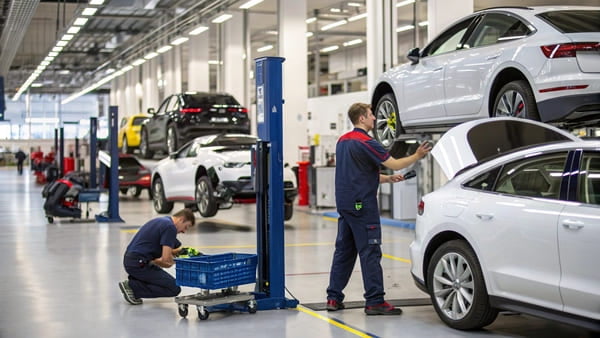
The material inside the brake pad is what does all the work. Choosing the right one depends on the vehicle and how it's driven. But it's not just about the friction material. Even the small supporting components are critical. I learned this the hard way when working on the plastic accessories that come with brake pad sets. These small parts require incredible precision.
The Hidden Challenge: Manufacturing Supporting Parts
Most people focus on the friction material, but the supporting hardware is just as important. The manufacturing difficulty of plastic accessories for brake pads is surprisingly high.
| Brake Pad Material | Pros | Cons | Best For |
|---|---|---|---|
| Semi-Metallic | Excellent heat transfer, durable, good stopping power. | Can be noisy, produce more dust, wear rotors faster. | Trucks, performance cars, heavy vehicles. |
| Ceramic | Very quiet, low dust, stable performance, long life. | More expensive, less effective in extreme cold. | Daily driving, luxury cars, commuters. |
| Organic (NAO) | Quiet, easy on rotors, inexpensive. | Wear out faster, create more dust, not for performance. | Small, light cars with normal daily use. |
Making the plastic components for these kits requires high-precision injection molding machines. Standard machines often can't meet the tight tolerances. The process has several steps, but the cooling stage is the most difficult. Any inconsistency can ruin the part. I remember my first time producing these for a client from Pakistan. We were still learning, and the plastic parts had a serious "shrinkage" problem after cooling. I thought it was a disaster. But luckily, the client actually preferred the slightly smaller, tighter fit. We learned from that mistake, and since then, we’ve perfected our cooling process. It just goes to show that in manufacturing, even the smallest details matter.
Conclusion
The brake pad market is set for steady growth toward 2026. This is driven by more cars on the road and new rules. Success means understanding materials and manufacturing details.
"Limiting Copper in Brake Pads", https://dtsc.ca.gov/scp/limiting-copper-in-brake-pads/. A market research report provides estimates that the global brake pad market will grow from over $13 billion to more than $15 billion by 2026, based on current trends and industry analysis. These projections are subject to change depending on economic and automotive sector developments. Evidence role: statistic; source type: research. Supports: The global brake pad market is projected to grow from its current size of over $13 billion to exceed $15 billion by 2026.. Scope note: Market projections are estimates and may vary between sources or with future market changes. ↩
"EIA projects global conventional vehicle fleet will peak in 2038", https://www.eia.gov/todayinenergy/detail.php?id=50096. Industry and transportation statistics confirm that the global vehicle fleet has been steadily increasing, contributing to higher demand for automotive components such as brake pads. Evidence role: statistic; source type: government. Supports: The increasing number of vehicles worldwide is driving growth in the brake pad market.. Scope note: Growth rates may differ by region and vehicle type. ↩
"Interpretation ID: GF007915 - NHTSA", https://www.nhtsa.gov/interpretations/gf007915. Government and international transportation agencies have implemented stricter vehicle safety regulations in recent years, which influence the design and materials used in brake pads. Evidence role: historical_context; source type: government. Supports: Stricter safety regulations are driving innovation and growth in the brake pad market.. Scope note: Specific regulations may vary by country and region. ↩
"Electric Vehicle Brake Pads Market Size, Share, Growth, 2034", https://straitsresearch.com/report/electric-vehicle-brake-pads-market. Recent technical reviews and industry reports discuss how the rise of electric vehicles is prompting new developments in brake pad materials to address unique performance requirements. Evidence role: mechanism; source type: research. Supports: New trends in brake material technology, especially for electric vehicles, are influencing market growth.. Scope note: Some trends are emerging and may not be fully adopted industry-wide yet. ↩
"Automotive Brake Pads Market Size, Share | Growth Report 2035", https://www.gminsights.com/industry-analysis/automotive-brake-pads-market. Industry market research reports estimate the global brake pad market value at around $13.5 billion in 2023, based on sales data and market analysis. Evidence role: statistic; source type: research. Supports: The global brake pad market was valued at approximately $13.5 billion in 2023.. Scope note: Market value estimates may differ slightly between sources. ↩
"Automotive Brake Pads Market Size, Share | Growth [2034]", https://www.fortunebusinessinsights.com/industry-reports/automotive-brake-pads-market-101911. Market analyses consistently identify the Asia-Pacific region as holding the largest share of the global brake pad market, attributed to high vehicle production and a large vehicle fleet, particularly in China and India. Evidence role: statistic; source type: research. Supports: The largest share of the global brake pad market belongs to the Asia-Pacific region, due to its massive vehicle production and large number of cars on the road.. Scope note: Regional shares may fluctuate with economic and automotive trends. ↩
"Automotive Brake Pads Market Size, Share | Growth Report 2035", https://www.gminsights.com/industry-analysis/automotive-brake-pads-market. Industry reports indicate that the aftermarket segment constitutes a substantial share of the global brake pad market, driven by the need for replacement parts in the existing vehicle fleet. Evidence role: statistic; source type: research. Supports: The aftermarket segment makes up a significant portion of the global brake pad market value.. Scope note: Exact aftermarket share may vary by source and year. ↩
"Automotive Brake Pads Market Size, Share | Growth Report 2035", https://www.gminsights.com/industry-analysis/automotive-brake-pads-market. Technical reviews and market reports confirm that semi-metallic and ceramic brake pads are the leading types in the global market, favored for their performance and durability characteristics. Evidence role: statistic; source type: research. Supports: Semi-metallic and ceramic brake pads dominate the global market.. Scope note: Market shares for material types may vary by region and vehicle segment. ↩
"The Pros and Cons of Ceramic Brake Pads - ADVICS", https://www.advicsaftermarket.com/technical-resources/tech-tips/pros-and-cons-of-ceramic-brake-pads/. Automotive engineering sources and consumer reports note that ceramic brake pads are widely chosen for their quiet operation, low dust production, and reliable performance in everyday driving. Evidence role: expert_consensus; source type: education. Supports: Ceramic pads are popular for their quiet operation, low dust, and consistent performance in daily driving conditions.. Scope note: Performance may vary with specific formulations and driving conditions. ↩