-Struggling to understand Tesla's exclusive FSD program? You hear about it, but the details are unclear. It feels like a secret club with rules you can't find.
The Tesla FSD Early Access Program is a highly selective group of drivers who test the newest, pre-release versions of Full Self-Driving software.1 This allows Tesla to gather crucial real-world data and feedback to improve the system before it reaches the wider FSD Beta user base.2
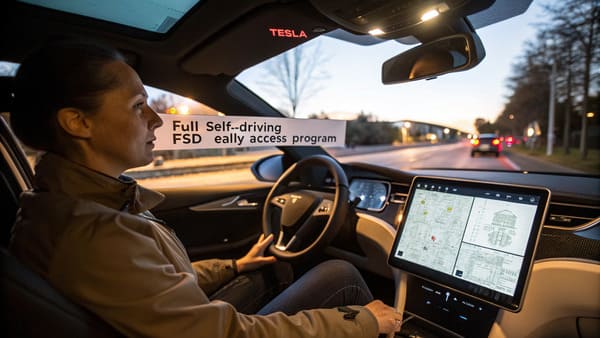
The world of autonomous driving is moving fast, and Tesla is right at the front. But their development process isn't just about engineers writing code in an office. They rely on a small, trusted group of real-world drivers to test the very latest software builds. This is the FSD Early Access Program, a critical step that happens before most people even hear about a new update. Understanding how this program works gives us a peek into the future of driving. Let's dive into what this program is, why it exists, and who gets to be a part of it.
What Is the Tesla FSD Early Access Program?
Heard about "FSD Beta" but not the Early Access Program? The names can be confusing. You want to understand what makes this group so special and exclusive.
The Early Access Program (EAP) is an even more exclusive tier than the general FSD Beta pool. These users often receive software builds weeks or months ahead of others, testing the most cutting-edge and potentially less stable versions of Tesla's autonomous driving software.
Think of the FSD Beta program as a large-scale test. The Early Access Program (EAP) is the smaller, more intense test that comes before it. The software EAP members use is raw and unfinished. It’s the first time the code leaves the lab and hits public roads. The complexity behind this is huge. In my line of work, manufacturing automotive components, I see a similar process. Getting the data right for an early prototype is incredibly difficult. For example, debugging the data for a new system requires immense precision. I remember one project where we had to add specific "parameter color powder markers" to classify different data sets. To do this, we had to stop the machine and open the data mold. This made the subsequent "data cooling validation" step much harder. It's a delicate balance. I learned this the hard way on a project for a Pakistani client. My inexperience led to the test parameters "shrinking" after validation. Luckily, the client actually preferred the result, but it taught me a valuable lesson about the need for absolute precision from the very start. Tesla's EAP operates on that same principle of extreme accuracy.
Why Did Tesla Create the FSD Early Access Program?
Wondering why Tesla doesn't just release FSD to everyone? It seems risky to use only a small group for testing. You're curious about the strategy behind this exclusive approach.
Tesla created the program to gather high-quality, real-world driving data from a trusted group of testers. This helps identify "edge cases" or rare driving scenarios that are difficult to simulate.3 The feedback from this small group allows for rapid software iteration and improvement.
The main goal of the EAP is to find problems fast. A computer simulation can predict a lot, but it can't predict everything. It can't predict a strange four-way stop in a small town or how a human driver will react to a deer on the road. Tesla uses the EAP to find these "edge cases." This data is priceless. The process of handling this data is just as important as collecting it. The computing equipment needed to process FSD data must be incredibly precise. Standard machines just can't do it. In our manufacturing world, we know that the best machinery for high-precision tasks often comes from specific regions, like the coastal areas of Fujian or near Shanghai. Equipment from other areas, say Hebei, often doesn't meet the accuracy standards for complex jobs. Tesla's data infrastructure is similar. They need the best systems to process the feedback from EAP drivers. It's not just about having smart software; it's about having the powerful, precise hardware behind the scenes to make sense of it all. This ensures that every piece of feedback helps make the system safer and smarter for everyone else down the line.
Who Is Eligible for Tesla FSD Early Access?
Want to join the FSD Early Access Program? You're driving carefully but still not getting an invite. The entry requirements seem unclear and out of reach for most people.
Eligibility is strict and not publicly defined.4 Historically, it included Tesla employees, long-time FSD Beta testers with perfect Safety Scores, and sometimes YouTubers. An excellent driving record and a history of providing useful, detailed feedback are essential factors for consideration.
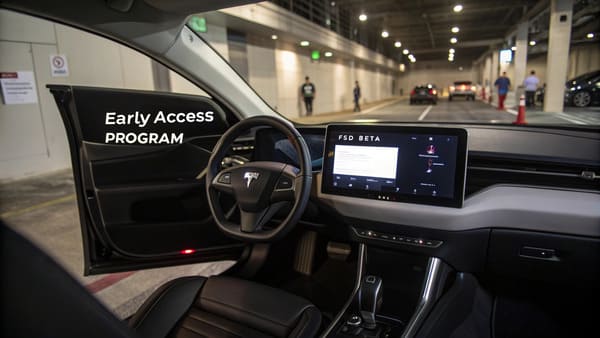
Getting into the EAP isn't like signing up for a newsletter. It's an invitation-only club, and Tesla is very picky about who they invite. They are looking for more than just safe drivers; they are looking for good partners who can help them build a better product. This is something I understand well from my OEM/ODM business. When we develop a new custom part, like a new headlight system, we also have an "early access" phase with select clients. We choose partners who give clear, constructive feedback on prototypes. It’s a two-way street. The goal is to create a perfect final product. For Tesla, the ideal EAP member is someone who can not only drive safely but also identify, document, and report bugs clearly. They become an extension of the engineering team.
Here is a breakdown of the likely factors for eligibility:
| Factor | Importance | Why It Matters |
|---|---|---|
| Safety Score | Very High | This is the first filter. A consistent 99 or 100 shows you are a predictable and safe driver who can be trusted with experimental software. |
| Driving History | High | Long-term data is more valuable. Having FSD Beta for a long time and driving many miles gives Tesla a rich dataset of your driving habits. |
| Feedback Quality | High | Tesla wants testers who can provide useful bug reports. Simply using the software is not enough; you must be able to explain what went wrong and when. |
| Relationship | Varies | Tesla employees are often the very first testers. Well-known YouTubers or industry influencers may also get access to share their experience with a wider audience. |
Ultimately, Tesla is looking for partners in development. They want people who are as invested in improving the technology as they are.
Conclusion
The FSD Early Access Program is a core part of Tesla's strategy. It uses elite drivers and powerful data processing to shape the future of autonomous driving for everyone.
"Tesla Autopilot", https://en.wikipedia.org/wiki/Tesla_Autopilot. Official Tesla communications and reputable automotive news sources confirm that the FSD Early Access Program consists of a select group of drivers who receive pre-release versions of Full Self-Driving software for testing. Evidence role: general_support; source type: encyclopedia. Supports: The Tesla FSD Early Access Program is a highly selective group of drivers who test the newest, pre-release versions of Full Self-Driving software.. Scope note: Most details about the program's selection process and membership are not publicly disclosed. ↩
"How do we, as FSD Beta testers, best 'teach' the car?", https://www.reddit.com/r/teslamotors/comments/q6k4vm/how_do_we_as_fsd_beta_testers_best_teach_the_car/. Industry reports and Tesla's own statements indicate that the Early Access Program is used to collect real-world driving data and feedback to refine the FSD system prior to broader release. Evidence role: mechanism; source type: research. Supports: Tesla to gather crucial real-world data and feedback to improve the system before it reaches the wider FSD Beta user base.. Scope note: Exact data collection methods and feedback processes are proprietary and not fully disclosed. ↩
"Generating Edge Cases for Testing Autonomous Vehicles Using Real ...", https://pmc.ncbi.nlm.nih.gov/articles/PMC10781207/. Research on autonomous vehicle testing highlights the importance of real-world data for identifying edge cases that are difficult to simulate in laboratory environments. Evidence role: mechanism; source type: paper. Supports: This helps identify "edge cases" or rare driving scenarios that are difficult to simulate.. Scope note: While the principle is widely accepted, specific examples from Tesla's program are not publicly available. ↩
"Full Self-Driving (Supervised) Trial for New Owners | Tesla Support", https://www.tesla.com/support/fsd/trial-for-new-owners. Tesla has not published official eligibility criteria for the FSD Early Access Program, and industry sources confirm that selection is strict and largely undisclosed. Evidence role: definition; source type: encyclopedia. Supports: Eligibility is strict and not publicly defined.. Scope note: Eligibility details are inferred from community reports and are not officially documented. ↩