
Your customer's Mercedes is stuck in park and won't shift. This common and frustrating problem often points to a failing Intelligent Servo Module1, a costly part to get wrong.
The Intelligent Servo Module1 (ISM), also known as component A80, is the electronic brain that tells the 722.9 automatic transmission2 which gear to engage. It fails due to electronic faults3 or mechanical wear4, and choosing the correct replacement requires matching the OEM part number5 exactly.
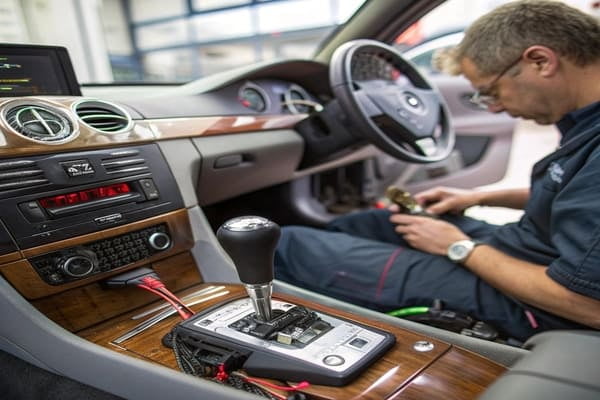
I've seen many clients struggle with this specific component. It's a high-precision part, and a bad replacement can cause more problems than it solves. As a manufacturer, I understand the details that make these modules work or fail. Let's walk through what you need to know to source them correctly and avoid costly mistakes. This guide will help you understand the failure points6 and ensure you order the right part every time for your inventory or customers.
What Exactly Is an Intelligent Servo Module1 in the 722.9 Transmission?
A car that won't shift is a big problem. When you don't understand the failed part's function, it makes finding a reliable replacement even harder for your business.
The Intelligent Servo Module1, or ISM, is a mechatronic unit7 mounted on the side of the 722.9 transmission. It acts as the bridge between the driver's electronic shifter and the transmission's internal mechanics, physically selecting Park, Reverse, Neutral, or Drive.
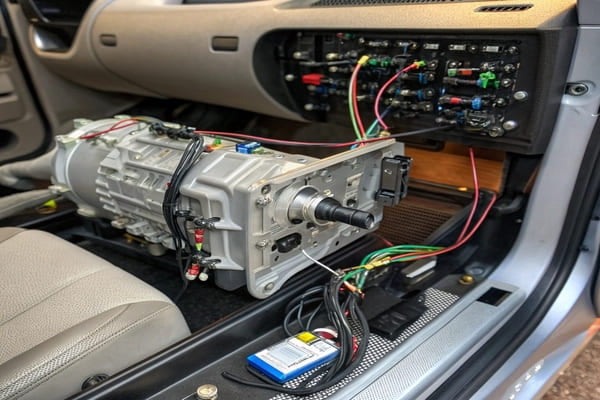
Let me dive a little deeper into how it works. The ISM isn't just a simple switch. It's a complex device with its own control unit, an electric motor, and a mechanical lever. When a driver selects a gear, the signal goes to the ISM. The module's internal brain then tells its motor to move the lever, which engages the correct gear inside the transmission. The entire process requires perfect communication and movement.
From my experience in manufacturing these parts, the biggest challenge is the precision required.
-
### Electronic Signal Calibration The most difficult step in making an ISM is calibrating the electronic signals. The internal circuit board8 must perfectly match the motor's movements. This requires highly specialized machinery that can perform tests with micron-level accuracy. Most small auto part workshops simply don't have this kind of equipment. We use a three-step process, and the final signal calibration9 is always the most complex.
-
### Mechanical Durability The internal gears and lever are constantly working. We use reinforced materials to ensure they don't wear out prematurely, which is a common failure point in cheaper aftermarket versions10.
Which Mercedes-Benz Models and Years Use the 722.9 ISM?
You're trying to stock parts for your customers, but ordering for the wrong model is a costly risk. A mismatched part means lost time, money, and customer trust.
The 722.9 transmission, also known as the 7G-Tronic, and its ISM are used in most rear-wheel-drive and all-wheel-drive Mercedes-Benz models11 produced from approximately 2004 to 2015. This includes popular sedans, SUVs, and coupes.

The 722.9 was a workhorse transmission for Mercedes-Benz for over a decade. As a result, the demand for replacement ISMs12 is very high. However, you can't assume one part fits all. It's critical to know which models used this transmission to narrow down your search. While the only way to be 100% certain is by checking the vehicle's VIN13, having a general guide helps you manage your inventory effectively. I always advise my clients to be aware of the common applications before placing a bulk order.
Here is a table of common models that are equipped with the 722.9 transmission.
| Model Series | Common Model Codes | Approximate Years |
|---|---|---|
| C-Class | W204, S204 | 2007 - 2014 |
| E-Class | W211, W212, C207 | 2004 - 2016 |
| S-Class | W221 | 2006 - 2013 |
| CLS-Class | C219, C218 | 2004 - 2017 |
| ML-Class | W164, W166 | 2005 - 2015 |
| GL-Class | X164 | 2006 - 2012 |
| R-Class | W251 | 2006 - 2013 |
| SLK/SLC | R171, R172 | 2004 - 2016 |
This list is not exhaustive, but it covers the majority of vehicles you will encounter. Always remember that model year transitions and regional differences can affect which transmission was used.
How Can You Identify the Correct ISM by OEM Part Number?
You have a faulty ISM in front of you, but the part numbers are confusing. Choosing the wrong replacement is not an option, as it won't work and could damage the vehicle's electronics.
To identify the correct ISM, you must find the original equipment manufacturer (OEM) part number printed on the old unit's housing. Common numbers include A0002701752 and A0002701852. Always provide the vehicle's VIN13 to your supplier for final verification.
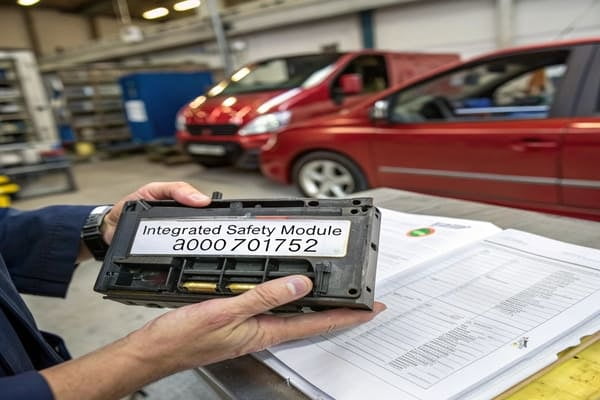
This sounds simple, but it's one of the most critical steps. Mercedes-Benz frequently updates its part numbers, so a number might be replaced by a newer one. A professional supplier will have access to a database to cross-reference these numbers. In my factory, this is a step we take very seriously. One of the biggest challenges in supplying the correct ISM is accurately matching it to the specific transmission's software and hardware version.
This isn't just about a part number on a sticker.
-
### The Coding Database Challenge To ensure perfect compatibility, we often have to stop our equipment and access a protected coding database14 from the manufacturer. We input the vehicle's data to confirm that the electronic profile of our new ISM will be accepted by the car's computer. This step is complex and time-consuming, which is why many smaller operations skip it, leading to incompatible parts.
-
### Part Number Supersession Mercedes may replace an old part number with a new one. For example:
| Old Part Number | New (Superseded) Part Number | Notes |
|---|---|---|
| A0002701752 | A0002701852 | Common replacement sequence |
| A2212700952 | Often replaced by newer versions | Check with supplier |
When you order, providing just the old number might not be enough. A good supplier will know the latest compatible version. This is a key part of our service.
What Are the Most Common Symptoms of a Failing Intelligent Servo Module1?
Your customer's Mercedes won't start or shift, and the dashboard is lit up with warnings. Identifying the ISM as the likely culprit helps you quickly provide the right solution.
The most common symptoms of a failing ISM are the inability to shift the car out of Park, a dashboard warning like "Drive to workshop without changing gear," the transmission being stuck in limp mode, or a complete no-start condition.
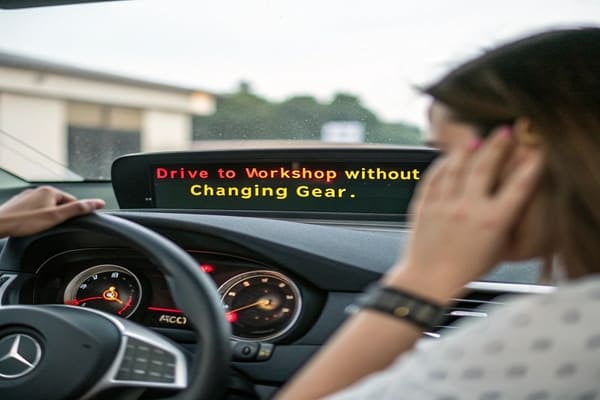
I learned about these failure modes firsthand early in my career. I was working with a new client from Pakistan who ordered an ISM. At the time, my team was still refining our calibration process. The part we sent caused a "signal transmission failure" message. The module's internal signals were not perfectly synchronized. Luckily, the client was using it for an older, modified car and was happy with the result. But it was a huge lesson for me. That experience drove us to perfect our quality control15 to eliminate these issues.
Here are the main symptoms broken down:
-
### Vehicle Stuck in Park This is the most frequent complaint. The electric motor or internal mechanism inside the ISM fails, so it cannot physically move the transmission linkage out of the Park position. The driver moves the shifter, but nothing happens.
-
### "Drive to workshop" Error Message The ISM has its own diagnostic system. When it detects an internal fault—either mechanical or electronic—it sends an error message to the dashboard, telling the driver to seek service immediately.
-
### Limp Mode As a safety measure, if the ISM detects a critical failure, it may lock the transmission in a single gear (usually 2nd or 3rd). This allows the driver to "limp" the car to a safe location but prevents any further shifting.
-
### Engine Will Not Start For safety, a Mercedes-Benz will only start if the transmission is in Park or Neutral. A faulty ISM may fail to send the correct "I am in Park" signal to the engine control unit (ECU), preventing the starter from engaging.
Conclusion
The 722.9 ISM is a complex part that frequently fails. Success for your business depends on understanding its function, symptoms, and, most importantly, using the correct OEM part number5 and VIN13.
Understanding the ISM is crucial for diagnosing transmission issues and ensuring proper replacements. ↩
Learn about the 722.9 transmission's capabilities to better assist customers with their vehicles. ↩
Explore common electronic faults to better understand potential issues with the ISM. ↩
Understanding mechanical wear can help in diagnosing and preventing transmission failures. ↩
Finding the right OEM part number is essential for ensuring compatibility and avoiding costly mistakes. ↩
Identifying failure points can help in diagnosing issues and improving repair strategies. ↩
Understanding mechatronic units can enhance your knowledge of modern automotive systems. ↩
Understanding the function of circuit boards can aid in diagnosing electronic issues in vehicles. ↩
Signal calibration is key to ensuring that electronic components function correctly in vehicles. ↩
Explore the risks associated with aftermarket parts to make informed decisions for your customers. ↩
Knowing which models use the 722.9 transmission helps in inventory management and customer service. ↩
Choosing the right replacement ISM is vital for maintaining vehicle performance and reliability. ↩
The VIN is crucial for identifying the correct parts and ensuring compatibility. ↩
Learn about coding databases to ensure accurate part replacements and compatibility. ↩
Quality control is vital for ensuring the reliability and performance of automotive parts. ↩