
Are you struggling with inconsistent brake pad quality? This can damage your brand's reputation and create serious safety risks for your customers, hurting your bottom line in the long run.
Choosing a reliable brake pad manufacturer1 is critical for your business. A true manufacturing partner ensures product safety2, consistency, and performance. This directly protects your brand's reputation and guarantees that you are supplying high-quality, dependable parts to your customers every single time.
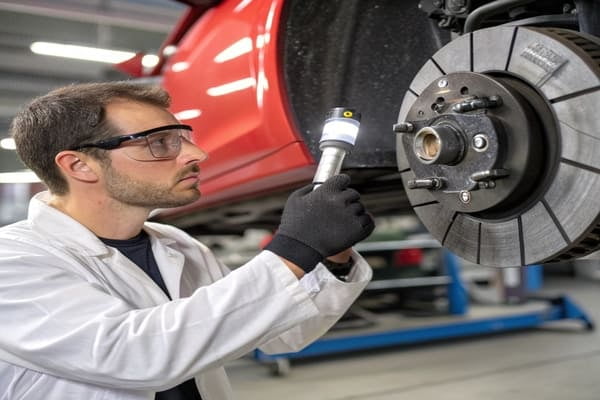
Finding a partner you can trust is a big deal in the auto parts industry. It’s not just about getting a good price. It's about building a supply chain3 that you can depend on for years. A great manufacturer becomes an extension of your own team, helping you grow your business with products that you can be proud to sell. Let's look at what really matters when you make this important choice.
What Makes a True Brake Pad Manufacturer Stand Out in the Market?
Many companies sell brake pads, but few actually make them. You might be working with a trading company without even knowing it, which adds cost and reduces your control.
A true brake pad manufacturer1 stands out because they control the entire process. They have in-house engineering4, develop their own tooling, and manage production from raw materials to final quality testing5. This gives them deep technical knowledge and the ability to offer full customization.
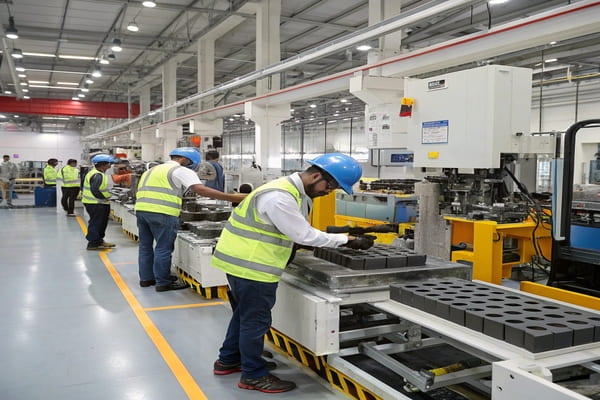
When I talk about a "true manufacturer," I mean a partner who has total control over their production line. They aren't just assembling parts from other suppliers. They are involved in every single step. This starts with research and development (R&D). A good manufacturer invests in R&D to create better friction formulas6 and designs. They have engineers who understand the science behind braking performance. They also design and build their own molds and tooling. This is a huge advantage because it means they can create unique products for you and ensure the precision of every part. A simple trading company can't do this. They just buy and sell what's already available. Working directly with a manufacturer means you get better quality control, faster problem-solving, and a partner who can help you innovate.
| Feature | True Manufacturer | Trading Company |
|---|---|---|
| Production Control | Full, in-house control | None, outsources everything |
| R&D Capability | Strong, develops own formulas | Minimal to none |
| Customization | Full OEM/ODM services | Limited to existing products |
| Technical Support | Direct access to engineers | Basic sales support |
| Pricing | Factory-direct, more stable | Higher, includes markup |
How Does Factory Strength Influence Brake Pad Quality and Consistency?
Have you ever received a batch of products with inconsistent quality? This can destroy customer trust and lead to costly returns, damaging the reputation you worked so hard to build.
A factory's strength directly impacts quality. Advanced equipment, like high-precision hot-press machines, and strict process controls are essential. They ensure every brake pad has the right density and strength, preventing common defects like cracking or layer separation under pressure.
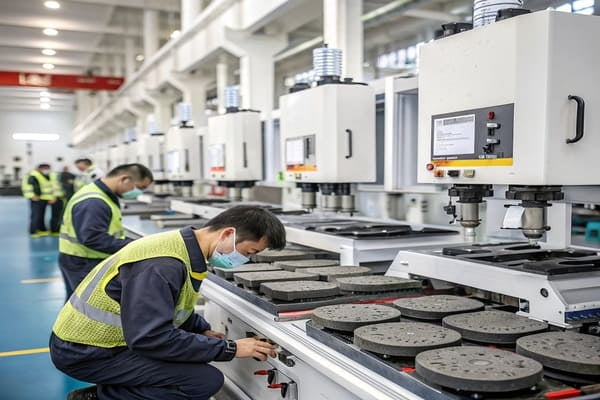
Making a high-quality brake pad is much harder than it looks. It requires incredibly precise machinery. For example, the hot-pressing stage is critical. A standard hot-press machine often can't provide the consistent pressure and temperature needed. The most difficult step is forming the friction layer. The machinery for this needs to be extremely accurate. We've found that factories in the Yangtze River Delta region have the best equipment for this. Another tricky part is bonding the insulation layer to the backing plate. The machine has to stop and open the mold to do this, which can make it hard to keep the pressure constant.
I learned this the hard way. Early on, I worked with a client from the UAE. We produced a batch of brake pads, but we had a serious "interlayer delamination" problem, where the friction material was separating from the backing plate. It was a stressful situation. Fortunately, the client found a specific use case where this feature was actually helpful, so it worked out. But that experience taught me a valuable lesson. We invested in better processes and machinery to control pressure perfectly. Now, it's a mistake we never make. This is why factory strength is not just a buzzword; it's the foundation of quality.
Why Do Certification Standards Matter When Selecting a Brake Pad Supplier?
It can be hard to know if a supplier's quality claims are real. You risk buying parts that are unsafe or don't meet the legal requirements in your market.
Certifications like IATF 169497 and ECE R908 are proof of quality. They show that a manufacturer follows strict, internationally recognized standards for production and safety. This protects your business and ensures your products are legal and trusted by customers.
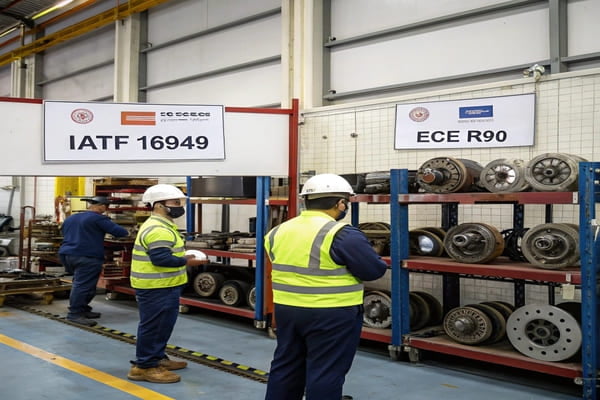
Certifications are not just pieces of paper to hang on a wall. They are a guarantee. They tell you that an independent third party has inspected the factory and confirmed that its processes meet a very high standard. For anyone in the automotive business, these are not optional. They are essential for protecting your business from liability and ensuring market access. For example, if you want to sell in Europe, you absolutely need ECE R908. If you want to be a supplier to major automotive brands, IATF 169497 is the global standard for quality management systems. Choosing a certified supplier means you are choosing a partner who is serious about quality, safety, and consistency. It saves you time and money because you don't have to worry about whether the products will meet legal and performance requirements.
| Certification | What It Guarantees | Why It Matters to You |
|---|---|---|
| IATF 169497 | A strict quality management system for the entire automotive supply chain3. | Ensures process consistency, continuous improvement, and defect prevention. |
| ECE R908 | The European standard for aftermarket brake parts. | Guarantees the brake pads perform within 15% of the original equipment (OE) parts. |
| AMECA | A U.S. standard for performance and safety compliance. | Verifies friction material quality and safety for the North American market. |
What Types of Brake Pad Formulations Should You Consider for Your Fleet or Product Line?
Using the wrong type of brake pad can lead to unhappy customers. It can cause loud noises, excessive dust, poor stopping power, or a short lifespan for the product.
The three main types are Organic (NAO)9, Semi-Metallic10, and Ceramic11. Each is designed for different needs. Understanding them helps you offer the right product for daily drivers, heavy-duty trucks, or performance vehicles12, ensuring customer satisfaction13.
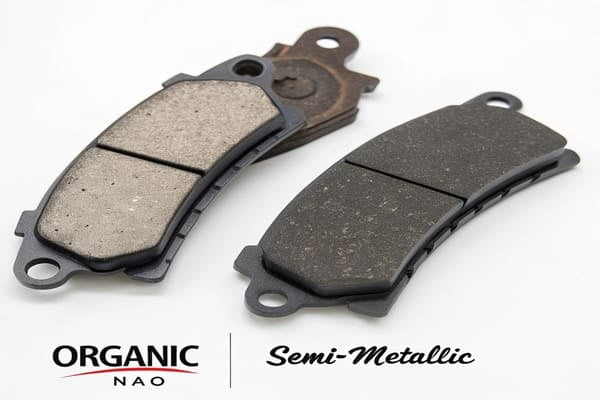
The friction material, or formulation, is the heart of the brake pad. There is no single "best" formula for everyone. The right choice depends on the vehicle, the driving style, and the customer's priorities. As a B2B supplier, we help our clients choose or even develop the perfect formulation for their target market. For example, a customer selling parts for family sedans in a city would likely want a quiet, low-dust ceramic or organic pad. On the other hand, a client supplying parts for work trucks or commercial fleets would need a durable semi-metallic pad that can handle heavy loads and high heat. Offering a range of formulations allows you to meet the needs of a wider customer base. We can work with you to analyze your market and develop custom formulations14 that give you a competitive edge.
| Formulation | Key Features | Performance | Best For |
|---|---|---|---|
| Organic (NAO)9 | Made of non-asbestos organic materials. Soft and quiet. | Good for normal driving, less effective at high heat. | Daily-driven passenger cars. |
| Semi-Metallic10 | Contains 30-65% metal fibers. Excellent heat transfer. | Superior stopping power, can be noisy and dusty. | Trucks, SUVs, performance driving. |
| Ceramic11 | Made of ceramic fibers and non-ferrous materials. | Quiet, very low dust, stable performance across temperatures. | Modern cars, luxury vehicles, daily drivers. |
Conclusion
Choosing the right brake pad manufacturer1 is a critical business decision. It ensures safety, protects your brand, and builds a foundation for long-term success in the competitive automotive market15.
Understanding the qualities of a reliable brake pad manufacturer can help you make informed decisions for your business. ↩
Exploring product safety in automotive parts can help you understand its impact on customer trust and brand reputation. ↩
A strong supply chain is crucial for business success; learn strategies to enhance your supply chain management. ↩
In-house engineering can lead to better product quality and innovation; discover its advantages for manufacturers. ↩
Quality testing ensures safety and performance; learn why it's essential in the manufacturing process. ↩
Understanding friction formulas can help you choose the right brake pads for various applications. ↩
IATF 16949 is crucial for quality management; learn how it benefits automotive suppliers. ↩
Understanding ECE R90 can help you ensure compliance and safety in the European market. ↩
Learn about Organic (NAO) brake pads to determine if they fit your customers' needs. ↩
Semi-Metallic pads offer unique benefits; discover if they are suitable for your product line. ↩
Ceramic brake pads are popular for their performance; explore their advantages for various vehicles. ↩
Choosing the right brake pads for performance vehicles is crucial; learn about the best options. ↩
Customer satisfaction is key to business success; learn strategies to meet customer expectations. ↩
Custom formulations can give you a competitive edge; find out how to develop them effectively. ↩
Staying updated on market trends can help you make informed decisions for your business. ↩