
Choosing a brake pad supplier1 is a critical decision. A poor choice can lead to quality issues and damage your brand. So, let’s identify the market leaders and how to pick the best partner.
The leading brake pad manufacturers in 2025 include Brembo2, Akebono3, and Bosch4, known for their OEM quality5 and innovation. To choose the right one, you must evaluate their manufacturing precision6, material science expertise7, and ability to meet modern performance and EV-specific requirements8 for your business.
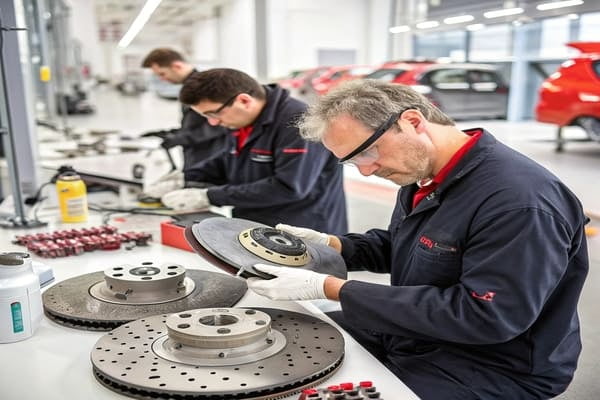
Finding a reliable manufacturing partner is more than just looking at a catalog. You need to understand what happens on the factory floor. The right partner can be the difference between building a trusted product line and dealing with constant customer complaints. It's about finding someone who understands the deep technical challenges of making a truly great brake pad. Let's dig into what really matters when you're making this choice.
What Factors Make a Brake Pad Manufacturer Truly Reliable in 2025?
Many suppliers look great on paper, but their real-world quality can be poor. This inconsistency can seriously hurt your brand reputation. Let's focus on the key factors that signal true reliability.
A reliable brake pad manufacturer in 2025 has advanced production machinery9, strict quality control10 over material mixing and curing, and proven OEM/ODM experience. They ensure consistent performance and safety standards for every single part they produce, which is crucial for your business's success.
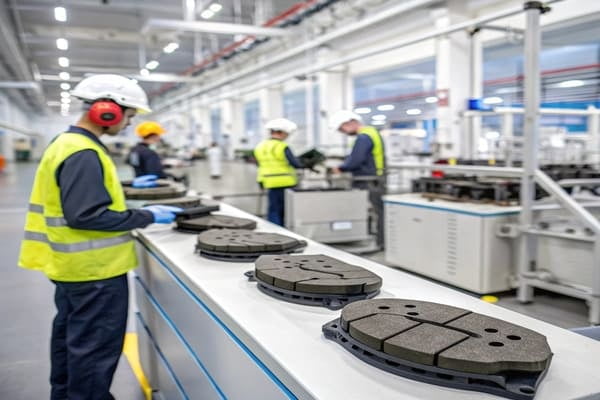
When I first started in this business, I thought making a brake pad was simple. I quickly learned it's one of the most technically demanding processes in automotive parts manufacturing. The precision required is incredibly high, and not just any factory can achieve it. The real signs of a reliable partner are found in their machinery, their processes, and their ability to solve complex problems. It’s about the small details that make a huge difference in the final product.
The Challenge of Precision Machinery
Making brake pads isn't a job for standard equipment. The hot press machines used in the process must meet very high standards of accuracy. The process involves at least three critical stages, but the most difficult one is the high-temperature pressure curing11. During this stage, the machine has to maintain exact pressure and temperature to properly bond the friction materials. This is where a lot of smaller factories fail. In my experience, the factories in the Yangtze River Delta and around Chongqing in China have the advanced machinery to get this right. In contrast, machines from smaller workshops in other regions often lack the required precision.
The Art of Friction Material Mixing
Another major challenge is mixing the friction materials. A brake pad is a complex recipe of over a dozen different ingredients. Getting the ratio of these materials perfect is essential for performance, noise levels, and wear. The problem is that during the mixing process, the machine often has to stop to add different components. When the material bin is opened, it can affect the accuracy of the mix. A top-tier manufacturer has automated systems and strict protocols to minimize these variations. I learned this the hard way on an early project with a German client. We had some issues with "interlayer bonding" after the curing process because our mixing wasn't perfect yet. Luckily, the pads were for heavy commercial vehicles, and the client actually found the characteristic favorable. We got lucky, learned a valuable lesson, and have since perfected our process.
| Reliability Factor | Low-Quality Supplier | High-Quality Supplier |
|---|---|---|
| Machinery | Uses standard, imprecise hot presses. | Invests in high-precision, automated machinery. |
| Curing Process | Inconsistent temperature and pressure. | Strict control over high-temp pressure curing. |
| Material Mixing | Manual or imprecise mixing process. | Automated systems for exact material ratios. |
| Quality Control | Basic checks on final product only. | Multi-stage QC, from raw materials to final part. |
How Is the Global Brake Pad Market Evolving in Performance, Materials, and EV Requirements?
The automotive industry is changing faster than ever. Using outdated brake pad technology can make your products irrelevant and uncompetitive. To stay ahead, you have to understand the key market trends.
The market is shifting towards low-copper or copper-free ceramic and organic materials to meet environmental regulations12 and reduce dust. There is a huge demand for pads that minimize noise, vibration, and harshness (NVH)13. For EVs, the focus is on regenerative braking compatibility14 and high corrosion resistance.
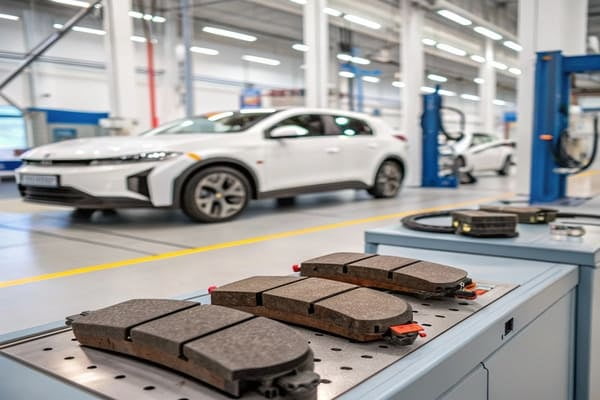
The days of one-size-fits-all brake pads are over. We are now in an era of specialization. Customers expect their daily drivers to be as quiet as a luxury car, and new regulations are pushing for greener materials. The biggest change, of course, is the rise of electric vehicles. EVs have completely different braking needs, and manufacturers who can't adapt will be left behind. As a product developer, this means we have to be constantly innovating to meet these new demands.
Material Innovations and Environmental Standards
For years, semi-metallic brake pads were the standard. They were effective but also noisy, dusty, and contained copper, which is harmful to the environment. Now, the industry is moving towards NAO (Non-Asbestos Organic) and ceramic formulations. These materials offer a much quieter and cleaner braking experience. More importantly, regulations in states like California and Washington are phasing out copper in brake pads. A reliable manufacturer must have the R&D capability to develop effective copper-free formulas15 that still provide excellent stopping power and heat dissipation. This isn't just about compliance; it's about meeting the expectations of the modern consumer.
The Unique Demands of Electric Vehicles (EVs)
Electric vehicles brake differently. They rely heavily on regenerative braking, where the electric motor slows the car down and recharges the battery. This means the traditional friction brakes are used much less frequently. This creates a new problem: rust. Because the pads and rotors aren't used as often, they are more susceptible to corrosion, which can cause noise and performance issues. Furthermore, EVs are incredibly quiet, so any little squeal or grind from the brakes is immediately noticeable. Brake pads for EVs must therefore be formulated for extreme corrosion resistance and ultra-low noise.
| Feature | Traditional ICE Vehicle Brakes | Electric Vehicle (EV) Brakes |
|---|---|---|
| Primary Use | Used frequently for all braking. | Used less often, mainly for hard stops. |
| Key Challenge | Heat dissipation, fade resistance. | Corrosion resistance, noise prevention. |
| Material Focus | Performance and durability under heat. | Quiet operation and long-term rotor protection. |
| Noise (NVH) | Masked by engine noise. | Highly noticeable due to silent powertrain. |
Which Brake Pad Manufacturers Lead the Industry in OEM Quality and Innovation?
You need OEM-level quality to build a successful brand. Partnering with a generic, low-tier supplier can lead to inconsistent products and unhappy customers. Let's look at the manufacturers that set the global standard.
Industry leaders for OEM quality5 include companies like Brembo2, Akebono3, and Bosch4. These manufacturers are known for their extensive R&D, strict quality control10, and deep partnerships with major car brands. They set the benchmark for performance, reliability, and innovation in the braking world.
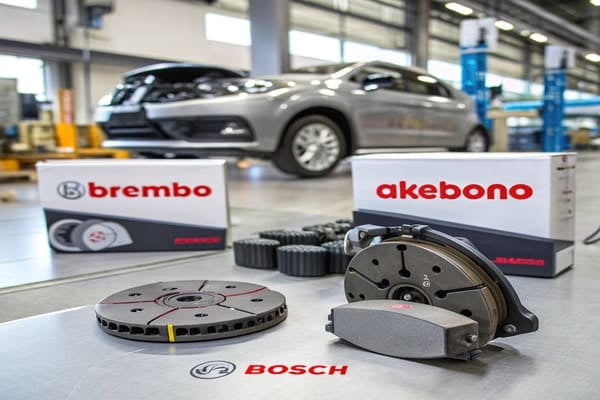
When we talk about OEM quality5, we're talking about a completely different level of manufacturing. These companies don't just produce parts; they are engineering partners with the world's biggest automakers. They are involved in the design process years before a new car model even hits the showroom. This deep integration gives them an unmatched understanding of vehicle dynamics and performance requirements. As an OEM/ODM supplier ourselves, we study these leaders closely to apply the same principles of rigorous testing and forward-thinking design to the custom solutions we develop for our clients.
The Importance of R&D and Rigorous Testing
Top-tier suppliers invest millions in research and development. They don't just copy existing designs; they invent new friction materials and braking technologies. Their facilities include state-of-the-art laboratories where they conduct extensive testing. This includes dynamometer testing16, which simulates thousands of miles of real-world driving conditions in a controlled environment, and fleet testing on actual vehicles. This commitment to R&D ensures that their products not only meet but often exceed the original specifications set by the car manufacturers. This is the standard you should look for in a manufacturing partner.
OEM vs. OES vs. Aftermarket17
It's important to understand the difference between these terms.
- OEM (Original Equipment Manufacturer): This is the company that makes the parts for the car company to install at the factory.
- OES (Original Equipment Supplier): This is often the same OEM company, but they are selling the exact same part in their own branded box instead of the car company's box.
- Aftermarket: These are parts made by other companies to fit a specific vehicle. The quality can range from very poor to better than OEM.
Partnering with a manufacturer that has direct OEM experience is a huge advantage. They understand the strict quality standards, the materials science, and the performance targets required to get a part approved by a major automaker. This expertise carries over to their aftermarket products, ensuring a higher level of quality and reliability for your brand.
| Part Type | Definition | Typical Quality Level |
|---|---|---|
| OEM | Part installed on the new vehicle at the factory. | The benchmark standard set by the automaker. |
| OES | The same OEM part sold by the original maker. | Identical to OEM quality5. |
| Aftermarket | A replacement part made by a different company. | Varies widely, from low-grade to premium. |
Why Do Brembo2, Akebono3, Bosch4, and Other Top Brands Dominate the Market?
It often seems like a few big names are everywhere in the auto parts industry. It can be hard for new or smaller product lines to compete. Let's break down their winning formula.
Top brands dominate because of their consistent quality, massive investment in technology, and strong brand recognition built over decades. Their global manufacturing footprint and deep relationships with automakers create a high barrier to entry for competitors, cementing their leadership position.
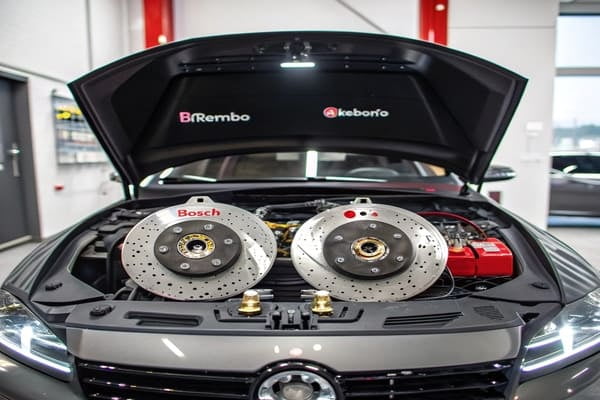
The success of these giants is no accident. It’s the result of decades of relentless focus on engineering, quality, and brand building. They have become synonymous with performance and reliability in the minds of both professional mechanics and everyday consumers. While it's tough to compete with them head-on, understanding their strengths helps us identify opportunities. As a flexible OEM/ODM partner, we can offer custom solutions and direct collaboration that these large corporations often can't, allowing our clients to build their own unique and competitive product lines.
Brembo2: The Performance King
When you think of high-performance brakes, you probably think of Brembo2. Their bright red calipers are a status symbol on sports cars and supercars. They built their reputation in motorsports, from Formula 1 to MotoGP. This association with extreme performance gives their entire product line, including their standard aftermarket pads, an aura of quality and stopping power. Their brand is so powerful that customers are often willing to pay a premium for it.
Akebono3: The OEM Quiet Specialist
Akebono3 is a giant in the OEM world, especially for Japanese and American automakers. They are pioneers in ceramic brake pad technology. Their primary focus is on creating brakes that are incredibly quiet, smooth, and produce very little dust. They master the science of NVH (Noise, Vibration, and Harshness) reduction. For a brand that wants to be known for a comfortable and clean driving experience, Akebono3 sets the standard.
Bosch4: The Engineering Powerhouse
Bosch4 is more than just a parts supplier; they are a global technology and engineering company. Their automotive division is enormous, and they supply everything from fuel injectors to sensors to complete braking systems. Their strength lies in their massive scale, German engineering precision, and a comprehensive product catalog that covers nearly every vehicle on the road. They are a trusted, reliable choice known for consistent quality across a vast range of products.
Conclusion
Choosing the right brake pad manufacturer means looking at their technology, quality control10, and market knowledge. Partnering with an expert ensures your products meet modern demands for safety and performance.
Understanding the key factors in selecting a brake pad supplier can help ensure quality and reliability. ↩
Explore Brembo's innovations and quality standards that set them apart in the automotive industry. ↩
Learn about Akebono's expertise in creating low-noise brake pads and their impact on driving comfort. ↩
Discover Bosch's engineering prowess and how it influences their brake pad quality and performance. ↩
Understanding OEM quality can help you choose reliable brake pad manufacturers for your needs. ↩
Explore the significance of precision in manufacturing for ensuring brake pad performance and safety. ↩
Delve into how material science expertise affects the quality and performance of brake pads. ↩
Learn about the unique demands of electric vehicles and how they influence brake pad design. ↩
Learn about the technology that enhances the precision and quality of brake pad production. ↩
Understanding quality control practices can help ensure consistent brake pad performance. ↩
Explore the critical curing process that affects the quality and durability of brake pads. ↩
Understanding regulations can help you choose compliant and sustainable brake pad options. ↩
Explore the significance of NVH in brake pad design for a comfortable driving experience. ↩
Understanding regenerative braking can help you choose the right brake pads for electric vehicles. ↩
Learn about the benefits of copper-free brake pads in terms of performance and environmental impact. ↩
Explore how dynamometer testing simulates real-world conditions to ensure brake pad reliability. ↩
Understanding these terms can help you make informed decisions when selecting brake pads. ↩