
Finding a reliable brake pad manufacturer1 is tough. The wrong choice can lead to safety issues and lost business, but understanding the market leaders makes the process much simpler.
The world's leading brake pad manufacturer1s are concentrated in China2, Germany3, Japan4, and the USA5. The "right" one for you depends on your business model (OEM6, aftermarket7, private label8) and target vehicle. Choosing correctly means matching a factory's specialty with your specific quality and certification9 needs.

Choosing a supplier can feel like navigating a maze. There are so many options, from giant global brands to smaller, specialized factories. It's easy to get lost. But if you break the problem down, you can find a partner that fits your needs perfectly. I've spent years in this business, and I'm here to share what I've learned to help you make a confident and profitable choice. Let's walk through it step by step.
What Does “Brake Pad Manufacturer” Mean for OEM6, Aftermarket, and Private Label Buyers?
The term "manufacturer" gets used loosely. This can cause you to partner with a simple trader instead of a true factory, creating quality control10 and supply chain nightmares.
An OEM6 (Original Equipment Manufacturer) makes parts for new cars. An aftermarket7 manufacturer produces replacements for existing vehicles. A private label8 manufacturer, like us, produces parts for another company to sell under its own brand. Understanding these distinctions is key to finding the right partner.
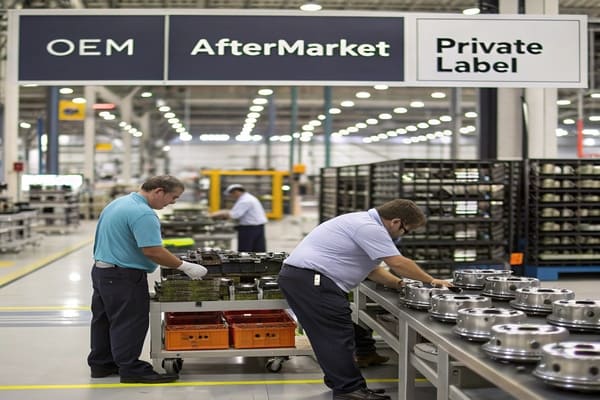
When you're sourcing11 brake pads, the type of manufacturer you partner with defines the entire relationship. Each category serves a different purpose and operates under different rules. As an OEM6/ODM supplier, I've worked across these models, so I understand the nuances. Getting this right from the start saves a lot of headaches later on.
OEM6: The Original Standard
OEM6 manufacturers work directly with car companies like Ford or Toyota. Their products are installed on vehicles at the assembly plant. This requires passing extremely strict audits and long validation processes. The focus is on perfect integration and meeting the carmaker's exact specifications for performance12, noise, and lifespan.
Aftermarket: The Replacement Market
Aftermarket manufacturers produce parts for sale after the car is sold. Their goal is to offer a replacement that is as good as, or sometimes better than, the original. This market is huge and diverse, with brands offering everything from budget-friendly options to high-performance12 upgrades. Success here depends on broad vehicle coverage and meeting regional quality standards.
Private Label: Your Brand, Our Factory
This is where we specialize. A private label8 or ODM (Original Design Manufacturer) partnership allows you to launch your own brand of brake pads without building a factory. We handle the engineering13, production, and quality control10 based on your requirements. This gives you control over your brand and product specifications, with the backing of an experienced manufacturing partner.
| Manufacturer Type | Primary Customer | Key Focus | Our Role |
|---|---|---|---|
| OEM6 | Automakers (e.g., VW, GM) | Strict adherence to vehicle specs | We can be a Tier 2/3 supplier. |
| Aftermarket | Distributors, Retailers | Broad compatibility, cost-effectiveness | We supply to major aftermarket7 brands. |
| Private Label (ODM) | Brands, Importers | Custom specifications, branding | This is our core service. |
Which Countries Dominate Global Brake Pad Manufacturing Today?
You know you need a global supplier. But different regions offer vastly different levels of quality, cost, and specialization, making the choice overwhelming. Let’s look at the key hubs.
China2, Germany3, Japan4, and the USA5 are the dominant forces. China2 leads in volume and flexible OEM6/ODM production. Germany3 and Japan4 are known for premium OEM6 quality and performance12. The USA5 has a very strong aftermarket7 presence. Your choice depends entirely on your market and quality goals.
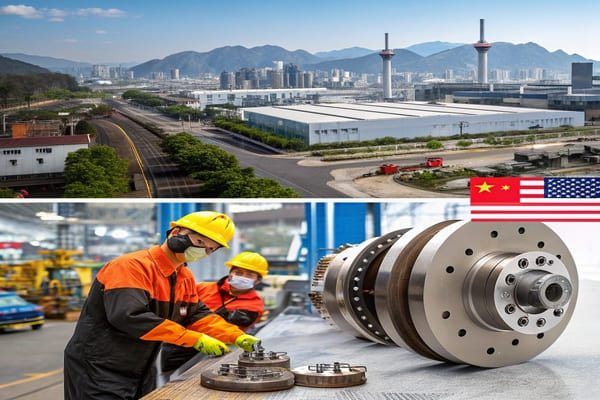
Over my years in this industry, I've sourced from and competed with factories all over the world. Each region has its own personality and strengths. A buyer looking for high-volume, cost-effective parts for a private label8 will have a very different "best" country than a brand focused on ultra-high-performance12 racing pads. Understanding these differences is the first step to building a successful supply chain.
China2: The World's Factory
China2 is the undisputed leader in manufacturing volume. But "Made in China2" is not a single category. You have small, uncertified workshops, and you have world-class, certified factories. From my experience, the top-tier manufacturers are concentrated in coastal areas like Fujian and the region around Shanghai. These are the factories that have mastered the most difficult production steps, like the precise mixing of friction materials14 and advanced hot-press molding. They supply global brands and are fully capable of meeting international standards.
Germany3 & Japan4: The Quality Benchmarks
German and Japan4ese manufacturers are legendary for their engineering13 and precision. Brands from these countries often set the global standard for OEM6 quality and high-performance12 aftermarket7 parts. They invest heavily in R&D and materials science. Partnering with them usually means higher costs, but it provides a benchmark for quality that is recognized worldwide.
USA5: A Powerful Aftermarket
The US has a mature and powerful automotive aftermarket7. American manufacturers are masters of branding, distribution, and meeting the specific needs of North American vehicles, like trucks and SUVs. They are deeply integrated into the local supply chain and are trusted by mechanics and consumers alike for their reliability and adherence to safety standards15 like the FMVSS.
| Country | Specialty | Average Cost | Key Strengths |
|---|---|---|---|
| China2 | OEM6/ODM, Private Label, Volume | Low to Medium | Flexibility, Scalability, Cost-Effectiveness |
| Germany3 | High-Performance, Premium OEM6 | High | Engineering, Brand Prestige, Material Science |
| Japan4 | OEM6, High-Reliability Aftermarket | Medium to High | Quality Control, Efficiency, Low-Noise Tech |
| USA5 | Aftermarket, Trucks & Heavy Duty | Medium to High | Distribution, Brand Trust, Market Specificity |
Who Are the Major Brake Pad Manufacturers in the USA5 and Why Are They Trusted?
The US market has specific demands and trusted brands. Ignoring these established players can make it difficult to gain market share16 or meet local expectations for quality and performance12.
Major players with a strong US presence include Brembo, Akebono, Federal-Mogul (Wagner), and Carlisle. They are trusted for their extensive R&D, rigorous testing to meet federal safety standards15, and deep roots in the North American OEM6 and aftermarket7 supply chains.
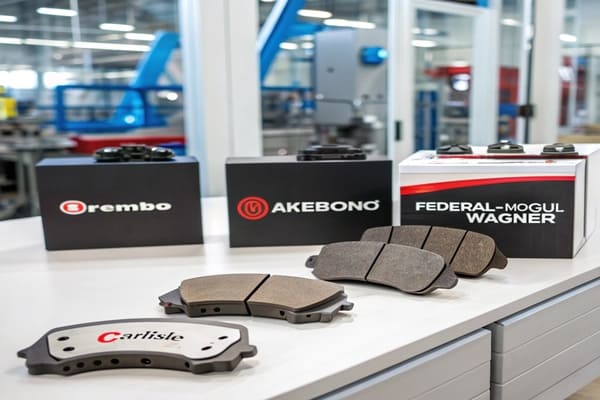
If you want to sell in the United States, you have to understand the landscape. It's not enough to just have a good product; you have to compete with brands that have been trusted by mechanics and drivers for generations. These companies have built their reputations over decades, and they set the standard for what American consumers expect from a safety-critical component like brake pads.
The Giants of the Aftermarket
Brands like Wagner (from Federal-Mogul) are household names in the US aftermarket7. They have built immense trust through decades of consistent quality, wide availability through national distributors, and product lines that cater to virtually every car on the road. Their marketing and mechanic training programs have made them a default choice for many repair shops.
The OEM6 Suppliers
Companies like Akebono (originally Japan4ese) and Brembo (Italian) are major OEM6 suppliers to automakers in the US. Akebono, for instance, is famous for its ceramic brake pads that are factory-installed on many American, Japan4ese, and Korean cars. This OEM6 presence gives them incredible credibility in the aftermarket7, as consumers often want to replace their pads with the exact same brand that came with the car.
What Builds Trust?
Trust in the US market is built on a few key pillars. First is compliance with Federal Motor Vehicle Safety Standards (FMVSS). These are not optional. Second is consistent, reliable performance12 backed by strong warranties. Finally, a robust distribution network17 is critical. A mechanic needs to be able to get the part the same day. These established players excel at all three, which is why they are so hard to compete against without a solid strategy. As a private label8 partner, we help new brands enter this market by ensuring their products meet these same high standards from day one.
Which Brake Pad Manufacturers Serve Passenger Cars, Trucks, and Commercial Vehicles?
You need brake pads for a specific vehicle type. But a manufacturer great for passenger cars might produce terrible truck brakes, leading to dangerous failures and a damaged reputation.
Most manufacturers specialize. For instance, brands like Akebono and TRW focus heavily on passenger cars. In contrast, companies like Haldex and Meritor are leaders in heavy-duty18 commercial vehicles. Choosing a manufacturer with proven expertise in your target vehicle segment is critical for safety and performance12.
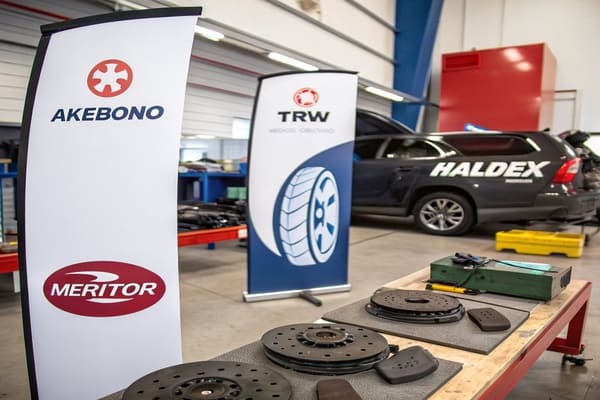
You can't use a one-size-fits-all approach with brake pads. The physics are completely different. A brake pad for a small sedan is designed for low noise and smooth stops. A pad for a heavy-duty18 truck must withstand immense heat and pressure while hauling 80,000 pounds. Using the wrong one is not just a mistake; it's dangerous.
Matching Pads to Purpose
The most difficult part of sourcing11 is matching the product to the application19. This goes beyond just the vehicle model. You have to consider the use case. Is it for a daily commuter car that needs quiet operation? Or a work truck that needs maximum stopping power and durability? The friction material, backing plate design, and even the manufacturing process must be tailored to that specific job. A good manufacturer will ask these questions and guide you to the right formulation.
The Challenge of Certification
Once you know the use case, you have to match it with the right certification9s. This is where many buyers get stuck. You have to cross-reference international standards (like ECE R90) with domestic ones, and then map those to the specific vehicle and its intended environment. It’s a complex process. You have to open up the certification9 databases and carefully check that the supplier's product is compliant for your target market and vehicle. This requires precision and can be a point of failure in the sourcing11 process.
A Personal Lesson in Matching
I learned this lesson the hard way. Early in my career, I worked with a client from Pakistan to source a container of brake pads. I was less experienced then. After delivery, the client reported that the pads showed significant "heat fade20" under heavy use. I was worried, but it turned out to be a lucky break. His customers used the vehicles for low-speed city commuting, and they actually preferred the softer pedal feel. The project was a success, but I knew I had dodged a bullet. That experience taught me to never leave things to chance. Now, our process for matching a pad to its exact application19 is incredibly rigorous. It was a close call that I've never forgotten and a mistake I have not made since.
Conclusion
Choosing the right brake pad manufacturer1 is not about finding the single "best" factory. It's about finding the best partner for your specific market, vehicle application19, and business model.
Explore this link to find trusted brake pad manufacturers that meet your quality and safety standards. ↩
Explore China's manufacturing capabilities and how they can benefit your sourcing needs. ↩
Learn about the engineering excellence of German manufacturers and their premium products. ↩
Find out how Japanese manufacturers maintain high standards in brake pad production. ↩
Explore the major players in the US market and their trusted products. ↩
Understanding OEM can help you choose the right manufacturer for your vehicle parts. ↩
Learn about the aftermarket and how it affects your brake pad sourcing decisions. ↩
Discover how private label partnerships can help you launch your own brake pad brand. ↩
Learn about the certification process and its importance in brake pad manufacturing. ↩
Discover the importance of quality control in ensuring safe and effective brake pads. ↩
Explore best practices to ensure you choose the right brake pad manufacturer. ↩
Explore the key factors that influence the performance of brake pads in various applications. ↩
Explore the role of engineering in creating high-performance brake pads. ↩
Learn about different friction materials and their impact on brake pad performance. ↩
Understanding safety standards is crucial for ensuring the reliability of your brake pads. ↩
Discover strategies to effectively compete in the brake pad market. ↩
Learn how a strong distribution network can affect your brake pad supply chain. ↩
Find out which manufacturers specialize in heavy-duty brake pads for trucks and commercial vehicles. ↩
Learn how to select the right brake pads based on specific vehicle applications. ↩
Understand the concept of heat fade and its implications for brake pad performance. ↩