
Are you struggling to find reliable data on Tesla's suppliers1? Using inaccurate information leads to bad sourcing decisions. This guide breaks down the complex supply chain2 for you.
To truly understand Tesla's supply chain2, buyers must look beyond public lists. It involves a mix of in-house manufacturing3 for core tech and outsourcing to Tier-1 giants4 like CATL5, Bosch6, and ZF7. Verification requires deep industry-specific data, not just scattered online information.
Navigating Tesla's supply chain2 is more than just collecting a list of names. It’s about understanding the relationships, the tiers, and the logic behind each partnership. For any business looking to engage with this ecosystem, whether as a partner or a competitor, this understanding is critical. Let's start by defining what being a "Tesla supplier" really means for different types of buyers.
What Does “Tesla Parts Supplier” Mean for OEM, Tier-1, and Aftermarket Buyers?
The term "Tesla supplier" causes a lot of confusion. This ambiguity can lead you to source from the wrong type of partner, wasting time and money. Let's clarify this.
For OEM/Tier-1 buyers8, a "Tesla supplier" is a direct partner like CATL5 or Bosch6. For aftermarket buyers9, it’s often a company making "Tesla-compatible" parts, which may not be a direct OEM supplier. Knowing this difference is crucial for quality and compliance.
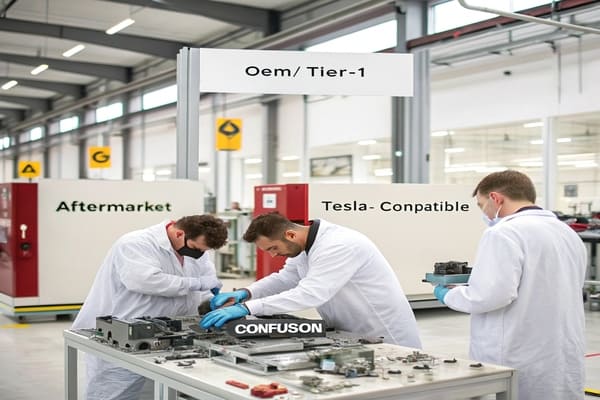
When we talk about suppliers, we can't treat them all the same. The term is too broad and can be misleading. For a professional buyer, breaking it down by tier is the only way to get a clear picture. I learned this early on when helping clients navigate the automotive parts landscape10. A company might proudly state they are a "Tesla supplier," but what they supply could be a simple fastener, not a complex electronic module. This distinction is everything. For your business, understanding these roles helps you find the right partner and avoid costly mistakes.
Supplier Tiers and Their Roles
| Supplier Type | Description | What It Means for Buyers |
|---|---|---|
| Tier-1 OEM Supplier | Directly supplies finished components or systems to Tesla's assembly line (e.g., Bosch6 for steering systems). | These are major, established corporations. Partnering with them is difficult unless you are a large-scale material or sub-component provider. |
| Tier-2/3 Supplier | Supplies parts or raw materials to Tier-1 suppliers, not directly to Tesla. | These are often specialized manufacturers. They represent opportunities for businesses that can provide specific materials, processing, or sub-components. |
| Aftermarket Supplier | Manufactures parts for Tesla vehicles after they are sold. These parts are not used in the factory. | This is a huge market for wholesalers, distributors, and e-commerce sellers. Quality and compatibility are key, but the barrier to entry is lower than OEM. |
Which Tesla Components Are Manufactured In-House Versus Outsourced?
Tesla's vertical integration11 blurs the line between making and buying parts. Not knowing this difference can make it hard to spot real sourcing opportunities for your business.
Tesla manufactures core items like battery packs12 (with sourced cells), motors, and seats in-house. It outsources battery cells (CATL5, Panasonic), infotainment chips (AMD), braking systems (Brembo), and many structural parts. This strategy gives them control over key technology.
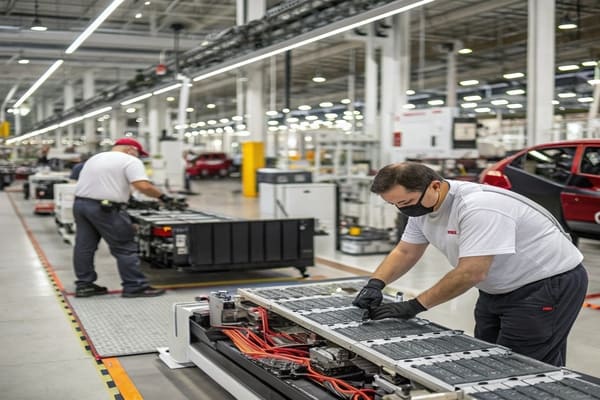
Tesla's approach to manufacturing is unique. The company is famous for its "first principles" thinking, which often leads them to bring production in-house if they believe they can do it better or cheaper. This is called vertical integration11. However, they can't do everything. They still rely on a massive global network of suppliers for thousands of parts, from simple screws to highly advanced microchips. Understanding this balance is the first step to identifying where the real business opportunities lie. For a potential supplier or a buyer, your opportunity isn't to compete with what Tesla does in-house, but to fill the gaps where they choose to outsource.
In-House vs. Outsourced Breakdown
| Component Category | Primarily In-House (Made by Tesla) | Primarily Outsourced (Bought from Suppliers) |
|---|---|---|
| Powertrain | Electric motor, gearbox, inverter assembly, battery pack assembly. | Battery cells, raw materials (magnets, copper wiring), some power electronics. |
| Chassis & Body | Some body stampings and structural castings (Giga Press). | Most suspension components, braking systems, glass, tires, body panels. |
| Electronics | Full Self-Driving (FSD) computer, vehicle control software. | Infotainment processors (AMD), sensors (Bosch6), displays, basic controllers. |
| Interior | Seats (for most models), some interior trim. | Airbags, steering wheels, carpets, lighting, most plastic components. |
Who Are Tesla’s Confirmed Tier-1 Parts Suppliers by Component Category?
Trying to find a verified list of Tesla's Tier-1 suppliers is incredibly difficult. Relying on rumors or old news can lead you to waste time contacting the wrong companies.
Key Tier-1 suppliers include CATL5 and Panasonic (batteries), Bosch6 (sensors), ZF7 (safety systems), Brembo (brakes), and Gentex (mirrors). This list is always changing by model and region, so it needs constant verification from industry-specific channels.
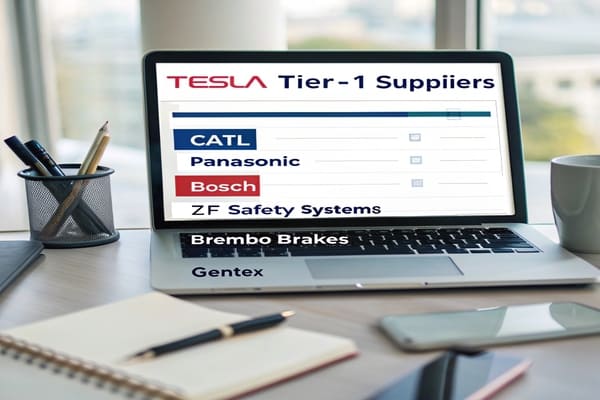
The difficulty in confirming Tesla's supply chain2 is extremely high. Standard information channels just don't provide the depth or accuracy required. When my team and I vet suppliers for clients, we use a three-step verification process13. The hardest step is always validating the core supplier's qualifications. You simply can't get this level of accuracy from a quick online search. The best information comes from industry platforms and networks located in the core industrial zones, like the Yangtze River Delta and the area around Shenzhen in Guangdong. These regional hubs are where the real deals are made and where the most reliable data lives.
Key Tier-1 Suppliers (Examples)
| Component Category | Confirmed Tier-1 Supplier(s) | Notes |
|---|---|---|
| Electronics & ADAS | Bosch6, Continental, Aptiv, NXP, AMD | This is one of the most complex areas, with dozens of suppliers for sensors, chips, and modules. |
| Interior | Yanfeng, Faurecia, Gentex | Includes dashboards, door panels, center consoles, and auto-dimming mirrors. |
| Chassis & Brakes | Brembo, Mando, ThyssenKrupp | Tesla uses high-performance brakes from Brembo on performance models and systems from others on standard models. |
| Body & Exterior | Magna Steyr, Sika AG | Includes contract manufacturing support, structural adhesives, and other materials. |
This table is just a starting point. The real work is in continuous verification and understanding the specific role each supplier plays for each specific vehicle model.
Which Battery, Powertrain, and Thermal System Suppliers Support Tesla Production?
The core of any Tesla is its battery and powertrain14. Understanding who supplies these critical parts is the key to understanding Tesla's entire manufacturing and business strategy.
Essential suppliers include CATL5, Panasonic, and LG for battery cells. While Tesla assembles its own powertrain14, it relies on many sub-suppliers for materials. Thermal systems involve partners like Hanon Systems and Modine for components integrated into Tesla's unique designs.
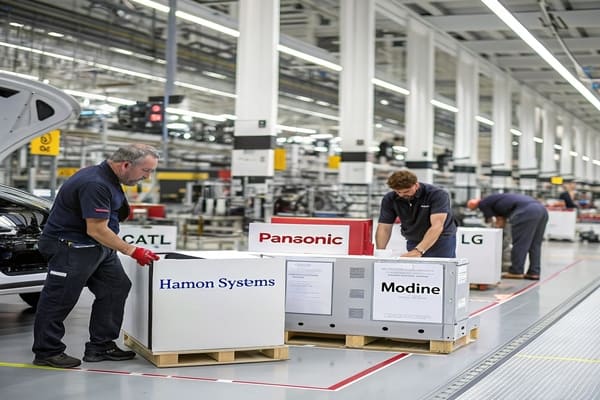
Understanding Tesla's supply chain2 gets even more complex when you look at its core technology. The hardest part for most buyers to grasp is the supply-and-demand synergy15. When you try to break down this logic, you have to pause your information gathering and look at the supply chain2 hierarchy map. This can make it hard to maintain a clear picture. For example, knowing that CATL5 supplies LFP batteries is just one piece of the puzzle. The deeper insight is understanding why Tesla chose them for its China-made models—it was about cost, local production, and securing a massive supply of a specific battery chemistry. This "why" is more important than the "who."
I learned this lesson the hard way. The first time I did a supply chain2 investigation for a client from Pakistan, my team and I didn't have enough experience. Our initial report had what I thought were "information deviations." We presented a mix of Tier-1 suppliers and high-quality aftermarket manufacturers. To my surprise, the client was thrilled. His goal was to source high-potential aftermarket products, not compete for an OEM contract. The "inaccurate" data was exactly what he needed. This taught me to always clarify the buyer's goal first. It determines which part of the supply chain2 map we need to focus on.
Conclusion
Understanding Tesla's supply chain2 requires deep, verified industry research. To find real opportunities, you must look beyond public lists and focus on specific supplier tiers and component categories16.
---Explore this link to gain insights into Tesla's supplier network and ensure accurate sourcing. ↩
Understanding Tesla's supply chain can help you navigate sourcing decisions effectively. ↩
Learn about Tesla's in-house manufacturing to understand their production strategy better. ↩
Discover the major Tier-1 suppliers to Tesla and their roles in the supply chain. ↩
Find out how CATL contributes to Tesla's battery supply and overall production. ↩
Explore Bosch's involvement in Tesla's supply chain for critical components. ↩
Learn about ZF's contributions to Tesla's safety systems and their importance. ↩
This resource will clarify the distinctions important for OEM/Tier-1 buyers. ↩
Explore the aftermarket landscape for Tesla parts to make informed sourcing decisions. ↩
Gain insights into the automotive parts landscape to make informed sourcing decisions. ↩
Learn how vertical integration impacts Tesla's manufacturing and sourcing strategies. ↩
Discover the manufacturing process of Tesla's battery packs for better insights. ↩
Understanding the verification process can help you identify reliable suppliers. ↩
Understanding Tesla's powertrain components can help you identify sourcing opportunities. ↩
Explore the concept of supply-and-demand synergy to understand Tesla's sourcing logic. ↩
Learn about the various component categories to better navigate Tesla's supply chain. ↩