
Are you confused about what brake linings1 are actually made of? Choosing the wrong type can affect safety and performance. I will explain the materials that stop your car.
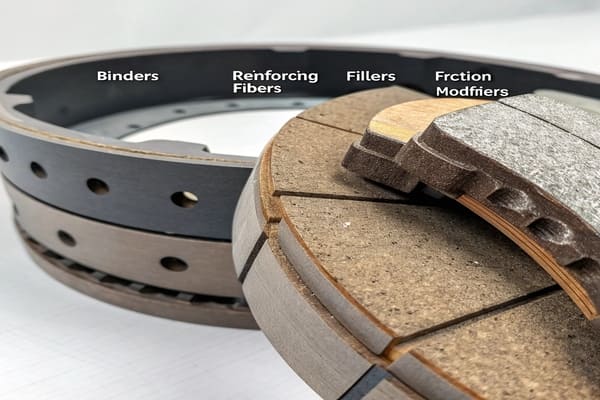
Brake linings are not made from a single material. They are a complex composite formula. The main components are binders (like phenolic resin2), reinforcing fibers3 (like aramid or glass), fillers, and friction modifiers4 that control performance.
Understanding these materials is key for any automotive parts business. It's a topic I've spent years mastering, especially when developing custom solutions for clients. The science behind stopping a two-ton vehicle safely is fascinating and complex. Let's break down what goes into these critical components so you can make more informed decisions for your product line.
What material is used for brake linings1?
Do you find the composition of brake linings1 a mystery? Using a poor-quality formula can lead to brake fade and failure. I will clarify the key ingredients for you.
Brake linings use a friction material formula. This includes a binder like phenolic resin2 to hold everything together, reinforcing fibers3 for strength, and various fillers and friction modifiers4 to achieve specific performance goals like quietness or high-temperature stability.
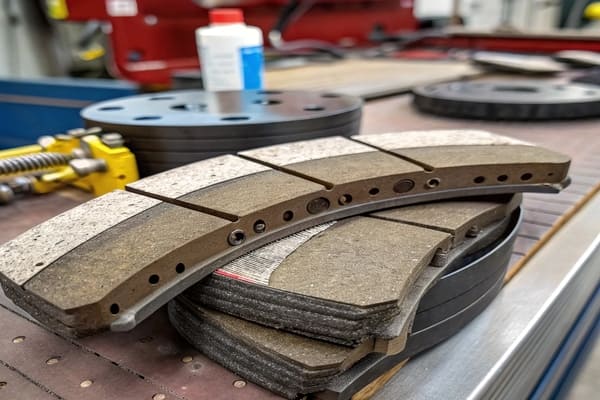
Let's dive deeper into the formula. Think of it like a recipe where every ingredient has a specific job. Getting the balance right is extremely difficult and is the core of brake manufacturing5. Standard material production lines just can't achieve the friction stability needed for a reliable brake lining. The process requires highly specialized equipment.
The main components are:
- Binders: These are typically thermosetting resins, like phenolic resin2. Their job is to hold all the other ingredients together in a solid block. The process of heat-pressing and curing this resin is the most difficult and critical step in production.
- Reinforcing Fibers: These provide structural integrity and strength. Common materials include aramid, glass, or mineral fibers. They prevent the pad from crumbling under pressure.
- Fillers: These are cheaper materials, like barium sulfate, that add bulk and help reduce manufacturing costs. They also can help modify certain characteristics of the pad.
- Friction Modifiers: This is a huge category of materials, including graphite, metal sulfides, and more. They are added to control the friction coefficient, reduce noise, and manage wear.
| Component | Primary Material | Main Function |
|---|---|---|
| Binder | Phenolic Resin | Holds the pad together |
| Reinforcing Fiber | Aramid, Glass, Steel | Provides structural strength and integrity |
| Filler | Barium Sulfate | Adds bulk, reduces cost, modifies properties |
| Friction Modifier | Graphite, Metal Dust | Controls friction, noise, and heat generation |
What material is used for brake lines6?
Are you worried about your brake lines6 failing? A leak in a brake line means a complete loss of braking power, which is extremely dangerous. I'll explain the materials that prevent this.
Brake lines are very different from brake linings1. Rigid brake lines6 are made from double-walled steel tubing7 with a protective coating. Flexible brake hoses that connect to the wheels are made from reinforced synthetic rubber or braided stainless steel8.
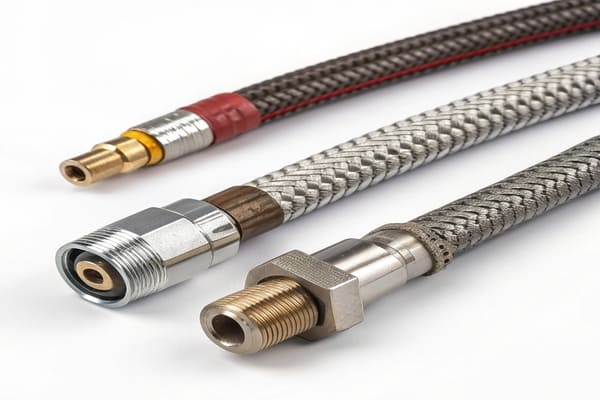
It's a common point of confusion, but "lines" and "linings" are completely different parts of the brake system. The lines are the pipes and hoses that carry hydraulic fluid under immense pressure. The linings are the friction material on the pads that press against the rotor. The materials for brake lines6 must be incredibly strong and durable to handle the pressure and resist corrosion.
There are two main types of brake lines6 on a vehicle:
Hard Lines
These are the rigid metal tubes that run along the car's frame and underbody. They are typically made from double-walled steel because it is strong, durable, and can withstand the very high hydraulic pressures of the brake system without expanding. To prevent rust, these steel lines are coated with a protective layer, often zinc or a Polyvinyl Fluoride (PVF) coating.
Flexible Hoses
These are used at the ends of the system to connect the hard lines to the brake calipers at the wheels. This flexibility is necessary to allow for the movement of the suspension and steering. Standard hoses are made from EPDM synthetic rubber9 reinforced with fabric braiding. For better performance, many people upgrade to stainless steel braided hoses, which have a Teflon (PTFE) core surrounded by a weave of stainless steel. This prevents the hose from swelling under pressure, giving the brake pedal a firmer, more responsive feel.
| Feature | Standard Rubber Hose | Braided Stainless Steel Hose |
|---|---|---|
| Pedal Feel | Softer, can be spongy | Firmer, more responsive |
| Pressure Swell | Some swelling | Almost zero swelling |
| Durability | Good | Excellent, resists abrasion |
| Cost | Lower | Higher |
What material is commonly used for brake pads?
Are you overwhelmed by the different types of brake pads on the market? Choosing between organic, semi-metallic, and ceramic can be confusing, but it directly impacts your braking experience.
The most common brake pad materials10 are grouped into three main categories: Non-Asbestos Organic (NAO)11 or Organic, Semi-Metallic, and Ceramic. Each uses a unique friction formula to deliver different levels of performance, noise, dust, and durability.
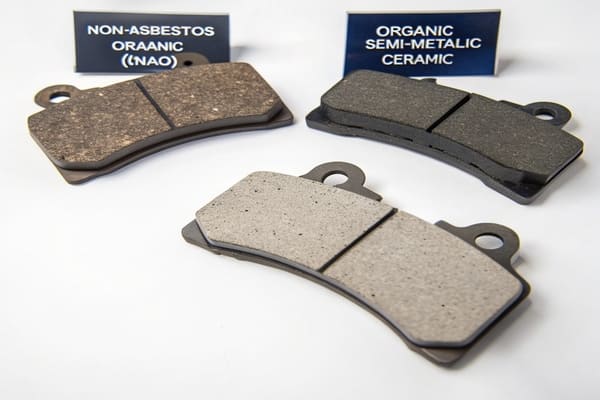
While we call them by a single name, like "ceramic," remember that they are all composite materials. The name just refers to the primary ingredient in the friction formula. As a manufacturer, we adjust these formulas constantly to meet the specific demands of different vehicles and customer preferences. It's a delicate balancing act.
Here’s a breakdown of the common types:
Organic Brake Pads (NAO)
These are made from a mix of fibers and materials like rubber, glass, and Kevlar, all held together with resin. They are the softest and quietest type of pad. They are gentle on brake rotors but wear out faster and don't perform as well under extreme heat. They are a great choice for daily driving in normal conditions.
Semi-Metallic Brake Pads
These pads contain a high percentage of metal, typically between 30% and 70%, including steel, iron, or copper. This metal content makes them very durable and excellent at transferring heat away from the rotor. This makes them great for performance and heavy-duty applications. The trade-off is that they can be noisier, produce more brake dust12, and cause more wear on the rotors.
Ceramic Brake Pads
These are made from a dense ceramic material mixed with embedded copper fibers. They are very quiet, produce a fine, light-colored dust that doesn't stick to wheels, and are very stable across a wide range of temperatures. They also last a long time and are gentle on rotors. Their main disadvantage is that they are the most expensive option.
| Pad Type | Noise Level | Dust Level | Lifespan | Performance | Cost |
|---|---|---|---|---|---|
| Organic | Very Low | Low | Shorter | Good (Normal) | Low |
| Semi-Metallic | High | High | Long | Excellent (Heavy) | Medium |
| Ceramic | Very Low | Very Low | Longest | Excellent (Stable) | High |
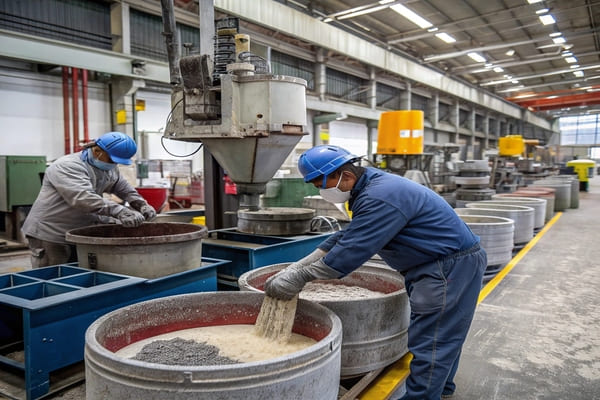
This process, especially the hot-pressing and curing13 stage, is where the magic happens. It’s also the hardest part to get right. The precision of the machinery is everything. In my experience, the production lines with the highest accuracy are often found in coastal regions like Fujian or near major industrial hubs like Shanghai. Equipment from other regions sometimes struggles to meet the tight tolerances needed for consistent performance.
One of the biggest challenges in R&D is adjusting the formula for different vehicle models. Changing the metal content or the ratio of friction particles requires stopping the production tests to analyze material wear data. This back-and-forth can make it difficult to maintain perfect formula stability. I learned this the hard way. I remember the first time I worked on a custom formula for a client from Pakistan. We were still new to this level of customization. The final brake pads were much dustier than we intended, but they had an incredibly sharp and responsive bite. I was nervous about the client's reaction. To my surprise, he absolutely loved that aggressive feel. It was a powerful lesson that the "perfect" brake pad is different for every market and every driver.
Conclusion
Brake linings are not one material but a complex composite. The right blend of binders, fibers, and modifiers, manufactured with precision, is essential for creating safe and effective brakes.
Explore the composition of brake linings to understand how they impact vehicle safety and performance. ↩
Learn about phenolic resin's role in brake linings and its importance in ensuring safety and durability. ↩
Discover how reinforcing fibers enhance the strength and integrity of brake linings. ↩
Understand the role of friction modifiers in controlling brake performance and reducing noise. ↩
Explore the challenges faced in brake manufacturing and how they are overcome. ↩
Find out the materials that ensure brake lines are strong and durable for safe braking. ↩
Learn why double-walled steel tubing is essential for the safety and reliability of brake lines. ↩
Learn how braided stainless steel hoses improve brake performance and durability. ↩
Discover the benefits of EPDM synthetic rubber in enhancing the performance of brake hoses. ↩
Discover the various brake pad materials and how they affect braking performance. ↩
Understand the benefits and characteristics of NAO brake pads for everyday driving. ↩
Discover the sources of brake dust and ways to reduce its impact on your vehicle. ↩
Understand the critical manufacturing processes that ensure the quality of brake pads. ↩