
Sourcing auto parts1 for the US? The wrong supplier can cause massive delays and compliance2 headaches. Let's look at the top countries to build a reliable and efficient supply chain3.
The United States imports auto parts1 from a global network of suppliers. The primary sources are Mexico4, China5, Canada, Japan, and Germany, thanks to their strong manufacturing capabilities and experience with US market regulations like DOT certification6.
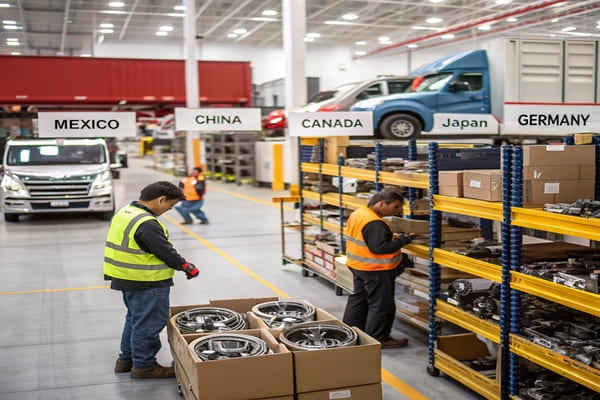
Knowing the top countries is just the start. To make smart sourcing decisions for your business, you need to understand the specific roles these countries play in the global auto parts1 supply chain3. Let's break down the details to help you find the perfect partner.
Where does the US import auto parts1 from?
Trying to map out your global sourcing strategy? Choosing a supplier from the wrong region can lead to unexpected costs and logistical problems. Here’s a clear breakdown of the key players.
The US sources auto parts1 globally, with Mexico4 leading due to its proximity and trade agreements. Key Asian partners include China5 for its vast production scale, and Japan and South Korea for their high-tech components and OEM expertise7. Canada and Germany are also major European suppliers.
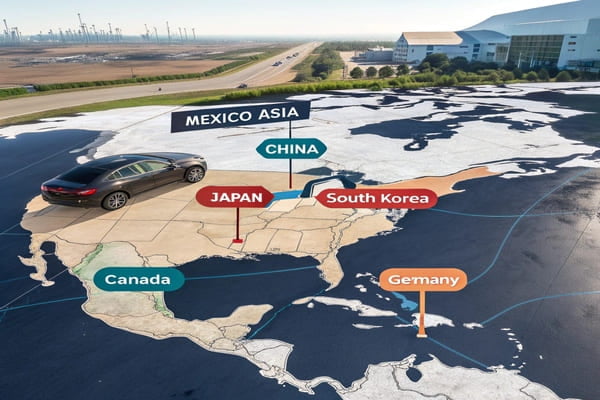
The sources for US auto parts1 are not all the same. Each country has a specific strength. Mexico4 benefits greatly from the USMCA8 trade agreement, making it a top choice for parts used in new vehicle assembly. This simplifies logistics9 and reduces tariffs. Asian countries are powerhouses for different reasons.
Key Import Regions and Their Specialties
China5 offers unmatched production scale for a wide variety of aftermarket parts10. South Korea is a leader in automotive electronics and high-quality components. Japan is known for its precision engineering. Then you have Europe, with Germany leading in performance and luxury vehicle components. Understanding these specialties is key to finding the right partner for your specific needs.
| Country/Region | Primary Strength | Common Parts |
|---|---|---|
| Mexico4 | USMCA8 Integration & Proximity | Wiring harnesses, seats, engine parts |
| China5 | Manufacturing Scale & Diversity | Aftermarket accessories, lighting, electronics |
| Japan/S. Korea | High-Tech, OEM Quality | Transmissions, electronics, sensors11 |
| Germany | Performance & Precision Engineering | Brakes, suspension, engine components |
This breakdown helps you target your search for a supplier more effectively.
Which country exports the most car parts?
Want to partner with the biggest player in the auto parts1 game? Sourcing from smaller markets might limit your options and increase your costs. Let's pinpoint the world's number one exporter.
On a global scale, China5 stands as the largest exporter of automotive parts. Its immense manufacturing capacity, extensive supply chain3, and competitive pricing enable it to supply a vast array of components to both original equipment manufacturers (OEMs) and the aftermarket sector across the world.
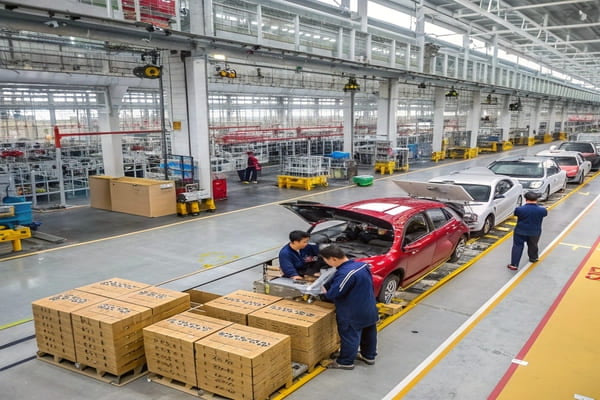
China5's position as the top global exporter isn't an accident. It's the result of decades of investment in manufacturing infrastructure. This allows for what we call "supply chain3 clustering," where everything from raw materials to final assembly happens in close proximity. This drastically reduces costs and production time for us as manufacturers. However, this scale comes with a major challenge for importers: compliance2.
Navigating a Large-Scale Market
Not all factories in a massive market like China5 can meet strict US standards like DOT and FMVSS. As a manufacturer and exporter, we spend a huge amount of our resources on product safety testing and DOT certification6 (filing). This is a critical and expensive step that many smaller producers simply cannot afford. It is the single most difficult part of the process. This is why it's vital to partner with an experienced supplier who already understands the complex regulatory landscape of the US market. The scale is an advantage only if the quality and compliance2 are guaranteed.
Which countries export most to the USA?
Sourcing specifically for the American market? The top global exporter isn't always the top supplier to the US. Let's look at the countries that dominate US auto part imports.
Mexico4 is the single largest exporter of auto parts1 to the United States. Its close proximity and the USMCA8 trade agreement make logistics9 seamless for North American vehicle production. Following Mexico4 are China5, Canada, Japan, and Germany, who also hold significant shares of the US import market.
The list of top exporters to the US is shaped by trade policy and logistics9. Mexico4's top spot is directly tied to the highly integrated North American auto industry. Parts can cross the border quickly, sometimes multiple times during the manufacturing process. This is something overseas suppliers can't compete with for just-in-time assembly lines. However, for the aftermarket and specialized components, the story is very different.
The Challenge of US Customs
This is where countries like China5, Japan, and Germany shine. But for them, the biggest hurdle is US customs. I remember my first project helping a client from Pakistan with this. We faced serious delays because of "certification replenishment" requests after the parts had already landed. It taught me a valuable lesson about the importance of perfect documentation from the start. Correctly classifying parts with the right HS codes12 and preparing all DOT compliance2 paperwork before shipping is absolutely essential. This avoids costly delays and problems at the port.
Who is the largest supplier of auto parts1?
It's useful to think about countries, but who are the actual suppliers? Partnering with the wrong type of company can stall your project. Let's identify the largest supplier types.
The term "largest supplier" can refer to two things. First, there are massive Tier 1 corporations like Bosch or Magna that supply directly to automakers. Second, there are countries like China5 and Mexico4 that act as giant B2B supply hubs13 for wholesale and custom OEM/ODM projects.
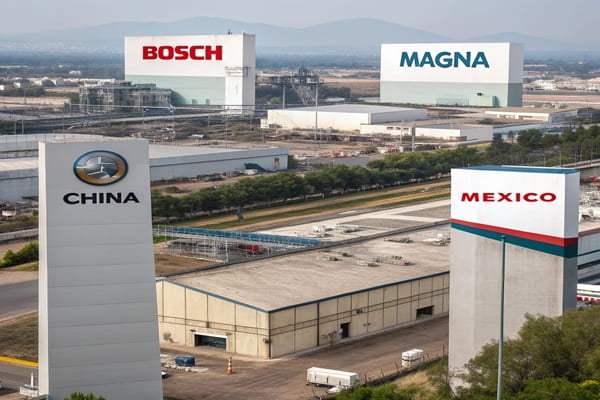
It's important to understand the different business models. The giants like Bosch or Denso are Tier 1 suppliers. They work directly with car companies like Ford or Toyota on massive, long-term contracts to supply parts for new cars on the assembly line. Their business is generally not accessible to importers, distributors, or aftermarket brands.
Finding the Right Type of Partner
For distributors and brands, the "largest suppliers" are experienced B2B manufacturers, often based in China5 or Mexico4. We fall into this category. We provide OEM/ODM services, so we can make parts to your exact specifications or develop a completely new product from scratch. The most critical factor is finding a partner with proven compliance2 capabilities. A factory might offer a low price, but if they can't pass DOT/FMVSS testing, their products are useless for the US market. This is the hardest and most important step in the entire process.
| Supplier Type | Primary Customer | Key Service |
|---|---|---|
| Tier 1 (e.g., Bosch) | Major Automakers (Ford, GM) | Mass production for assembly lines |
| B2B OEM/ODM (Us) | Brands, Importers, Wholesalers | Custom development, wholesale production14 |
Conclusion
Sourcing auto parts1 for the US is complex. The top countries are Mexico4 and China5, but success depends on finding a manufacturing partner who masters compliance2 and logistics9.
Explore this link to discover comprehensive guides and tips for sourcing quality auto parts effectively. ↩
This link discusses the key compliance challenges faced by importers in the auto parts sector. ↩
This resource offers insights into streamlining your supply chain for better efficiency and cost savings. ↩
Learn about Mexico's advantages in auto parts supply, including trade agreements and logistics. ↩
This link provides an in-depth analysis of China's manufacturing capabilities and export strategies. ↩
Explore the importance of DOT certification and how it impacts compliance in the auto parts industry. ↩
This resource explains the significance of OEM expertise and its role in quality assurance. ↩
Understand the implications of the USMCA trade agreement on sourcing auto parts from Mexico. ↩
Find strategies to enhance logistics efficiency in your auto parts sourcing process. ↩
Discover the differences between aftermarket and OEM parts, and their implications for sourcing. ↩
Explore the importance of sensors in modern vehicles and their sourcing considerations. ↩
This resource explains HS codes and their critical role in customs and compliance. ↩
Understand the concept of B2B supply hubs and their significance in the auto parts market. ↩
Discover the process of wholesale production and its benefits for sourcing auto parts. ↩