
Choosing the right brake pad supplier1 is a huge challenge. A bad choice can lead to safety issues and unhappy customers. I'll show you how to find the best partners.
The best brake pad manufacturers have proven OEM/ODM experience2, strict quality control3 over materials, and advanced processes like high-temperature hot-pressing4. They also hold key certifications like E-Mark5 and DOT, which verify their product's safety and performance for specific vehicle applications.
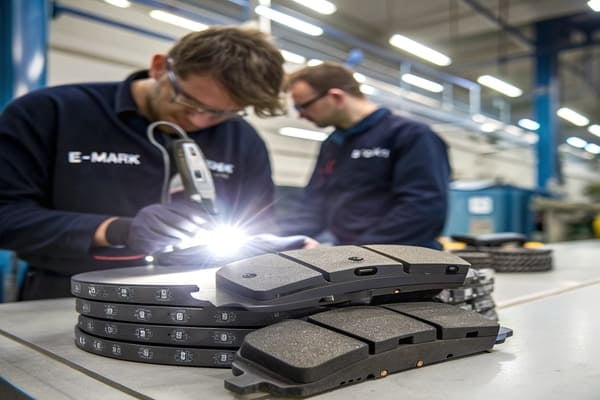
Finding a reliable partner for something as critical as brake pads is one of the toughest parts of this business. The market is flooded with options, and it's hard to tell the good from the bad without a deep dive. I learned early on that you can't just trust a spec sheet; you have to understand the manufacturer's entire process, from the raw materials to the final tests. This guide is built on that experience, designed to help you navigate the complexities and find a supplier you can truly depend on. Let's get into the details.
What Types of Brake Pads Do Manufacturers Produce for Street, Sport, and Competition Use?
Not all brake pads are created equal. Using a racing pad on a street car can be just as bad as using a basic pad on the track. Let's clarify the options.
Manufacturers produce three main types: street, sport, and competition pads6. Street pads (organic/ceramic) focus on quiet operation. Sport pads (semi-metallic) offer a balance of performance and daily usability. Competition pads (metallic/carbon) provide maximum stopping power but require high heat to work.
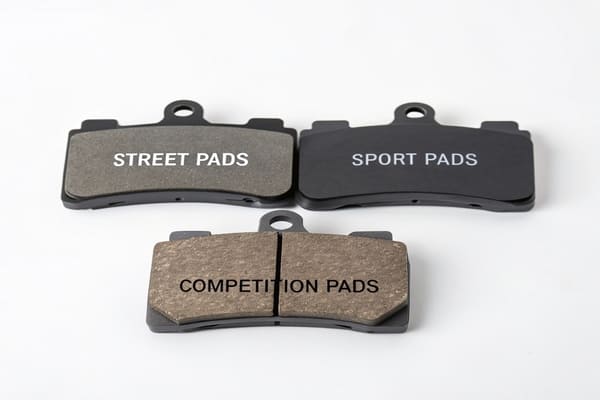
When you're developing a product line, the first question you must answer is: who is the end-user? A daily commuter has completely different needs than a weekend track enthusiast. A good manufacturer understands this and can produce distinct formulas for each application. Your job as a brand or importer is to select the right product for your target market. Choosing incorrectly can lead to poor reviews, returns, and a damaged reputation. For example, selling a high-performance pad that is noisy and dusty to a luxury car owner will only create problems. We need to break down these categories to make sure you're sourcing the right part for the right driver.
Matching Brake Pad Type to Driving Style
The application dictates the technology. A manufacturer’s ability to produce different formulations is a sign of their expertise. Here’s a simple breakdown:
| Pad Type | Primary Use | Key Characteristics | Common Materials |
|---|---|---|---|
| Street | Daily Driving, Commuting | Quiet, low dust, good initial bite when cold, long life. | Non-Asbestos Organic (NAO), Ceramic |
| Sport | Spirited Driving, Light Track Use | Higher friction, better heat resistance, more dust/noise. | Performance Ceramic, Semi-Metallic |
| Competition | Professional Racing, Track Days | Extreme heat tolerance, maximum friction, very noisy, works poorly when cold. | Full-Metallic, Carbon-Composite |
For Street Use, the focus is on Noise, Vibration, and Harshness (NVH)7. Customers want a smooth, quiet stop. Ceramic and NAO pads excel here. They are gentle on rotors and produce a light-colored dust that is less visible on wheels.
For Sport Use, you need a hybrid solution. These pads must work well when cold during a normal drive but also resist fading during aggressive braking. Semi-metallic compounds are popular here because the metal fibers help dissipate heat effectively.
Finally, Competition Use is all about performance. Drivers in this category will accept noise, dust, and fast wear in exchange for consistent stopping power at extreme temperatures. These pads often feel "dead" until they get very hot, making them unsuitable and even dangerous for street driving.
Which Materials Are Used in High-Performance Brake Pads and How Do They Affect Durability?
The materials inside a brake pad look simple, but they are a complex science. Using the wrong formula results in pads that wear out fast or fail under pressure.
High-performance brake pads use advanced materials like semi-metallic compounds8, performance ceramics9, and carbon-Kevlar composites10. The precise mixture and a high-temperature hot-pressing4 process determine the pad's durability, heat stability, and overall lifespan under intense use.
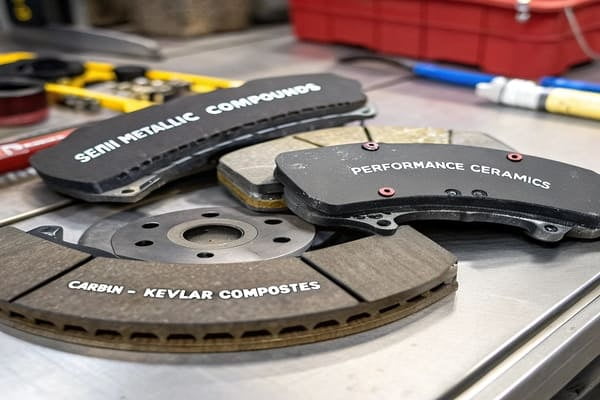
Finding a manufacturer who has mastered material science11 is the key to sourcing great brake pads. Many low-cost factories use generic, pre-mixed compounds that just meet minimum standards. They can't deliver the stability and heat resistance needed for high-performance applications. The best suppliers have their own R&D teams and treat their material formulas like a secret recipe. I’ve found that the most capable manufacturers are often located in specific industrial hubs, like in coastal Fujian or around Shanghai, where there is a deep history of precision manufacturing. They have the machinery and the know-how to get it right. Small, uncertified workshops simply can't compete on this level.
The Science Behind Stopping Power
A brake pad is a complex composite of 10 to 20 different materials, each with a specific job. The real art is in the formulation and the manufacturing process.
Key Material Components:
- Abrasives: These are hard materials like aluminum oxide that provide friction and help clean the brake rotor surface. The amount and type of abrasive affect the pad's "bite" and rotor wear.
- Fillers: Cheaper materials like barite or other mineral powders are added to reduce cost and can help with noise reduction. Too many fillers, however, will compromise high-temperature performance.
- Friction Modifiers: Materials like graphite and metal sulfides are used to stabilize the friction level across a wide range of temperatures. This is critical for preventing brake fade.
- Structural Materials: This is the backbone of the pad, often made of steel, copper, or aramid (Kevlar) fibers. These fibers hold the pad together under immense pressure and heat. The metal fibers in semi-metallic pads are excellent at conducting heat away from the rotor.
The most critical manufacturing step is high-temperature hot-pressing4. During this stage, the mixed raw materials are pressed into shape under extreme heat and pressure. This process bonds all the ingredients together into a solid, stable block. If the pressure or temperature is wrong, the pad can become brittle or fail to achieve its target friction properties. This is where top-tier factories invest heavily in their equipment and quality control3.
How Do Manufacturers Measure Key Brake Pad Performance Metrics Like Friction, Heat Resistance, and Noise?
You see claims like "high-performance" everywhere. But without objective testing, these are just words. You need to know how to verify a manufacturer's claims with real data.
Top manufacturers use dynamometer testing12 to measure performance. They record the friction coefficient13 at various temperatures to check for heat fade14, measure wear rates, and analyze noise levels (NVH). Passing certifications like ECE R9015 and DOT standards requires succeeding in these tests.
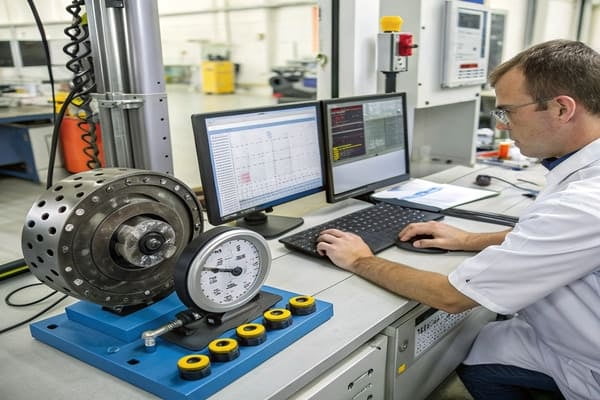
I learned a tough lesson about this early on. I was working with a new client from Pakistan who needed pads for a fleet of city vehicles. I sourced a batch that seemed fine on paper, but the client reported severe "high-temperature heat fade14" during use. The brakes would feel weak after just a few hard stops. Luckily, their vehicles operated in low-speed city traffic, and the drivers actually liked the softer pedal feel, so the project was a success by accident. It taught me a valuable lesson: I now insist on seeing full dynamometer test reports before committing to any supplier. It is the only way to truly know how a brake pad will perform in the real world.
Decoding Performance Data
When you partner with a professional OEM/ODM supplier, you get access to this testing data. Here’s what to look for:
1. Friction Coefficient (and Heat Fade)
This measures the pad's gripping power. It's not a single number; it changes with temperature, pressure, and speed. Testers look for stability. A good pad maintains a consistent friction level as it heats up. A bad pad suffers from heat fade14, where the friction level drops dangerously as temperatures rise. You can often see this on the packaging via a two-letter code (e.g., "FF"). The first letter is the cold friction rating, and the second is the hot friction rating. A "GG" rating is better than an "FF" rating.
2. Noise, Vibration, and Harshness (NVH)7
For street pads16, this is just as important as stopping power. No one wants squealing brakes. On a dynamometer, microphones record the noise produced during hundreds of stops under different conditions to identify and engineer out any potential for squeal or groan.
3. Durability and Wear
The test also measures how quickly the pad and the brake rotor wear down. The goal is to find a balance. A pad that lasts forever but eats rotors is not a good product. The manufacturer should provide data on expected lifespan under specific test cycles.
4. Certifications: The Proof of Quality
Finally, official certifications tie all this testing together.
- ECE R9015 (Europe): This is a critical standard. It mandates that aftermarket pads perform within 15% of the original equipment (OE) part. It includes tests for friction, speed sensitivity, and cold performance.
- DOT (USA): While the US has a self-certification system, manufacturers are legally required to meet federal standards (FMVSS17) for safety, and they must label their pads with the friction code.
Matching these certifications to the target vehicle and market is a complex but necessary step. It's a core part of the service we provide, ensuring the products you import are not only high-quality but also fully compliant.
Conclusion
Finding the right brake pad manufacturer means looking past the price. You need a partner who masters material science11, has a precise manufacturing process, and proves their quality through rigorous testing.
Explore this resource to learn essential tips for selecting a reliable brake pad supplier that ensures safety and quality. ↩
Understanding OEM/ODM experience can help you choose manufacturers with proven track records in quality and reliability. ↩
Discover how strict quality control measures can enhance the safety and performance of brake pads. ↩
Learn about the hot-pressing process and its significance in producing durable and high-performance brake pads. ↩
Explore the significance of E-Mark certification in ensuring brake pad safety and compliance with European standards. ↩
Discover the characteristics of competition pads designed for professional racing and track days. ↩
Explore how NVH metrics are crucial for ensuring a quiet and comfortable driving experience. ↩
Learn about the benefits of semi-metallic compounds in enhancing brake pad performance and heat resistance. ↩
Discover how performance ceramics contribute to the durability and effectiveness of high-performance brake pads. ↩
Explore the advantages of using carbon-Kevlar composites for high-performance brake pads. ↩
Explore the role of material science in developing high-quality and effective brake pads. ↩
Understand the importance of dynamometer testing in verifying brake pad performance metrics. ↩
Learn about the significance of the friction coefficient in assessing brake pad effectiveness. ↩
Explore the concept of heat fade and its impact on brake pad performance during intense use. ↩
Learn about ECE R90 certification and its role in ensuring brake pad quality and compliance. ↩
Find out what makes street pads suitable for daily driving and commuting, ensuring a smooth and quiet ride. ↩
Understand the FMVSS standards that govern brake pad safety and performance in the United States. ↩