
Are you confused by the different names for car mirrors? This can make sourcing parts1 tricky. I'll explain the correct terms and why these parts are so vital for safety.
The mirror on the side of a car is most commonly called a side-view mirror2, wing mirror3, or door mirror4. Its main job is to give the driver a clear view of the areas to the side and rear of the vehicle, which helps eliminate dangerous blind spots5.
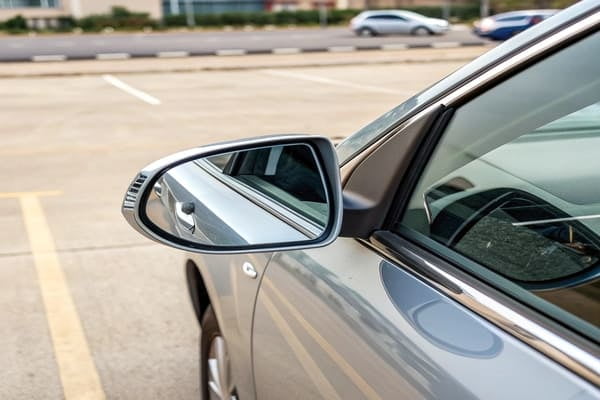
You see them every day, but getting the name right is important, especially in the auto parts business. A small mix-up in terms can lead to big problems with orders. In this post, I'll break down everything you need to know about these essential components. We will look at the correct names, how they differ from other mirrors, and why their quality is non-negotiable for driver safety6. Let’s dive in and clear up the confusion.
What Is the Correct Name for the Rear Side Mirror on a Car?
Have you ever struggled to describe a part because it has too many names? It's a common problem in our industry that can lead to ordering mistakes and delays.
There is no single "correct" name. The most common and widely accepted terms are "side-view mirror2," "door mirror4," and "wing mirror3." The best term often depends on your region and who you're talking to. All refer to the same part on the car's exterior.
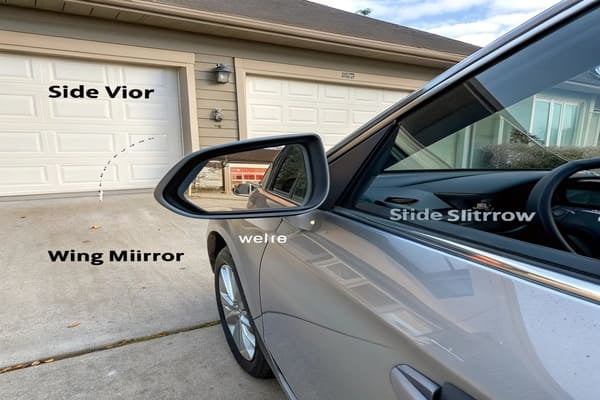
When we work with clients from all over the world, we have to be fluent in the language of auto parts. The term you use for the mirror on the side of a car can change depending on where you are. For us as a manufacturer, precision is key. While we understand all the common names, our internal documents and production lines7 use specific part numbers to avoid any mix-ups.
Here’s a simple breakdown of the common names:
Common Terminology for Exterior Mirrors
| Term | Origin & Usage |
|---|---|
| Side-View Mirror | This is the most generic and widely understood term, especially in North America. It accurately describes the mirror's function: to view the side of the vehicle. |
| Door Mirror | This name is also very common. It describes the mirror's location, as most modern cars have them mounted on the front doors. It's a very literal and clear description. |
| Wing Mirror | This term is more common in the UK and other parts of Europe. It's a bit of a holdover from older car designs where mirrors were mounted on the front fenders, which were called "wings." |
No matter what you call it, we know what you mean. Our job is to translate your need into a high-quality, reliable product.
Is a Rear Side Mirror the Same as a Side View Mirror or Door Mirror?
Are you worried that using the term "rear side mirror" might confuse your supplier? This kind of uncertainty can slow down your sourcing and product development process.
Yes, for all practical purposes, a "rear side mirror" is the same as a "side-view mirror2" or "door mirror4." The term simply adds "rear" to specify it provides a view towards the rear of the car, distinguishing it from any potential forward-facing sensors or cameras.
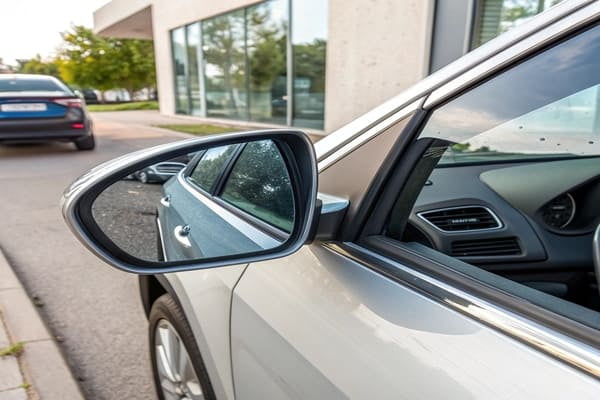
In the auto parts industry, clarity is everything. While "rear side mirror" isn't the most common term, it's perfectly understandable. It describes an exterior mirror on the side of the car that shows you what's behind you. The terms "side-view mirror2" and "door mirror4" are just shorter, more common ways to say the same thing.
When we develop a new mirror assembly for a client, we don't just rely on names. We work with detailed specifications, CAD drawings, and 3D models. We talk about functionality: Is it heated? Does it have a built-in turn signal? Does it include a blind-spot monitoring light? Does it auto-dim?
The evolution of these parts is a key factor.
- Past: It was just a piece of glass on a plastic or metal stalk, adjusted by hand.
- Present: It's a complex electronic module8. It contains motors, heating elements, lights, and sometimes even cameras.
This complexity is why using precise language in OEM/ODM projects9 is so important. But don't worry, we are experts at navigating these details to make sure you get the exact product you need for your market.
How Is a Rear Side Mirror Different from an Interior Rear View Mirror?
Do you ever mix up the functions of the different mirrors in a car? It's an easy mistake to make, but understanding their unique roles is crucial for safety.
The interior rear-view mirror10 is located inside the car on the windshield and shows what is directly behind. The exterior side-view mirrors11](2s">https://hengmingcar.com/understanding-the-importance-of-side-mirrors-in-vehicle-safety-and-performance/)2s are on the doors and are curved to show the areas to the side, covering the driver's blind spots5.
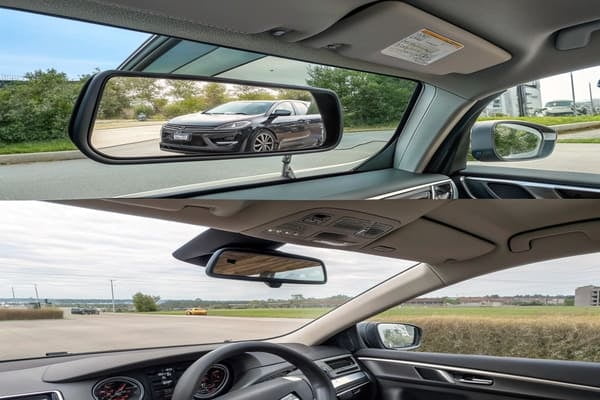
The two types of mirrors are designed for completely different jobs, and their construction reflects that. The interior mirror is usually flat, giving you a true-to-distance view of the traffic directly behind you. The side-view mirror2s, however, are convex. They are curved outwards slightly. This is why they often have the warning "Objects in mirror are closer than they appear."
This curve is not a design flaw; it's a critical safety feature. It gives the driver a much wider field of view, helping to see cars that might be hiding in the blind spot. But getting that curve exactly right is one of the hardest parts of manufacturing a mirror.
Mirror Manufacturing: The Challenge of Curvature
| Feature | Interior Rear-View Mirror | Exterior Side-View Mirror |
|---|---|---|
| Location | Inside, center of windshield | Outside, on the front doors |
| Shape | Flat | Convex (curved outwards) |
| Function | See directly behind the car | See the sides and blind spots5 |
| Key Challenge | Glare reduction (dimming) | Precise curvature for wide view |
The precision needed to control the mirror's curvature is immense. We need highly specialized machinery to achieve it. In my experience, the best machines for this job are typically found in advanced factories, like those near the Fujian coast or around Shanghai. This level of precision ensures the mirror provides a wide, clear view without distorting the image, which is vital for driver safety6.
Why Are Rear Side Mirrors Essential for Eliminating Blind Spots?
Have you ever started to change lanes, only to have another car suddenly appear out of nowhere? That heart-stopping moment is caused by a blind spot, a problem that side mirrors are built to solve.
Side mirrors are essential because their convex shape12 provides a wide-angle view, revealing vehicles in the blind spots5 that are invisible in the interior mirror or peripheral vision. Properly adjusted, they create a nearly seamless panoramic view around the car.

A blind spot is any area around your vehicle that you can't see directly or through your mirrors. The main blind spots5 are on the rear left and rear right of the car. The interior rear-view mirror10 can't see these areas, and they are too far back to be in your peripheral vision. This is where the side-view mirror2 becomes a driver's best friend.
But a great mirror isn't just about the glass. The entire assembly has to be perfect. One of the most difficult parts of our manufacturing process is fitting the anti-vibration base13. The mirror needs to be held completely steady. If the base is not perfectly fitted, the mirror will shake as the car moves, making the reflection blurry and useless. This fitting process is tricky because the machine has to stop, and the mold has to open to attach the base, which can compromise stability if not done correctly.
I remember my first time managing a side mirror project for a client from Pakistan. We were still refining our process, and the final products had a slight "field of view deviation" because of an issue with the base fitting. I was worried, but the client actually loved the unique viewing angle it created. It was a lucky break, but it taught us a valuable lesson. We immediately perfected our assembly process to guarantee that every mirror we produce from that day on is perfectly stable and precise. That experience showed just how a small detail in manufacturing can have a huge impact on the final product's performance and safety.
Conclusion
In short, side-view mirror2s are critical safety components with many names. Quality manufacturing, from the glass curvature to the stable base, is essential for them to do their job properly.
Find strategies to streamline the sourcing process for automotive components. ↩
Understanding the role of side-view mirrors can enhance your knowledge of vehicle safety and maintenance. ↩
Explore the unique features of wing mirrors and their significance in automotive design. ↩
Learn about the functionality of door mirrors and their impact on driving safety. ↩
Discover how understanding blind spots can improve your driving skills and safety. ↩
Understand the critical role of mirrors in enhancing overall driving safety. ↩
Discover the processes that guarantee high standards in automotive part production. ↩
Understand the advanced technology behind modern car mirrors and its benefits. ↩
Explore the significance of OEM and ODM in ensuring high-quality automotive parts. ↩
Gain insights into the role of interior mirrors in vehicle safety and navigation. ↩
Explore the differences between exterior and interior mirrors for better driving awareness. ↩
Find out how the convex design enhances visibility and safety for drivers. ↩
Discover how anti-vibration technology enhances mirror stability and performance. ↩