
Choosing between semi-metallic and ceramic brake pads is tough. The wrong choice can lead to unhappy customers. I'll explain the key differences to help you source the best parts.
The biggest difference is the manufacturing precision required. Semi-metallic pads contain metal fibers for heat transfer, offering aggressive stopping. Ceramic pads use ceramic compounds and copper fibers for quieter, cleaner performance. The choice depends entirely on the target vehicle and driver expectations.
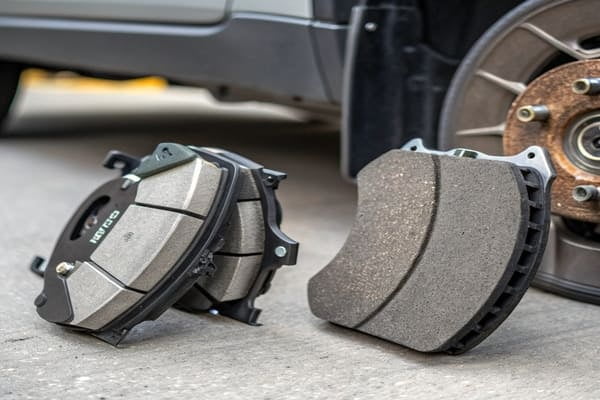
The materials are just one part of the story. The real secret lies in how they are made and how that affects their performance on the road. I learned this firsthand through some tough but valuable experiences. Let's break down exactly what sets these two popular brake pad types apart so you can make an informed decision for your business.
How Do Semi-Metallic Brake Pads Work Compared to Ceramic Brake Pads?
Unsure how different pad materials create friction? This makes it hard to market them effectively. I'll explain the simple mechanics behind how each pad type works to stop a vehicle.
Semi-metallic pads use abrasive friction, where metal fibers scrape the rotor to stop the car. It’s aggressive. Ceramic pads use adhesive friction, laying down a smooth material layer on the rotor. This creates a high-friction surface for quieter, more controlled stopping.
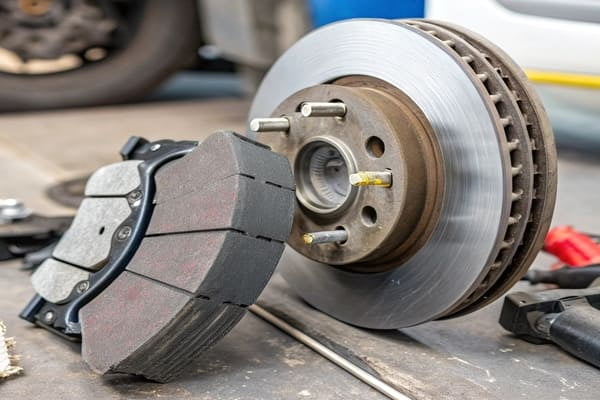
The way these pads function comes down to two different types of friction. Semi-metallic pads are all about abrasive friction. Think of it like sandpaper. The metal content—like steel and copper—in the pad literally scrapes against the brake rotor to slow the car down. This is very effective, especially from a cold start. However, this process is what can cause more rotor wear and noise.
Ceramic pads, on the other hand, primarily use adhesive friction. When they heat up, they transfer a very thin, even layer of ceramic film onto the rotor's surface. From then on, the friction happens between the pad and that film, not the bare rotor. This is a much smoother and quieter process.
The manufacturing challenge here is immense. Getting that friction material to form uniformly requires high-precision hot-press machines. If the material is uneven, you get inconsistent braking. Many smaller factories, unlike the specialized ones in the Yangtze River Delta or Guangrao, simply can't achieve this level of precision.
Here’s a simple breakdown:
| Feature | Semi-Metallic Pads | Ceramic Pads |
|---|---|---|
| Primary Friction | Abrasive (scraping) | Adhesive (transfer layer) |
| Mechanism | Metal fibers "bite" the rotor | Pad material sticks to the rotor |
| Result | Strong, aggressive stopping | Smooth, consistent stopping |
| Manufacturing Focus | Binding metal fibers securely | Creating a stable transfer film |
Which Brake Pads Offer Better Stopping Power: Semi-Metallic or Ceramic?
Does "better stopping power" mean the same thing for every driver? Choosing the wrong pad for a specific use case can be a serious issue. Let's clarify which is better.
For pure, aggressive stopping power, especially from a cold start, semi-metallic pads are often better. They have a strong initial bite. Ceramic pads offer more consistent, fade-resistant braking in daily driving and high-heat situations, but with a less aggressive feel. It depends on the application.
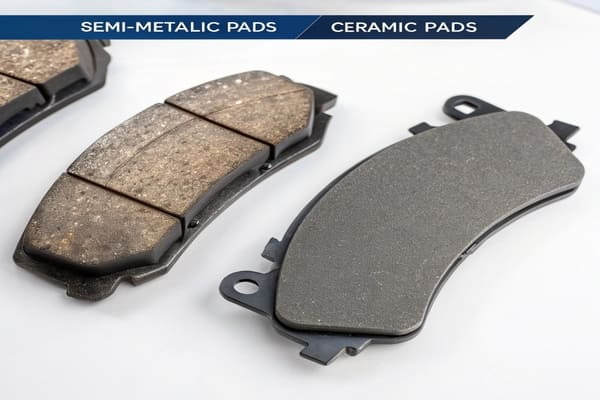
"Stopping power" isn't a single metric. We need to break it down. Semi-metallic pads excel in initial bite. This is that immediate, strong grab you feel the moment you touch the brake pedal. It’s great for heavy vehicles or for performance driving where you need an instant response. The metal fibers conduct heat away effectively, which helps prevent brake fade during a single hard stop.
Ceramic pads shine in heat management and consistency. They don't have the same aggressive initial bite, which some drivers find smoother for daily commuting. Their real strength is resisting brake fade during repeated hard braking, like driving down a mountain.
I remember my first project with a European client. We had some "performance deviations" in our initial batch. Some pads had a stronger bite, others were much smoother. The issue was traced back to the precision of our formula mixing process. At first, I was worried. But the client actually loved it. They found the aggressive pads perfect for their performance car line and the smoother pads ideal for their luxury sedans. It was a valuable lesson in how different performance profiles fit different market needs.
| Driving Scenario | Better Choice | Why? |
|---|---|---|
| Daily Commuting | Ceramic | Smooth, quiet, and low dust. |
| Heavy-Duty/Towing | Semi-Metallic | Excellent cold bite and raw stopping force. |
| Spirited/Track Driving | Ceramic or High-Performance Semi-Metallic | Ceramic resists fade better; special semi-metallics offer max bite. |
Are Semi-Metallic Brake Pads Noisier Than Ceramic Brake Pads?
Tired of customer complaints about noisy brakes? Brake squeal is a major source of dissatisfaction and can harm your brand's reputation. Here’s the truth about which pad type is quieter.
Yes, as a rule, semi-metallic pads are noisier. Their metal-on-metal contact with the rotor creates vibrations we can hear as squeal. Ceramic pads are made of denser materials that vibrate at frequencies above human hearing, resulting in a much quieter braking experience.
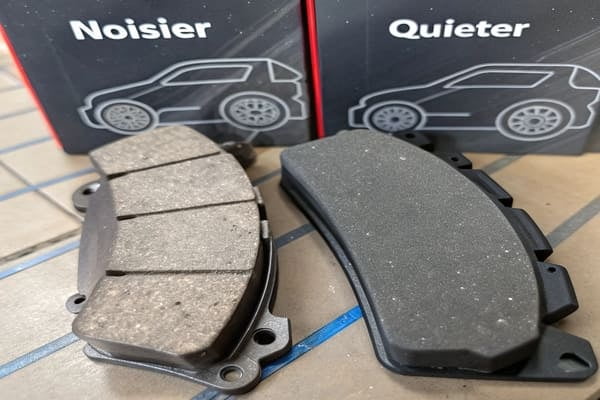
The noise from brake pads comes from high-frequency vibrations. When a semi-metallic pad presses against the rotor, the metal fibers can create a "stick-slip" vibration, much like chalk on a blackboard. This vibration is right in the range of human hearing, and we perceive it as a squeal or groan.
Ceramic pads are different. The material is much denser and more uniform. When it vibrates, it does so at a much higher frequency, often above 20,000 Hz. This is ultrasonic, meaning it's outside the range of what our ears can detect. The result is a nearly silent stop.
However, material isn't everything. Manufacturing quality is critical for noise reduction. This is where precise molding from a hot-press machine is so important. A pad that isn't perfectly flat or has an inconsistent density will vibrate and make noise, even if it's ceramic. This is why we add features like chamfers (angled edges) and slots (cuts in the pad surface). These design elements help disrupt noisy vibrations before they can become a problem for the driver.
Do Ceramic Brake Pads Cause Less Brake Dust Than Semi-Metallic Pads?
Are your customers complaining about constantly dirty wheels? That black, sticky brake dust is a major pain point. Let's look at which brake pad material solves this common problem.
Yes, ceramic pads produce far less dust. The dust they do create is a light, fine powder that doesn't stick to wheels. Semi-metallic pads shed a dark, greasy, metallic dust that clings to wheel surfaces and is very noticeable, requiring frequent cleaning.
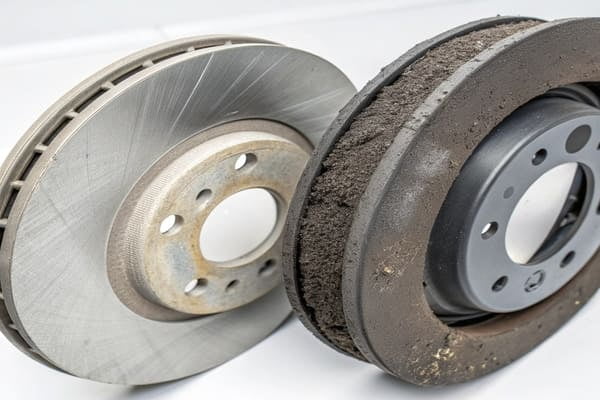
The difference in brake dust is a direct result of the friction mechanism we discussed earlier. Semi-metallic pads work by scraping material off the rotor. This process creates a lot of dark, heavy dust composed of metal particles from the pad and iron particles from the rotor. It’s sticky and very visible on light-colored wheels.
Ceramic pads, using adhesive friction, wear down much more slowly. The dust they produce is made of fine ceramic particles and is a very light gray or tan color. It doesn't contain the same sticky metallic elements, so it doesn't cling to the wheel finish. For car owners who value clean aesthetics, this is a huge selling point.
This is another area where formula precision is key. When we mix the raw materials for the friction compound, the machine has to be stopped to open the material hopper. This brief pause can slightly alter the uniformity of the mix. If not controlled perfectly, it can affect how the pad wears and how much dust it creates. It’s a tiny detail, but it’s what separates a premium, low-dust pad from a cheap one.
Conclusion
Choosing between semi-metallic and ceramic pads isn't just about materials. It's about matching the right manufacturing precision and performance profile—stopping power, noise, and dust—to your customers' needs.