
Confused by brake pad choices? The wrong type can lead to noise and poor stopping power. Let's break down the real differences to help you choose wisely.
The main difference is the material. Ceramic pads use ceramic fibers for quiet, low-dust braking ideal for daily driving. Metallic pads use metal fibers for better heat dissipation and high-performance stopping, but are often noisier and create more dust.
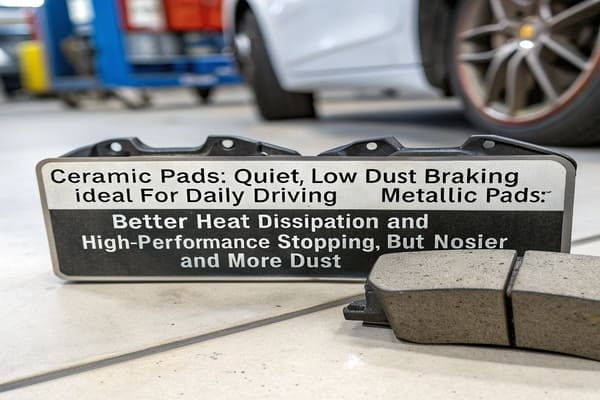
Now you know the basics, but the story doesn't end there. How these pads are made completely changes their behavior on the road. Let's look closer at each type.
What Are Ceramic Brake Pads and How Are They Made?
Ever wonder why ceramic pads cost more? Without knowing what's inside, you could be paying for the wrong reasons. Let's explore their composition and manufacturing process.
Ceramic brake pads are made from a dense ceramic material, like porcelain, mixed with fine copper fibers and other non-ferrous fillers. They are formed under extreme heat and pressure to create a pad that is quiet, produces very little dust, and is gentle on rotors.
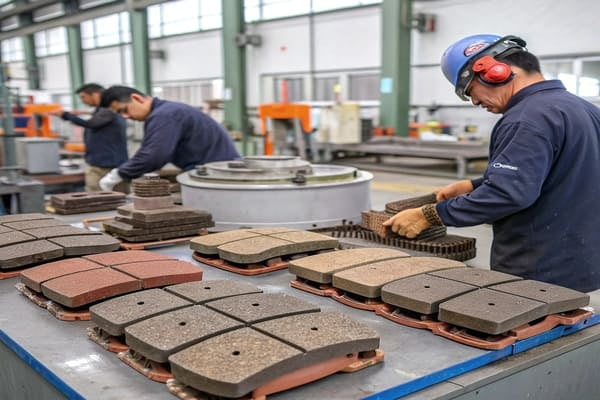
Making ceramic pads is a lot harder than most people think. It’s not something a small workshop can do well. The process requires highly precise machinery to get right.
The Challenge of Precision
The most difficult step is controlling the friction coefficient. This requires a very advanced hot-press machine that can apply heat and pressure with extreme accuracy. In my experience, you only find machines with this level of precision in major manufacturing areas like China's Yangtze River Delta or around Shandong. A standard press just won't cut it, and the final product won't be consistent or safe. The entire process involves at least three critical stages, and getting the friction properties stable is by far the most demanding part.
The Art of the Formula
The material mix is also a huge challenge. You have to blend the ceramic fibers, copper, and other binders perfectly. When we load a new batch of raw materials into the machine, we have to stop it and open the料仓 (material hopper). This simple action can affect how uniformly the ingredients are mixed. A small variation here can create a big difference in braking performance from one pad to the next. It’s a delicate balancing act we’ve worked on for years.
| Component | Main Function in the Pad |
|---|---|
| Ceramic Fibers | Provides stable friction, reduces noise and heat |
| Copper Fibers | Helps dissipate heat, improves friction at different temperatures |
| Non-Ferrous Fillers | Fine-tunes performance, acts as a mild abrasive |
| Bonding Agents | Holds the entire pad together under extreme pressure |
What Are Metallic Brake Pads and What Materials Do They Use?
Think metallic pads are just for race cars? This common idea might make you overlook their benefits for towing or heavy vehicles. Let's see what actually goes inside them.
Metallic brake pads, often called semi-metallic, contain 30% to 70% metal. These metals include steel, iron, and copper. They are mixed with graphite lubricant and other fillers, then bonded together under high heat and pressure to create a durable, heat-resistant pad.
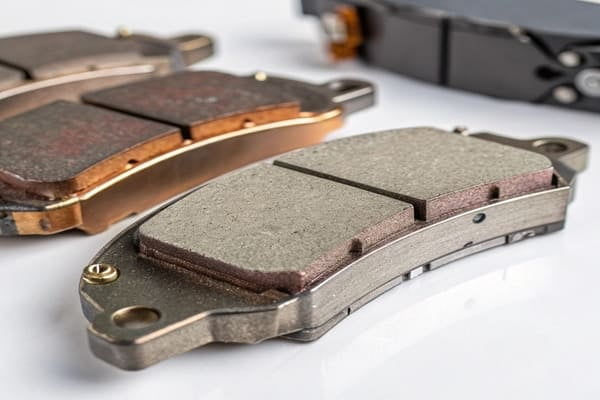
The "recipe" for a metallic brake pad is what defines its character. It's not just a random mix of metals; every ingredient has a specific job to do, and getting that recipe right is a huge part of our work as a manufacturer.
A Blend of Strength and Control
The core of a metallic pad is its metal content. We use a combination of metals to achieve specific goals. For example, steel fibers provide incredible structural strength and durability, making the pad last longer under tough conditions. Copper is fantastic for transferring heat away from the rotor, which is critical for preventing brake fade. We also mix in graphite, which acts as a lubricant to help reduce wear and noise, although these pads are still generally louder than their ceramic counterparts. All these materials are bonded together to create a pad that can really take a beating.
My First Big Challenge
I clearly remember my first time producing these for a North American client. We were still new to the specific formula. After production, we discovered a noticeable "brake wear deviation" across the batches. I was worried we had made a huge mistake. To my surprise, the client loved it. They found that one batch was perfect for demanding city driving, while another performed better for long-haul highway use. It was a lucky break, but it taught me a valuable lesson about how sensitive this manufacturing process is. A tiny change in the formula can create a completely different product. Since then, we've perfected that control.
| Material | Primary Role in the Pad |
|---|---|
| Steel / Iron Fibers | Provides structural strength and durability |
| Copper Powder/Fibers | Excellent for conducting and dissipating heat |
| Graphite | Acts as a lubricant to reduce noise and wear |
| Abrasives / Fillers | Helps clean the rotor and modify friction levels |
How Do Ceramic and Metallic Brake Pads Differ in Braking Performance?
Wondering which pad provides a better braking feel? The materials list doesn't tell the whole story. Let's compare how they actually perform on the road, side-by-side.
Ceramic pads offer a smooth, quiet stop with a consistent pedal feel, ideal for daily commuting. Metallic pads provide a stronger initial "bite" and more aggressive stopping power. However, they are often noisier and can feel harsher during gentle stops.
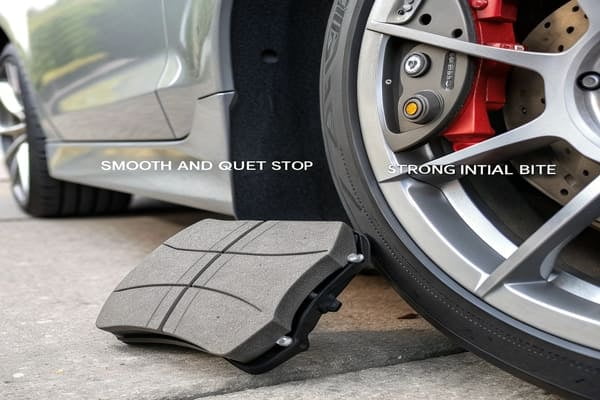
The difference in performance isn't just about stopping distance. It's about the entire experience, from the sound the brakes make to the dust they leave on your wheels.
Daily Driving vs. Performance Use
For a daily driver or a luxury vehicle, comfort is key. This is where ceramic pads excel. They are incredibly quiet and produce a fine, light-colored dust that doesn’t stick to wheels. The braking action is very smooth and predictable, which gives the driver a lot of confidence in normal traffic conditions. They are also very gentle on brake rotors, which can save you money in the long run.
Metallic pads are built for a different purpose. They have a much stronger initial "bite," meaning they grab the rotor more aggressively as soon as you touch the pedal. This is great for performance driving or when you're towing a heavy load and need immediate stopping power. This aggressive nature, however, comes at a cost. They tend to be noisier and produce a lot of dark, heavy dust. They are also harder on rotors, causing them to wear out more quickly.
| Performance Metric | Ceramic Brake Pads | Metallic Brake Pads |
|---|---|---|
| Initial Bite | Smooth and gradual | Strong and aggressive |
| Noise Level | Very quiet | Can be noisy (squeal/grind) |
| Brake Dust | Low, light-colored, easy to clean | High, dark-colored, corrosive |
| Rotor Wear | Very low | Higher than ceramic |
| Best Use Case | Daily commuting, luxury cars | Performance driving, towing, trucks |
Which Brake Pad Type Handles Heat Better Under Heavy Braking?
Drive in the mountains or tow heavy loads? Brake fade from high heat is a serious risk. Let's find out which brake pad material is better at managing extreme temperatures.
Metallic brake pads are superior at handling high heat. The metal content is excellent at conducting heat away from the brake rotor, which helps prevent brake fade during repeated, heavy stops. Ceramic pads handle heat well, but can be outperformed by metallics in extreme performance situations.
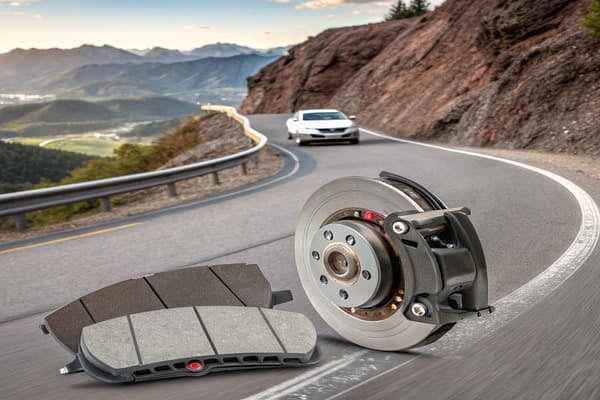
Heat is the number one enemy of a braking system. When your brakes get too hot, they can stop working effectively, a dangerous situation known as brake fade.
Understanding Brake Fade
Brake fade occurs when the temperature of the brake pad and rotor gets so high that the friction material can no longer create enough grip. You'll feel it in the pedal—it becomes soft or "spongy," and you have to push it much further to the floor to get the same stopping power. This is common when driving down a long, steep hill or during repeated hard stops on a racetrack. The key to preventing fade is to get heat away from the brakes as quickly as possible.
Why Metal Is the Winner for Heat
This is the area where metallic pads are the undisputed champion. Metal is a fantastic conductor of heat. The steel and copper fibers woven into the pad act like a heatsink. They pull the intense heat from the brake rotor and transfer it to the brake caliper and the surrounding air. This process keeps the rotor's temperature under control and ensures the pad continues to work effectively even under extreme abuse. This is precisely why you find metallic pads on race cars, heavy-duty trucks, and any vehicle used for towing. While modern ceramic pads have very good heat resistance, they simply cannot transfer and dissipate that heat as efficiently as a metallic pad can.
Conclusion
Choosing between ceramic and metallic pads depends on your driving style. Ceramic is for quiet, clean comfort, while metallic is for high-performance, heat-intensive stopping power.