
Struggling to find the right brake rotor brand1? The market is full of options, making it hard to ensure quality and fit for your customers' vehicles.
The "best" brand isn't a single name. It's about finding a manufacturing partner2 that guarantees precise vehicle fitment, uses high-quality materials, and provides verifiable quality certifications3. This ensures reliability for cars, trucks, and high-performance applications4, which is key for any wholesale or private-label business.
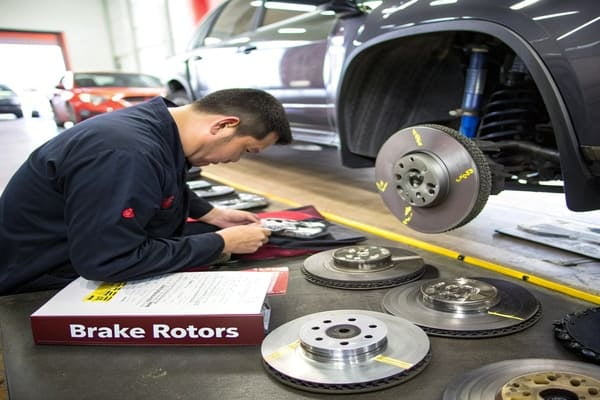
Finding the right brake rotors for your business is a big challenge. It's not as simple as picking a famous brand name off a list. As a manufacturer, I've learned that the most important thing is the quality of the supplier behind the product. The "best" choice depends on your specific needs, whether you're a distributor, an importer, or a brand building a new product line. I want to share what I've learned about navigating this process. It all comes down to asking the right questions and knowing what to look for in a production partner. This guide will help you understand the factors that truly matter, so you can make a smart investment for your business.
Which Brands of Brake Rotors Are Most Reliable and Long-Lasting?
Worried about rotor failures and comebacks? Low-quality rotors wear out fast, damaging your brand's reputation and leading to costly returns from your distribution network.
The most reliable and long-lasting rotors come from manufacturers with strict quality control. Look for suppliers who can prove their material sourcing, casting processes5, and runout testing. Reliability isn't a brand name; it's a documented manufacturing standard you can trust for your wholesale business6.
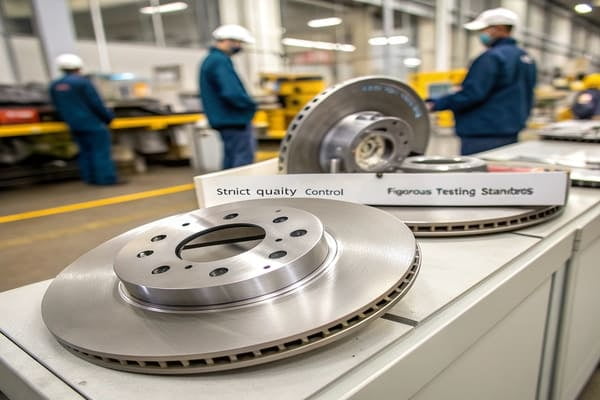
When we talk about reliability, we're really talking about the supplier's manufacturing process. From my experience, sourcing reliable rotors requires a careful screening process. It's not something you can rush. In our business, we've found that a three-step process is necessary to ensure we are working with a quality product that we can stand behind for our clients. This is especially true when sourcing from major industrial regions like the Yangtze River Delta, where there are many suppliers but quality varies greatly.
The Supplier Screening Process
First, we perform an initial check on the supplier's basic qualifications. We look for essential certifications like IATF 169497, which is the global quality standard for the automotive industry. This tells us they have a basic quality management system in place. Then, we move to the most difficult step: technical and fitment verification8. This requires access to precise vehicle data to ensure the rotor matches the intended application perfectly. Finally, we conduct on-site audits to see their production line, check their quality control equipment9, and confirm their processes match their paperwork. This part can slow down procurement, but it's not optional.
Key Quality Indicators
Here are the technical details we look for:
| Quality Indicator | What We Look For | Why It Matters |
|---|---|---|
| Material Grade | G3000 or G3500 grade iron | Ensures proper hardness and thermal properties for durability. |
| Casting Method | Consistent, controlled casting process | Prevents internal weak spots that can lead to cracking. |
| Machining Tolerance | Low runout (typically under 0.05mm) | Guarantees the rotor spins true, preventing brake pedal pulsation. |
| Surface Finish | Specific Ra (Roughness average) | Ensures proper bedding-in with new brake pads for optimal performance. |
A reliable "brand" is simply a supplier who can consistently meet these technical requirements.
How Do Rotor Materials Affect Performance Across Different Brands?
Are your customers complaining about brake fade10 or noise? The wrong rotor material can cause poor performance, especially under heavy use, and this hurts customer satisfaction.
Rotor materials directly impact heat dissipation, durability, and friction characteristics. Standard cast iron is for daily driving11. High-carbon iron offers better thermal stability for heavy-duty use. Carbon-ceramic is for extreme performance. The right supplier helps you choose the correct material for your target market.
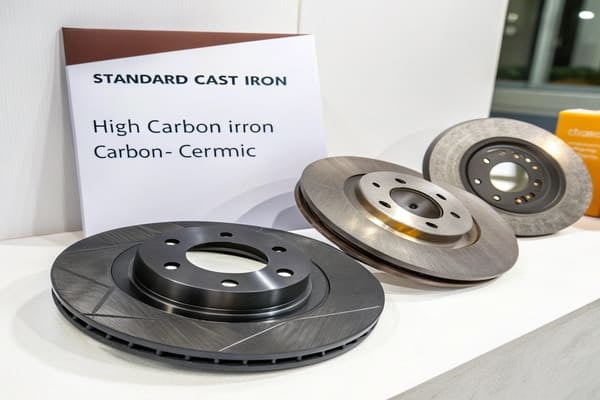
The material a brake rotor is made from is one of the biggest factors in its performance. As a manufacturer, we work with a variety of materials to meet the needs of different clients, from large distributors to private-label brands. The choice isn't about which material is "best" overall, but which is best for a specific application. A misunderstanding here can lead to a product that fails to meet market expectations. For example, putting a basic rotor on a performance vehicle will lead to brake fade10 and warping.
Common Rotor Materials
Most rotors on the market fall into a few material categories. Each one is designed for a different balance of cost, performance, and durability. As an OEM/ODM partner, our job is to help our clients navigate these options to build a successful product line.
Matching Material to Application
Here is a simple breakdown of the common materials and their uses:
| Material | Primary Use | Pros | Cons |
|---|---|---|---|
| Gray Cast Iron (G3000) | Daily Driving, OEM Standard | Cost-effective, quiet, good baseline performance. | Can warp under high, repeated heat cycles. |
| High-Carbon Iron (G3500) | Performance Cars, Trucks, SUVs | Better heat dissipation, resists cracking and warping. | Higher cost, can sometimes be noisier. |
| Carbon-Ceramic Matrix | Supercars, Racing | Extremely lightweight, superior heat handling, long life. | Very expensive, not practical for most vehicles. |
When a client comes to us wanting to develop a line of brake rotors, our first questions are about their target market. Are they selling to everyday car owners or performance enthusiasts? Are the parts for light-duty passenger cars or heavy-duty trucks? The answer determines our material recommendation and the entire engineering approach for the product.
Are OEM or Aftermarket Brake Rotors Better for Safety and Durability?
Confused between OEM and aftermarket for your product line? Choosing incorrectly can lead to safety concerns or parts that don't meet customer expectations for durability.
High-quality aftermarket rotors can be as safe and durable as OEM parts, and sometimes even better. The key is the manufacturer. A reputable OEM/ODM supplier often produces both, adhering to strict standards. The "better" choice depends on your business goals and target price point.
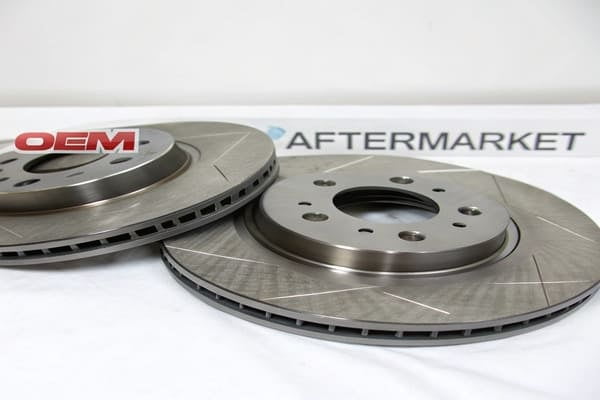
This is a question I get a lot from importers and distributors. There's a common belief that OEM (Original Equipment Manufacturer) parts are always superior. While OEM parts are built to a reliable standard, a high-quality aftermarket part can offer equal or even greater performance and safety. As a company that handles both OEM and ODM projects, we see this firsthand. The quality isn't determined by the label "OEM" or "aftermarket," but by the engineering, materials, and quality control of the factory that made it.
Understanding OEM Production
OEM parts are designed to meet the car manufacturer's specific requirements. These requirements are a balance of performance, durability, and, most importantly, cost. An OEM rotor is designed to perform well for the average driver during the vehicle's warranty period. It's a solid, reliable baseline. However, it is not always designed to be the absolute best-performing part possible. There is often room for improvement.
The Advantage of Quality Aftermarket
This is where high-quality aftermarket parts come in. A good aftermarket manufacturer can take the OEM design as a starting point and improve upon it. For example, we can develop an aftermarket rotor for a client that uses a higher-grade, high-carbon iron12 to improve heat resistance for a truck that frequently tows trailers. Or, we can add slots and drills to a rotor for a performance car brand to improve braking in wet conditions and reduce brake fade10. The aftermarket allows for specialization. As an ODM supplier, we help our partners identify these opportunities and build a product that gives them a competitive edge. It's not about being cheaper than OEM; it's about offering targeted value.
Which Brake Rotor Brands Are Best for Daily Driving vs. High-Performance Use?
Trying to serve both daily drivers and performance enthusiasts? Offering the wrong rotor for the application leads to unhappy customers and a damaged brand reputation.
For daily driving11, focus on suppliers providing G3000-grade cast iron rotors that match OEM specs for quietness and reliability. For high-performance, partner with a manufacturer skilled in high-carbon iron12 or custom-engineered rotors with features like slots and drills for better heat management.
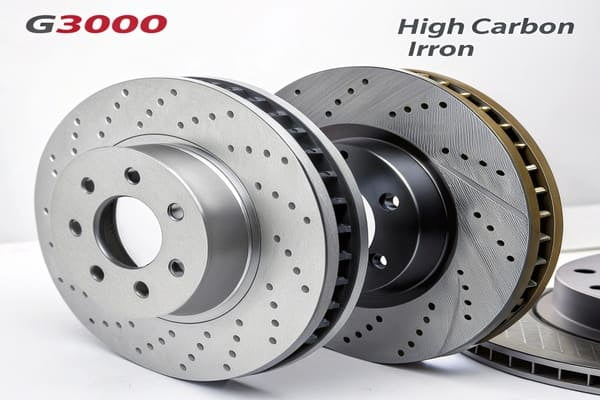
The needs of a daily commuter are completely different from those of a track day enthusiast or a heavy-duty truck operator. As a business, you must cater to these different needs with the right products. The "best brand" is the one that provides the right solution for the specific use case. It's about matching the product to the customer. This requires a deep understanding of rotor design and a flexible manufacturing partner2.
Sourcing for Daily Drivers
For the daily driver market, consistency and precision are everything. Customers expect a quiet, smooth, and reliable brake pedal. The main challenge here is not extreme performance but perfect fitment. I learned this lesson the hard way. On one of my first projects with a North American client, we supplied rotors that had a minor "fitment deviation." I was less experienced then, and it was a very stressful situation. Luckily, the client was using the vehicles for a unique, heavy-duty application, and the slight difference actually worked better for their needs. They ended up loving it. It was a lucky break, but it taught me a critical lesson: precision is non-negotiable. Since then, we have perfected our vehicle data matching process to guarantee an exact fit every time.
Developing a High-Performance Line
For high-performance applications4, the conversation shifts from fitment to thermal management13. Here, we work with clients to engineer rotors that can handle extreme heat without warping or fading. This involves:
| Application | Key Requirement | Recommended Rotor Type | Our Role as a Supplier |
|---|---|---|---|
| Daily Driving | Perfect Fitment, Quiet Operation, Cost | OEM-Style, Plain Face, G3000 Iron | Ensuring precise vehicle data matching and stable mass production. |
| High-Performance | Heat Dissipation, Fade Resistance | Slotted/Drilled, High-Carbon Iron, Two-Piece | Custom engineering, material selection, and performance validation. |
We can develop a full private-label performance line, including features like directional cooling vanes, cryogenic treatment to strengthen the iron, or lightweight two-piece rotor designs. It’s not about finding a brand; it’s about creating one with a manufacturing partner2 who has the right engineering capabilities.
Conclusion
Ultimately, the "best brand" of brake rotors is not a name you find on a shelf. It is the reliable, expert manufacturing partner2 you choose for your business.
Explore the leading brands to ensure quality and fit for your customers' vehicles. ↩
Learn how to select a partner that guarantees quality and precise fitment. ↩
Understanding certifications helps ensure you're sourcing from reputable manufacturers. ↩
Explore sourcing strategies to meet the demands of performance enthusiasts. ↩
Discover casting methods that prevent defects and ensure durability. ↩
Discover strategies to enhance your wholesale operations and customer satisfaction. ↩
Learn about this key certification that ensures quality management in automotive manufacturing. ↩
Learn the importance of fitment verification to avoid costly returns. ↩
Explore the technology that ensures high-quality production standards. ↩
Learn about brake fade to improve customer satisfaction and safety. ↩
Find out which rotors provide reliability and performance for everyday use. ↩
Learn why high-carbon iron is preferred for performance applications. ↩
Understand how thermal management affects rotor performance and longevity. ↩