
Are your vehicle designs stuck with dim, outdated sealed beams1? This limits safety and aesthetics. Composite headlights offer the modern, bright, and stylish solution you need.
A composite headlight is a modern automotive lighting system2 with a replaceable bulb3 and a housing that's part of the car's body. It replaced sealed beams1 because it offers superior brightness, design flexibility4, and better aerodynamics5, leading to improved safety and fuel efficiency6.
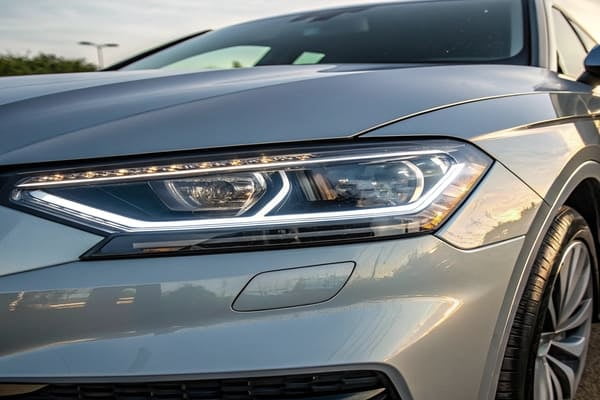
You've probably noticed that almost every car on the road today uses these sleek, integrated lights. But what makes them "composite," and how did they become the industry standard? The story involves a big shift in technology, design, and even government rules. It's a change that completely reshaped how we think about automotive lighting. Let's break down what these headlights really are and why the old sealed beam units are now a thing of the past. Understanding this evolution is key for anyone in the auto parts industry.
What Exactly Is a Composite Headlight in Modern Automotive Lighting?
Confused by the term "composite headlight"? This technical name can make it seem complicated. It’s actually a simple, multi-piece assembly with a separate housing, lens, and replaceable bulb3.
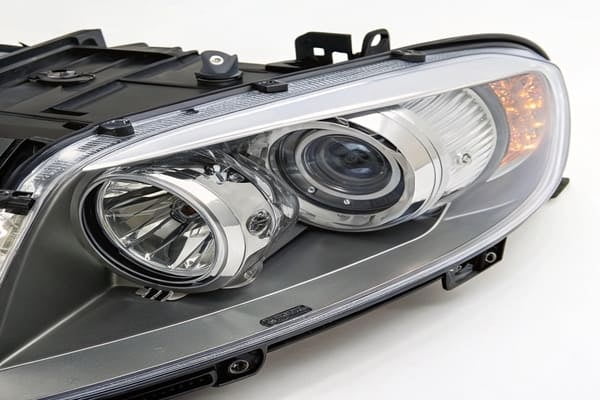
A composite headlight is an assembly where the lens and reflector7 are integrated into a housing that forms part of the car's body. Unlike older lights, the bulb is a separate, replaceable component. This design allows for more aerodynamic shapes and the use of various light sources.
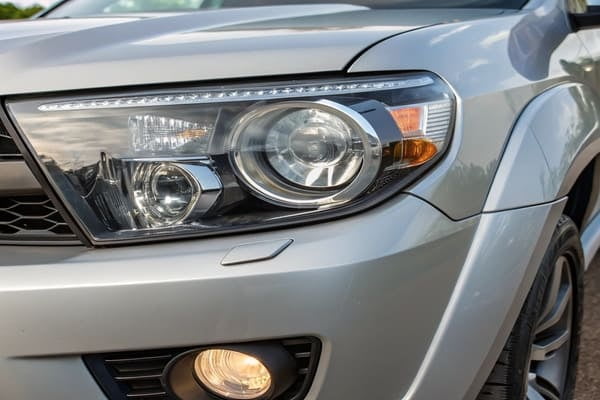
Let's dive deeper into the structure. A composite headlight isn't a single, sealed unit. It's an assembly of several key parts working together. This modular design is its biggest strength.
- Housing: This is the main body, usually made of a durable polymer. It's mounted directly to the vehicle's frame and holds all other components in place.
- Lens: The clear outer cover, typically polycarbonate. It protects the internals and is shaped for aerodynamics5.
- Reflector: The shiny, chrome-plated surface inside that directs the light beam.
- Bulb/Light Source: This is the replaceable part, which can be halogen, HID8, or an integrated LED module9.
This multi-part construction is what makes manufacturing so demanding. Getting the lens to seal perfectly with the housing is a major challenge. It requires high-precision injection molding machines, which I've found are more common in the Shanghai and Fujian coastal regions, not everywhere in China. Standard equipment just can't meet the tight tolerances needed for a perfect, waterproof seal.
How Do Composite Headlights Differ From Traditional Sealed Beam Headlights?
Remember when a burnt-out headlight meant replacing the entire glass unit? Sealed beams were inconvenient and limited design. Composite headlights changed everything by separating the bulb from the housing.
The key difference is that a sealed beam is one single, disposable unit containing the filament, reflector7, and lens. A composite headlight is a permanent housing with a replaceable bulb3. This makes maintenance easier, improves performance, and allows for countless unique, aerodynamic designs for car fronts.
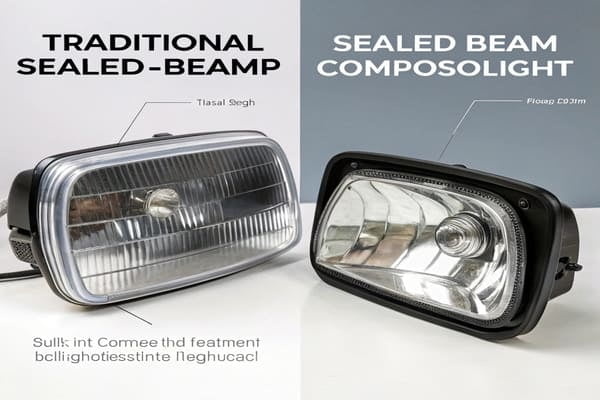
The shift from sealed beam to composite headlights10 was a true revolution in automotive design11 and function. The differences are fundamental and impact everything from maintenance to vehicle performance. I've worked with both technologies in my career, and the leap forward is huge. Let's compare them side-by-side to make the distinctions clear.
| Feature | Sealed Beam Headlight | Composite Headlight |
|---|---|---|
| Construction | Single, sealed glass unit | Multi-part assembly (housing, lens, bulb) |
| Bulb Replacement | Entire unit must be replaced | Only the bulb is replaced |
| Shape & Design | Limited to round or rectangular shapes | Aerodynamic, custom shapes integrated into body |
| Material | Glass | Polycarbonate lens, polymer housing |
| Performance | Lower light output, less efficient | Higher light output, better beam control |
| Cost | Cheaper initial unit | Higher initial cost, cheaper bulb replacement |
This table shows exactly why the industry moved on. Sealed beams were a dead end for innovation. Composite headlights opened the door for designers and engineers to improve both safety and style, creating opportunities for specialized manufacturers like us.
Why Did Automotive Regulations Shift Away From Sealed Beam Headlights?
Ever wonder why older American cars all had similar round or square headlights? Strict regulations forced the use of sealed beams1. This stifled innovation until the rules were finally updated.
Automotive regulations, particularly in the U.S., shifted away from sealed beams1 in the 1980s to allow for better aerodynamics5, fuel efficiency6, and improved lighting performance. European designs had already proven that composite headlights10 were safer and more efficient, pressuring regulators to modernize the standards.
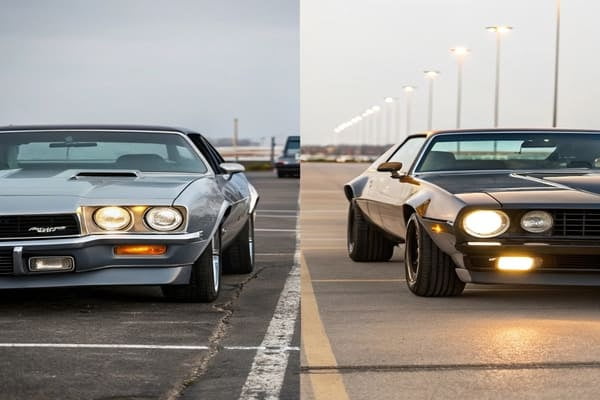
The story behind the regulatory change is fascinating. For about 40 years, U.S. federal law mandated the use of sealed beam headlights. The original goal was standardization and easy replacement for everyone. However, this rule became a major roadblock to progress over time. While European automakers were developing sleek, aerodynamic cars with powerful, form-fitting headlights, American cars were stuck with clunky, inefficient designs that looked dated.
The pressure to change came from two main areas:
- Fuel Efficiency: The oil crises of the 1970s made aerodynamics5 a top priority. Boxy sealed beams1 created significant air drag, which hurt fuel economy. Automakers desperately needed to create "slipperier" car designs to meet new efficiency standards.
- Safety and Performance: Composite designs offered far better light projection and control. They could illuminate the road more effectively and reduce glare, improving nighttime driving safety.
By 1983, the National Highway Traffic Safety Administration (NHTSA) finally relented. They amended the rule, allowing for replaceable-bulb, composite headlight systems. This single change unlocked decades of design innovation.
What Materials and Technologies Are Used in Composite Headlight Assemblies?
Think a headlight is just a piece of plastic? Using the wrong materials leads to fogging12 and failure. Modern composite headlights10 rely on advanced polymers and technologies for lasting performance.
Composite headlights primarily use a polycarbonate (PC) lens for its impact resistance and a polypropylene13 (PP) or similar polymer housing. The manufacturing process, especially sealing the lens to the housing and embedding the light module, requires extremely high-precision machinery14 to prevent fogging12 and water ingress.
The materials and manufacturing tech behind a composite headlight are where our expertise as an OEM supplier really comes into play. It's not as simple as just molding plastic. The lens is almost always made from polycarbonate (PC) because it's incredibly strong and shatter-resistant. It's then hard-coated to protect against UV rays, which prevents that ugly yellowing you see on older cars. The housing is typically a tough polymer like polypropylene13 (PP) that can withstand engine heat and vibrations.
The real difficulty is in the assembly. I learned this the hard way on an early project with a client from Pakistan. We had issues with the headlights fogging12 up because the seal between the lens and housing wasn't perfect. Another tough step is embedding the light source module. The machine has to stop, and a positioning jig opens to place the module. This moment can easily compromise the seal if not done perfectly. That first experience, though stressful, was a valuable lesson. It taught me that you absolutely need specialized, high-precision equipment to get it right, every time.
Conclusion
In short, composite headlights10 replaced sealed beams1 by offering superior design flexibility4, better performance, and easier maintenance, becoming the modern standard for automotive lighting and safety.
Learn about the limitations of sealed beams and the advantages of modern lighting solutions. ↩
Discover the technology behind automotive lighting systems and their evolution. ↩
Find out how replaceable bulbs improve maintenance and reduce costs. ↩
Understand the importance of design flexibility in modern automotive lighting. ↩
Learn how better aerodynamics can enhance vehicle performance and fuel efficiency. ↩
Learn about the connection between headlight design and fuel economy. ↩
Discover how reflectors enhance light distribution and visibility. ↩
Learn about the advantages and disadvantages of HID lighting in vehicles. ↩
Find out why LED technology is revolutionizing automotive lighting. ↩
Explore how composite headlights enhance safety and aesthetics in automotive design. ↩
Explore the relationship between lighting technology and automotive design innovation. ↩
Find solutions to prevent fogging and maintain headlight clarity. ↩
Discover the properties of polypropylene that make it ideal for automotive applications. ↩
Learn about the technology that ensures quality in headlight production. ↩