
Tired of that awful squealing every time you brake? It's distracting and makes you worry something is seriously wrong. A small, inexpensive part called a brake shim1 can fix it.
A brake shim1 is a thin layer of material, usually metal or rubber, that fits between your brake pad and the brake caliper. Its main job is to absorb vibrations and prevent the high-pitched squeal that often happens during braking, ensuring a quieter ride.
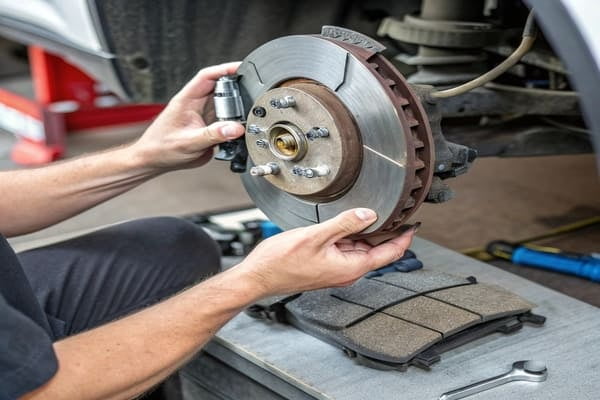
This small part plays a huge role in your car's comfort and noise levels. It seems simple, but there is a lot of engineering that goes into making a good one. You might be wondering how exactly this thin piece of material can silence such a loud noise. And does every car really need one? Let's look closer at how these components work and why they are so important for a smooth and quiet braking experience.
How Do Brake Shims Reduce Noise and Vibration?
Your brakes create a high-frequency vibration2 when you press the pedal. This vibration turns into that awful squealing noise you hear. Shims act as a buffer to absorb it.
Brake shims work by creating a damping layer3 that absorbs micro-vibrations from the contact between the brake pad and caliper. They convert this vibration energy into a tiny amount of heat, which stops the vibration from becoming a loud, audible noise.
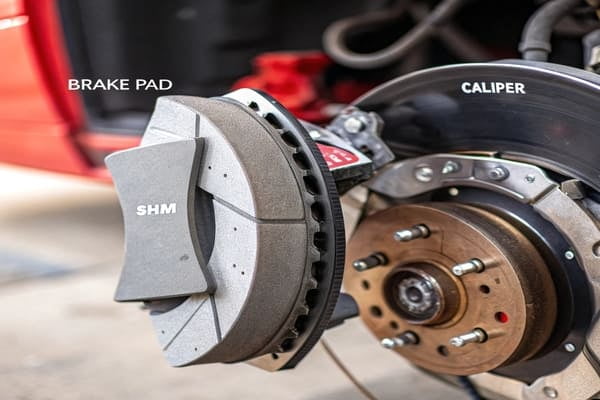
The science behind brake noise4 is all about high-frequency vibration2s. When the brake pad presses against the rotor, it doesn't just clamp down smoothly. It actually sticks and slips thousands of times per second. This "stick-slip" action creates vibrations that travel through the caliper. If the frequency of these vibrations is within the range of human hearing, you get brake squeal. The job of the shim is to stop this from happening.
Damping the Vibration
A good shim is designed to be a poor transmitter of vibration5. It acts like a cushion. When the vibrations from the brake pad hit the shim, the shim's material absorbs the energy. Getting this damping effect right is actually the hardest part of manufacturing a shim. The precision needed for tuning the damping6 is incredibly high. Most standard stamping machines just can't do it. In my experience, only specialized factories, like the ones in China's Yangtze River Delta7 or around Qingdao, have the equipment to achieve this level of accuracy. A shim from a small workshop usually won't meet the standard.
Changing the Frequency
Besides just absorbing the noise, shims can also change the frequency of the vibration. By adding a new layer with a different mass and stiffness, the shim alters the natural frequency of the entire brake assembly8. The goal is to shift the vibration to a frequency that is either too high or too low for the human ear to hear. So, the vibration might still be there, but you won't be able to hear it.
Are Brake Shims Necessary for Every Car?
You might wonder if you can just skip installing shims to save a minute. But doing that could lead to months of annoying brake noise4. Most modern cars need them.
While a car's brakes will still function without shims, most modern brake systems are designed to use them. If you leave them out, you will probably get significant brake noise4 and vibration. For a quiet and comfortable ride, they are highly recommended.
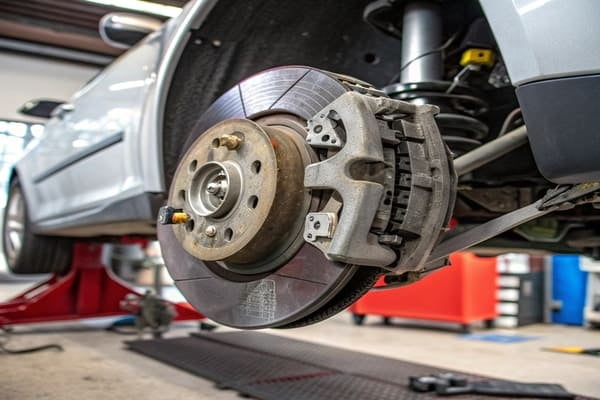
Whether you need a shim really depends on the vehicle and the brake system's design. Most new cars that come from the factory have brake pads with shims already attached. These are engineered specifically for that car to provide the quietest operation possible. When you replace your brake pads, it's best to use new shims that are designed for your new pads. Some high-quality aftermarket brake pads9 will come with new shims in the box.
I learned a lot about this from one of my first big projects. We were making shims for an Australian client. To be honest, we were still new to the process, and the final product had a weaker damping effect than we wanted. I was worried it was a failure. But the client was fitting them on older car models. It turned out they actually preferred the slight feedback and feel of our shims for that specific application. It was a lucky break for us, but it taught me a huge lesson. You have to match the shim's performance to the vehicle's needs10. Since that day, we've perfected our process to make sure the damping is always exactly right for the intended car.
What Are the Different Types of Brake Shims Available?
You will see different types of shims and might not know what to choose. Picking the wrong one could mean the noise doesn't go away. They are mainly categorized by material.
Brake shims are available in various materials, each offering different levels of noise damping11 and heat resistance12. The most common types include simple metal shims, rubber-coated metal shims, and more advanced multi-layer shims13, often known as RSR or constrained layer shims.
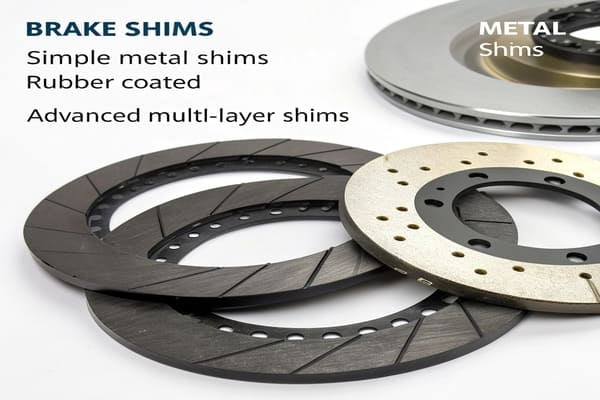
The "best" shim really depends on the car and your driving style. A daily commuter car has very different needs from a high-performance sports car. As a manufacturer, we have to master several types to serve our clients.
Single-Layer Shims
These are the most basic type. They can be a simple piece of metal or a shim made entirely of a special type of rubber. They offer some damping but are generally less effective than more complex designs. They are often found in older vehicles or in very budget-friendly brake pad kits.
Multi-Layer Shims
This is where the real engineering comes in. These are the standard for most modern cars. They are often called constrained layer shims and feature a sandwich-like construction, such as rubber-steel-rubber (RSR). The different layers work together to absorb a much wider range of vibration frequencies. Another difficult part of manufacturing is applying the coating. The high-temperature resistant coating requires a special process. The machine has to stop for the spray nozzle to work, and the jig holding the part has to open. This makes it very hard to get a perfectly even coat. Any small mistake can affect the shim's performance and how long it lasts.
How Do Rubber, Metal, RSR, and Titanium Shims Differ in Performance?
Choosing between different shim materials can be confusing. The price and performance can vary a lot. Understanding their key differences helps you choose the right one for your needs.
Rubber-coated shims are great for daily driving noise. Plain metal shims are durable but not as quiet. RSR (Rubber-Steel-Rubber14) shims give the best balance of quiet and durability for most cars. Titanium is a premium choice for racing because of its excellent heat resistance12.
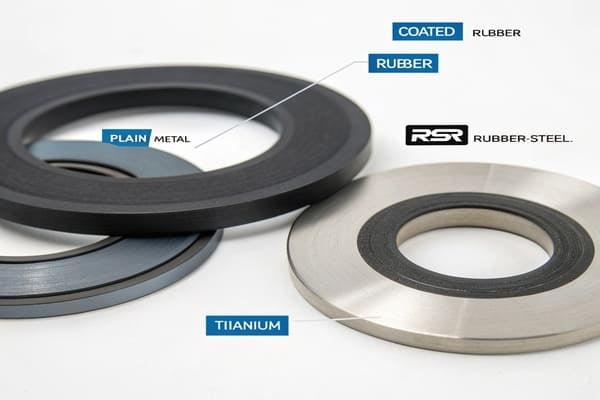
As a manufacturer that helps brands develop their own product lines, we have to be experts in how these materials behave. Creating a reliable RSR shim, for example, is a complex task. You have to bond different materials together that will survive extreme heat and pressure while still doing their job of damping noise. It's a real engineering challenge. Here is a simple breakdown to help you understand the differences in performance.
| Material Type | Primary Benefit | Best For | Considerations |
|---|---|---|---|
| Rubber-Coated | Excellent noise damping11 at low temps | Daily driving, city commuting | Can degrade under very high heat |
| Plain Metal | Durability and low cost | Older vehicles, some heavy-duty applications | Offers minimal noise damping11 |
| RSR (Constrained Layer) | Best overall noise reduction | Most modern passenger cars and SUVs | More expensive than single-layer shims15 |
| Titanium | Superior heat barrier, lightweight | High-performance track and racing cars | Very expensive, provides less noise damping11 |
Titanium shims are interesting because they don't just dampen noise. They also act as a thermal barrier16. Titanium is a poor conductor of heat. This means it helps block heat from transferring from the hot brake pad to the brake caliper and brake fluid. This prevents the brake fluid from boiling, which is a major issue in racing.
Conclusion
Brake shims are small but vital parts for stopping brake noise4. Choosing the right type and ensuring they are made well is key for a quiet and smooth braking experience.
Understanding brake shims can help you maintain a quieter and safer driving experience. ↩
Discover the causes of brake vibrations to better address noise issues in your car. ↩
Explore the role of damping layers in improving brake performance and comfort. ↩
Find solutions to common brake noise issues for a smoother driving experience. ↩
Find out which materials enhance brake shim performance for a quieter ride. ↩
Explore the complexities of tuning damping for effective brake noise reduction. ↩
Learn about the manufacturing excellence in the Yangtze River Delta for quality products. ↩
Gain insights into the brake assembly for better maintenance and performance. ↩
Learn how aftermarket options can enhance your vehicle's braking performance. ↩
Understand the importance of matching shim performance to your vehicle for optimal results. ↩
Discover the importance of noise damping for a comfortable driving experience. ↩
Explore how heat resistance plays a crucial role in brake safety and efficiency. ↩
Discover the advantages of multi-layer shims for modern braking systems. ↩
Understand RSR technology for optimal noise reduction in your vehicle. ↩
Learn about single-layer shims and their suitability for different vehicles. ↩
Discover how thermal barriers enhance brake performance and safety. ↩