
Are you tired of frequent, costly brake pad replacements1? This constant maintenance drains your wallet and adds stress. There are advanced methods that go far beyond simple driving habits2.
To truly extend the life of your brake pads, you must go beyond gentle driving. The most effective methods involve professional-grade dynamic break-in procedures3, precise temperature control during maintenance4, and carefully matching your driving habits2 to your vehicle’s specific load conditions.
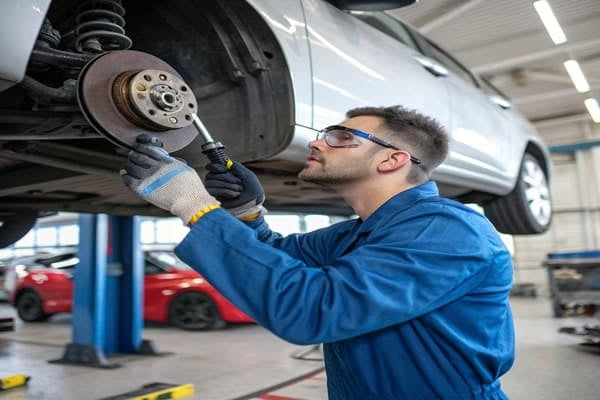
Everyone wants their car parts to last longer, especially critical components like brake pads. You have probably heard the usual advice: avoid sudden stops, lighten your vehicle's load, and coast more. While these tips are helpful, they often don't produce the significant results you are looking for. The truth is, achieving a major increase in brake pad lifespan requires a level of precision and technical knowledge that most drivers and even many standard workshops don't have. Let's look at the real, professional methods that make a substantial difference.
How to extend brake pad life?
Your brake pads seem to wear out too quickly, no matter how carefully you drive. The standard advice isn't working, and you are looking for a real solution.
True brake pad life extension requires three key steps that are rarely discussed: a proper dynamic break-in process, managing brake temperatures5, and adjusting driving style based on data. These professional techniques6 go far beyond what is done during a typical service appointment.
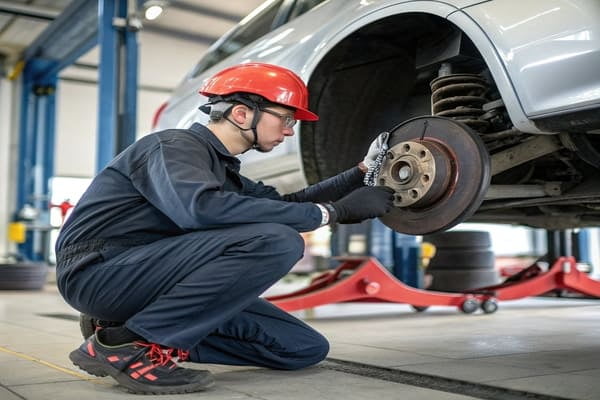
To get more life out of your brake pads, we need to think like engineers. The biggest gains come from highly specific, technical procedures. These are not simple tips but structured processes. The first step is a professional dynamic break-in, also known as "bedding-in." This isn't just a few hard stops. It is a controlled process of heating and cooling the brakes to transfer a thin, even layer of friction material from the pad to the rotor. This layer is critical for performance and longevity. The second step is temperature control. The workshops that do this best, often in places like coastal Fujian or around Shanghai, use special tools to monitor brake temperatures5 during the break-in process to ensure it is done perfectly. This level of precision is hard to find in a standard maintenance shop. Finally, the most advanced step is matching your driving habits2 to your vehicle's load. This requires logging driving data7 to understand how you use your vehicle and then making specific adjustments. It is a complex process, but it delivers real results.
What is the 30 30 30 rule8 for brakes?
You have probably heard about the "30 30 30 rule8" for new brakes. You are not sure what it means, if it works, or how to do it correctly.
The 30-30-30 rule is a basic method for bedding-in new brakes. It involves performing 30 gentle stops from 30 mph, with about 30 seconds of cooling time between each stop. This helps the new pads and rotors mate together properly.
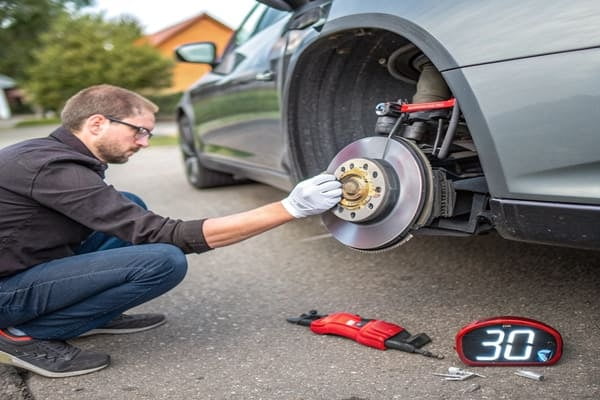
The 30-30-30 rule is a good starting point for a DIY enthusiast who has just installed new pads and rotors. It is a simplified version of the professional bedding-in process9 I mentioned earlier. The goal is to heat the components enough to start the material transfer process without overheating them, which could cause damage. However, this rule has its limits. It is a one-size-fits-all approach that does not account for important variables. For example, the ideal break-in procedure for a heavy truck is very different from that for a lightweight sports car. Different brake pad materials10 (ceramic, semi-metallic, organic) also require different procedures. A professional break-in is much more controlled.
Here is a simple comparison:
| Feature | 30-30-30 Rule (DIY) | Professional Bedding-In |
|---|---|---|
| Speed | Fixed at ~30 mph | Varied based on vehicle and pad type |
| Pressure | "Gentle" (subjective) | Measured and consistent |
| Temperature | Not monitored | Monitored with infrared thermometers |
| Cooling | Timed (~30 seconds) | Based on actual temperature readings |
| Effectiveness | Basic seating | Optimal performance and longevity |
The 30-30-30 rule is better than nothing, but a professional, data-driven approach is what truly maximizes brake life and performance.
Can I spray WD-40 on my brake pads?
Your brakes are making a loud squeaking noise. In a moment of frustration, you might think about grabbing a can of WD-40 to silence them, as it works for a squeaky door hinge.
Absolutely not. Never spray WD-40, or any other lubricant or oil, on your brake pads or rotors. Doing so is extremely dangerous. It completely eliminates the friction your brakes need to stop your car, which could lead to a total brake failure.
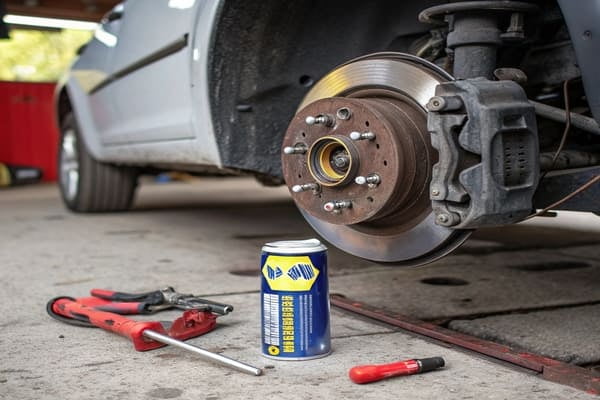
Let's be perfectly clear about this, because it is a life-or-death safety issue. Your entire braking system works on one principle: friction. The brake pads clamp down on the metal rotors, and the friction between them converts your car's kinetic energy into heat, slowing you down. WD-40 is a lubricant. Its purpose is to reduce friction. If you apply it to your brake pads or rotors, you are essentially removing their ability to do their job. The brake pedal will feel normal, but when you press it, the pads will just slide over the lubricated rotors with almost no stopping power. This is not a fix; it is a recipe for disaster. The real causes for squeaking brakes are usually harmless, like brake dust buildup11, or they are indicators of a problem, like worn-out pads. The correct solution is to diagnose the cause. A proper fix might involve cleaning the components with a dedicated brake cleaner (which evaporates and leaves no residue), installing new anti-squeal shims, or replacing worn-out pads. Never take a shortcut with a lubricant.
How to improve brake pads?
Your car's standard brake pads are not quite right for you. They might feel weak, create too much dust, or simply wear out too fast for your liking.
To improve your braking, you must choose a brake pad that matches your specific needs. The three main types are organic for quiet daily driving, semi-metallic for good all-around performance and durability, and ceramic for high-performance stopping with low dust and noise.
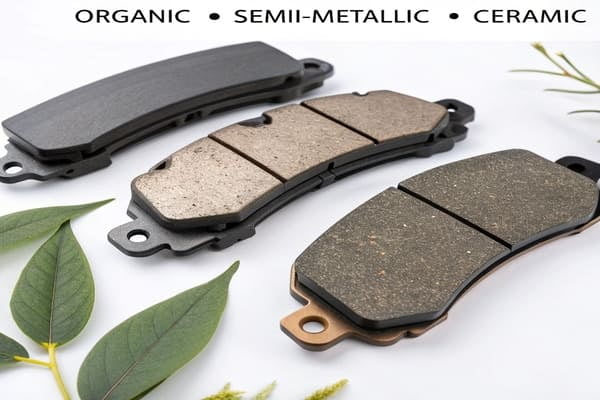
"Improving" your brake pads means finding the right balance of characteristics for your vehicle and driving style. There is no single "best" brake pad, only the best one for a specific application. As a manufacturer, this is where we focus our expertise. We help clients develop product lines by engineering pads with the perfect blend of materials.
Here is a breakdown of the most common materials:
| Pad Type | Stopping Power | Longevity | Noise | Dust | Best For |
|---|---|---|---|---|---|
| Organic | Moderate | Lower | Very Low | Low | Daily commuting, quiet operation |
| Semi-Metallic | High | High | Moderate | High | All-around use, heavy vehicles |
| Ceramic | Very High | Moderate | Very Low | Very Low | Performance driving, clean wheels |
I remember working on a project for a client from Pakistan. We were developing a new brake pad for their market. Our first batch of samples had a unique outcome—they wore a little faster than the target, but the pedal feel was incredibly firm and stable. I was worried, but the client loved it. They preferred that confident, solid feel over maximum longevity. That experience was a great lesson: "improvement" is defined by the end-user. Our job is to engineer the exact performance our clients want, whether it's for a long-haul truck, a daily driver, or a performance car.
Conclusion
Extending brake pad life involves more than just gentle driving. True longevity comes from professional break-in techniques, proper temperature management, and choosing the right pad material for your specific needs.
Explore effective strategies to minimize brake pad replacements and save money on maintenance. ↩
Understand how adjusting your driving style can lead to longer-lasting brake pads. ↩
Learn about advanced techniques that can significantly enhance brake pad performance and lifespan. ↩
Discover the importance of temperature management in extending the life of your brake pads. ↩
Explore how temperature monitoring can optimize brake pad performance during use. ↩
Find out about expert methods that can dramatically improve brake pad durability. ↩
Discover how analyzing driving data can lead to better brake pad choices and usage. ↩
Get insights into this popular method for bedding-in new brake pads effectively. ↩
Learn how proper bedding-in can enhance brake performance and longevity. ↩
Learn about various brake pad materials and how to choose the right one for your vehicle. ↩
Find out how to manage brake dust and maintain cleaner wheels and better performance. ↩